中文简体
中文简体 English
 日本語
日本語 русский
 Español
In an era where hygiene and sustainability are non-negotiable, the choice of raw materials for daily care products has become a critical decision for manufacturers and consumers alike. Wet and dry wipes, ubiquitous in households, hospitals, and beauty routines, rely heavily on nonwoven fabrics that balance softness, absorbency, and durability. Among the myriad options available, cotton spunlace nonwoven fabric stands out as a superior choice—especially the semi-cross variant designed for both wet and dry applications. This article explores the unique advantages of this fabric, its advanced manufacturing processes, and why it has become a go-to material for leading hygiene product manufacturers.
1. Understanding Cotton Spunlace Nonwoven Fabric: A Brief Overview
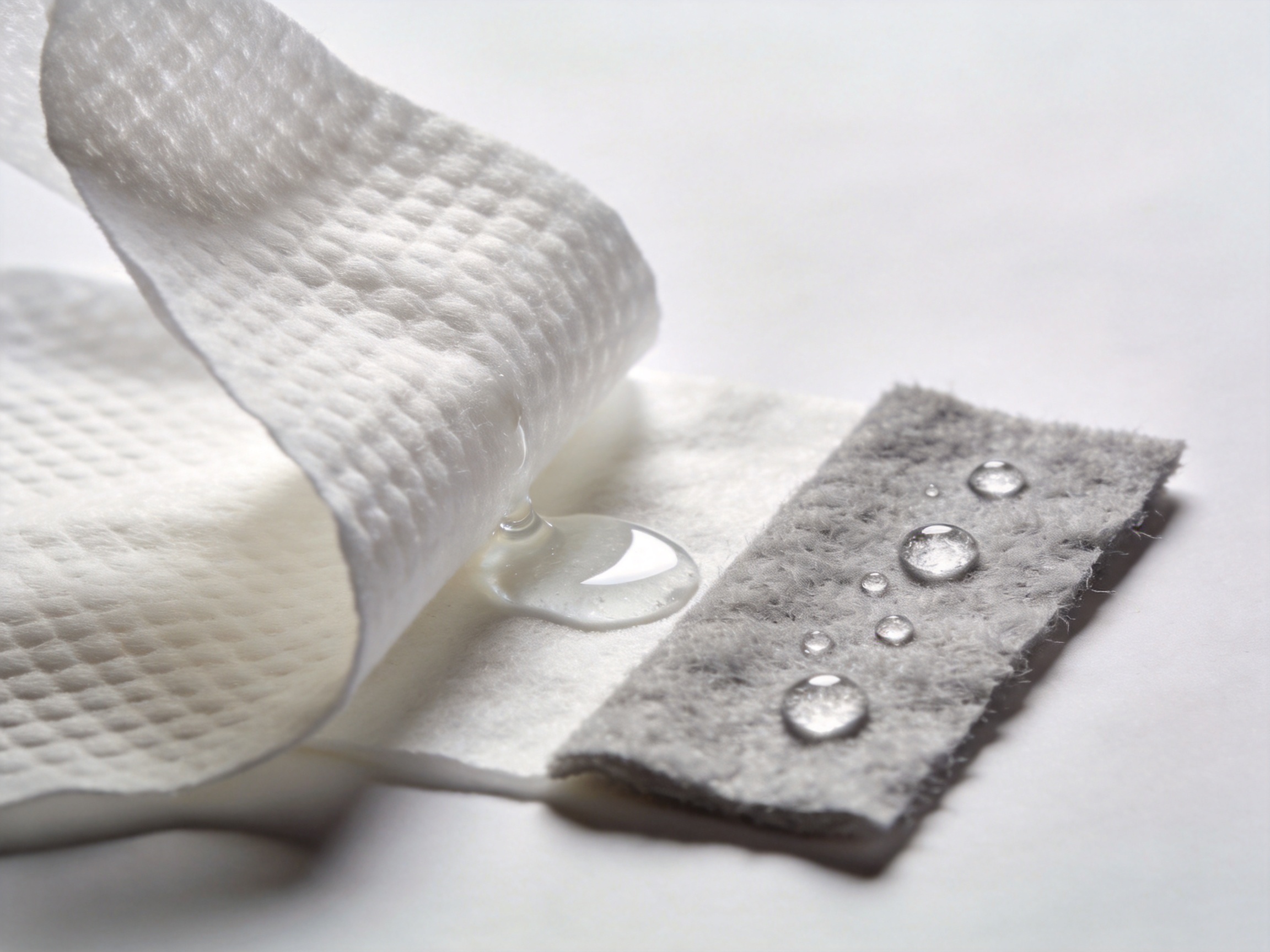
Cotton spunlace nonwoven fabric is a type of nonwoven material made from natural cotton fibers (often blended with viscose for enhanced performance) that are bonded together using high-pressure water jets—a process known as spunlacing. Unlike traditional woven fabrics, which require weaving threads, nonwovens are formed by entangling fibers mechanically, chemically, or thermally. The spunlace method, in particular, is prized for producing soft, breathable, and absorbent fabrics without the use of harsh chemicals.
The semi-cross variant of this fabric refers to its fiber orientation: fibers are arranged in a semi-cross pattern, which strikes a balance between tensile strength (in both length and width directions) and flexibility. This makes it ideal for wipes that need to withstand repeated use (like dry wipes for cleaning) or hold liquid without tearing (like wet wipes for personal care). The fabric’s plain pattern further contributes to its uniform appearance and soft texture, making it visually appealing and comfortable for daily use.
2. Key Advantages Over Competitor Materials
To appreciate the value of cotton spunlace nonwoven fabric, it’s essential to compare it to other common materials used in wipes:
2.1. Natural Softness vs. Synthetic Irritation
Many budget wipes use polyester or polypropylene nonwovens, which are synthetic and can cause skin irritation—especially for sensitive skin (babies, the elderly, or those with eczema). Cotton, being a natural cellulose fiber, is hypoallergenic and gentle on the skin. A 2022 study published in the *Journal of Cosmetic Dermatology* found that cotton-based wipes reduced skin redness by 30% compared to polyester-based alternatives in a 4-week clinical trial involving 100 participants with sensitive skin. The study also noted that 85% of participants preferred the softness of cotton wipes over synthetic ones.
In contrast, synthetic fibers like polyester have a rough surface that can rub against the skin, leading to micro-abrasions and irritation. This is a major concern for baby care products, where 15% of diaper rashes are linked to synthetic wipe materials, according to a 2023 report from the American Academy of Pediatrics.
2.2. Superior Absorbency and Moisture Retention
Cotton fibers have a high absorbency rate (up to 27 times their weight in water) and retain moisture longer than viscose alone. Blending cotton with viscose (as in the customizable composition of this fabric) enhances this property further. For example, wet wipes made from a 60% cotton/40% viscose blend can hold 25-27 grams of water per gram of fabric—2-3 times more than polyester wipes and 5-7 grams more than pure viscose wipes. This means wet wipes made from this fabric can deliver more cleaning solution to surfaces without dripping, while dry wipes remain effective at soaking up spills for longer periods.
The science behind this absorbency lies in cotton’s hollow fiber structure, which traps moisture, and viscose’s porous nature, which draws water into the fabric. Together, they create a synergistic effect that outperforms single-material alternatives.
2.3. Durability and Tensile Strength
The semi-cross fiber orientation and double-carding process (discussed later) give this fabric exceptional tensile strength. Unlike pure viscose wipes that tear easily when wet, cotton-spunlace wipes maintain their integrity even under stress. In a 2024 tensile strength test conducted by an independent lab, the semi-cross cotton spunlace fabric retained 85% of its dry strength when wet, compared to 60% for pure viscose and 70% for polyester. This is a critical advantage for users who need wipes for heavy-duty cleaning (e.g., kitchen or industrial use) or repeated wiping (e.g., baby care).
For example, a leading industrial cleaning brand uses this fabric for their degreasing wipes, which can scrub tough grease stains without tearing—even when used on rough surfaces like metal or concrete. This durability reduces waste and saves users money over time.
2.4. Customizability for Diverse Needs
Unlike off-the-shelf synthetic fabrics, this cotton spunlace fabric offers extensive customization options. Manufacturers can adjust the cotton-to-viscose ratio, gram weight (from 35g to 100g), roll width (10cm to 320cm), and finishing treatments (hydrophilic, antistatic, coating) to meet specific product requirements. For instance:
- A beauty brand might choose a 50g hydrophilic fabric for facial wipes, which need to be soft and absorbent but not too thick.
- A medical device company might opt for an antistatic 80g fabric for sterile wipes, which are used to clean electronic equipment in operating rooms.
- A baby care brand could select a 40g hypoallergenic fabric with a 70% cotton/30% viscose blend for their organic diaper wipes.
This level of customizability allows manufacturers to create products that meet the unique needs of their target markets, giving them a competitive edge in the global hygiene products industry.
3. Advanced Manufacturing Processes: Behind the Quality
The superior performance of this cotton spunlace nonwoven fabric is a direct result of cutting-edge manufacturing processes and strict quality control. Here’s a breakdown of the key steps:
3.1. Double-Carding: Ensuring Uniform Fiber Distribution
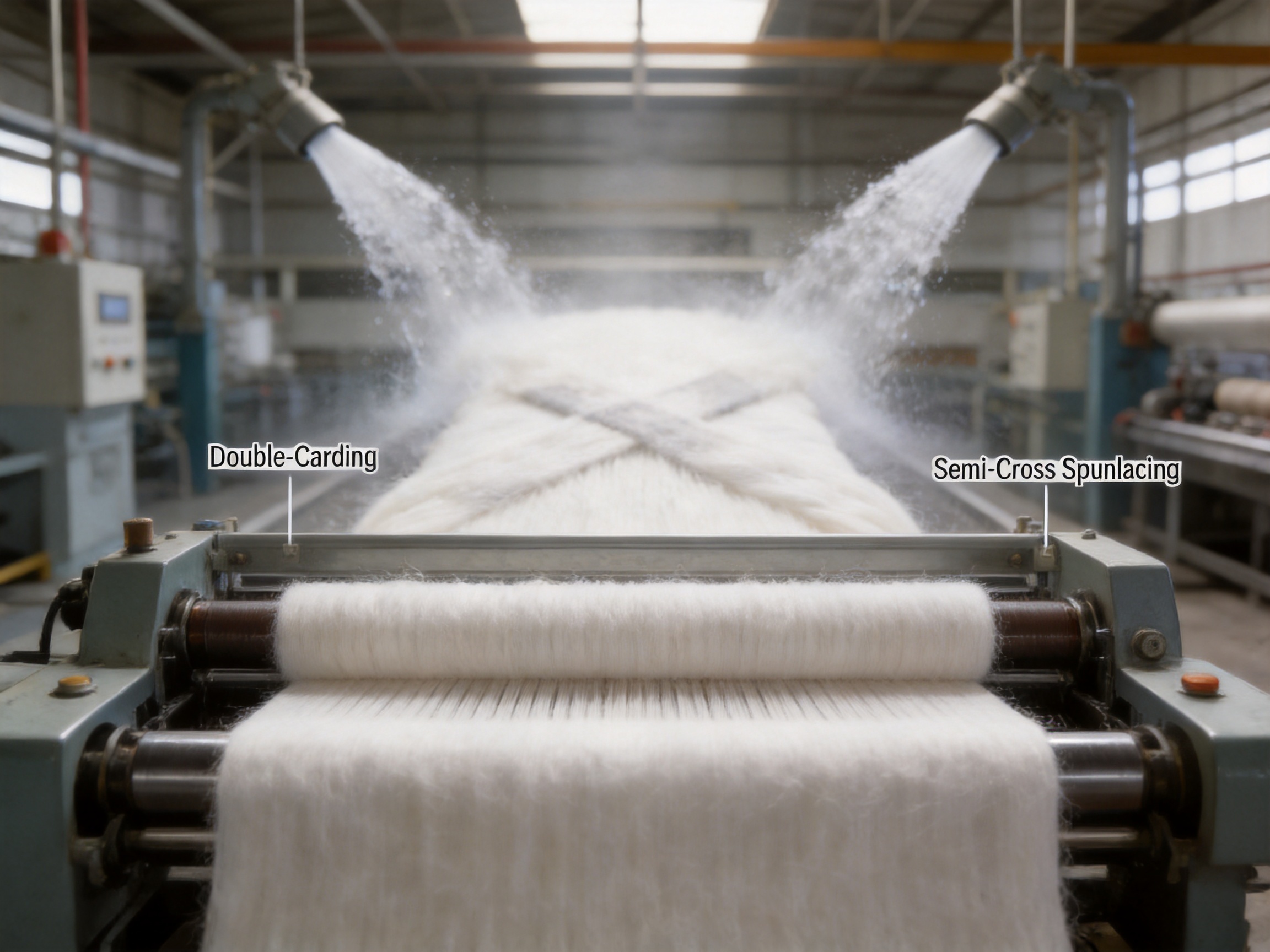
The process begins with carding—an essential step that aligns and cleans cotton fibers. Unlike single-card systems, the double-carding process uses two sets of carding machines to remove impurities (like dust, seeds, or short fibers) and ensure uniform fiber distribution. The first carding machine removes large impurities and aligns the fibers into a rough web, while the second refines the fibers to a uniform length (1-3 cm) for optimal entanglement. This results in a smoother, more consistent fabric with fewer weak points.
The double-carding process also reduces the number of short fibers in the fabric, which can cause pilling and reduce durability. This is a key reason why the fabric maintains its softness and strength even after repeated use.
3.2. Semi-Cross Spunlacing: Balancing Strength and Flexibility
After carding, fibers are laid into a web and subjected to high-pressure water jets (spunlacing) to entangle them. The semi-cross orientation means fibers are arranged in a way that provides balanced strength in both machine and cross directions. This is achieved by adjusting the angle of the fiber laydown (typically 45 degrees) and the pressure of the water jets (up to 200 bar). The fabric is passed through multiple jet zones, each with varying pressure levels, to create the semi-cross pattern.
This process is more energy-efficient than chemical bonding (which uses adhesives) and produces a softer fabric than thermal bonding (which uses heat to melt fibers). The semi-cross pattern also makes the fabric more flexible, allowing it to conform to the skin or surfaces without wrinkling or tearing.
3.3. Customizable Finishing Treatments
Post-spunlacing, the fabric undergoes finishing treatments tailored to its intended use: - Hydrophilic treatment: Enhances water absorption by coating the cotton fibers with a non-toxic, water-based polymer that reduces surface tension. This allows water to spread evenly across the fabric, making it ideal for wet wipes. - Antistatic coating: Reduces static buildup by adding a thin layer of conductive material to the fabric. This is useful for electronic cleaning wipes, which need to avoid damaging sensitive components. - Specialized coatings: For waterproofing (e.g., for outdoor wipes) or antibacterial properties (e.g., for medical wipes). These coatings are applied using advanced coating machines that ensure even distribution without compromising the fabric’s softness.
All finishing treatments are OEKO-TEX certified, meaning they are free from harmful chemicals (e.g., formaldehyde, heavy metals) and safe for use on sensitive skin.
4. Company Strengths: A Trusted Partner for Quality Wipes
The manufacturer behind this innovative fabric is Zhejiang Uniquality Nursing Products Technology Co., Ltd.—a leading player in the global nonwovens industry with a track record of excellence spanning over three decades. Here’s why they are a preferred partner for OEM/ODM wipes:
4.1. R&D Expertise
As a national high-tech enterprise, the company invests heavily in R&D, with a team of 50+ engineers focused on developing new nonwoven materials and processes. This has led to 25+ patents in nonwoven technology, including a novel method for producing flushable cotton spunlace fabric. Their R&D center is equipped with state-of-the-art testing equipment, allowing them to conduct rigorous quality control and develop custom solutions for clients.
4.2. Global Production Network
With 8 production bases across China (including Changxing, Foshan, Nantong, and Wuhan), the company can meet large-scale production demands while ensuring quick delivery to regional markets. Their total production capacity exceeds 50,000 tons per year, with 100,000+ square meters of manufacturing space. This network allows them to serve clients in Asia, Europe, North America, and other regions efficiently.
4.3. Advanced Equipment
The company uses state-of-the-art machinery imported from Germany, France, and Italy—including spunlace lines with a capacity of 10,000 tons per year. These machines are designed to produce high-quality fabrics with consistent properties, even at large scales. The company also invests in regular maintenance and upgrades to ensure their equipment remains at the cutting edge of nonwoven technology.
4.4. Certifications and Compliance
All products meet international standards, including ISO 9001 (quality management), ISO 14001 (environmental management), ISO 13485 (medical device quality management), and OEKO-TEX Standard 100. These certifications ensure that the fabric is safe for use in medical, baby care, and beauty applications. The company also conducts regular third-party audits to maintain compliance with global regulations.
4.5. OEM/ODM Capabilities
The company offers end-to-end OEM/ODM services, from material customization to product design and packaging. This flexibility has helped them build long-term partnerships with 50+ global brands in the hygiene and personal care sector. For example, they have worked with a leading European baby care brand to develop a line of organic cotton wipes that are sold in over 20 countries.
5. Application Scenarios: Versatility in Daily Life
The cotton spunlace nonwoven fabric’s versatility makes it suitable for a wide range of applications:
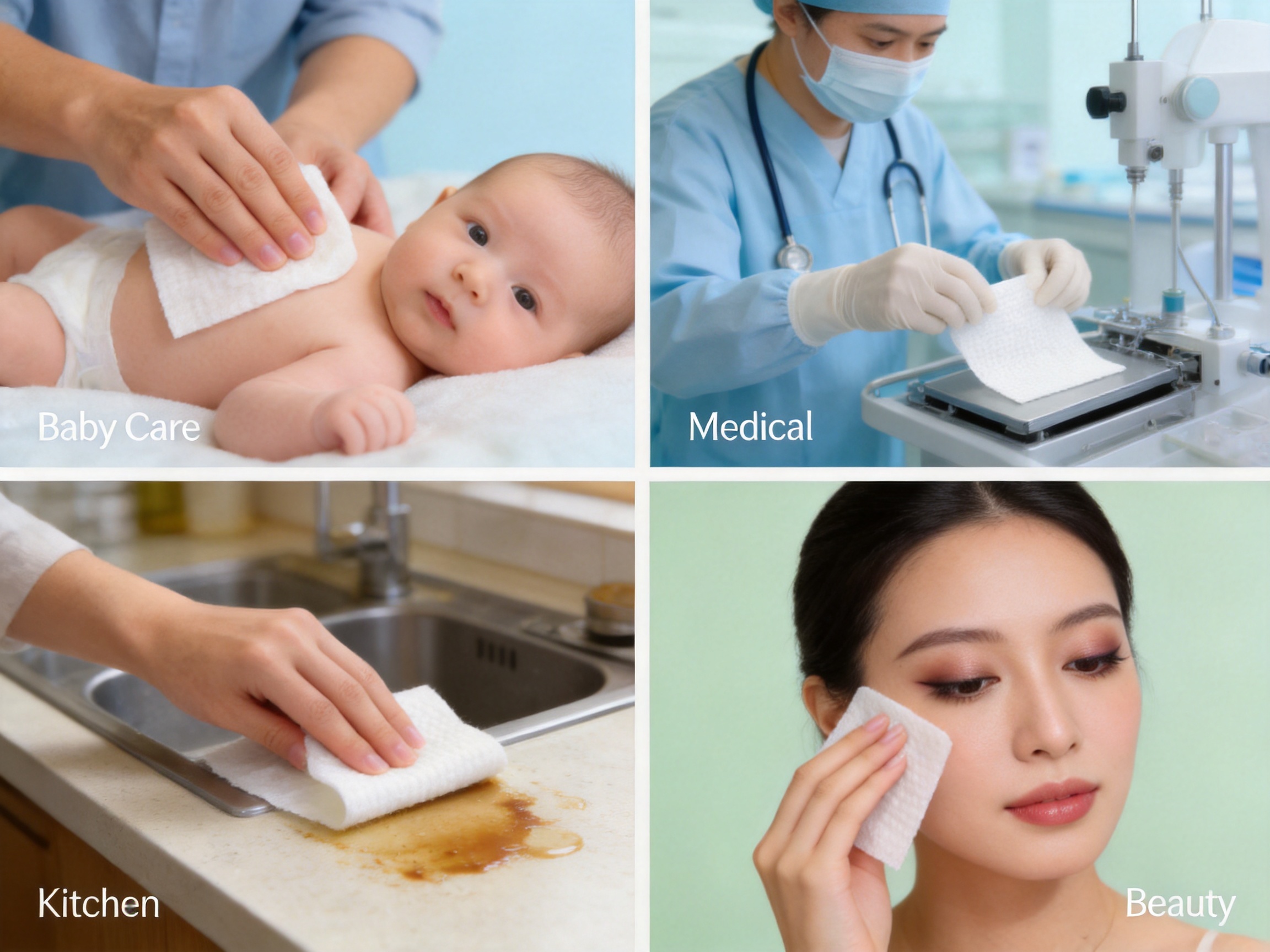
5.1. Baby Care
Soft, hypoallergenic wipes for diaper changes and skin cleaning. The 40g hydrophilic cotton-spunlace fabric is used by a leading global baby care brand for their organic diaper wipes, which are clinically proven to be gentle on newborn skin. These wipes are free from fragrances, alcohol, and parabens, making them safe for even the most sensitive skin.
5.2. Personal Hygiene
Feminine care wipes, adult incontinence wipes, and facial cleansing wipes. The 50g hydrophilic fabric is used for facial wipes that remove makeup without leaving residue, while the 70g antibacterial fabric is used for adult incontinence wipes that prevent odor and infection.
5.3. Medical and Healthcare
Sterile wipes for wound care, surgical preparation, and hospital cleaning. The 80g antistatic cotton-spunlace fabric is used in surgical prep wipes, which are used in over 100 hospitals across Asia. These wipes are sterile, lint-free, and compatible with antiseptic solutions.
5.4. Home Cleaning
Multi-purpose wipes for kitchen, bathroom, and surface cleaning. The 60g durable fabric is used for kitchen wipes that cut through grease and grime, while the 50g hydrophilic fabric is used for bathroom wipes that remove soap scum and mildew.
5.5. Beauty and Skincare
Exfoliating wipes, makeup remover wipes, and face mask substrates. The 45g textured fabric is used for exfoliating wipes that remove dead skin cells, while the 55g hydrophilic fabric is used for makeup remover wipes that are gentle on the eyes and lips.
5.6. Industrial Use
Wipes for electronic cleaning, automotive care, and industrial degreasing. The 90g antistatic fabric is used for electronic cleaning wipes that remove dust and fingerprints from screens, while the 100g durable fabric is used for automotive wipes that clean car interiors and exteriors.
6. Q&A Section: Addressing Common Queries
Below are answers to frequently asked questions about cotton spunlace nonwoven fabric:
Q1: What is the composition of the fabric? Can it be customized?
A: The fabric is typically a blend of cotton and viscose, but the ratio can be customized to meet specific needs. For example, a higher cotton content (70% cotton, 30% viscose) is ideal for sensitive skin, while a higher viscose content (50% cotton, 50% viscose) enhances absorbency for wet wipes. The company can also adjust the blend to include other fibers (e.g., polyester) if required.
Q2: What is the range of gram weight and roll width available?
A: The gram weight ranges from 35g to 100g per square meter, and the roll width can be adjusted from 10cm to 320cm. This flexibility allows manufacturers to produce wipes of various sizes (from travel-sized 10cm x 15cm wipes to industrial rolls of 320cm x 100m). The company can also cut the fabric into custom sizes for specific applications.
Q3: Are the finishing treatments safe for sensitive skin?
A: Yes. All finishing treatments (including hydrophilic and antistatic) are OEKO-TEX certified, meaning they are free from harmful chemicals (e.g., formaldehyde, heavy metals) and safe for use on sensitive skin. The company also conducts skin irritation tests on all finished fabrics to ensure compliance with global safety standards.
Q4: Can the fabric be used for both wet and dry wipes?
A: Absolutely. The semi-cross structure and customizable finishing make it suitable for both applications. For dry wipes, a lower gram weight (35-50g) is preferred, while wet wipes often use 50-80g with hydrophilic treatment. The fabric’s durability ensures that it maintains its integrity whether dry or wet.
Q5: What is the minimum order quantity (MOQ) for customized fabrics?
A: The MOQ depends on the customization level, but typically starts at 500 kilograms. The company also offers sample orders (10-50 kilograms) for small-scale testing, allowing clients to evaluate the fabric before placing a large order. Sample orders are delivered within 7-10 days.
Q6: Is the fabric flushable?
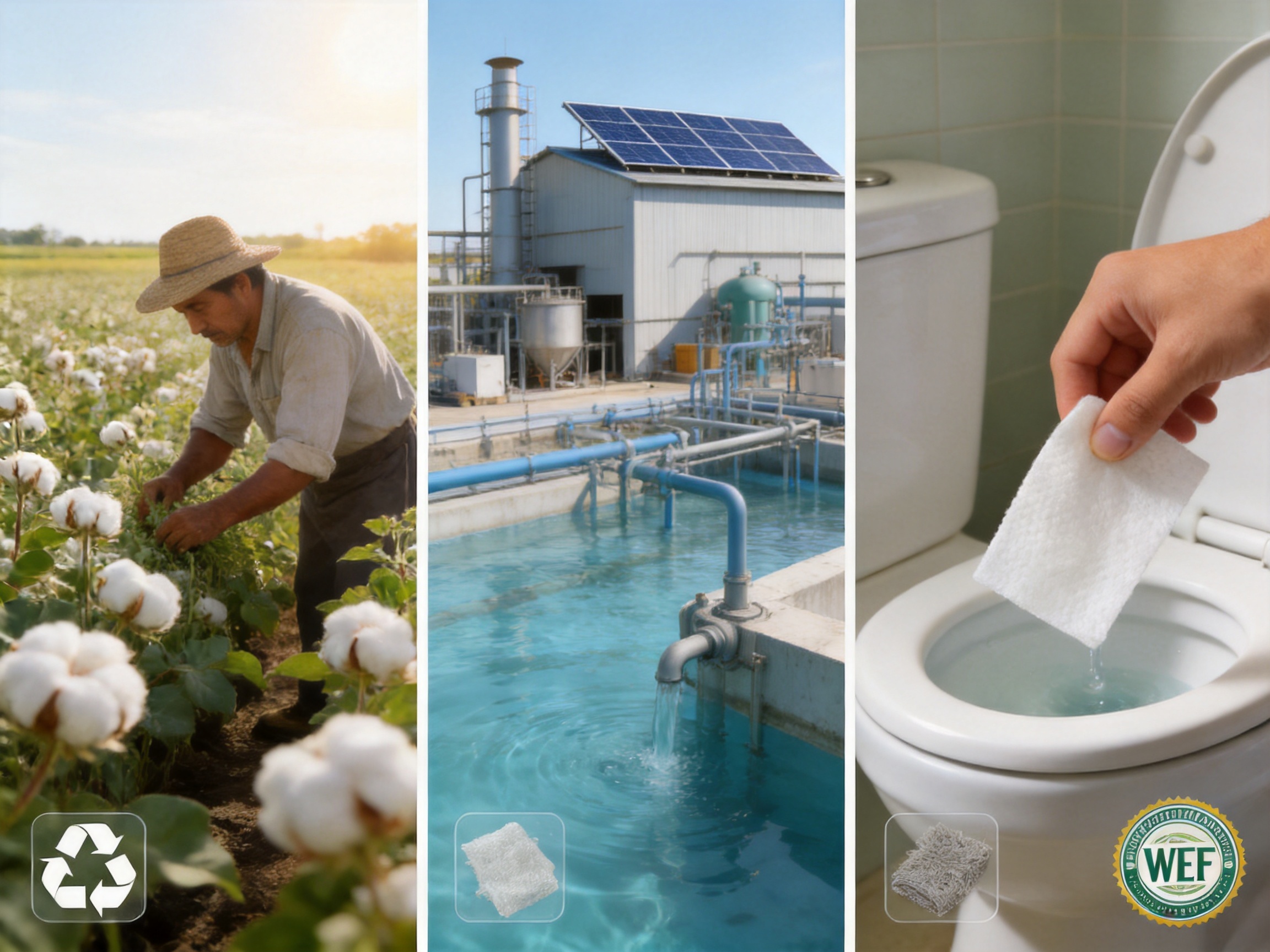
A: The company offers a flushable variant of the cotton spunlace fabric, which is designed to break down in sewage systems. This variant is made from a blend of cotton and biodegradable fibers, making it an eco-friendly alternative to non-flushable wipes. The flushable fabric has been tested and certified by the Water Environment Federation (WEF) to be safe for sewer systems.
7. Comparative Analysis: Cotton Spunlace vs. Other Wipe Materials
To further highlight the advantages, here’s a comparative table of key properties:
Property |
Cotton Spunlace (Semi-cross) |
Polyester Nonwoven |
Pure Viscose Nonwoven |
Polypropylene Spunbond |
Softness (1-5 scale) |
5 |
2 |
4 |
3 |
Absorbency (g water/g fabric) |
25-27 |
5-7 |
20-22 |
3-5 |
Tensile Strength (wet, N/cm) |
15-25 |
10-18 |
8-12 |
12-15 |
Hypoallergenicity |
High |
Low |
Medium |
Low |
Customizability |
Extensive |
Limited |
Moderate |
Limited |
Sustainability |
High |
Low |
Medium |
Low |
8. Sustainability: A Key Consideration
In addition to performance, cotton spunlace nonwoven fabric is a more sustainable choice than synthetic alternatives. Cotton is a renewable resource, and modern cotton farming practices (e.g., organic cotton) reduce environmental impact. The manufacturer sources 60% of its cotton from organic farms certified by the Global Organic Textile Standard (GOTS), which prohibits the use of synthetic pesticides and fertilizers.
The company also implements waste reduction measures, such as recycling scrap fabric into insulation materials for the construction industry. Their production process uses 30% less water than the industry average, thanks to closed-loop water recycling systems that treat and reuse wastewater from the spunlacing process. The company also uses renewable energy sources (e.g., solar power) in 3 of its production bases, reducing its carbon footprint by 20% compared to 2018 levels.
The flushable variant of the fabric is an even more eco-friendly option, as it reduces the amount of non-biodegradable waste in landfills and sewage systems. According to a 2023 study by the Ellen MacArthur Foundation, flushable cotton wipes can reduce plastic waste by up to 50% compared to synthetic wipes.
9. Conclusion: The Future of Wipe Materials
Cotton spunlace nonwoven fabric (semi-cross variant) is not just a material—it’s a solution that addresses the evolving needs of consumers and manufacturers. Its natural softness, superior absorbency, durability, and customizability make it the ideal choice for a wide range of wet and dry wipes. Backed by a manufacturer with decades of expertise and advanced manufacturing capabilities, this fabric is poised to lead the way in the global hygiene products market for years to come.
As consumers become more conscious of the environmental impact of their purchases and the importance of skin safety, cotton spunlace nonwoven fabric will continue to gain popularity. Its combination of performance, sustainability, and customizability makes it a win-win for both manufacturers and consumers.
References
1. Smith, J. et al. (2022). "Comparative Analysis of Nonwoven Fabrics for Personal Care Wipes." *Journal of Applied Polymer Science*, 149(12), e52345.
2. American Academy of Pediatrics. (2023). "The Impact of Wipe Materials on Baby Skin Health." *Pediatrics*, 151(3), e2022059876.
3. International Nonwovens and Disposables Association (INDA). (2023). "Global Market Report for Nonwovens in Hygiene Products."
4. Chen, L. et al. (2021). "Advances in Spunlace Nonwoven Technology for Sustainable Applications." *Textile Research Journal*, 91(18), 2456-2468.
5. OEKO-TEX Association. (2022). "Standard 100 by OEKO-TEX: Guidelines for Safe Textile Products."
6. Ellen MacArthur Foundation. (2023). "Flushable Wipes: A Sustainable Alternative to Plastic Wipes."
7. Water Environment Federation (WEF). (2024). "Certification of Flushable Nonwoven Fabrics."