中文简体
中文简体 English
 日本語
日本語 русский
 Español
Modern hygiene expectations are changing rapidly. Consumers want products that feel gentle, clean effectively, reduce odor, support personal comfort, and fit naturally into busy daily routines. Flushable sanitizing wipes meet these expectations by offering a more complete cleansing experience than traditional dry toilet paper, while also addressing the need for convenience and responsible disposal. Designed with plant fiber and wood pulp materials, these wipes combine softness, strength, moisture, and dispersibility in a product that can be used at home, at work, while traveling, or in care environments.
Unlike ordinary toilet paper, flushable wipes provide moist cleansing that helps remove residue more thoroughly. Unlike many conventional wet wipes, they are designed to be soluble and flushable, making disposal easier and more hygienic when used correctly. Their value lies in the balance of performance and practicality: they are soft enough for sensitive skin, strong enough for reliable wiping, and dispersible enough to be thrown directly into the toilet under appropriate usage conditions.
Behind this product is a manufacturer with decades of nonwoven material experience, strong research and development capability, advanced international production equipment, and the ability to support OEM and ODM customization. Zhejiang Uniquality Nursing Products Technology Co., Ltd., together with the broader Kingsafe & Uniquality industrial foundation, has developed a strong position in wet wipes, dry wipes, diapers, pull-ups, wet toilet paper, cleansing wipes, and nonwoven fabrics. This manufacturing background gives the flushable sanitizing wipes a competitive advantage not only in product comfort, but also in material engineering, production stability, customization flexibility, and large-scale supply capability.
1. The Hygiene Challenge That Flushable Sanitizing Wipes Solve
Traditional dry toilet paper has been used for generations, but it has limitations. It can be rough, especially for sensitive skin, and it often requires repeated wiping to achieve a clean feeling. Dry paper may leave residue behind, and in some cases it can cause discomfort through friction. For consumers who prioritize freshness, odor control, and a more complete personal hygiene routine, dry paper alone may not provide the level of cleanliness they expect.
Conventional wet wipes solve part of this problem by adding moisture and softness, but many are not designed to break down properly after flushing. Non-flushable wipes may create disposal inconvenience and can contribute to plumbing concerns if consumers mistakenly flush them. This gap between comfort and flushability has created demand for products that combine the cleansing benefits of wet wipes with the convenience of toilet disposal.
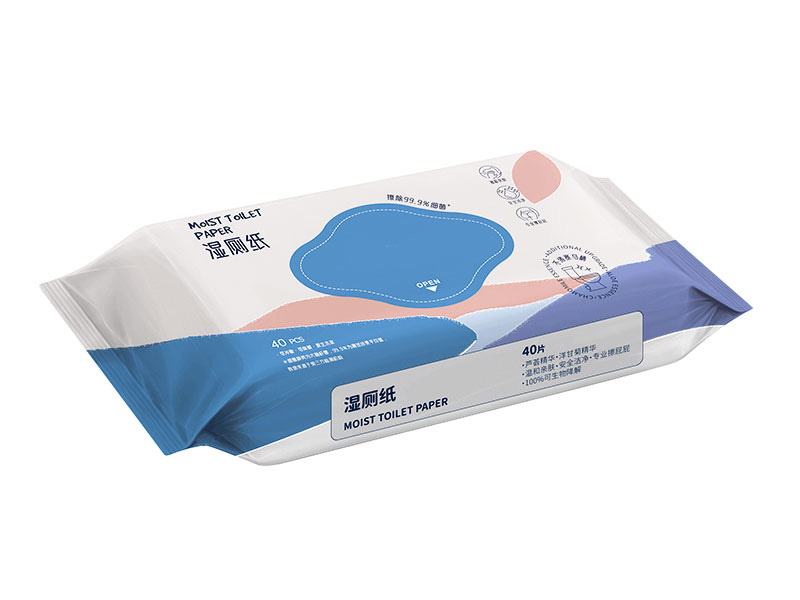
Flushable sanitizing wipes are developed to bridge this gap. They are cleaner and softer than traditional toilet paper and more disposal-friendly than ordinary non-flushable wet wipes. The product is made from plant fiber and wood pulp, materials selected to support softness, skin comfort, and dispersibility. The result is a wipe that offers a moist, comfortable, and hygienic cleansing experience while being suitable for flushing when used as directed.
The product also responds to broader lifestyle changes. People are more aware of personal hygiene than ever before. Parents want better solutions for children during toilet training. Adults want discreet freshness throughout the day. Elderly users and caregivers need products that make hygiene routines easier and more comfortable. Travelers want compact products that can be used away from home. In all these situations, flushable sanitizing wipes deliver clear practical value.
2. What Makes Flushable Sanitizing Wipes Different
The most important difference is the combination of moisture, softness, cleansing performance, and flushability. Many hygiene products perform well in one area but compromise in another. Dry toilet paper is flushable but lacks moist cleansing. Ordinary wet wipes are soft and moist but are often not suitable for flushing. Premium hygiene tissues may be soft but still cannot offer the same refreshing feeling as a wet wipe. Flushable sanitizing wipes are positioned as a more balanced solution.
The product content highlights several core characteristics: plant fiber and wood pulp material, safe use without unnecessary addition, flushable and soluble behavior, easy disposal in the toilet, pollution prevention, and hygiene-related functions such as disinfection, sterilization, deodorization, and health care support. These features make the product a creative upgrade to dry toilet paper and a strong alternative to traditional wet wipes.
The wipe’s material structure is critical. A flushable wipe must remain strong enough during use but weaken and disperse after flushing. This is a demanding technical balance. If the wipe is too weak, it tears during use. If it is too strong, it may not disperse adequately. The use of plant fiber and wood pulp helps create a material that can provide softness and reliable wiping performance while supporting breakdown after disposal.
The moist formula also matters. A well-designed flushable sanitizing wipe should feel comfortable on the skin, avoid harshness, and provide a fresh after-feel. It should help reduce odor and enhance the sense of cleanliness without leaving an unpleasant residue. For private label and OEM customers, formulation options can be customized based on market expectations, target users, packaging size, fragrance preference, and functional positioning.
3. Product Advantages Over Traditional Toilet Paper
Compared with dry toilet paper, flushable sanitizing wipes provide a noticeably more thorough cleaning effect. Moist cleansing helps lift away residue more effectively than dry wiping alone. This is particularly valuable after bowel movements, during menstruation, after exercise, in hot weather, or when users simply want a fresher feeling. The wipe does not merely absorb; it actively cleans.
Softness is another major advantage. Traditional toilet paper varies widely in quality. Low-grade paper can feel abrasive, while even high-grade paper can become uncomfortable after repeated wiping. Flushable wipes are designed to be softer and smoother, reducing friction and improving comfort. This makes them suitable for users with sensitive skin, families with children, elderly people, and anyone who prefers a gentler personal care product.
Moist wipes also help reduce the amount of wiping needed. Instead of using multiple sheets of dry paper, users may achieve a cleaner feeling with fewer wipe movements. This can improve convenience and reduce irritation. For many consumers, the experience of switching from dry toilet paper to wet toilet paper or flushable wipes is similar to upgrading from basic cleaning to more complete personal care.
Another advantage is odor management. Flushable sanitizing wipes can include deodorizing functions that support a fresher after-use feeling. Dry toilet paper cannot provide this same benefit. In private hygiene, the perception of freshness is important, and consumers increasingly expect products that go beyond basic cleaning.
Flushable wipes are also easy to use. They can be placed near the toilet like ordinary tissue, carried in travel packs, or supplied in family-size packaging. Their convenience encourages better hygiene habits because users can access a moist cleansing option whenever needed.
4. Product Advantages Over Ordinary Wet Wipes
Ordinary wet wipes are widely used for baby care, cleaning, cosmetics, travel, and household wiping, but many are not designed to be flushed. This is a key limitation in toilet hygiene applications. If a consumer uses an ordinary wet wipe in the bathroom, the wipe must usually be discarded in a waste bin. That may create odor, inconvenience, and hygiene concerns. If the consumer flushes it despite warnings, the wipe may create plumbing risks.
Flushable sanitizing wipes solve this problem by being designed for toilet disposal. Their biggest advantage is that they are flushable and soluble, allowing them to be thrown directly into the toilet under proper use conditions. This makes the bathroom routine cleaner and more convenient. Instead of handling used wipes separately, users can dispose of them in the same way as toilet paper.
The material selection also distinguishes flushable wipes from many standard wet wipes. Many conventional wipes use synthetic fibers or high-strength nonwoven structures that are designed for durability, not dispersibility. Flushable wipes require a different engineering approach. They must combine enough wet strength for use with the ability to break apart in water after disposal. Plant fiber and wood pulp materials support this balance.
From a market perspective, flushable sanitizing wipes occupy a premium and practical segment. They offer the comfort of wet wipes, the convenience of toilet paper, and the hygiene enhancement of sanitizing and deodorizing functions. This makes them attractive for retail brands, supermarkets, pharmacies, maternity and baby channels, healthcare supply chains, hospitality providers, and private label customers seeking differentiated products.
5. Material Engineering: Plant Fiber and Wood Pulp
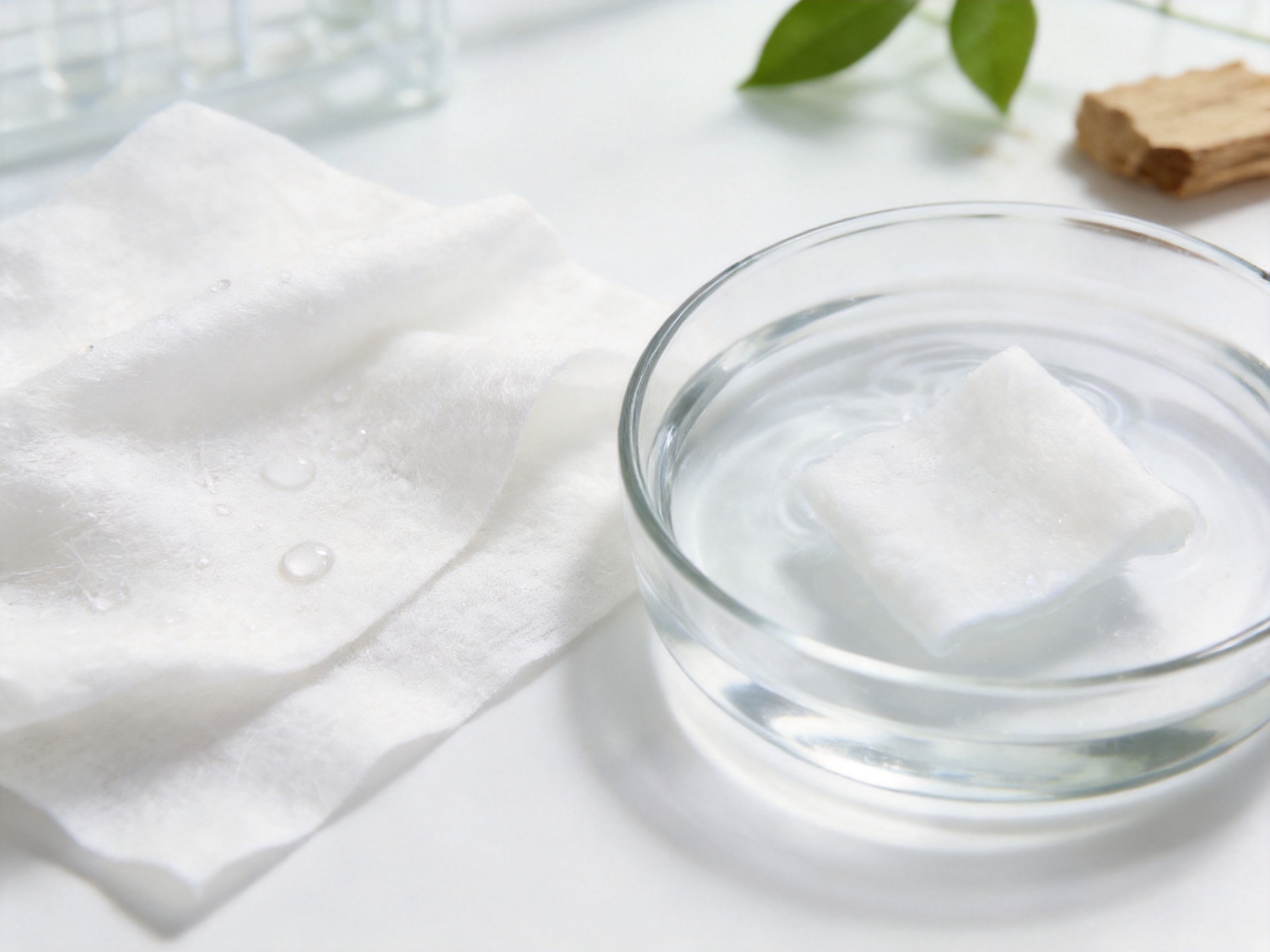
The choice of plant fiber and wood pulp is central to the product’s identity. These materials provide a natural-feeling hand touch, good liquid absorption, and comfort during use. Wood pulp contributes softness and absorbency, while plant fiber can support structure and dispersible performance. Together, they create a wipe substrate that is suitable for moist toilet hygiene and designed to dissolve or disperse after flushing.
Material engineering is not only about selecting ingredients. It also involves fiber length, bonding method, web formation, moisture distribution, tensile strength, thickness, texture, and dispersibility testing. A high-quality flushable wipe must be consistent from sheet to sheet. If some sheets are too weak, consumers will be dissatisfied. If others are too strong, flushability may be affected. This is why advanced manufacturing capability is important.
As a company with long-term experience in spunlace nonwoven fabrics, spunmelt nonwoven fabrics, hot air through nonwoven fabrics, and flushable and degradable nonwoven fabrics, Kingsafe & Uniquality has a deep material foundation. The group’s nonwoven knowledge supports the development of wipes that perform reliably in real use conditions. This is a meaningful advantage over suppliers that only convert purchased materials without strong control over material design.
The plant fiber and wood pulp structure also supports a clean product image. Consumers increasingly prefer hygiene products that avoid unnecessary additives and feel safe for daily use. A wipe that is soft, plant-based, and designed for responsible disposal fits well with this trend. For brands, this creates strong marketing value in categories such as family care, female care, senior care, and sustainable personal hygiene.
6. Flushability and Responsible Disposal
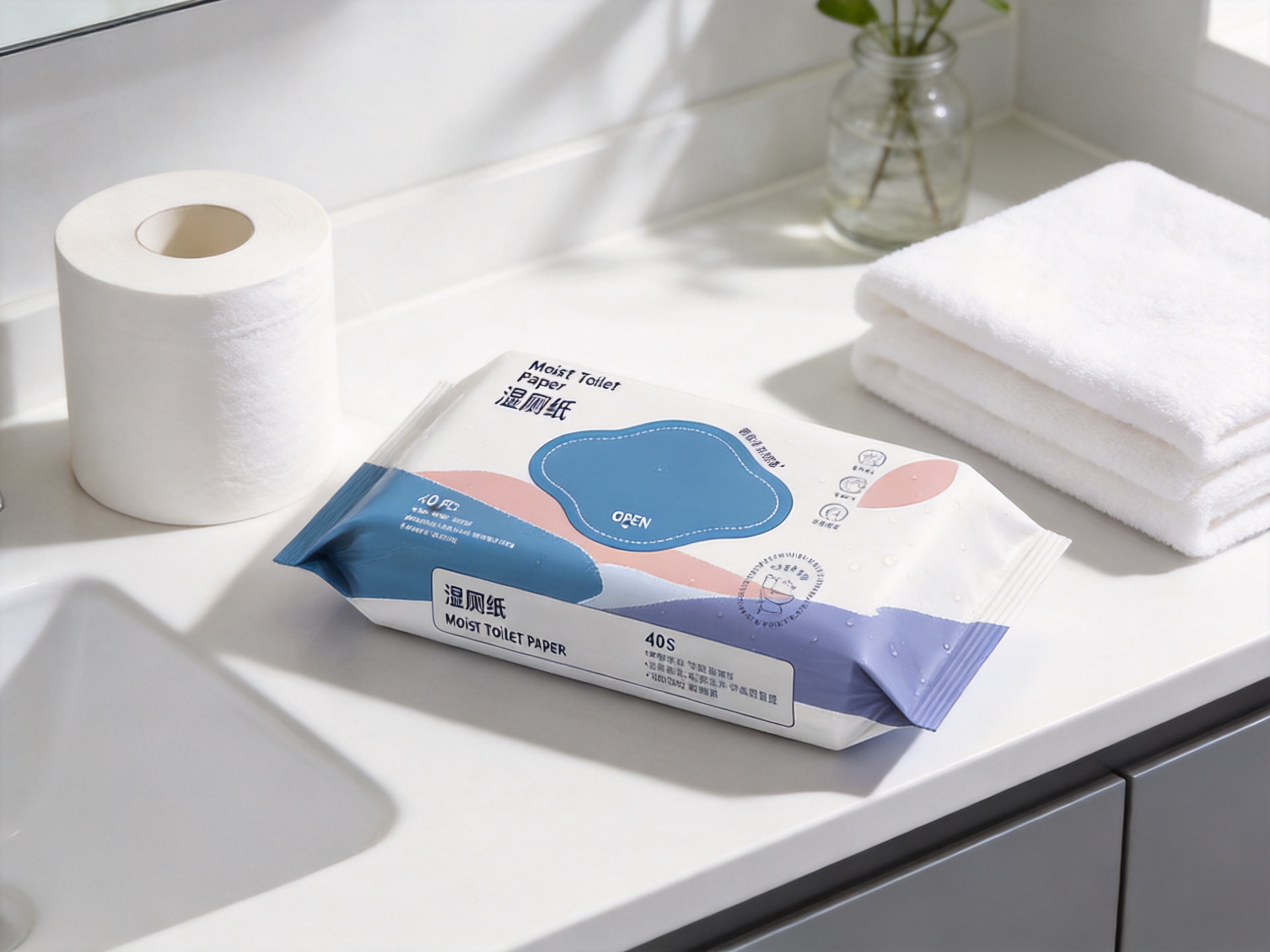
Flushability is one of the most important selling points of this product. The wipe is designed to be soluble and can be thrown directly into the toilet, making it convenient for bathroom use. However, responsible communication remains essential. Flushable products should be used according to package instructions, typically flushing one or a small number of sheets at a time depending on local plumbing conditions and product guidance.
A truly competitive flushable wipe must be evaluated not only by how it feels in the hand, but also by how it behaves after use. The wipe should retain integrity during wiping, then begin to lose strength and separate in water movement after flushing. This performance depends on raw material composition, fiber bonding, sheet density, moisture formula, and converting quality.
Compared with non-flushable wipes, flushable sanitizing wipes help reduce waste-bin disposal and improve bathroom hygiene. They can also support pollution prevention when designed with dispersible materials and used correctly. In many households, disposal convenience is a deciding factor. Users may like wet wipes, but they do not want used wipes sitting in a bathroom bin. Flushable wipes provide a cleaner alternative.
For private label customers, flushability can be a major product differentiator. Retail shelves often contain many wet wipe products that look similar. A product that clearly offers moist cleaning, softness, sanitizing support, odor control, and toilet disposal can stand out. It can be marketed as wet toilet paper, flushable cleansing wipes, personal hygiene wipes, bathroom wipes, or adult fresh wipes depending on regional market language.
7. Sanitizing, Deodorizing, and Health Care Support
The product content indicates that wet toilet paper has certain disinfection, sterilization, deodorization, and health care functions. In practical market terms, this means the product can be designed to support a cleaner and fresher hygiene experience. For daily toilet hygiene, users care about more than visible cleaning. They also want confidence, comfort, and odor control.
Sanitizing performance depends on formulation design and applicable regulatory requirements in the target market. A manufacturer with OEM and ODM capability can work with customers to develop formulas that fit local expectations, whether the focus is mild daily cleansing, deodorizing freshness, sensitive skin positioning, fragrance-free design, or more functional hygiene claims where permitted. The ability to customize formulas is especially valuable for international brands because requirements differ across countries and sales channels.
Deodorization is a practical feature with broad consumer appeal. After toilet use, menstruation, sports, or travel, a fresh feeling can improve comfort and confidence. Flushable sanitizing wipes can help remove odor-causing residue more effectively than dry paper and can leave a clean sensation. This makes them suitable for both men and women and for family bathrooms.
Health care support should also be understood through the lens of comfort. Excessive wiping with dry paper can cause friction discomfort. A soft moist wipe can reduce this friction and support gentler cleaning. For elderly users, people with limited mobility, postpartum users, and caregivers, this can make personal hygiene easier and more dignified.
8. A Creative Upgrade to Dry Toilet Paper
Wet toilet paper is often described as a creative upgrade to dry toilet paper because it changes the function of bathroom tissue from simple wiping to moist cleansing. This difference is easy for consumers to understand. People use water and moisture for cleaning in many parts of daily life; applying this concept to toilet hygiene feels natural and effective.
The upgrade is also emotional. Consumers do not simply buy hygiene products for technical reasons. They buy comfort, confidence, freshness, and peace of mind. Flushable sanitizing wipes offer a small but meaningful improvement in daily life. Once users experience the difference, many find it difficult to return to dry paper alone.
For brands and retailers, this creates strong repeat-purchase potential. Bathroom hygiene is a daily need, and products that improve comfort can become part of a routine. Flushable wipes can be positioned as a complementary product used together with dry toilet paper or as a premium alternative for users who want a complete clean.
In competitive markets, the product can be differentiated through sheet size, thickness, embossing, fragrance, skin-friendly ingredients, pack design, lid type, travel format, family pack format, and private label branding. This flexibility makes it suitable for many distribution channels, including supermarkets, online stores, pharmacies, maternity and baby stores, hotels, care institutions, and export markets.
9. Manufacturing Strength Behind the Product
A key advantage of these flushable sanitizing wipes is the manufacturing background behind them. Zhejiang Uniquality Nursing Products Technology Co., Ltd. is connected with Kingsafe & Uniquality, a national high-tech enterprise founded in 1987 and specialized in research, development, production, and sales of medical and hygienic nonwoven materials, nursing products, and high-end clothing interlining. More than 30 years of development has created a strong industrial foundation.
The company is headquartered in Changxing, Huzhou, in the Yangtze River Delta region, an area known for convenient land, sea, and air transportation. This location supports efficient logistics, export operations, supplier coordination, and customer service. The company has also established multiple production bases in locations such as Foshan in Guangdong, Nantong in Jiangsu, and Wuhan in Hubei, creating a broad manufacturing network.
Scale matters in hygiene product manufacturing. Large-scale operations can provide stable output, better cost control, stronger procurement capability, and more reliable delivery. For private label wipes, diapers, and nursing products, customers need suppliers who can maintain consistency across orders and respond to changing demand. A manufacturer with multiple bases and decades of production experience offers clear supply-chain advantages.
The company has ranked among the top enterprises in China’s nonwovens industry for many consecutive years and has been listed among leading global nonwoven manufacturers. This industry position reflects strong technical accumulation and production capacity. For flushable sanitizing wipes, such background is valuable because the product depends heavily on nonwoven substrate performance.
10. Advanced International Equipment and Process Capability
Kingsafe introduced advanced production equipment and technology from Germany, France, and Italy. This matters because the quality of nonwoven hygiene products depends heavily on equipment precision, web uniformity, liquid application accuracy, cutting stability, folding consistency, packaging integrity, and process control. Advanced equipment helps reduce variation and supports consistent quality at scale.
In flushable wipe production, process control is especially important. The substrate must have the right strength profile. The liquid must be applied evenly. The sheet must be cut cleanly. The folding pattern must allow easy extraction. The packaging must preserve moisture and prevent contamination. Each step affects consumer experience.
Advanced production lines also support customization. OEM and ODM customers may require different sheet dimensions, fabric weights, moisture levels, packaging materials, lid styles, printing designs, carton specifications, and formula options. A strong manufacturing system can adapt to these requirements while maintaining efficiency. This is a major advantage over smaller suppliers with limited equipment flexibility.
The company’s product range covers spunlace nonwoven fabrics, spunmelt nonwoven fabrics, hot air through nonwoven fabrics, flushable and degradable nonwoven fabrics, wet wipes, dry wipes, baby diapers, pull-ups, wet toilet paper, and cleansing wipes. This wide product portfolio shows cross-category expertise. Knowledge gained in baby care, medical hygiene, maternal care, beauty, home cleaning, and industrial cleaning can be applied to improve personal hygiene wipes.
11. Quality Consistency and Product Reliability
Flushable sanitizing wipes must perform reliably every time. Consumers expect each sheet to feel soft, remain moist, pull out smoothly, clean effectively, and flush properly. If a wipe tears too easily, dries out, smells unpleasant, or fails to dispense, trust is lost quickly. Therefore, quality consistency is not optional; it is the foundation of brand loyalty.
Strong manufacturers manage quality through raw material selection, incoming inspection, process monitoring, moisture control, hygiene management, packaging checks, and finished product evaluation. For flushable wipes, additional attention must be paid to dispersibility and wet strength balance. The manufacturer’s nonwoven experience supports these controls because substrate performance is at the heart of the product.
Private label customers benefit from this reliability. When a retailer or brand places its name on a hygiene product, any quality issue can affect reputation. Working with an experienced OEM and ODM factory reduces risk. The supplier can help refine specifications, recommend suitable material structures, optimize formula choices, and support stable mass production.
The company’s long-term cooperation with well-known domestic and international brands further indicates its ability to meet demanding customer expectations. Brand customers typically require stable quality, responsive service, confidentiality, packaging accuracy, and delivery discipline. These same strengths support the production of flushable sanitizing wipes for different global markets.
12. OEM and Private Label Opportunities
Flushable sanitizing wipes are highly suitable for OEM and private label development. The category is growing because consumers are upgrading from dry toilet paper and seeking more hygienic, comfortable bathroom solutions. Retailers, distributors, and brand owners can create differentiated products by adjusting material, formula, packaging, positioning, and target user groups.
Private label wipes can be developed for many market segments. A family bathroom wipe can emphasize daily freshness and gentle cleaning. A sensitive skin version can focus on mild ingredients and fragrance-free comfort. A travel pack can emphasize portability and convenience. A female care version can highlight freshness during menstruation and daily personal care. A senior care version can focus on softness, ease of use, and dignity in personal hygiene. A premium version can use thicker material, elegant packaging, and enhanced deodorizing performance.
Zhejiang Uniquality Nursing Products Technology Co., Ltd. provides OEM and ODM support for wet and dry wipes, diapers, growing training pants, and related nursing products. This capability allows customers to build broader hygiene product lines from one manufacturing partner. A brand may launch flushable wipes together with baby wipes, dry wipes, diapers, pull-ups, or feminine care products, creating a unified retail portfolio.
Customization also extends to packaging. Flushable wipes can be supplied in soft packs with resealable labels, packs with plastic lids, travel sachets, family-size packs, refill packs, or multi-pack cartons. Packaging design affects shelf appeal, moisture retention, user convenience, and logistics cost. An experienced manufacturer can help customers select formats that match channel requirements and price targets.
13. Competitive Comparison
The following table summarizes how flushable sanitizing wipes compare with common alternatives in the hygiene market.
| Product Type | Main Strength | Main Limitation | Advantage of Flushable Sanitizing Wipes |
|---|---|---|---|
| Traditional dry toilet paper | Low cost and easy flushing | Dry cleansing, friction, less freshness | Provides moist, soft, and more thorough cleaning while remaining flushable |
| Ordinary wet wipes | Moist and comfortable | Often not suitable for toilet flushing | Combines wet wipe comfort with toilet disposal convenience |
| Premium bathroom tissue | Soft texture and familiar use | No sanitizing or deodorizing function | Adds cleansing liquid, freshness, and hygiene support |
| Baby wipes | Gentle and widely available | Usually designed for bin disposal, not toilet flushing | Designed specifically for bathroom use and flushable disposal |
| Low-cost private label wipes | Competitive price | May lack material consistency and advanced dispersibility design | Supported by advanced nonwoven manufacturing and customizable quality control |
This comparison shows why flushable sanitizing wipes can occupy a strong market position. They are not merely another wet wipe; they are a bathroom hygiene solution that addresses the weaknesses of multiple competing products.
14. Applications in Daily Life
Flushable sanitizing wipes can be used in many daily scenarios. In family bathrooms, they provide a cleaner option after toilet use. Parents can place them near the toilet to help children develop better hygiene habits during toilet training. Adults can use them for a fresher feeling before work, after exercise, or before social occasions.
For women, flushable wipes can support freshness during menstruation, after long travel, or during warm weather. For men, they provide a more comfortable and thorough cleansing routine than dry paper alone. For elderly users, they can reduce friction and make personal care easier. For caregivers, they offer convenience and dignity when assisting others.
In commercial settings, hotels, office buildings, airports, healthcare facilities, and senior care centers can provide flushable wipes as a premium hygiene amenity. Guests and users increasingly appreciate thoughtful hygiene products. A small addition to the bathroom can improve the perceived quality of a facility.
Travel is another important application. Compact packs of flushable sanitizing wipes are useful on flights, road trips, outdoor activities, business travel, and family vacations. Public restrooms may not always provide high-quality toilet paper or a comfortable cleaning experience. Portable wipes give users control over their hygiene wherever they go.
15. Comfort for Sensitive Users
Skin comfort is a major reason consumers choose wet toilet paper and flushable wipes. The perianal area is sensitive, and repeated dry wiping can cause irritation. Moist, soft wipes reduce friction and can help users feel clean with less rubbing. This is especially important for children, elderly people, postpartum users, and individuals who experience sensitivity from rough toilet paper.
The plant fiber and wood pulp composition contributes to a gentle touch. A well-designed wipe should feel smooth and comfortable, not harsh or overly wet. Moisture level must be carefully controlled: too little liquid reduces cleansing performance, while too much liquid can feel messy or cause dripping. Manufacturing precision helps achieve the right balance.
For sensitive skin markets, fragrance-free or mild-formula versions may be developed. Customers may also request specific ingredient positioning such as alcohol-free, gentle cleansing, or dermatologically inspired formulas, depending on regulatory and market requirements. The manufacturer’s customization ability supports these variations.
Comfort also includes emotional comfort. Users want confidence that the product is safe, clean, and reliable. Stable manufacturing, hygienic production environments, and consistent packaging all help build that confidence. For personal care items used in intimate areas, trust is particularly important.
16. Environmental and Practical Responsibility
The product content emphasizes that flushable wipes can help prevent pollution and align with the mainstream trend of environmental protection. This reflects a broader consumer preference for hygiene products that are convenient but also more responsible. Plant fiber and wood pulp materials, flushable and soluble design, and degradable nonwoven technology all contribute to this positioning.
Environmental responsibility in disposable hygiene products is complex. Consumers need convenience, but they also want to reduce unnecessary impact. Flushable wipes address part of this challenge by offering a product designed for dispersible disposal rather than ordinary synthetic wet wipes that may remain intact. For brands, clear instructions and responsible claims are important. The product should be marketed honestly, with guidance on proper flushing and storage.
The company’s experience in flushable and degradable nonwoven fabrics supports ongoing improvement in this area. Material innovation can help create products that perform better while meeting evolving consumer expectations. As markets place more attention on sustainability, suppliers with strong research and development capabilities will be better positioned to adapt.
Practical responsibility also means designing products that people will actually use correctly. If a wipe is convenient, flushable, and clearly labeled, users are less likely to dispose of it improperly. If packaging keeps wipes moist and easy to extract, waste may be reduced. If sheet strength is consistent, users may need fewer sheets. These small details contribute to a better overall product.
17. The Role of Research and Development
Research and development is essential in the flushable wipes category because consumer expectations are demanding and sometimes conflicting. Users want softness, strength, moisture, freshness, safety, and flushability all at once. Achieving this balance requires experimentation with fiber composition, web formation, bonding strength, liquid formulation, packaging, and performance testing.
Kingsafe & Uniquality’s long experience in nonwoven materials gives it a strong R&D platform. The company works across medical, maternal and baby, beauty, home, industrial cleaning, clothing, and other fields. This wide exposure helps its teams understand different performance needs. For example, baby care requires softness and safety; medical hygiene requires cleanliness and consistency; industrial cleaning requires strength; flushable wipes require dispersibility. Combining knowledge across these fields can improve product development.
R&D also supports customer differentiation. In private label markets, copying a basic product is rarely enough. Brands need unique value propositions. One customer may want a premium thick wipe with a luxury feel. Another may want a cost-effective family pack. Another may want an eco-positioned wipe with plant-based messaging. Another may need a specific formula for regional preferences. A strong R&D team can translate these ideas into manufacturable products.
As consumer habits evolve, flushable sanitizing wipes may continue to develop. Future improvements may include enhanced dispersibility, improved packaging recyclability, more skin-friendly formulas, better moisture retention, and more precise functional claims. Manufacturers with deep technical foundations will be able to lead these changes rather than follow them.
18. Supply Chain and Delivery Advantages
A great product also needs a reliable supply chain. Retailers and brand owners cannot afford frequent shortages, delayed shipments, or inconsistent batches. The company’s multiple production bases and location in the Yangtze River Delta support strong logistics capability. Access to convenient transportation helps serve both domestic and international customers.
For export customers, supply chain strength includes documentation support, packaging compliance, carton design, pallet loading, production scheduling, and communication. OEM and ODM projects often involve multiple rounds of artwork confirmation, sample evaluation, formula discussion, and packaging testing. Experienced manufacturers are better equipped to manage this process smoothly.
Large-scale production also provides flexibility. Demand for hygiene products can change quickly due to seasonal peaks, promotional campaigns, online sales events, or public health concerns. A supplier with significant manufacturing capacity can respond more effectively than a small factory operating near its limit. This is a meaningful competitive advantage for brands planning growth.
Procurement strength is another benefit. A major nonwoven manufacturer can better coordinate raw material supply and control quality from upstream to downstream. Since flushable wipes depend heavily on substrate performance, access to material expertise and supply stability is especially important.
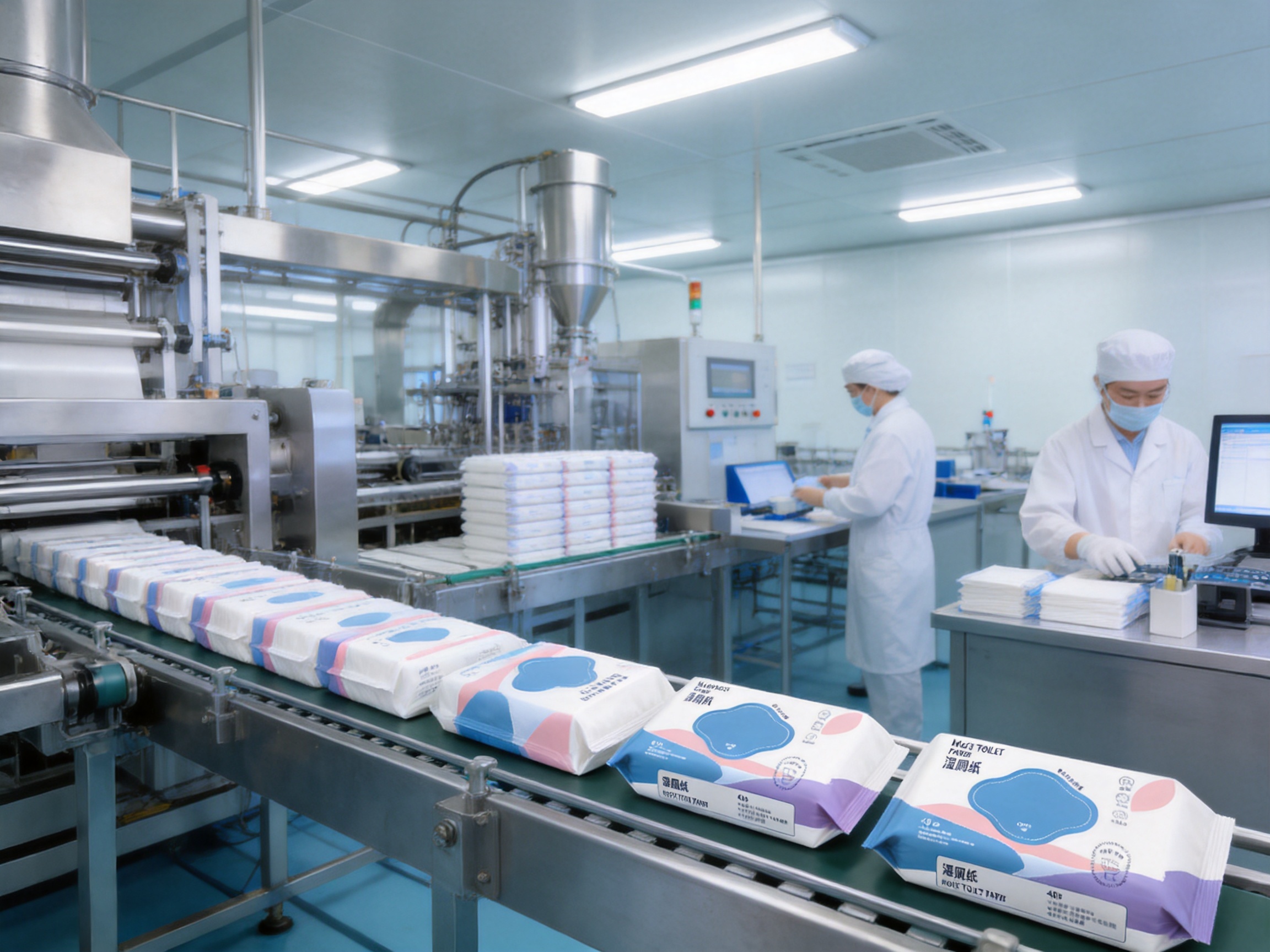
19. Packaging, Storage, and User Experience
Packaging plays a major role in the success of flushable sanitizing wipes. The pack must keep the wipes moist from first use to last use. It must open and close easily. It must dispense one sheet smoothly without causing multiple wipes to pull out unnecessarily. It must protect the product during transport and look attractive on shelf or online.
Soft packs with resealable labels are common and cost-effective. Packs with plastic lids offer better opening convenience and moisture retention, especially for family bathrooms. Travel packs provide portability. Refill packs can serve users who prefer to place wipes in a dispenser. Multi-pack formats are useful for warehouse clubs, online retail, and family shopping.
Sheet size and fold pattern also affect user experience. A wipe that is too small may require multiple sheets. A wipe that is too large may feel wasteful or be less suitable for flushing. The fold must allow easy extraction, especially when users are in the bathroom and need quick access. Manufacturing precision helps ensure that the pack performs consistently.
For private label brands, packaging design is also a communication tool. It can highlight softness, flushability, plant fiber material, deodorizing freshness, gentle cleansing, family use, travel convenience, or OEM quality. Clear instructions are important to guide proper use and disposal. The best packaging combines attractive design with practical education.
20. Why Manufacturing Experience Matters More in Flushable Wipes
Some disposable hygiene products are relatively simple to produce, but flushable wipes are technically demanding. The reason is that the product must behave differently in different environments. During storage, it must remain moist and stable. During use, it must stay intact. After flushing, it must disperse. This is a complex performance profile.
Manufacturers without strong material expertise may produce wipes that feel acceptable but lack consistent dispersibility. Others may focus too much on dispersibility and produce sheets that tear too easily. The best products achieve balance. This balance comes from experience in fiber selection, nonwoven technology, process control, and testing.
Kingsafe & Uniquality’s long history in nonwoven materials provides an advantage here. The company is not only a converter of finished wipes; it has deep experience in nonwoven fabric categories and nursing products. This integrated knowledge helps optimize the wipe from the substrate upward.
For customers, choosing such a supplier can reduce development time and risk. Instead of starting from trial and error, customers can rely on an experienced partner with established product platforms and customization options. This is especially valuable for brands entering the flushable wipes market for the first time.
21. Market Positioning and Brand Differentiation
Flushable sanitizing wipes can be positioned in several ways depending on market strategy. As a premium bathroom hygiene product, they appeal to consumers who want comfort and freshness. As wet toilet paper, they can be marketed as a natural upgrade from dry tissue. As personal cleansing wipes, they can target active lifestyles, travel, and daily confidence. As family hygiene wipes, they can emphasize convenience for all ages.
Retail pricing can also vary. A basic private label version can compete in value channels, while a premium version can use thicker material, enhanced packaging, and refined formulas. Online channels may favor multi-pack bundles, while pharmacies may prefer sensitive-skin positioning. Hotels and care institutions may require bulk packaging or customized specifications.
Brand differentiation can be built around several product features: plant fiber and wood pulp material, soft touch, flushable disposal, soluble design, deodorizing freshness, hygienic cleansing, OEM quality, and environmental awareness. These benefits should be communicated clearly and honestly. Consumers need to understand why the product is different from ordinary wet wipes and why it is worth adding to their routine.
Because the company supports OEM and ODM production, brand owners can develop exclusive product concepts. This may include unique embossing, custom fragrance, special pack artwork, different sheet counts, and tailored claims. Strong manufacturing support allows customers to create products that match their brand identity rather than accepting a generic solution.
22. Practical Use Guidance
To get the best experience from flushable sanitizing wipes, users should keep the package sealed after each use to maintain moisture. The wipes should be stored in a cool, clean place away from direct heat. Users should follow the flushing instructions on the package and avoid flushing excessive quantities at once. Proper use helps preserve both product performance and plumbing convenience.
The wipes can be used after toilet paper or as a standalone moist cleansing step depending on personal preference. Many consumers use dry toilet paper first and then finish with a flushable wipe for a cleaner feeling. Others use the wipe directly when they need softness and freshness. The product is flexible enough to fit different routines.
For children, parents should supervise proper use and teach correct flushing habits. For elderly users or care settings, caregivers should ensure that wipes are accessible and packages remain sealed. For travel, small packs can be carried in bags, cars, backpacks, or luggage.
Because the product is intended for personal hygiene, users should avoid using damaged or dried-out wipes. Packages should be closed tightly to prevent moisture loss. If a customer requires a special formula for sensitive users, private label development can include mild or fragrance-free options based on market needs.
23. Q&A Section
Q1: What are flushable sanitizing wipes used for?
Flushable sanitizing wipes are used for moist personal cleansing after toilet use and for daily freshness. They provide a softer and cleaner experience than traditional dry toilet paper and can support deodorizing and hygienic cleansing functions.
Q2: How are they different from ordinary wet wipes?
Ordinary wet wipes are often not designed to be flushed. Flushable sanitizing wipes are made with dispersible materials such as plant fiber and wood pulp, allowing them to be thrown directly into the toilet when used according to product instructions.
Q3: Why are they considered an upgrade to dry toilet paper?
They add moisture, softness, and cleansing power. Dry toilet paper mainly wipes, while flushable wipes help clean more thoroughly, reduce friction, and leave a fresher feeling.
Q4: Are the wipes soft enough for sensitive skin?
The wipes are designed to be soft and comfortable, using plant fiber and wood pulp materials. For private label projects, formulas can be customized for sensitive-skin positioning, including mild or fragrance-free options where required.
Q5: Can the product be customized for private label brands?
Yes. Zhejiang Uniquality Nursing Products Technology Co., Ltd. supports OEM and ODM production for wet wipes, dry wipes, diapers, training pants, and related nursing products. Customization can include material, sheet size, formula, fragrance, packaging, sheet count, and brand artwork.
Q6: What manufacturing strengths support the product?
The product is supported by decades of nonwoven material experience, advanced equipment and technology introduced from Germany, France, and Italy, multiple production bases, strong R&D capability, and broad experience in hygiene and nursing products.
Q7: Why is plant fiber and wood pulp important?
Plant fiber and wood pulp help create a wipe that is soft, absorbent, comfortable, and suitable for dispersible flushable design. These materials support the balance between strength during use and breakdown after flushing.
Q8: Who can benefit from using flushable sanitizing wipes?
Families, children, adults, elderly users, travelers, office workers, postpartum users, and caregivers can all benefit. The product is especially useful for people who want a cleaner, softer, and more convenient bathroom hygiene routine.
24. Conclusion
Flushable sanitizing wipes represent a meaningful step forward in personal hygiene. They address the shortcomings of traditional dry toilet paper by providing moist, soft, and more thorough cleaning. They also improve upon ordinary wet wipes by offering flushable and soluble disposal convenience. With plant fiber and wood pulp materials, deodorizing and hygiene-supporting functions, and a comfortable user experience, they meet the needs of modern consumers who expect more from everyday bathroom products.
The product’s competitive value is strengthened by the manufacturing capabilities behind it. Zhejiang Uniquality Nursing Products Technology Co., Ltd. and Kingsafe & Uniquality bring decades of experience in nonwoven materials, nursing products, wet wipes, dry wipes, diapers, pull-ups, wet toilet paper, and cleansing wipes. Advanced production equipment from Germany, France, and Italy, multiple production bases, strong R&D capacity, and OEM/ODM flexibility allow the company to support brands with reliable, customizable, and market-ready solutions.
For consumers, flushable sanitizing wipes offer comfort, freshness, and convenience. For retailers and private label brands, they offer a high-potential category with strong differentiation. For hygiene product markets, they represent the continued evolution from basic wiping to more complete personal care. As daily hygiene standards continue to rise, flushable sanitizing wipes are well positioned to become an essential product in modern bathrooms around the world.
References
1. EDANA and INDA. Guidelines for Assessing the Flushability of Disposable Nonwoven Products.
2. INDA. Nonwoven Fabrics Handbook: Material Properties, Production Processes, and Applications.
3. Smithers. The Future of Global Nonwovens to 2028.
4. Euromonitor International. Tissue and Hygiene Products: Global Market Trends and Consumer Behavior.
5. ASTM International. Standard Test Methods Related to Nonwoven Fabrics and Absorbent Hygiene Products.
6. World Health Organization. Guidelines on Hygiene, Sanitation, and Public Health Practices.