中文简体
中文简体 English
 日本語
日本語 русский
 Español
Compressed towels have become an increasingly important product in travel, hospitality, personal care, beauty, maternal and baby care, outdoor recreation, healthcare support, and emergency hygiene scenarios. Their appeal is simple: a towel can be compressed into a compact tablet or small block, stored conveniently, expanded with water, and used as a clean disposable textile. Behind this convenient consumer experience is a material that must balance softness, absorbency, strength, compression recovery, skin comfort, hygiene, and processing stability. Triple-carding spunlace nonwoven fabric is designed to meet these requirements with a combination of advanced web-forming technology and hydroentanglement performance.
The product discussed in this article is a triple-carding spunlace nonwoven fabric developed for compressed towel applications. It uses viscose and other customizable fiber blends, applies triple-carding technology, supports a gram weight range from 40 g to 100 g, and can be supplied in roll widths from 10 cm to 320 cm. It can also be finished with hydrophilic, coating, antistatic, and other functional treatments according to the needs of converters and private-label customers. Compared with ordinary compressed towel substrates, this fabric is engineered to provide a more fluffy and soft hand feel while improving lateral strength, which makes it a strong option for manufacturers seeking quality, consistency, and cost effectiveness.
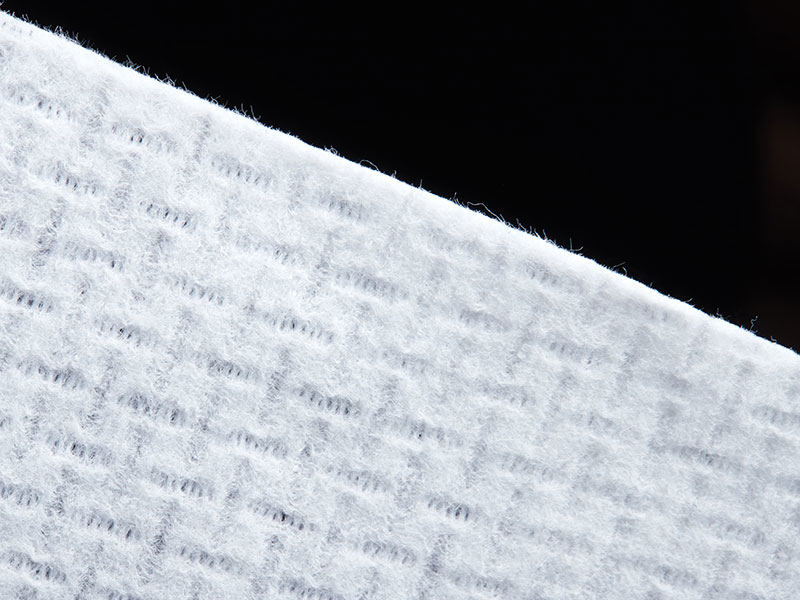
Triple-Carding Spunlace Nonwoven Fabric For Compressed Towel
Why Material Choice Matters in Compressed Towels
A compressed towel may look like a simple product, but the user’s satisfaction depends heavily on the base fabric. If the fabric is too thin, it may tear during expansion or use. If it is too stiff, it may feel unpleasant on the skin. If it lacks absorbency, it will not open quickly or perform well after wetting. If it lacks uniformity, compression and tablet-forming processes may become unstable. Therefore, the performance of compressed towels begins long before the final towel is packaged; it begins with the nonwoven fabric structure.
Traditional reusable towels can retain moisture for long periods, which may encourage odor and microbial growth if they are not washed and dried properly. In contrast, compressed towels are typically designed for single-use or limited-use occasions, providing a clean towel experience whenever and wherever users need it. This makes them especially attractive for travel, hotels, spas, salons, airlines, camping, gyms, offices, and emergency kits. However, disposable convenience should not come at the expense of comfort. Users still expect a towel that opens easily, feels soft, wipes effectively, and maintains integrity during use.
Triple-carding spunlace nonwoven fabric addresses these expectations by improving the foundation of the towel. Through a combination of ordinary carding, airflow web formation, and spunlace bonding, the fabric can achieve a balanced structure that is fluffy, soft, and strong. The result is a towel substrate that can be compressed efficiently but still regain volume after wetting. For converters, this means fewer complaints related to tearing, poor expansion, roughness, or weak hand feel. For brands, it means a better consumer experience and a more reliable product identity.
Product Overview
Triple-carding spunlace nonwoven fabric for compressed towels is a specialized material designed to support hygiene, portability, softness, and strength. It is especially suitable for the production of compressed towel tablets, travel towels, disposable face towels, guest towels, promotional towels, beauty towels, outdoor towels, and other compact personal-care textiles.
The fabric’s core advantage comes from its triple-carding process. Conventional carded spunlace fabrics may provide acceptable softness and absorbency, but they can sometimes show limitations in cross-direction strength, bulk, or uniformity, especially when used in compressed towel formats. By introducing triple-carding technology, including ordinary carding into web and airflow into web technology, the fabric gains a more three-dimensional, fluffy structure while maintaining the durability needed during compression, expansion, and wiping.
The fiber composition can be customized. Viscose is commonly valued for its absorbency and skin-friendly softness, while other fibers can be blended to adjust strength, cost, drying properties, softness, or specific functional performance. The available gram weight range of 40 g to 100 g allows manufacturers to choose lighter or heavier towel specifications depending on their target market. Light grades may suit promotional or travel-use towels, while heavier grades may be preferred for premium hospitality, spa, beauty, or household applications.
Item |
Specification |
Value for Compressed Towel Manufacturing |
Composition |
Viscose and other customizable blends |
Enables adjustment of softness, absorbency, strength, and cost structure |
Technology |
Triple-carding spunlace |
Improves fluffy hand feel and lateral strength compared with ordinary structures |
Pattern |
EF |
Supports practical wiping performance and attractive fabric texture |
Gram Weight |
From 40 g to 100 g |
Allows product positioning from economical to premium compressed towels |
Roll Width |
From 10 cm to 320 cm |
Suitable for different converting lines, cutting sizes, and production layouts |
Finishing Technology |
Hydrophilic, coating, antistatic, and other options |
Provides added functionality according to customer and market requirements |
Main Usage |
Compressed towel |
Optimized for compact compression, quick expansion, softness, and practical use strength |
The Triple-Carding Advantage
The term “triple-carding” describes a web-forming concept that is more advanced than a simple single-layer or ordinary carded structure. In nonwoven production, carding aligns and distributes fibers into a web. The quality of this web influences nearly every downstream property, including strength, texture, thickness, uniformity, and absorbency. In a compressed towel substrate, these properties are particularly important because the fabric is subjected to mechanical compression and later expected to recover after water activation.
Triple-carding technology combines ordinary carding into web and airflow into web methods. Ordinary carding helps distribute fibers and form a stable web, while airflow web formation contributes to a more open, lofty, and fluffy structure. This combination helps the fabric achieve a softer, fuller touch without sacrificing usability. The material feels more cushion-like than many conventional alternatives, which is important for towels used on the face, hands, or body.
Another critical benefit is lateral strength. Many nonwoven fabrics naturally show differences between machine direction and cross direction. If cross-direction strength is weak, the towel may tear when users pull it open after expansion or wipe with it in multiple directions. Triple-carding helps improve the lateral performance of the fabric, supporting a more balanced strength profile. This is especially valuable for compressed towels because users may unfold them quickly, stretch them, wring them, or use them for cleaning motions that place stress across the width of the material.
The result is a fabric that offers both comfort and practical durability. Many competitors must choose between softness and strength; increasing softness can sometimes reduce stability, while increasing strength can sometimes create stiffness. Triple-carding spunlace technology provides a better balance. It delivers a pleasant, fluffy hand feel while preserving enough strength for real-world towel use.
Spunlace Technology and Its Role in Performance
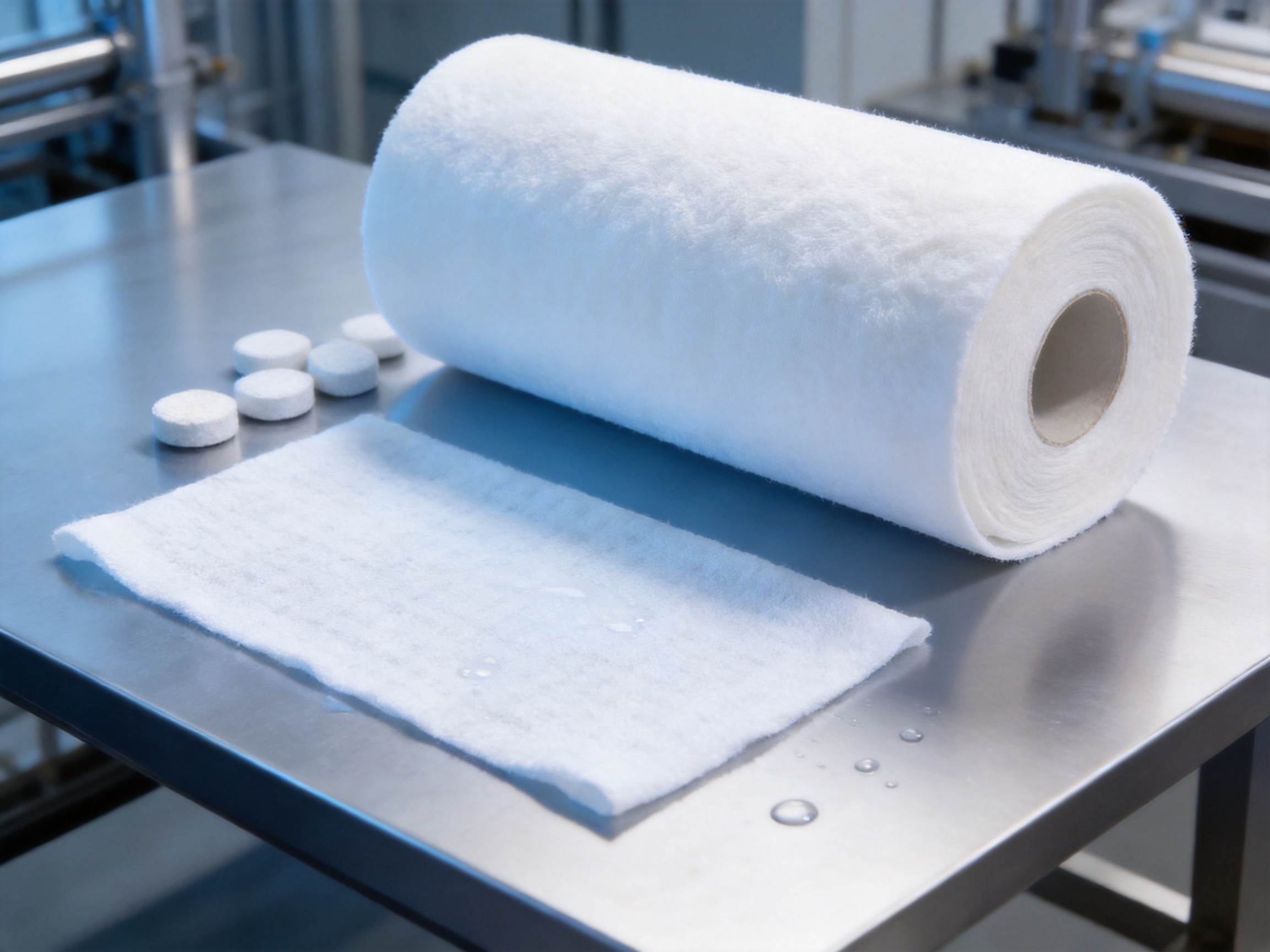
Spunlace, also known as hydroentanglement, uses high-pressure water jets to entangle fibers and create a bonded nonwoven fabric. Unlike some bonding methods that require binders, thermal points, or adhesive-heavy systems, spunlace bonding can create a soft and textile-like material. This makes it especially suitable for hygiene and personal-care products where skin contact is important.
For compressed towels, spunlace technology contributes to a natural drape, low lint tendency, and comfortable feel. The water-jet bonding process can create a fabric that is cohesive yet flexible. Users experience the towel as a soft sheet rather than a paper-like wipe. This distinction is important in premium compressed towel markets, where the product is expected to feel closer to a textile towel while still offering disposable hygiene and portability.
Spunlace performance also supports liquid management. When a compressed towel is activated with water, the fabric must absorb moisture quickly and open from its compressed state. Hydrophilic finishing can further improve this behavior, helping the towel expand efficiently and feel ready to use in a short time. A towel that requires too much water, takes too long to unfold, or remains stiff after wetting can disappoint users. A well-engineered spunlace fabric avoids these problems by combining absorbent fibers with an optimized web structure.
In addition, spunlace technology supports clean and versatile converting. Fabric rolls can be slit, cut, folded, compressed, and packaged according to the final product design. The wide roll-width range from 10 cm to 320 cm gives converters flexibility. Small widths may be useful for narrow-format products or specialized production lines, while wider rolls support efficient cutting and large-scale production.
Softness, Fluffiness, and Skin Comfort
Softness is one of the most visible quality indicators in a compressed towel. Consumers may not understand fiber composition or web-forming technology, but they immediately notice whether a towel feels gentle or rough. A compressed towel used for face cleansing, baby care support, beauty routines, or hospitality must offer a skin-friendly touch. The triple-carding structure helps create this soft experience by building a fluffy web that has more volume and cushion.
Fluffiness also improves perceived quality. When the compressed tablet expands, a towel that opens into a thin, flat, lifeless sheet can feel cheap. A towel that expands into a fuller sheet feels more premium and more useful. The additional bulk created by triple-carding can make the towel more pleasant to hold and more effective in wiping applications. It gives the material a textile-like character, which is an important competitive advantage in markets where users compare compressed towels with traditional cotton towels, facial towels, and wet wipes.
Viscose contributes significantly to this comfort. Known for its softness and absorbency, viscose can give the fabric a smooth and gentle hand feel. When blended with other fibers, it can be tuned to achieve a desired balance of softness, strength, and cost. This customization makes the fabric suitable for many market segments, from economical disposable towels to premium private-label compressed towels.
Strength and Durability During Real Use
Compressed towels must withstand several mechanical challenges. During manufacturing, the fabric may be unwound, cut, folded, compressed, and packed. During use, the consumer adds water, waits for expansion, unfolds the towel, and then wipes, pats, cleans, or dries surfaces or skin. Weak fabric may tear during any of these steps. A towel that breaks during unfolding or leaves fragments during wiping can damage brand reputation.
The triple-carding process improves lateral strength, making the fabric more resilient in cross-direction stress. This matters because users do not always pull or wipe in the machine direction. They may stretch the towel horizontally, twist it, or scrub with it. Enhanced lateral strength reduces the risk of tearing and supports a more dependable user experience.
Durability does not mean harshness. The fabric is designed to remain soft while gaining better cross-direction integrity. This balance helps manufacturers compete with lower-cost substrates that may be acceptable for basic wiping but lack premium feel or stable performance. It also helps compete with thicker but less efficient materials, because a well-structured triple-carding fabric can provide strength and bulk without unnecessary weight.
Absorbency and Expansion Performance
A compressed towel is only convenient if it opens quickly and reliably after water is added. Absorbency is therefore a central performance requirement. The use of viscose and hydrophilic finishing options helps the towel take up water efficiently. When the compressed tablet contacts water, liquid can penetrate the structure, loosen the compression, and allow the fabric to unfold.
The fluffy architecture produced by triple-carding also supports expansion. A highly compacted towel must recover enough volume to feel comfortable and usable. If the structure is too dense or poorly bonded, it may open unevenly or remain stiff. If it is too weak, it may separate when wet. Triple-carding spunlace fabric provides an optimized balance: enough openness for water penetration and softness, enough entanglement for strength, and enough structural recovery for a satisfying expansion effect.
For brand owners, expansion performance is a powerful selling point. Consumers often judge a compressed towel within seconds of adding water. A towel that expands smoothly creates a positive first impression and reinforces the idea of cleanliness, convenience, and quality. This can encourage repeat purchases, better reviews, and stronger private-label positioning.
Hygiene Benefits for Modern Lifestyles
Traditional towels are useful and familiar, but they require proper laundering, drying, and storage. In travel, public facilities, salons, camping, or emergency situations, users may not have reliable access to clean reusable towels. Damp reusable towels can also develop unpleasant odors or become a concern for hygiene if they are repeatedly used without proper cleaning. Compressed towels provide a practical alternative by offering a clean towel that can be stored compactly and used when needed.
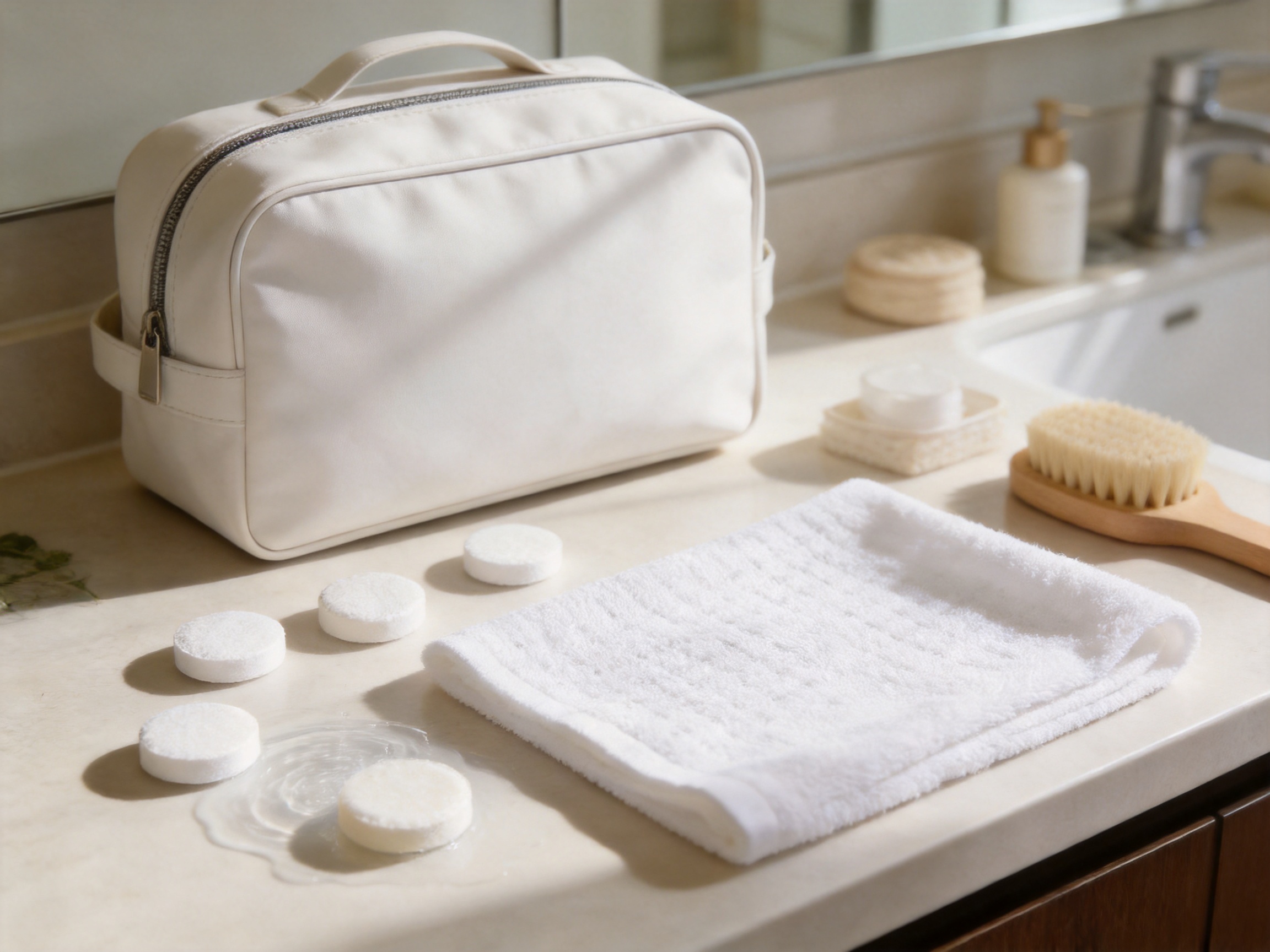
This does not mean that compressed towels replace all traditional towels. Instead, they provide a solution for specific moments when portability and cleanliness matter most. A traveler can carry several tablets in a small bag. A hotel can provide individual towels for guests. A beauty salon can offer fresh towels for facial cleansing. A company can include them in promotional kits. An outdoor enthusiast can carry them without taking up much space. In each of these scenarios, the quality of the fabric determines whether the product feels like a useful hygiene solution or a disposable novelty.
Triple-carding spunlace fabric supports hygiene-oriented applications by providing a clean, comfortable, and disposable textile base. Its customizable finishing options also allow manufacturers to meet different functional expectations. Hydrophilic treatment can improve water activation. Antistatic treatment may support certain processing or packaging requirements. Coating options can create specialized effects according to the intended application.
Competitive Advantages Over Ordinary Compressed Towel Substrates
In a competitive market, compressed towel manufacturers often face pressure to reduce cost while maintaining acceptable performance. Some products use low-grade nonwoven fabrics that may be thin, rough, weak, or inconsistent. These materials may produce a low initial price, but they can lead to quality problems, user dissatisfaction, and brand vulnerability. Triple-carding spunlace nonwoven fabric offers a stronger value proposition by improving the qualities that matter most in the final towel.
First, the fabric provides enhanced softness. Ordinary materials may feel paper-like or stiff after expansion. The triple-carding structure creates a fluffier and more textile-like feel, making the towel more suitable for face, hand, and body contact. This is especially important for premium markets and customers who want a product that feels more comfortable than basic disposable wipes.
Second, the fabric improves lateral strength. Many ordinary carded nonwovens may perform adequately in one direction but tear more easily across the width. Improved cross-direction strength helps the towel survive unfolding, pulling, and wiping. This reduces product failure and improves user confidence.
Third, the fabric offers strong customization potential. With composition blends, gram weights from 40 g to 100 g, roll widths from 10 cm to 320 cm, and finishing technologies such as hydrophilic, coating, and antistatic treatment, manufacturers can develop products for different markets. A low-cost travel towel and a premium spa towel do not need the same specification. This material platform allows each product to be engineered more precisely.
Fourth, the fabric supports cost effectiveness. Cost effectiveness does not simply mean the lowest price per kilogram. It means achieving the right performance at the right material usage, reducing defects, improving converting stability, and supporting consumer satisfaction. A fabric with better strength and uniformity may reduce waste during production. A fabric with better expansion and softness may justify stronger retail positioning. A fabric with customizable weight may help brands avoid over-engineering or under-engineering the final towel.
Finally, the fabric benefits from the manufacturing expertise of Zhejiang Uniquality Nursing Products Technology Co., Ltd. and the broader Kingsafe & Uniquality industrial platform. The company’s background in nonwoven materials, nursing products, and hygiene applications gives it a deep understanding of both raw fabric performance and final consumer product needs. This integrated perspective is a meaningful advantage over suppliers that focus only on commodity fabric output.
Advanced Manufacturing Strength Behind the Fabric
High-performance nonwoven fabric depends on more than a product formula. It requires reliable raw material control, advanced production equipment, process discipline, testing, quality management, and continuous research and development. Zhejiang Uniquality Nursing Products Technology Co., Ltd. is supported by the long industrial history of Kingsafe & Uniquality, founded in 1987. Over more than three decades, the enterprise has developed expertise in medical and hygienic nonwoven materials, nursing products, and high-end clothing interlining.
The company has grown into a leading enterprise in China’s industrial textile industry and has been recognized among the top companies in the domestic nonwovens sector for many consecutive years. It has also ranked among major global nonwoven manufacturers for multiple years. These achievements reflect scale, technical strength, production reliability, and market trust.
Manufacturing capacity is another important strength. The company is headquartered in Changxing, Huzhou, in the Yangtze River Delta region, an area known for convenient transportation and industrial supply-chain advantages. It has established multiple production bases in China, including locations in Guangdong, Jiangsu, and Hubei. This production network supports stable supply, flexible order handling, and responsiveness to customers in different regions.
The company has introduced advanced production equipment and technology from Germany, France, and Italy. International equipment standards help support consistent web formation, bonding quality, finishing control, and roll stability. For compressed towel fabric, this matters because even small variations in thickness, strength, absorbency, or width can affect downstream compression and packaging performance.
The product portfolio covers spunlace nonwoven fabrics, spunmelt nonwoven fabrics, hot-air-through nonwoven fabrics, flushable and degradable nonwoven fabrics, wet wipes, dry wipes, baby diapers, pull-ups, wet toilet paper, cleansing wipes, and other hygiene-related products. This broad technical base allows the company to understand the full chain from fiber and fabric to finished hygiene goods. Customers benefit from supplier expertise that goes beyond fabric production and includes knowledge of converting, packaging, private-label development, and end-user expectations.
Customization for OEM and Private-Label Customers
Compressed towel brands are not all the same. Some focus on travel convenience. Some target hotels and guest amenities. Some serve beauty salons and skincare routines. Some are designed for outdoor use, emergency preparedness, or promotional gifts. Because these markets have different expectations, customization is essential.
The fabric’s composition can be adjusted. Viscose can be blended with other fibers to change absorbency, hand feel, strength, drying behavior, and cost. For products positioned as soft facial towels, a higher emphasis on softness and absorbency may be chosen. For utility towels or outdoor towels, a different balance of strength and durability may be preferred. For economical products, the blend may be optimized for cost while preserving acceptable performance.
Gram weight customization from 40 g to 100 g gives brands additional flexibility. A 40 g grade may support compact, lightweight, economical towel formats. Medium weights may suit mainstream travel and hospitality products. Heavier weights may be used for premium towels that need a more substantial feel and stronger wiping performance. By selecting the right weight, customers can control both product experience and material consumption.
Roll width customization from 10 cm to 320 cm supports various converting requirements. Different compressed towel lines may have different feeding, cutting, folding, and compression designs. A supplier that can provide a broad width range helps customers reduce trimming waste and improve production efficiency. This is particularly important for high-volume manufacturers where small waste reductions can create significant savings over time.
Finishing technologies add another layer of differentiation. Hydrophilic finishing can improve water activation and user convenience. Antistatic finishing may improve handling in certain environments. Coating options may provide special surface effects or functional properties. These finishing choices allow private-label customers to build unique selling points rather than competing only on price.
Applications Across Multiple Markets
Although the primary usage is compressed towels, the fabric can support a wide range of product formats within that category. In travel retail, small compressed towels can be sold as convenient hygiene accessories for airplanes, trains, hotels, and daily commuting. Their compact size allows consumers to carry multiple units without adding weight or bulk.
In hospitality, individually packed compressed towels can provide guests with a clean and memorable amenity. Hotels, resorts, guesthouses, and restaurants can use them to enhance perceived service quality. A soft, fast-expanding towel can create a premium impression while saving storage space compared with bulky traditional towel inventory.
In beauty and personal care, compressed towels can be used for facial cleansing, makeup removal support, skincare routines, nail salons, spas, and massage services. In these settings, softness and hygiene are especially important. The triple-carding spunlace fabric’s fluffy hand feel and absorbency make it suitable for skin-contact applications where rough materials would be unacceptable.
In outdoor and emergency use, compressed towels offer practical value. Campers, hikers, drivers, rescue kits, and emergency preparedness packs benefit from towels that are compact, light, and activated with water. Strength is important in these cases because the towel may be used for more than gentle facial wiping. Improved lateral strength helps it perform in more demanding situations.
In promotional and gift markets, compressed towels can be customized in packaging, shape, size, and branding. The material’s stable quality supports a better final impression. A promotional towel that tears or feels rough may harm brand perception, while a soft and reliable towel can create a positive association.
How the Fabric Supports Better Converting Efficiency
For manufacturers, fabric quality affects production efficiency as much as final product performance. During converting, nonwoven rolls must unwind smoothly, maintain tension, cut cleanly, fold consistently, and enter compression equipment without excessive breaks or deformation. Inconsistent fabric can cause downtime, waste, misalignment, poor tablet shape, or packaging problems.
Triple-carding spunlace nonwoven fabric is designed for stability. Improved web uniformity supports predictable behavior during cutting and folding. Enhanced lateral strength reduces tearing during handling. Custom roll widths help match production-line requirements and reduce edge waste. These factors can improve production yield and reduce hidden costs.
Converters often focus on purchase price, but hidden production costs can be equally important. A cheaper fabric that causes frequent line stops, excessive trimming, rejected tablets, or customer complaints may be more expensive in practice. A well-engineered fabric can reduce these risks and provide better total value.
Sustainability and Responsible Material Design
Modern hygiene markets increasingly consider sustainability, resource use, and responsible product design. Compressed towels offer certain logistical advantages because they are compact, reducing storage volume and potentially improving transportation efficiency compared with bulky towel formats. However, responsible design also requires thoughtful material selection and appropriate use scenarios.
Spunlace nonwoven fabrics can be designed with different fiber blends according to performance and market requirements. Viscose, widely used in hygiene and personal-care nonwovens, is valued for absorbency and softness. Depending on customer needs, blends may be adjusted to support product positioning and responsible material choices. The company’s broader experience with flushable and degradable nonwoven materials also reflects technical engagement with evolving market expectations.
It is important for brands to communicate product usage clearly. Compressed towels should be disposed of according to local waste-management guidance unless specifically designed and verified for other disposal routes. Material design, packaging choices, and consumer instructions all play a role in responsible product development.
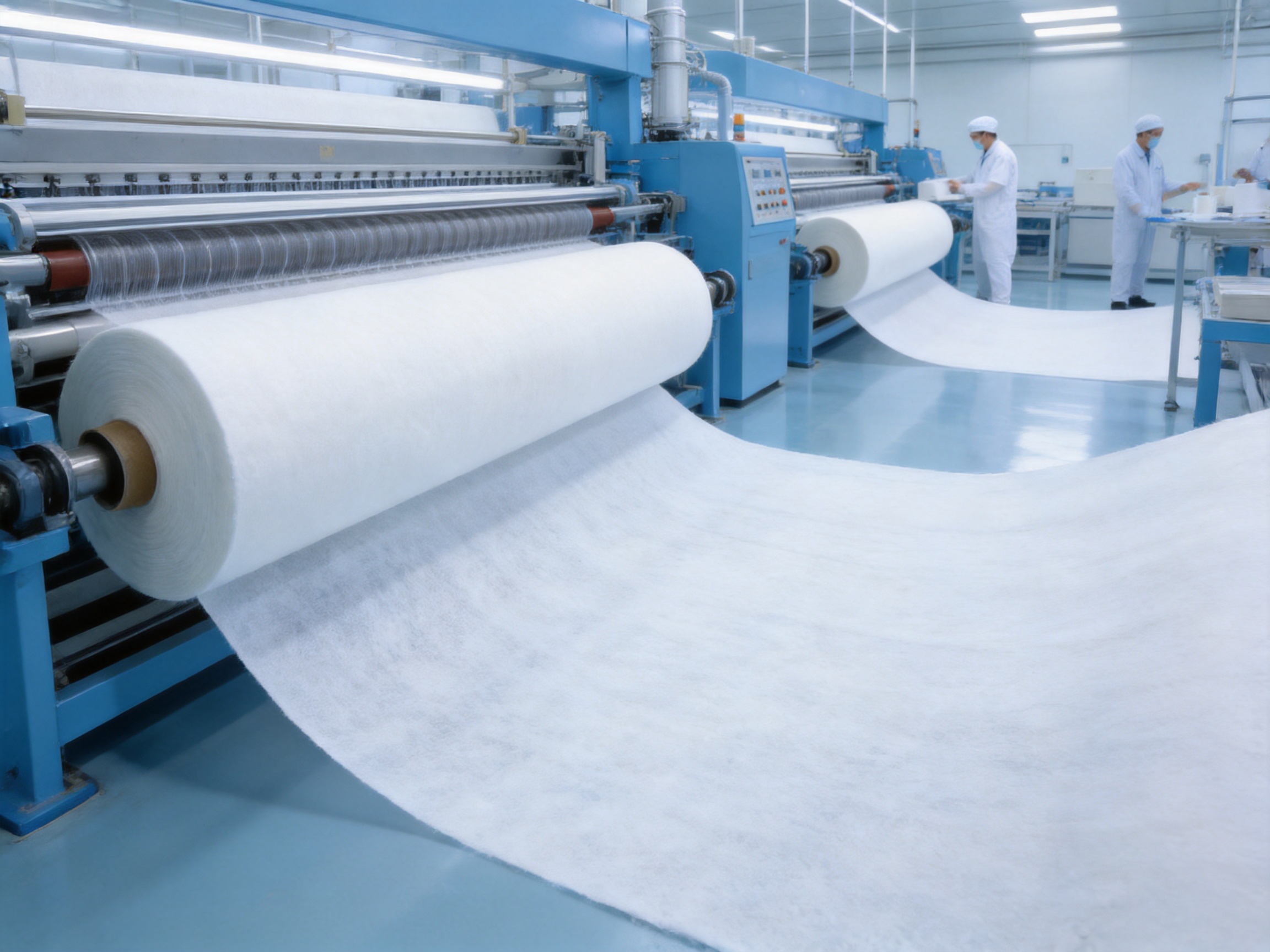
Quality Assurance and Consistency
Quality consistency is essential for compressed towel materials. A fabric may perform well in a laboratory sample, but if large-volume production varies from roll to roll, converters may struggle. Stable basis weight, roll width, strength, absorbency, thickness, and appearance are necessary for efficient manufacturing and consistent consumer experience.
The manufacturing strength of Zhejiang Uniquality Nursing Products Technology Co., Ltd. supports these requirements through its long experience in nonwoven production and hygiene product development. As a national high-tech enterprise, the company emphasizes research, production, and sales integration. This means product development is connected with practical manufacturing and market feedback.
Advanced equipment from Germany, France, and Italy helps support production precision. Multiple production bases improve capacity and supply stability. Long-term cooperation with well-known domestic and international brands demonstrates the company’s ability to meet demanding customer requirements. For private-label customers, this reliability is crucial because their own brand reputation depends on the supplier’s consistency.
Buyer Considerations When Selecting a Compressed Towel Fabric
Buyers should evaluate compressed towel fabric from multiple angles. The first consideration is the final user experience. How soft should the towel feel? How quickly should it expand? How strong should it be when wet? Will it be used on the face, hands, body, or surfaces? These questions guide the choice of composition, gram weight, and finishing.
The second consideration is converting compatibility. Buyers should confirm roll width, roll diameter, tension behavior, cutting performance, and compression suitability. A fabric that feels excellent but does not run smoothly on the production line may not be the best choice. Supplier communication is important to align fabric specifications with equipment conditions.
The third consideration is market positioning. Economy, mainstream, and premium compressed towels require different material strategies. A promotional travel towel may prioritize compactness and cost. A spa towel may require high softness and a heavier feel. An outdoor towel may need stronger durability. Triple-carding spunlace fabric provides a flexible platform for these different needs.
The fourth consideration is supplier capability. Buyers should choose a supplier with proven nonwoven expertise, stable production, customization ability, and quality assurance. Zhejiang Uniquality Nursing Products Technology Co., Ltd. offers the advantage of deep industry experience, a broad nonwoven product portfolio, and established manufacturing scale.
Why This Fabric Is a Strong Choice for Modern Brands
Modern compressed towel brands need more than a basic substrate. They need a material that can help them stand out in a competitive market. Triple-carding spunlace nonwoven fabric offers several advantages that align with current consumer and manufacturer expectations.
For consumers, it provides softness, cleanliness, portability, absorbency, and dependable strength. The towel expands from a compact form into a comfortable usable sheet, supporting daily hygiene, travel convenience, beauty routines, hospitality service, and outdoor preparedness.
For manufacturers, it provides process stability, width flexibility, gram weight options, composition customization, and finishing possibilities. These features help converters design products for different market levels while maintaining production efficiency.
For brand owners, it provides differentiation. A compressed towel made with a fluffy, strong, soft triple-carding spunlace fabric can be positioned above ordinary low-grade products. It gives brands a material story: advanced web formation, improved lateral strength, customizable performance, and reliable manufacturing support.
For procurement teams, it provides value. Cost effectiveness comes from the combination of performance, consistency, customization, and reduced risk. Instead of choosing a commodity fabric that may create quality problems, buyers can select a specialized material engineered for compressed towel use.
Company Strength and Industry Background
Zhejiang Uniquality Nursing Products Technology Co., Ltd. is part of a manufacturing tradition that began in 1987 under the Kingsafe & Uniquality industrial platform. The company specializes in research and development, production, and sales of medical and hygienic nonwoven materials, nursing products, and high-end clothing interlining. This broad foundation gives the company technical depth and practical market knowledge.
Headquartered in Changxing, Huzhou, the company benefits from the transportation advantages of the Yangtze River Delta region. Its production base network extends to multiple regions in China, supporting capacity, logistics, and customer service. Over more than 30 years, the enterprise has developed into a recognized leader in the industrial textile field.
The company’s products cover numerous hygiene and nonwoven categories, including spunlace nonwoven fabrics, spunmelt nonwoven fabrics, hot-air-through nonwoven fabrics, flushable and degradable nonwoven fabrics, wet wipes, dry wipes, baby diapers, pull-ups, wet toilet paper, and cleansing wipes. This broad experience is valuable because compressed towel fabric must satisfy both material-performance standards and consumer-product expectations.
The company has established long-term cooperative relationships with many well-known brands domestically and internationally. It emphasizes differentiation, functionalization, and customization, which are essential for OEM and private-label customers. In the compressed towel market, where brands often need unique specifications, packaging concepts, and performance levels, this customization ability is a major advantage.
Q&A Section
What is triple-carding spunlace nonwoven fabric?
Triple-carding spunlace nonwoven fabric is a nonwoven material made through advanced web-forming and hydroentanglement processes. The triple-carding approach combines ordinary carding into web and airflow into web technology to create a fabric structure that is fluffy, soft, and stronger in the lateral direction. Spunlace bonding then entangles the fibers with high-pressure water jets to create a cohesive, textile-like fabric.
Why is this fabric suitable for compressed towels?
It is suitable because compressed towels require softness, absorbency, expansion recovery, and strength. The fabric can be compressed into compact towel forms and then expand after water activation. Its fluffy structure improves hand feel, while enhanced lateral strength helps prevent tearing during unfolding and use.
How does it compare with ordinary compressed towel materials?
Compared with many ordinary materials, triple-carding spunlace fabric offers better softness, fuller texture, improved cross-direction strength, and stronger customization options. These advantages help manufacturers create compressed towels that feel more premium and perform more reliably.
Can the fiber composition be customized?
Yes. The fabric can use viscose and other fiber blends, and the blending ratio can be customized. This allows customers to adjust absorbency, softness, strength, cost, and other performance factors according to the final product’s market positioning.
What gram weights are available?
The fabric can be supplied from 40 g to 100 g. Lighter weights may be used for compact or economical towels, while heavier weights may be selected for premium towels, spa products, hospitality amenities, or stronger wiping applications.
What roll widths are available?
Roll widths can range from 10 cm to 320 cm. This wide range helps converters match different production lines, reduce trimming waste, and improve manufacturing efficiency.
What finishing options are possible?
Available finishing technologies include hydrophilic treatment, coating, antistatic treatment, and other customized options. Hydrophilic finishing is especially useful for compressed towels because it supports faster water absorption and expansion.
Is the fabric only for travel towels?
No. While travel towels are an important application, the fabric is also suitable for hospitality towels, beauty towels, spa towels, outdoor towels, emergency hygiene towels, promotional towels, and other compressed towel formats.
Why is lateral strength important?
Lateral strength is important because users pull, unfold, wipe, and stretch towels in different directions. If the cross-direction strength is weak, the towel may tear easily. The triple-carding process improves lateral strength, helping the towel remain intact during real use.
What makes the manufacturer a reliable partner?
Zhejiang Uniquality Nursing Products Technology Co., Ltd. benefits from decades of nonwoven manufacturing experience, advanced equipment introduced from Germany, France, and Italy, multiple production bases, broad hygiene product expertise, and long-term cooperation with many well-known brands. These strengths support stable supply, customization, and quality consistency.
Conclusion
Triple-carding spunlace nonwoven fabric for compressed towels represents a strong upgrade from ordinary compressed towel substrates. It directly addresses the key challenges of the category: softness, expansion, absorbency, strength, hygiene convenience, and converting stability. Through the combination of ordinary carding, airflow web formation, and spunlace bonding, the fabric achieves a fluffy and soft effect while improving lateral strength. This makes it suitable for both everyday and premium compressed towel applications.
The material’s customizable composition, 40 g to 100 g gram weight range, 10 cm to 320 cm roll width range, and finishing options such as hydrophilic, coating, and antistatic treatment give customers wide product-development flexibility. Whether the target is an economical travel towel, a premium spa towel, a hospitality amenity, or an outdoor hygiene product, the fabric can be tailored to meet the desired balance of comfort, durability, and cost effectiveness.
Supported by Zhejiang Uniquality Nursing Products Technology Co., Ltd. and the Kingsafe & Uniquality manufacturing platform, the fabric benefits from advanced production processes, international equipment, strong R&D capability, multiple production bases, and deep experience in hygiene and nonwoven materials. For OEM, ODM, and private-label customers, this combination of product performance and manufacturing strength creates a dependable path to higher-quality compressed towels.
In a market where consumers increasingly value convenience, cleanliness, and comfort, the base fabric is the foundation of product success. Triple-carding spunlace nonwoven fabric provides that foundation with a thoughtful balance of technology, softness, strength, customization, and value.
References
1. Russell, S. J. Handbook of Nonwovens. Woodhead Publishing.
2. Association of the Nonwoven Fabrics Industry. Nonwoven Fabric Manufacturing and Performance Principles.
3. EDANA. Nonwovens Standard Procedures and Industry Guidance.
4. Krcma, R. Manual of Nonwovens: Textile Progress Series.
5. Adanur, S. Wellington Sears Handbook of Industrial Textiles.
6. Industry literature on spunlace hydroentanglement, viscose fiber absorbency, and disposable hygiene textile applications.