中文简体
中文简体 English
 日本語
日本語 русский
 Español
In the competitive market for wet wipes, dry wipes, personal care wipes, household cleaning wipes, and industrial wiping materials, the substrate is the foundation of product performance. Lotion formulation, packaging, fragrance, and branding all matter, but the fabric itself determines how the wipe feels in the hand, how effectively it cleans, how well it absorbs liquid, and whether consumers perceive it as soft, strong, and premium. The viscose and polyester ginkgo dot style spunlace nonwoven described here is designed for manufacturers that want to create differentiated wipe products with a distinctive surface pattern, thicker hand feel, stable strength, and adaptable finishing options.
This product is a semi-cross spunlace nonwoven made with a typical composition of 50% viscose and 50% polyester, although the blending ratio can be customized according to application requirements. It uses double-carding and semi-cross technology, with a ginkgo dot pattern that gives the fabric both visual recognition and tactile friction. The available gram weight ranges from 40 gsm to 100 gsm, and the roll width can be supplied from 10 cm to 320 cm. Finishing technologies such as hydrophilic treatment, coating, and antistatic finishing can be applied to support wet wipes, dry wipes, and other hygiene or cleaning applications.
Unlike ordinary parallel-lapped spunlace materials, the semi-cross structure gives the fabric a thicker style and superior strength. This is particularly important for wipe products that must perform under moisture, pressure, stretching, rubbing, or repeated folding. The ginkgo leaf pearl-like dot texture also creates a more appealing appearance and improves the wiping experience by increasing surface interaction. For brands and converters, this combination of structure and pattern can help build a wipe product that feels more premium than common flat or plain substrates.
Viscose And Polyester Ginkgo Dot Style Spunlace Nonwoven For Dry Or Wet Wipes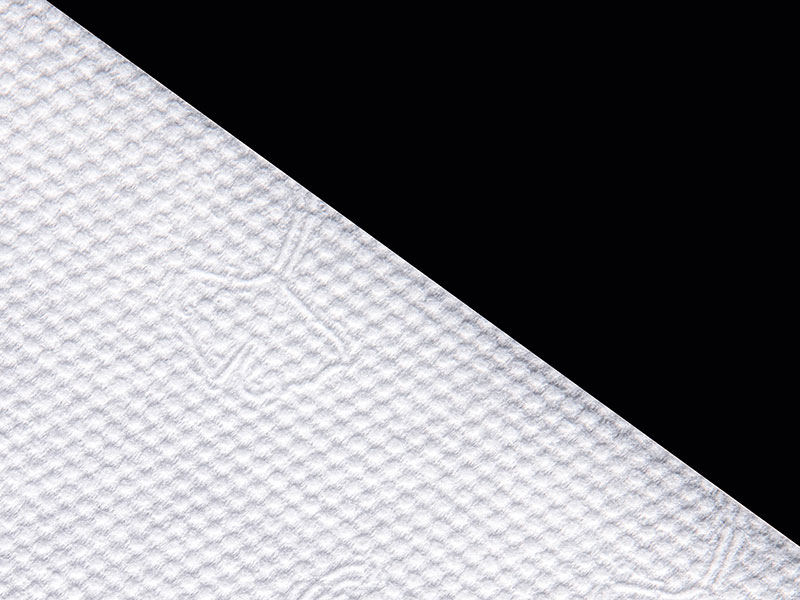
Product Overview
The ginkgo dot style spunlace nonwoven is a viscose-polyester blended substrate designed for wipe applications that require softness, wet strength, absorptive capacity, and a distinctive surface pattern. The 50% viscose component contributes hydrophilicity, softness, moisture absorption, and a natural cellulose-based touch. The 50% polyester component contributes dimensional stability, tensile strength, durability, and resistance to deformation. Together, these fibers form a balanced substrate that can perform well in both dry and wet conditions.
The semi-cross lapping structure is one of the product’s main advantages. In ordinary parallel-lapped nonwovens, fibers are oriented mostly in the machine direction, which can create an imbalance between machine direction strength and cross direction strength. For many wipe applications, this imbalance can lead to tearing, distortion, or a weaker hand feel when the product is pulled sideways. Semi-cross technology improves fiber distribution and provides a more stable fabric structure, allowing the wipe to better resist stress from multiple directions.
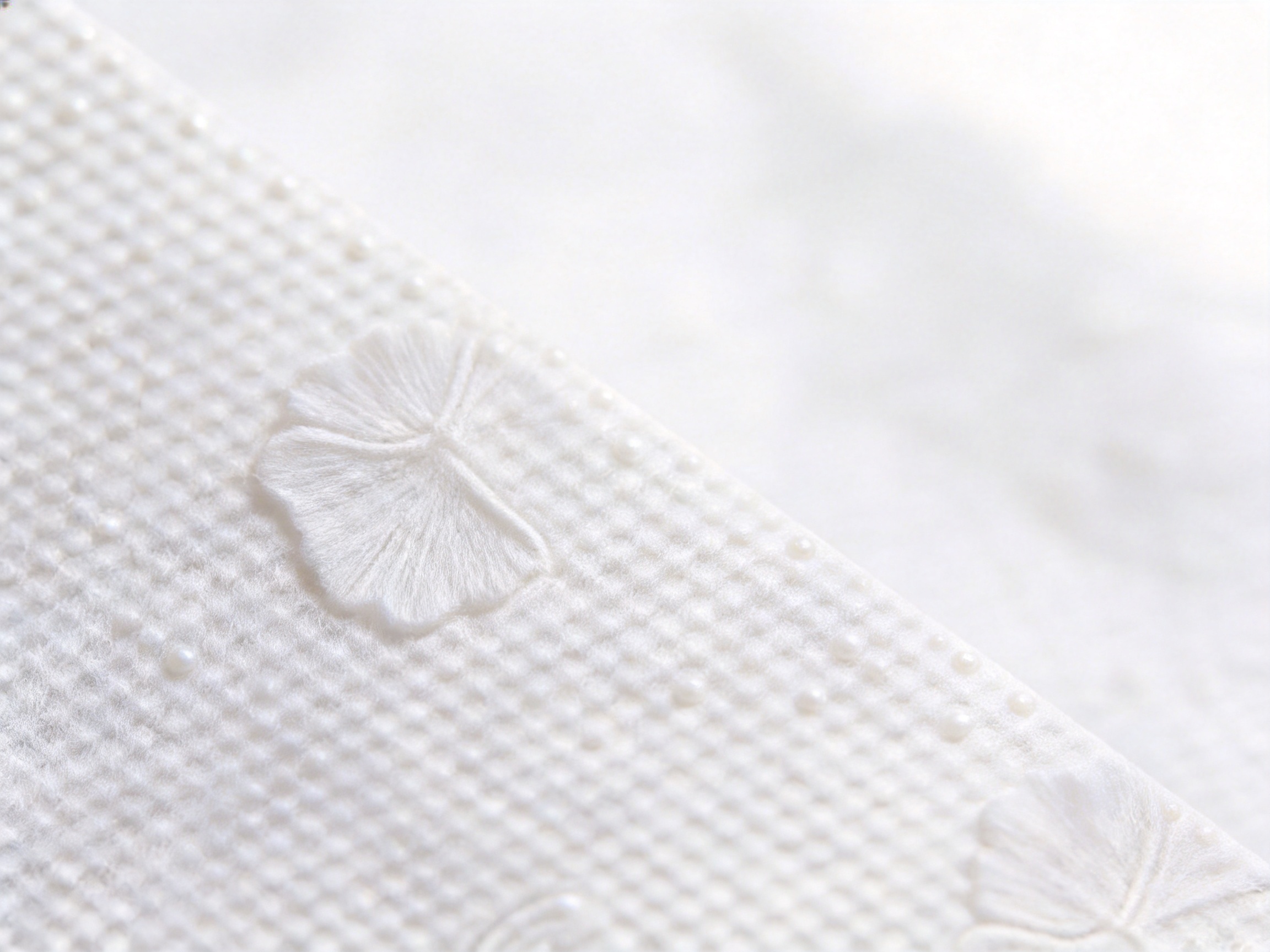
The ginkgo dot pattern is another defining feature. In wipe products, embossing or patterned textures are not only decorative. A well-designed pattern can enhance bulk, improve wiping friction, help capture dirt or residue, increase perceived thickness, and give the product a memorable identity. The ginkgo dot design offers a refined texture that can be suitable for personal care, beauty cleansing, home cleaning, and specialty wipe products where appearance and function are both important.
The fabric can be used for wet wipes, dry wipes, cleansing wipes, baby care wipes, cosmetic wipes, household wipes, and other disposable wiping products. Depending on the end-use scenario, the substrate can be adjusted in gram weight, width, fiber ratio, and finishing. This flexibility makes it suitable for private label brands, OEM/ODM production, and customized wipe development projects.
Key Technical Specifications
Item |
Specification |
Product Benefit |
Composition |
50% viscose and 50% polyester, with customizable blending ratio |
Balanced softness, absorption, strength, and durability |
Technology |
Double-carding and semi-cross lapping |
Thicker style, improved multidirectional strength, and better fabric stability |
Pattern |
Ginkgo dot texture |
Distinctive appearance, better friction experience, and improved wiping effect |
Gram Weight |
40 gsm to 100 gsm |
Suitable for light daily wipes, premium wipes, and stronger cleaning wipes |
Roll Width |
10 cm to 320 cm |
Adaptable to different converting lines and finished wipe sizes |
Finishing Technology |
Hydrophilic, coating, antistatic, and other optional treatments |
Supports wet wipes, dry wipes, functional wipes, and specialty applications |
Usage |
Wet wipes, dry wipes, and related wiping materials |
Wide application range for personal care, home care, and cleaning markets |
Why the Viscose and Polyester Blend Matters
A wipe substrate must balance several performance factors at once. It should be soft enough for skin contact, strong enough not to tear, absorbent enough to hold liquid, and stable enough for high-speed converting and packaging. A single fiber type often struggles to deliver all these properties at the same time. This is why viscose and polyester are commonly blended for high-performance spunlace nonwovens.
Viscose is valued for its soft and skin-friendly hand feel. It is derived from regenerated cellulose and has excellent moisture absorption. In wet wipes, viscose helps the substrate take up lotion effectively and release it smoothly during use. In dry wipes, viscose contributes comfort and wiping efficiency, especially when used for personal care, facial cleansing, baby care, or delicate surface cleaning.
Polyester, by contrast, is valued for its strength and resilience. It helps the fabric maintain structure when wet, reduces excessive stretching, and improves durability during rubbing. Polyester also supports better dimensional stability during roll handling, slitting, folding, and packaging. Without a sufficient strengthening component, a wipe may feel soft but become weak, limp, or easily torn after lotion saturation.
The 50% viscose and 50% polyester ratio creates a balanced starting point. It allows the fabric to maintain a soft, absorbent touch while also delivering reliable wet and dry strength. For customers who require more absorbency and softness, the viscose percentage can be increased. For customers who require higher mechanical strength, better durability, or more cost-performance balance, the polyester percentage can be adjusted. This customizability is important because baby wipes, cosmetic wipes, household wipes, and industrial wipes do not all need the same substrate structure.
Compared with many lower-grade wipe materials, this blend offers a more stable user experience. Some low-cost wipes may be too thin, too easy to tear, or too rough on the skin. Others may lack texture and fail to clean effectively. The viscose-polyester ginkgo dot spunlace is designed to overcome these issues by combining softness, strength, texture, and thickness in one engineered fabric.
The Advantage of Semi-Cross Technology
The semi-cross structure is one of the most important features of this product. In spunlace manufacturing, fiber web formation plays a major role in the final fabric’s mechanical properties. Traditional parallel lapping aligns most fibers in the machine direction. This can produce adequate lengthwise strength, but it may leave the fabric comparatively weaker in the cross direction. When a user pulls, rubs, or stretches a wipe sideways, the substrate may deform or tear more easily.
Semi-cross lapping improves this issue by creating a more distributed fiber orientation. The fabric achieves better balance between machine direction and cross direction performance. This is particularly valuable for wet wipes because liquid saturation can reduce the apparent firmness of a substrate. A semi-cross structure helps the wipe retain body and stability even when impregnated with lotion.
For dry wipes, semi-cross technology also supports a fuller hand feel. Consumers often judge wipe quality immediately after touching the product. A wipe that feels thin or flimsy may be perceived as low value, even if it technically performs adequately. The thicker style created by the semi-cross process gives the material a more substantial, premium impression. This can help brands position their products above common entry-level wipes.
Another benefit is improved friction control. During wiping, pressure is not always applied in one direction. The user may rub in circles, pull the wipe diagonally, or fold it several times. A semi-cross fabric can better tolerate these multidirectional forces. For household cleaning and industrial wiping, this means better durability. For beauty and personal care, it means a more secure and comfortable wiping process with less risk of tearing.
Compared with competitors that rely only on ordinary parallel-lapped technology, the semi-cross ginkgo dot spunlace offers a stronger product platform. It can help manufacturers produce wipes that feel thicker, look better, and withstand practical use more reliably.
Double-Carding for Uniformity and Quality Stability
Double-carding technology contributes to fiber web uniformity and product consistency. In nonwoven production, uniform fiber distribution is essential because uneven areas can cause weak spots, inconsistent absorbency, poor appearance, and problems during converting. Double-carding helps prepare a more even web before hydroentanglement, supporting stable fabric properties across the roll.
For converters, uniformity directly affects production efficiency. A substrate with inconsistent thickness or weak points may break during unwinding, slitting, folding, or stacking. It may also create inconsistent wipe counts, poor package appearance, or uneven lotion distribution. A stable substrate reduces production interruptions and helps ensure that every finished wipe meets quality expectations.
For end users, uniformity affects satisfaction. A wipe should feel the same from the first piece to the last piece in a pack. It should not have thin spots, hard spots, linting areas, or unexpected texture changes. Double-carding supports this consistency by improving the starting web quality before the spunlace jets bond the fibers.
The combination of double-carding and semi-cross lapping creates a product that is both uniform and strong. This is a major advantage over lower-grade substrates that may rely on simpler web formation methods. In markets where consumer reviews and repeat purchases are important, consistency is not a minor detail; it is a core part of product competitiveness.
Ginkgo Dot Pattern: More Than Appearance
The ginkgo dot pattern is inspired by the recognizable form of ginkgo leaves and pearl-like dot textures. It gives the substrate a refined and memorable visual identity. However, the pattern is not merely decorative. In wiping applications, texture influences how the material interacts with skin, surfaces, dust, oil, residue, and liquid.
A flat wipe may glide smoothly, but it may not always provide enough friction to remove residue efficiently. A highly aggressive texture may clean well, but it can feel rough or uncomfortable. The ginkgo dot pattern is designed to create a balanced friction experience. It can provide better contact points for wiping while maintaining a soft and pleasant hand feel.
For wet wipes, the pattern can help distribute lotion across the surface and improve the user’s perception of thickness. When consumers take a wipe from the pack, the visible texture suggests quality and intentional design. This can be especially useful for premium baby wipes, cleansing wipes, feminine care wipes, facial wipes, and high-end household wipes.
For dry wipes, the texture can improve dust pickup and surface cleaning. The raised dot structure can help trap particles and increase the wipe’s mechanical cleaning effect. In applications such as kitchen wipes, surface wipes, and personal care dry towels, this can improve practical performance.
From a branding perspective, a distinctive pattern also helps product differentiation. Many wipe substrates look similar in the market. A unique ginkgo dot surface gives brands a recognizable feature that can be highlighted in packaging, product descriptions, and consumer communication. This visual difference can support premium positioning and reduce direct price comparison with ordinary plain wipes.
Performance in Wet Wipes
Wet wipes require a substrate that performs well after lotion saturation. The material must absorb liquid, retain enough moisture, release lotion during use, resist tearing, and remain comfortable against the skin. The viscose-polyester ginkgo dot spunlace is well suited for these requirements because each part of its design supports wet performance.
The viscose component helps absorb and hold liquid. This is important for baby wipes, cleansing wipes, wet toilet tissue alternatives, personal hygiene wipes, and household wet wipes. A wipe with poor absorption may feel dry, unevenly wetted, or unable to deliver enough lotion to the surface being cleaned. The hydrophilic nature of viscose supports a more comfortable and effective wet wiping experience.
The polyester component helps maintain wet strength. Once saturated, some substrates become weak or lose their shape. Polyester helps the wipe remain intact during pulling, unfolding, and rubbing. This is particularly important for larger wipes, thicker premium wipes, and cleaning wipes used on surfaces with more friction.
The semi-cross structure further improves wet stability. Because forces during use are not limited to one direction, balanced strength is essential. A wet wipe may be pulled from a package, stretched while unfolding, wrapped around fingers, or rubbed repeatedly. The semi-cross structure allows the fabric to better manage these stresses.
The ginkgo dot pattern can enhance user satisfaction by adding a gentle massaging or friction effect. In personal care, this can make cleansing feel more effective. In home care, it can support residue removal. The pattern also improves the perceived quality of the finished wet wipe, helping brands compete in markets where consumers compare softness, thickness, and texture.
Performance in Dry Wipes
Dry wipes require a slightly different performance profile. They may be used directly in dry form, moistened by the user, or combined with external cleaning agents. The substrate must be strong, clean, low-lint, easy to fold, and pleasant to touch. The ginkgo dot spunlace nonwoven provides a strong foundation for these applications.
In dry form, the fabric’s texture can help pick up dust, particles, and light residues. The dot pattern creates surface variation that improves contact with irregular surfaces. For household cleaning, beauty care, and personal use, this makes the wipe more functional than a completely smooth substrate.
The semi-cross structure supports durability when the dry wipe is used with pressure. Dry wiping can create more friction than wet wiping because there is less liquid lubrication. A weak substrate may tear or pill under rubbing. The polyester component and semi-cross structure help maintain integrity.
For personal care dry towels, the viscose component contributes softness and comfort. Consumers increasingly expect disposable dry towels and cleansing towels to feel gentle while also being strong enough for repeated wiping. The 40 gsm to 100 gsm range allows the substrate to be tailored for different product tiers, from economical daily dry wipes to thick premium cleansing towels.
Dry wipes are also often used in professional settings, such as beauty salons, healthcare support environments, hospitality, and industrial cleaning. In these contexts, reliability and consistency are essential. The double-carding and controlled spunlace process help provide a stable material that can be converted efficiently and used confidently.
Customizable Gram Weight for Different Market Needs
The product can be supplied from 40 gsm to 100 gsm, giving manufacturers flexibility to design wipes for different use cases and price levels. Gram weight has a direct impact on thickness, strength, absorbency, cost, and consumer perception. Choosing the correct gsm is therefore a strategic decision.
A lower gsm option, such as around 40 gsm to 50 gsm, may be suitable for lightweight wet wipes, daily cleaning wipes, or applications where cost efficiency and adequate performance are the main priorities. Even in lighter weights, the semi-cross structure and ginkgo dot pattern can help improve the perceived quality compared with ordinary plain materials.
Medium gram weights, such as around 55 gsm to 70 gsm, can serve mainstream baby wipes, personal care wipes, and household wipes. This range often provides a strong balance between softness, absorption, and durability. The ginkgo dot pattern can make these wipes feel more premium while keeping production costs manageable.
Higher gram weights, such as 75 gsm to 100 gsm, are suitable for premium wipes, large-size wipes, heavy-duty cleaning wipes, beauty towels, and specialty products that require extra thickness and strength. At these weights, the semi-cross structure can deliver an especially full hand feel, helping finished products stand out on shelf and in use.
The ability to customize gram weight is valuable for OEM and private label projects. A brand may want to launch multiple product tiers using the same visual pattern but different thickness levels. For example, a standard wipe and a premium wipe can both use the ginkgo dot identity while differing in gsm, lotion, packaging, and positioning.
Roll Width Flexibility and Converting Compatibility
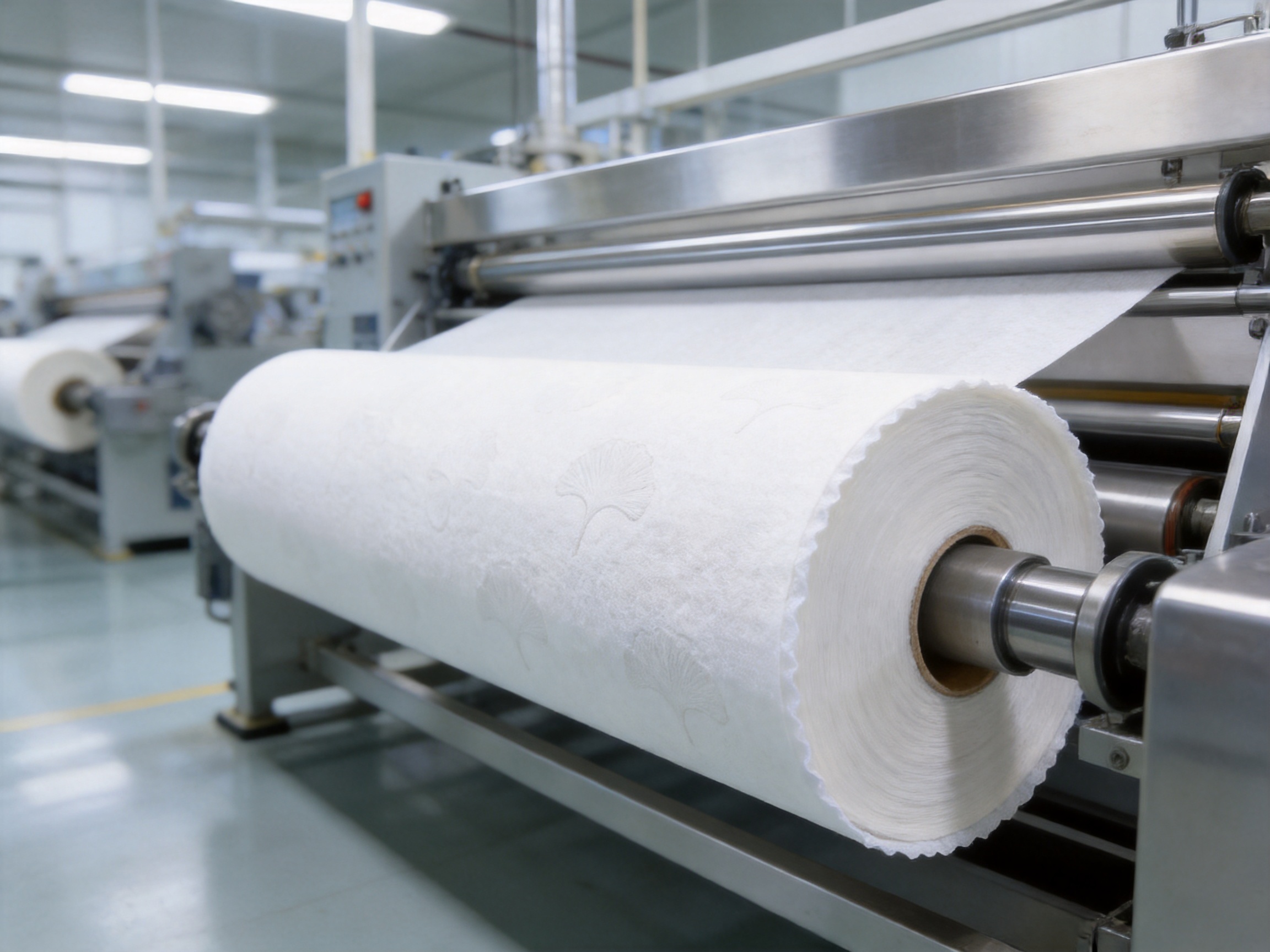
The available roll width range from 10 cm to 320 cm supports diverse converting requirements. Wipe manufacturers use different production lines, folding systems, sheet sizes, and packaging formats. A flexible roll width range reduces the need for excessive secondary processing and helps customers match the substrate to their equipment.
Narrow widths can be useful for specialized wipes, small-format products, sample packs, and certain converting processes. Wider rolls support high-volume production and allow converters to slit material according to finished product needs. This flexibility can improve efficiency, reduce waste, and support customized product development.
Stable roll quality is also important. In nonwoven converting, roll tension, edge neatness, uniform thickness, and consistent winding affect downstream productivity. A substrate that runs smoothly helps reduce machine stoppages and material loss. The company’s advanced manufacturing background and experience in nonwoven production support this level of industrial reliability.
Finishing Technologies for Functional Performance
Finishing technology allows the substrate to be tailored for specific applications. The listed finishing options include hydrophilic treatment, coating, antistatic finishing, and other possible functional treatments. These options can change how the fabric absorbs liquid, interacts with surfaces, behaves during converting, and performs in final use.
Hydrophilic finishing is important for wet wipes and absorbent dry wipes. It improves the fabric’s ability to take up water-based lotion and distribute it evenly. Without suitable hydrophilicity, wetting may be slow or uneven, resulting in inconsistent product quality.
Coating can be used to add special functional properties depending on the target market. For example, a substrate may require improved surface feel, enhanced cleaning effect, or compatibility with certain formulations. Coating options should be selected based on the finished product’s safety, performance, and regulatory requirements.
Antistatic finishing may be useful for dry wipes and industrial applications where static attraction or electrostatic discharge concerns need to be managed. In certain environments, controlling static can improve handling and reduce particle attraction.
The ability to apply finishing technologies demonstrates manufacturing versatility. Rather than offering only a generic substrate, the producer can help customers build application-specific wipe materials. This is especially important for brands that want differentiated products, such as gentle baby wipes, refreshing cosmetic wipes, durable household wipes, or professional cleaning wipes.
Advantages Over Ordinary Parallel-Lapped Competitor Materials
The most direct competitive advantage of this product is its semi-cross structure compared with ordinary parallel-lapped spunlace. Parallel-lapped materials may be economical and suitable for basic use, but they often have limitations in cross-direction strength, thickness perception, and multidirectional stability. The semi-cross ginkgo dot material is designed to address these limitations.
First, it offers a thicker style. Consumers associate thickness with quality, comfort, and reliability. A wipe that feels substantial is more likely to be perceived as premium. The semi-cross structure contributes to bulk and hand feel without relying only on higher gram weight.
Second, it provides superior strength balance. Wipes are not used only in the machine direction. Users pull them out of packages, unfold them, stretch them across the hand, and rub them in multiple directions. A substrate with better multidirectional stability reduces tearing and deformation.
Third, the ginkgo dot pattern creates visual and tactile differentiation. Many competitor substrates are plain, mesh-like, or use common embossing patterns. A ginkgo dot texture gives the wipe a distinctive appearance and can support marketing claims related to texture, cleaning efficiency, and premium design.
Fourth, the viscose-polyester blend offers a practical balance of softness and durability. Some competitor products may emphasize softness but lack strength, while others may be strong but feel synthetic or rough. This blend supports a more balanced user experience.
Fifth, customization options allow brands to create targeted products rather than accepting a one-size-fits-all material. Composition, gram weight, width, and finishing can be adjusted to fit different markets. This is a powerful advantage for private label and OEM/ODM customers.
Manufacturing Strength and Industrial Background
The product is supported by a manufacturer with decades of experience in medical and hygienic nonwoven materials, nursing products, and related textile technologies. Founded in 1987, the company has developed from a specialized producer into a major enterprise in the industrial textile field. Its business covers spunlace nonwoven fabrics, spunmelt nonwoven fabrics, hot air through nonwoven fabrics, flushable and degradable nonwoven fabrics, wet wipes, dry wipes, baby diapers, pull-ups, wet toilet paper, cleansing wipes, and other hygiene and care products.
A strong manufacturing background matters because wipe substrate quality depends on more than one machine or one process. It requires fiber sourcing, web formation control, hydroentanglement expertise, finishing capability, roll handling, quality inspection, and application knowledge. A producer with integrated experience in both nonwoven materials and finished hygiene products can better understand how substrate performance affects the final consumer product.
The company has introduced advanced production equipment and technologies from countries such as Germany, France, and Italy. This international technical foundation supports stable production, process precision, and product innovation. Advanced equipment can help improve fiber distribution, pattern formation, water jet bonding, drying efficiency, finishing uniformity, and roll consistency.
The company has also established multiple production bases in China, including regions such as Guangdong, Jiangsu, Hubei, and Zhejiang. A multi-base structure supports production capacity, supply security, and responsiveness to customer demand. For large OEM and private label customers, stable supply is a key factor. A high-quality substrate is valuable only if it can be delivered consistently and on time.
Long-term participation in the nonwovens industry has allowed the company to build experience across medical, maternal and baby, beauty, home, industrial cleaning, clothing, and other fields. This broad application knowledge supports the development of customized substrates for different market needs. The ginkgo dot semi-cross spunlace product benefits from this accumulated expertise.
Quality Control from Fiber to Finished Roll
Quality control for spunlace nonwoven should begin before production starts. Fiber selection and blending accuracy influence the final fabric’s softness, strength, absorbency, and appearance. For a viscose-polyester blend, maintaining the correct ratio and uniform mixing is essential. Uneven blending can create inconsistent zones that behave differently during wetting or rubbing.
During carding and web formation, the manufacturer must control fiber distribution, web weight, and orientation. Double-carding helps improve this stage, but process monitoring remains important. Any variation in web uniformity can affect the final roll’s tensile strength and thickness.
During hydroentanglement, high-pressure water jets entangle the fibers without the need for chemical binders. Parameters such as water pressure, jet configuration, line speed, and support pattern influence bonding strength and texture. For the ginkgo dot style, pattern control must be precise enough to create consistent visual and tactile effects across the fabric width and length.
Drying and finishing must also be controlled carefully. Excessive heat, uneven drying, or poor finishing distribution can affect hand feel and performance. If hydrophilic, coated, or antistatic treatments are applied, they must be compatible with the intended application and uniformly distributed.
Final roll inspection may include checks for gram weight, width, appearance, tensile strength, absorbency, moisture content, defects, winding quality, and customer-specific parameters. Reliable inspection helps protect converters from production problems and helps brands maintain consistent consumer satisfaction.
Applications Across Wipe Categories
The ginkgo dot semi-cross spunlace nonwoven can be applied across a wide range of wipe categories. Its versatility comes from the balance of fiber composition, structure, pattern, and finishing options.
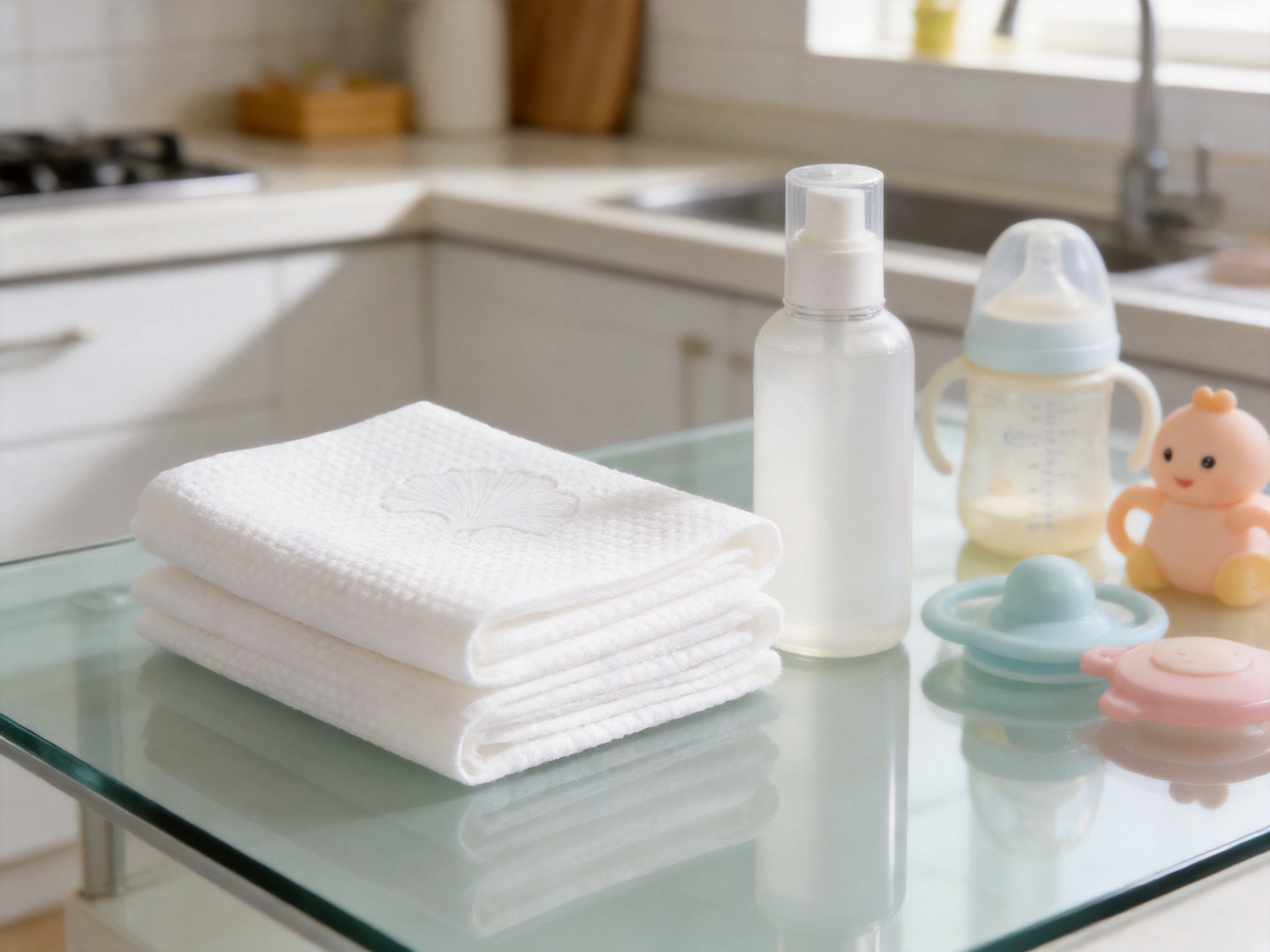
For baby wipes, softness and wet strength are essential. Parents expect wipes to be gentle on delicate skin while strong enough to clean effectively without tearing. The viscose component supports softness and lotion absorption, while polyester and semi-cross lapping support strength. The ginkgo dot texture can provide gentle cleaning without an overly rough feel.
For cosmetic and facial cleansing wipes, appearance and touch are especially important. Consumers often associate texture and softness with premium skincare. The ginkgo dot pattern creates a refined look, while the viscose-polyester blend provides comfort and stability. The substrate can be paired with cleansing lotions, makeup removal formulations, or refreshing skincare solutions.
For household wipes, cleaning efficiency and durability are key. The textured surface can help remove dust, stains, and residues, while the fabric strength supports repeated rubbing. Different gram weights can be selected for kitchen wipes, bathroom wipes, furniture wipes, and general surface cleaning products.
For dry wipes and disposable towels, the substrate can offer a soft yet strong alternative to ordinary tissue or low-grade nonwovens. Users can apply water or cleaning solution as needed, making the product suitable for travel, hospitality, beauty care, and personal hygiene.
For industrial or professional cleaning, higher gram weights and functional finishing can be considered. Stronger versions of the fabric can support more demanding wiping tasks where durability and low failure rates are important.
OEM and Private Label Value
For OEM and private label customers, material differentiation is often the key to building competitive finished products. Many wipe brands compete in crowded retail environments where packaging, claims, price, and user experience must work together. A distinctive substrate can become a core selling point.
The ginkgo dot style allows brands to communicate visible quality. When consumers open the pack and see the patterned surface, they immediately recognize that the wipe is not a generic plain material. This can support claims such as textured cleaning, premium softness, improved wiping experience, or enhanced thickness perception, depending on testing and regulatory compliance.
Customization also supports private label strategy. Retailers may require different product tiers, such as value, standard, and premium. By adjusting gram weight, fiber ratio, lotion compatibility, finishing, and package format, a manufacturer can create a complete product family while maintaining consistent visual identity.
OEM customers also benefit from the producer’s experience in finished products such as wet wipes, dry wipes, diapers, pull-ups, wet toilet paper, and cleansing wipes. This means the material supplier understands not only the nonwoven roll but also the final product’s converting, packaging, storage, and consumer-use requirements.
Sustainability and Responsible Material Choices
Sustainability has become a major topic in the wipes and nonwovens industry. Consumers, retailers, and regulators increasingly pay attention to fiber sources, disposability, packaging waste, chemical safety, and environmental impact. While this product uses a viscose-polyester blend rather than a fully cellulose or fully biodegradable structure, it can still contribute to responsible product design when used appropriately.
Viscose provides a cellulose-based component that can improve absorbency and reduce reliance on fully synthetic structures. Polyester contributes durability, which may allow the wipe to perform effectively at optimized gram weights rather than requiring excessive material use. The correct balance can help avoid overengineering while maintaining quality.
Manufacturing efficiency is also part of sustainability. Stable production, uniform rolls, and good converting performance reduce waste. Defective substrates, frequent line breaks, and inconsistent wetting can all create material loss. A well-controlled semi-cross spunlace process supports more efficient use of resources.
For brands with specific sustainability goals, the fiber ratio, finishing chemistry, packaging approach, and end-of-life claims should be reviewed carefully. The manufacturer’s broader experience with flushable and degradable nonwoven technologies may also support customers seeking alternative substrate solutions for specific applications.
How to Select the Right Version for a Finished Wipe
Selecting the right substrate version requires matching material properties to the intended use. A baby wipe may prioritize softness, lotion absorption, and mild texture. A household cleaning wipe may prioritize strength, friction, and higher gsm. A beauty wipe may require premium appearance, skin comfort, and excellent lotion compatibility.
The first decision is gram weight. Lighter options can support economical daily wipes, while heavier options provide premium thickness and strength. The second decision is fiber ratio. More viscose can improve softness and absorbency, while more polyester can improve strength and resilience. The third decision is finishing. Hydrophilic treatment is usually important for wet wipes, while antistatic or coating options may be selected for special uses.
Roll width should be selected according to converting equipment and target sheet size. Working with the supplier early in the development process can help reduce waste and avoid production compatibility issues. Samples and trial runs are recommended before mass production, especially for new lotion formulas or packaging formats.
Testing should include dry tensile strength, wet tensile strength, absorbency, lotion pickup, linting, hand feel, surface friction, package stability, and user experience. For wipes intended for skin contact, safety and compatibility testing should be performed according to relevant market requirements.
Q&A Section
What is the main advantage of this ginkgo dot spunlace nonwoven?
The main advantage is the combination of semi-cross strength, thicker hand feel, viscose-polyester balance, and a distinctive ginkgo dot texture. Compared with ordinary parallel-lapped spunlace, it provides better multidirectional stability and a more premium wiping experience.
Why use 50% viscose and 50% polyester?
Viscose provides softness, absorption, and a comfortable cellulose-based touch. Polyester provides strength, durability, and dimensional stability. A 50/50 blend balances these properties, and the ratio can be customized for different applications.
What does semi-cross technology do for the fabric?
Semi-cross technology improves fiber orientation balance compared with ordinary parallel lapping. This helps the fabric achieve better cross-direction strength, thicker style, and improved resistance to deformation during wiping.
Is the ginkgo dot pattern only decorative?
No. The pattern improves appearance, but it also enhances tactile friction and wiping interaction. It can help improve cleaning performance, particle pickup, lotion distribution perception, and product differentiation.
Can this material be used for both wet and dry wipes?
Yes. The substrate is suitable for wet wipes, dry wipes, cleansing wipes, personal care wipes, household wipes, and related products. Finishing treatments can be selected according to the final application.
What gram weights are available?
The available range is from 40 gsm to 100 gsm. Lower weights can serve economical or lightweight wipes, while higher weights are suitable for premium wipes and stronger cleaning products.
Can the roll width be customized?
Yes. Roll widths can range from 10 cm to 320 cm, making the product compatible with many converting lines and finished wipe formats.
What finishing options are available?
Available finishing technologies include hydrophilic treatment, coating, antistatic finishing, and other options depending on the application. These treatments help tailor absorption, surface behavior, and functional performance.
How does this product help private label wipe brands?
It gives private label brands a differentiated substrate with visible texture, customizable specifications, and premium tactile performance. This can help finished wipes stand out from ordinary plain products.
Why is manufacturing experience important for this product?
Spunlace quality depends on fiber blending, carding, web formation, hydroentanglement, pattern control, finishing, drying, and roll inspection. A manufacturer with decades of nonwoven and hygiene product experience can provide more stable quality and better customization support.
Conclusion
The viscose and polyester ginkgo dot style semi-cross spunlace nonwoven is more than a simple wipe substrate. It is an engineered material designed to help wipe manufacturers create products with better strength, thicker style, improved texture, and stronger market differentiation. Its 50% viscose and 50% polyester blend provides a balanced foundation of softness, absorbency, and durability. Its double-carding and semi-cross technology improve uniformity and multidirectional strength. Its ginkgo dot pattern enhances both appearance and wiping performance.
Compared with ordinary parallel-lapped materials, this substrate offers clear advantages in hand feel, strength balance, visual identity, and user experience. The customizable gram weight, roll width, fiber ratio, and finishing options make it suitable for wet wipes, dry wipes, baby wipes, cosmetic wipes, household wipes, and professional cleaning products.
Supported by advanced manufacturing processes, international equipment experience, multiple production bases, and decades of expertise in nonwoven materials and hygiene products, this fabric provides a reliable platform for OEM, ODM, and private label development. For brands seeking a wipe material that is functional, attractive, and competitive, the ginkgo dot semi-cross spunlace nonwoven offers a strong solution for premium product creation.
References
1. Russell, S. J. Handbook of Nonwovens. Woodhead Publishing.
2. EDANA. Nonwovens Standard Procedures and Industry Guidance Documents.
3. INDA. Nonwoven Fabrics Handbook and Wipes Industry Technical Resources.
4. Albrecht, W., Fuchs, H., and Kittelmann, W. Nonwoven Fabrics: Raw Materials, Manufacture, Applications, Characteristics, Testing Processes. Wiley-VCH.
5. Kissa, E. Wetting and Wicking. Textile Research and Surface Science Publications.
6. Chinta, S. K., and Gujar, P. D. Significance of Nonwoven Fabrics in Technical Textiles. International Journal of Engineering Research and Applications.