中文简体
中文简体 English
 日本語
日本語 русский
 Español
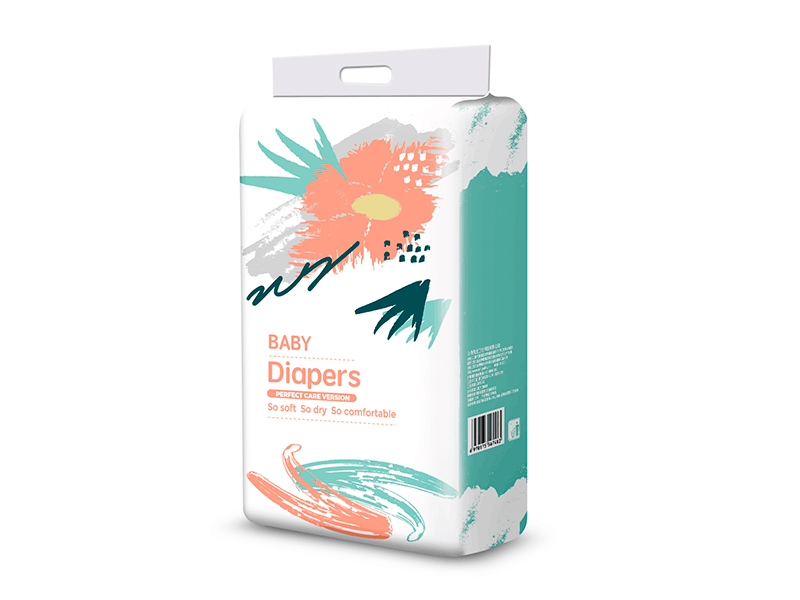
In modern infant care, parents and caregivers expect a diaper to do far more than simply hold moisture. A reliable baby diaper must keep the skin dry, reduce leakage, remain comfortable during movement, support long hours of wear, and offer dependable performance at a reasonable cost. Organic baby diapers in the economic diaper category answer this everyday need by combining practical absorbency, soft materials, and efficient manufacturing design. They are made for families, retailers, distributors, and private label buyers who want a balanced product: comfortable enough for babies, efficient enough for mass-market use, and cost-conscious enough for large-volume sales.
This article introduces the features, market value, manufacturing strengths, and competitive advantages of organic baby diapers produced by Zhejiang Uniquality Nursing Products Technology Co., Ltd., a professional manufacturer with deep experience in nonwoven materials, hygiene products, wet and dry wipes, baby diapers, growing training pants, and related care solutions. The product discussed here belongs to the economic diaper segment, but it is designed to deliver the essential performance expected from modern baby care products. Its structure includes fluff pulp and super absorbent polymer, commonly known as SAP, and although the absorbent core is not layered, it is engineered to provide strong water absorption and stable basic diaper functions.
For many markets, that balance is exactly what customers need. Not every buyer requires a premium diaper with every advanced structural feature. Many families, wholesalers, and private label brands look for a dependable diaper that offers dryness, softness, leakage protection, and value. This product is positioned to serve that demand. It reflects a realistic understanding of global consumer behavior: parents want quality, but they also need affordability, supply reliability, and products that perform consistently in daily use.
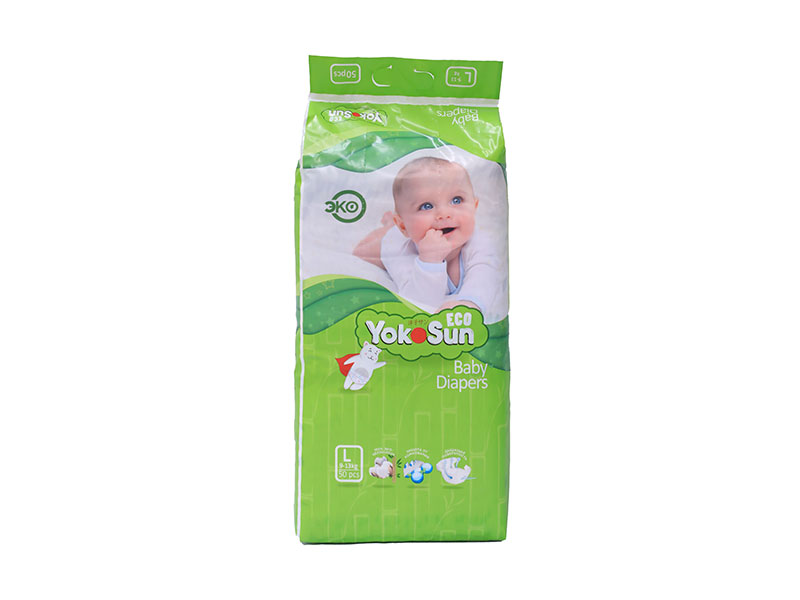
Understanding the Role of Economic Organic Baby Diapers
The diaper market has expanded rapidly in the twenty-first century. Population growth, urban lifestyles, rising hygiene awareness, and the increasing participation of parents in professional work have all contributed to the global demand for disposable baby diapers. The modern diaper is a result of years of technological improvement. Each upgrade in absorbent materials, core design, topsheet softness, backsheet breathability, and production precision represents progress in hygiene science and industrial manufacturing.
Economic diapers occupy an important position in this market. They are not simply low-cost products; rather, they are practical hygiene products designed around essential needs. A good economic diaper must provide sufficient absorbency, help prevent leakage, fit comfortably, and remain safe for delicate baby skin. It must also be efficient to manufacture and stable in quality across large production volumes. This combination makes it attractive for supermarkets, maternal and baby stores, online sellers, institutional buyers, and distributors serving broad consumer groups.
The organic baby diapers discussed here are designed to meet the needs of most customers. They contain fluff pulp and SAP in the absorbent core. Fluff pulp helps distribute liquid and provides bulk, while SAP captures and locks moisture into gel form, reducing wetness on the surface. Although the core is not layered, the water absorption effect remains excellent for everyday diapering needs. This design choice helps maintain cost efficiency while retaining the most important functional elements of a baby diaper.
The term “organic” in this product context reflects a focus on baby care, comfort, and natural-use positioning within the market. For buyers, the product’s value is built on balanced performance rather than unnecessary complexity. It is suitable for brands that want to offer a gentle, dependable diaper product at an accessible price point. In many regions, this is a crucial advantage because affordability directly affects product adoption and repeat purchase rates.
Core Product Advantages
The first advantage of these organic baby diapers is their reliable absorption. A diaper’s most important job is to absorb liquid quickly and retain it effectively. By combining fluff pulp with SAP, the product can take in urine, disperse it through the core, and help keep the baby’s skin drier than basic absorbent materials alone. This contributes to comfort and can help reduce the discomfort associated with prolonged surface wetness.
The second advantage is simplicity of structure. Some premium diapers use multi-layered cores, complex channels, and additional functional materials. Those technologies can be useful, but they also increase cost. This economic diaper focuses on the essentials. Its non-layered core allows buyers to obtain a practical diaper solution without paying for unnecessary features. For markets that are price-sensitive but still quality-conscious, this is a meaningful competitive strength.
The third advantage is suitability for private label programs. Zhejiang Uniquality Nursing Products Technology Co., Ltd. has experience in OEM and ODM services for private label wipes, baby diapers, growing training pants, wet toilet paper, cleansing wipes, and related hygiene products. Private label buyers often need a manufacturer that can provide consistent quality, flexible customization, stable supply, and technical understanding of materials. These diapers are well suited for buyers who want to build or expand a baby care brand with a dependable economic product line.
The fourth advantage is manufacturing reliability. The company behind this product is part of a broader industrial system with decades of experience in nonwoven materials and hygiene product manufacturing. Since its founding in 1987, Kingsafe & Uniquality has developed significant expertise in R&D, production, and sales of medical and hygienic nonwoven materials, nursing products, and high-end clothing interlining. This industrial background supports better material selection, process control, and product consistency.
The fifth advantage is market versatility. Economic organic baby diapers can be positioned for daily home use, retail shelves, e-commerce bundles, promotional packs, export distribution, and institutional procurement. Because the product offers the basic functions of diapers with good absorbency, it can serve a wide range of customers without being limited to a niche segment.
Material Design and Functional Performance
A baby diaper is a layered hygiene system. Even when the absorbent core itself is not layered, the diaper still relies on coordination among multiple components. These typically include a soft topsheet, an absorbent core, a backsheet, elastic components, waist materials, fastening systems, and packaging. Each component must be selected and assembled carefully to achieve comfort, absorbency, and leakage resistance.
The topsheet is the layer that touches the baby’s skin. It should feel soft, allow liquid to pass through quickly, and reduce surface wetness after absorption. A comfortable topsheet helps babies move naturally and reduces friction during crawling, sleeping, playing, and feeding. In economic diapers, softness must be balanced with cost control, so experienced material sourcing is important.
The absorbent core is the central functional area. This product uses fluff pulp and SAP, which is a proven combination in disposable diaper manufacturing. Fluff pulp provides structure and helps guide liquid through the absorbent area. SAP absorbs liquid many times its own weight, forming a gel that helps prevent liquid from returning to the surface. The result is a core that can perform the basic diapering function effectively.
The backsheet helps prevent liquid from leaking outward onto clothes, bedding, or strollers. Depending on product specification, backsheets may be designed to feel cloth-like, breathable, or smooth. A good backsheet contributes to wearer comfort and consumer perception. For private label buyers, the backsheet may also support printing or customized product appearance.
Elastic leg cuffs and waist areas support fit. Babies move constantly, and a diaper must adapt to their legs, hips, and belly without being too tight. Proper elastic design helps reduce side leakage and improves comfort. For economic diapers, fit stability is especially important because it can strongly influence customer satisfaction and repeat purchases.
Fastening tapes or closure systems allow caregivers to adjust the diaper. A secure fit helps maintain the diaper’s position even when the baby rolls, sits, or crawls. Easy fastening also improves the user experience for parents, grandparents, daycare workers, and healthcare staff.
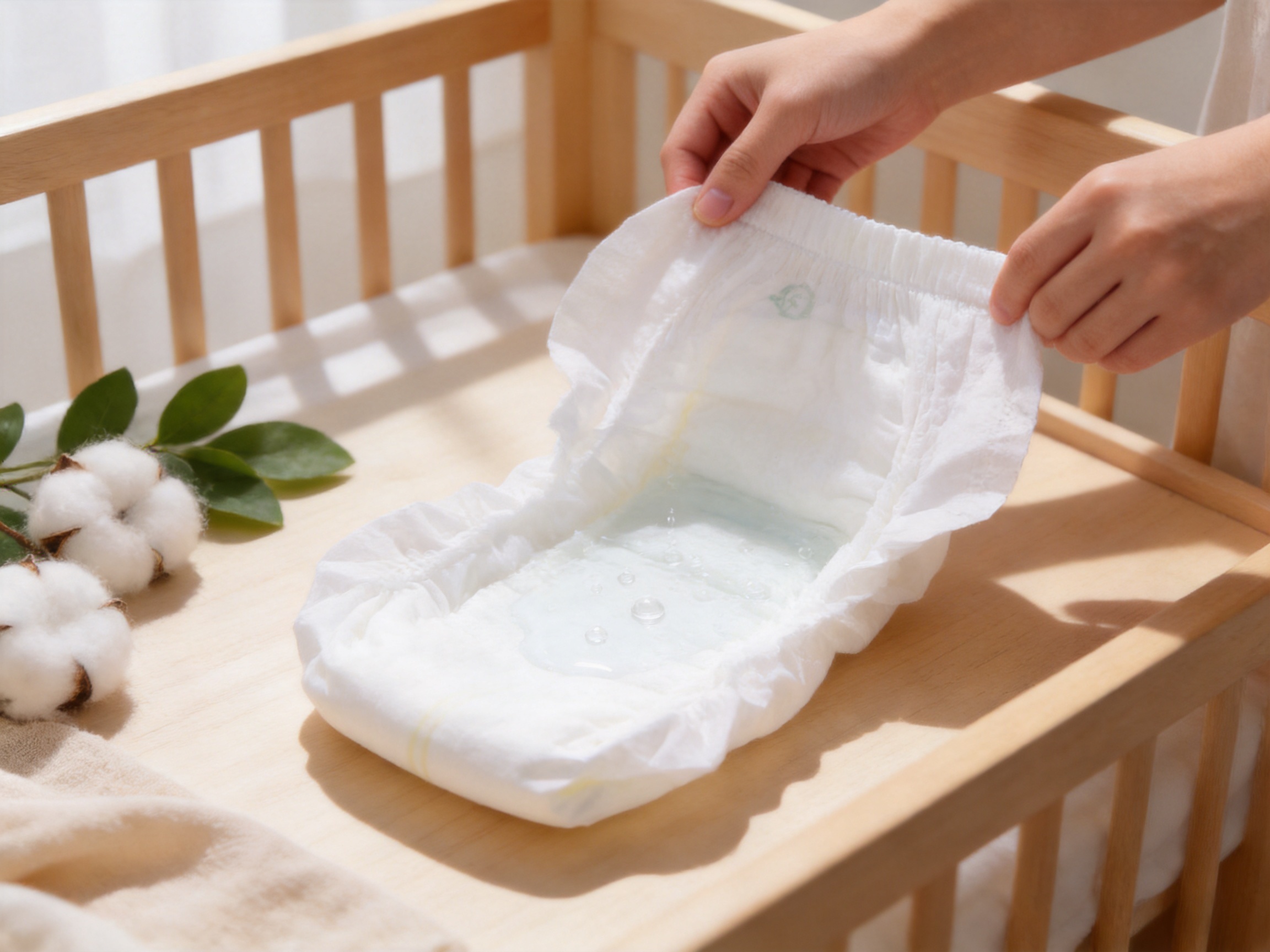
Comparison with Common Competing Products
In a crowded diaper market, competition occurs across many dimensions: price, softness, absorption speed, rewet performance, leakage protection, packaging appeal, brand trust, and supply stability. Premium diapers may offer advanced multi-layer cores or special designs, while low-end products may reduce material cost at the expense of comfort or absorbency. The organic baby diapers described here aim for a middle path within the economic category: practical performance, dependable materials, and controlled cost.
Compared with very low-cost diapers, this product benefits from a manufacturer with strong industrial experience in nonwoven materials and hygiene production. That matters because diaper quality depends heavily on consistency. Poorly controlled products may show uneven SAP distribution, weak sealing, uncomfortable surfaces, or inconsistent sizing. By relying on established manufacturing systems, the product can offer better reliability than many generic low-price competitors.
Compared with premium diapers, this product offers a more accessible cost structure. It does not attempt to compete by adding every possible feature. Instead, it focuses on the core requirements that most users need: absorption, dryness support, fit, comfort, and leak resistance. This makes it attractive for brands that want to reach high-volume consumer groups.
Compared with products from manufacturers with limited OEM experience, these diapers are supported by a company familiar with customization and private label requirements. Buyers can benefit from manufacturing knowledge, product development support, and category experience across diapers, wipes, and other hygiene products. This is especially useful for importers and distributors who want to develop a complete baby care line.
| Evaluation Area | Organic Baby Diapers in the Economic Category | Typical Low-Cost Competitors | Typical Premium Competitors |
|---|---|---|---|
| Absorbent System | Fluff pulp and SAP core with strong basic absorption | May use less SAP or less consistent distribution | May use multi-layer cores and advanced channels |
| Cost Position | Designed for value and broad consumer access | Very low price, often with performance compromise | Higher price due to added features and materials |
| Comfort | Soft, practical, suitable for daily wear | May feel rougher or less stable in fit | Often uses enhanced softness materials |
| Private Label Suitability | Strong OEM and ODM support from an experienced manufacturer | Limited customization or weaker quality control | Possible, but often with higher minimum cost |
| Target Market | Mass market, retail, e-commerce, distribution, daily family use | Highly price-sensitive buyers | Premium buyers seeking advanced features |
This comparison shows the product’s strategic position. It is not designed to be the most expensive diaper on the shelf, nor is it positioned as the cheapest product regardless of quality. Its strength is balance. For many markets, balance is the key to commercial success.
Manufacturing Strength Behind the Product
Zhejiang Uniquality Nursing Products Technology Co., Ltd. benefits from the broader industrial foundation of Kingsafe & Uniquality, a national high-tech enterprise specializing in research, development, production, and sales of medical and hygienic nonwoven materials, nursing products, and high-end clothing interlining. Founded in 1987, the company has accumulated more than three decades of technical experience and manufacturing capability.
The company is headquartered in Changxing, Huzhou, Zhejiang, in the hinterland of the Yangtze River Delta. This region offers convenient land, sea, and air transportation, which supports efficient domestic distribution and international export logistics. Logistics strength is often overlooked in product evaluation, but for diapers and wipes it is crucial. These products are high-volume goods, and reliable shipment schedules help customers maintain inventory, reduce supply gaps, and respond to seasonal demand.
Over the years, the company has established multiple production bases in China, including Foshan in Guangdong, Nantong in Jiangsu, and Wuhan in Hubei. A multi-base production structure enhances manufacturing capacity and resilience. It allows the company to support large orders, diversify production resources, and serve different regional markets more efficiently.
The company has ranked among the top enterprises in China’s industrial textile industry and has been recognized among leading nonwoven manufacturers globally. Its strong position in the nonwovens industry matters directly to diaper manufacturing because disposable hygiene products depend on nonwoven materials. A manufacturer that understands nonwoven production can better control material softness, uniformity, tensile strength, permeability, and compatibility with converting equipment.
Kingsafe introduced advanced production equipment and technology from countries such as Germany, France, and Italy. Internationally advanced equipment supports stable output, precise forming, improved automation, and quality consistency. In hygiene manufacturing, precision is essential. A small variation in material placement, sealing temperature, elastic tension, or cutting accuracy can affect product performance. Advanced production lines reduce such variation and support scalable quality.
The company’s product range includes spunlace nonwoven fabrics, spunmelt nonwoven fabrics, hot air through nonwoven fabrics, flushable and degradable nonwoven fabrics, wet wipes, dry wipes, baby diapers, pull-ups, wet toilet paper, cleansing wipes, and more. This broad product portfolio gives the company material knowledge across medical, maternal and baby, beauty, home, industrial cleaning, clothing, and other fields. Such cross-category experience supports innovation and reliable product development.
Why Nonwoven Expertise Matters in Baby Diapers
Nonwoven materials are central to disposable hygiene products. In baby diapers, nonwovens may be used in topsheets, backsheets, acquisition layers, leg cuffs, waist components, fastening materials, and packaging-related structures. The comfort and performance of a diaper are strongly influenced by the quality of these materials.
A company with deep nonwoven expertise can make better decisions about softness, liquid permeability, strength, breathability, and skin feel. For baby products, these factors are especially sensitive because babies have delicate skin and are unable to communicate discomfort clearly. A rough or poorly performing topsheet can lead to irritation, crying, and dissatisfaction from caregivers. A weak nonwoven component can tear during use. A poorly selected barrier material can increase leakage risk.
Because Kingsafe & Uniquality has a strong background in nonwoven production, it can integrate material understanding into diaper development. This is a meaningful advantage over manufacturers that only assemble purchased components without deep material science experience. When a manufacturer understands both material production and diaper conversion, it can optimize the entire product system more effectively.
Nonwoven expertise also supports customization. Private label customers may request specific softness levels, fabric textures, colors, printing effects, or packaging styles. They may want a diaper positioned for economy, mid-range, or premium segments. A technically experienced manufacturer can evaluate these requirements and recommend practical specifications that align with cost and market goals.
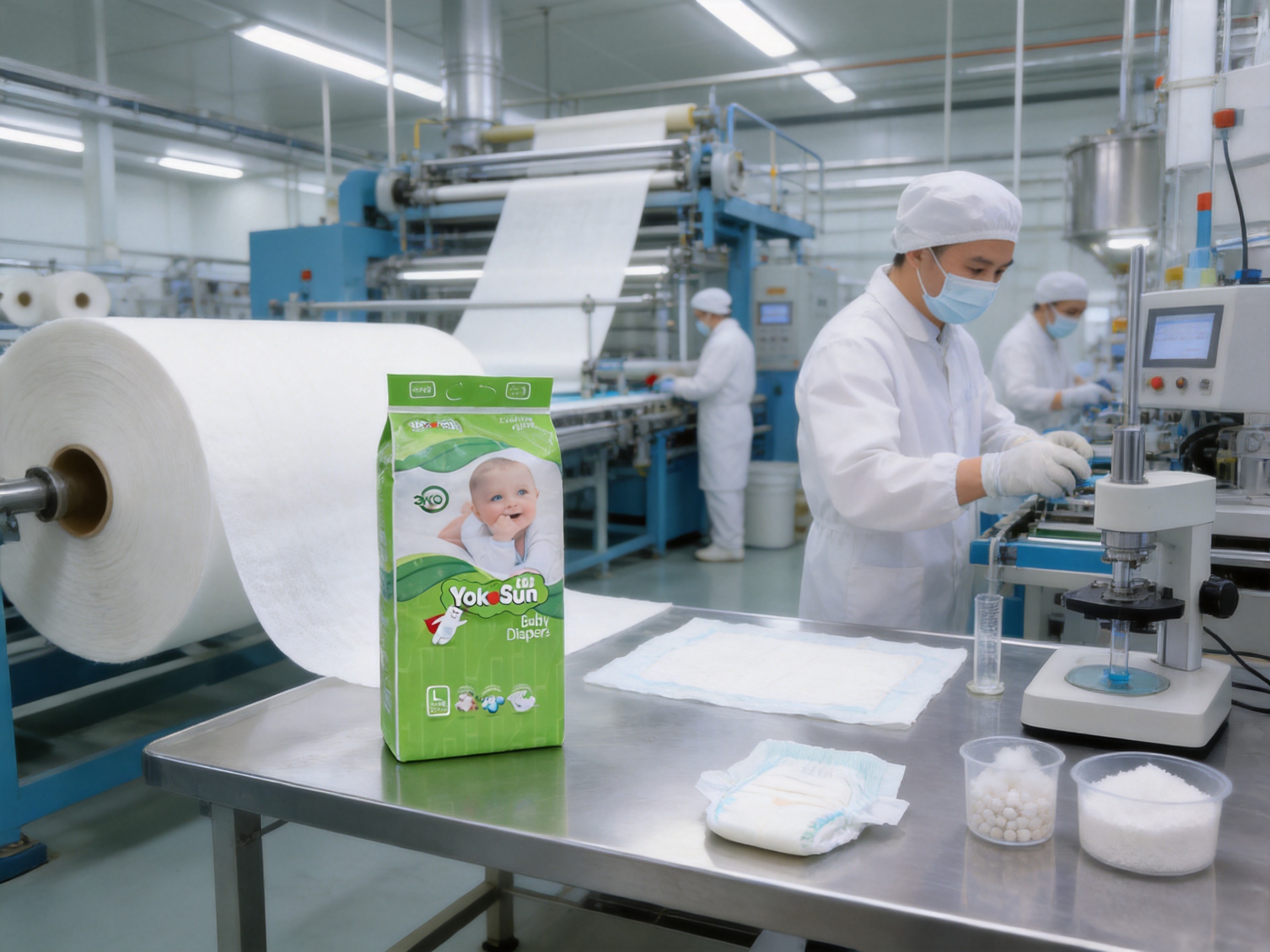
OEM and ODM Value for Private Label Buyers
Private label baby care products have become increasingly important worldwide. Retail chains, e-commerce sellers, distributors, and regional brands often want to offer their own diaper lines. To succeed, they need more than a simple supplier; they need a manufacturing partner that understands product development, packaging, quality control, compliance expectations, and market positioning.
Zhejiang Uniquality Nursing Products Technology Co., Ltd. provides OEM and ODM services for wet and dry wipes, diapers, growing training pants, and related hygiene products. For private label buyers, this means the company can support brand-specific requirements such as size ranges, package counts, absorbency positioning, outer packaging design, product naming, and market segment planning.
OEM service is useful when a buyer already has clear specifications and wants a reliable manufacturer to produce according to those requirements. ODM service is valuable when the buyer needs development support, product recommendations, or adjustments based on target market needs. In both cases, the manufacturer’s experience can reduce product development risk.
For economic organic baby diapers, OEM and ODM flexibility is especially important. Buyers may need to meet different price points in different markets. For example, one region may prefer smaller packs for affordability, while another may prefer bulk packs for online sales. Some customers may prioritize softness, while others focus on absorption or packaging economy. A flexible manufacturer can help create a product that fits those needs without losing control of quality.
Private label buyers also benefit from the company’s experience in related categories such as wipes and wet toilet paper. Baby care customers often buy diapers and wipes together. A supplier that can provide both categories helps simplify procurement, align packaging styles, and build a more complete retail offering. This can improve shelf impact and brand consistency.
Quality Control and Production Consistency
Quality control is one of the most important factors in diaper manufacturing. Parents may forgive a product that is simple, but they are less likely to forgive inconsistency. A diaper that works well in one pack but leaks in the next can quickly lose customer trust. Therefore, stable production processes and systematic inspection are essential.
Effective quality control begins with raw material inspection. Fluff pulp, SAP, nonwoven fabrics, elastic materials, adhesives, tapes, and packaging materials must meet defined standards. Moisture content, weight, thickness, tensile strength, absorbency, and appearance may all be checked depending on the material type. Reliable incoming inspection helps prevent defects before production begins.
During manufacturing, process control is equally important. Production lines must manage material unwinding, core forming, SAP application, adhesive placement, elastic attachment, cutting, folding, and packaging. Each step must remain stable at high speed. Automated and advanced equipment helps maintain precision, but skilled technicians and quality teams are still necessary to monitor performance.
Finished product inspection may include diaper weight, size accuracy, absorbency testing, rewet testing, leakage evaluation, appearance inspection, fastening performance, and packaging checks. For export and private label orders, additional requirements may be applied according to customer specifications.
A manufacturer with decades of experience is more likely to understand the importance of preventive quality management. Instead of only finding defects after production, strong manufacturers work to reduce defect causes at the process level. This leads to more stable products and fewer customer complaints.
Comfort for Babies and Convenience for Caregivers
Comfort is not a luxury in baby diapers; it is a basic requirement. Babies wear diapers for many hours each day, including during sleep and active movement. A diaper must be gentle on the body, flexible around the legs and waist, and capable of keeping wetness away from the skin.
The organic baby diapers described here are designed for practical everyday comfort. The absorbent core helps manage liquid, while the diaper structure supports fit and basic leakage protection. A good economic diaper should not feel stiff or bulky. It should allow babies to move naturally, whether they are lying down, crawling, sitting, or taking early steps.
For caregivers, convenience matters as much as performance. A diaper should be easy to put on, easy to adjust, and easy to remove. It should fit securely without requiring complicated handling. Packaging should be clear, compact enough for storage, and suitable for retail or distribution. These practical details influence user satisfaction.
Parents also value confidence. When a diaper absorbs well and fits properly, caregivers can focus on feeding, play, sleep routines, and family life rather than constantly worrying about leaks. In this sense, a reliable economic diaper provides emotional value as well as functional value.
Cost Efficiency Without Ignoring Quality
Cost efficiency is a defining feature of the economic diaper category. However, cost efficiency should not mean careless production or poor user experience. The best economic diapers control cost intelligently by focusing on essential performance and efficient manufacturing.
This product achieves value through a practical core structure using fluff pulp and SAP. By avoiding unnecessary complexity, it can remain accessible while still delivering effective absorption. This is important for markets where parents need dependable diapers at a price they can afford for daily use.
Manufacturing scale also contributes to cost efficiency. A company with multiple production bases, advanced equipment, and broad product lines can often manage resources more effectively. Scale may improve material procurement, production scheduling, logistics planning, and technical support. These advantages help buyers receive competitive products without sacrificing stability.
For distributors and retailers, cost-efficient products can improve turnover. A diaper that meets daily needs at an attractive price is more likely to generate repeat purchases. For private label brands, this can help build customer loyalty in the mass-market segment.
Market Applications and Buyer Profiles
Organic baby diapers in the economic category are suitable for many business models. In retail, they can be sold as a value-oriented diaper line for families seeking dependable daily use. In e-commerce, they can be packaged in multiple-count bundles, subscription models, or promotional family packs. In wholesale distribution, they can serve regional markets where affordability and consistent supply are key purchase drivers.
Importers may use this product to enter the baby care category with a competitive price point. Retail chains may develop it under a private label brand. Maternal and baby stores may offer it as an accessible alternative to premium imported products. Institutions such as childcare centers may prefer economic diapers because they require large quantities and practical performance.
The product is also useful for emerging markets where disposable diaper penetration is still growing. In these regions, consumers may be transitioning from cloth diapering or mixed-use diapering to disposable products. A cost-effective diaper with reliable basic functions can encourage adoption and improve hygiene convenience.
In mature markets, the product can serve value-conscious families, secondary product lines, or promotional channels. Even consumers who purchase premium diapers may choose economic diapers for daytime use, daycare, travel, or backup supplies. Therefore, the product’s potential market is broad.
Sustainability and Responsible Product Thinking
Modern consumers increasingly consider environmental impact when choosing disposable hygiene products. Diapers are single-use products, so responsible material selection, efficient manufacturing, and waste-conscious design are important topics. Economic diapers must balance affordability with responsible production practices.
The company’s broader product portfolio includes flushable and degradable nonwoven fabrics, showing experience in material innovation related to environmental performance. While the specific diaper discussed here is positioned as an economic product with fluff pulp and SAP, the manufacturer’s nonwoven research background can support future development in more sustainable hygiene solutions.
Responsible manufacturing also includes efficient use of materials, stable production that reduces waste, and quality control that avoids defective batches. A product that performs properly is itself less wasteful than a poorly made diaper that requires frequent changes due to leakage or failure. Absorbency, fit, and reliability can all contribute indirectly to more efficient usage.
For private label customers, sustainability positioning may be adjusted according to product specifications and market needs. Some buyers may request packaging changes, material adjustments, or product lines that emphasize eco-conscious features. A manufacturer with R&D capability is better positioned to explore these possibilities.
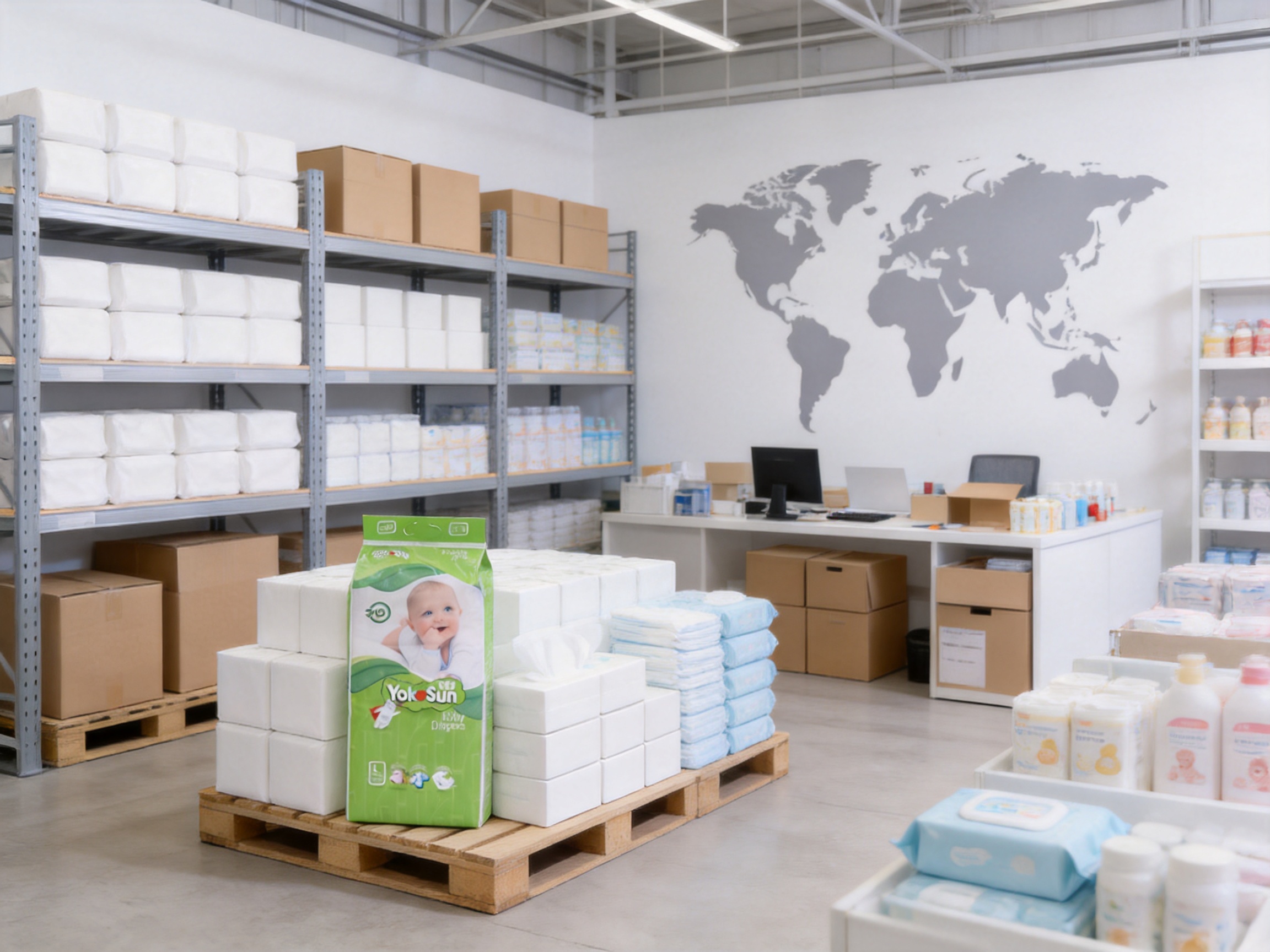
The Company’s Industrial Foundation and Global Relevance
Zhejiang Uniquality Nursing Products Technology Co., Ltd. is supported by a company history that began in 1987. Over more than 30 years, Kingsafe & Uniquality has grown into a significant enterprise in China’s industrial textile industry. It has ranked among the top companies in China’s nonwovens sector and among important global nonwoven manufacturers for multiple years. This reputation reflects long-term capability rather than short-term market activity.
The company’s enterprise spirit includes dedication, innovation, inclusiveness, delicacy, and cooperation. These values are relevant to hygiene product manufacturing because the industry requires continuous improvement, careful process control, and close collaboration with customers. Baby diapers and wipes may appear simple to consumers, but behind them are complex decisions about materials, machinery, testing, packaging, and supply chain management.
The company has established long-term cooperative relationships with well-known brands domestically and internationally. Such cooperation indicates the ability to meet professional customer expectations. Brand customers often require stable specifications, consistent delivery, documentation support, and responsiveness. Experience with demanding customers strengthens manufacturing discipline.
The company’s products cover medical, maternal and baby, beauty, home, industrial cleaning, clothing, and other fields. This diversified application experience supports technical learning across categories. For example, softness knowledge from wipes, absorbency knowledge from hygiene products, and strength knowledge from industrial materials can all contribute to product improvement.
How Advanced Manufacturing Improves Diaper Performance
Advanced manufacturing is not only about faster production. It directly affects diaper performance. In a diaper production line, materials must be combined precisely at high speed. If SAP is unevenly distributed, some areas may become saturated quickly while others remain underused. If elastic tension is inconsistent, the diaper may feel too tight or too loose. If sealing is weak, leakage or product separation may occur. If cutting is inaccurate, shape and fit may be affected.
Equipment introduced from advanced international sources helps improve precision and process stability. German, French, and Italian technology has long been respected in industrial manufacturing for engineering quality. When combined with experienced operators and quality systems, advanced equipment supports consistent product output.
Automation can also improve hygiene and efficiency. Disposable baby diapers must be produced in clean, controlled environments with minimal unnecessary handling. Automated systems reduce manual contact and help maintain production speed. This supports both product safety and cost control.
Manufacturing strength also supports faster product development. When a customer requests changes in absorbency, size, packaging, or materials, an experienced manufacturer can test feasibility, adjust equipment settings, evaluate results, and refine specifications. This is particularly valuable for private label buyers competing in fast-changing retail markets.
Packaging, Branding, and Retail Presentation
Packaging plays a major role in diaper sales. It protects the product, communicates brand positioning, provides size and usage information, and influences consumer trust. For economic diapers, packaging must be attractive but cost-effective. It should stand out on the shelf while maintaining a practical price structure.
Private label buyers may request customized packaging designs for different markets. Some may prefer bright colors and baby-oriented graphics, while others may choose a clean and natural style. Package size can also vary. Small packs are useful for trial purchases and lower-income consumers, while large packs support family value and e-commerce sales.
The manufacturer’s OEM and ODM experience can help buyers align packaging with product positioning. A diaper designed for value should communicate reliability, comfort, and affordability. Claims should be practical and supported by the product’s actual performance. Overpromising can harm long-term brand trust, while clear and accurate messaging builds repeat purchase.
Retail presentation also includes barcode requirements, carton strength, pallet loading, export markings, and shipping efficiency. Professional manufacturing partners understand these operational details and can support smoother supply chain execution.
Why Buyers Choose a Balanced Economic Diaper
Many buyers choose economic diapers because they understand the real behavior of diaper consumers. Babies use multiple diapers per day. This makes diapers a recurring household expense. Even parents who care deeply about quality must consider monthly cost. A product that provides dependable performance at a reasonable price can become a family’s regular choice.
For retailers, balanced economic diapers can attract foot traffic and support repeat sales. For distributors, they offer a product that can move through multiple channels. For private label brands, they provide an entry point into a category with strong recurring demand. For institutional users, they support practical budget management.
The organic baby diapers discussed here are especially suitable for buyers who value essential performance over excessive feature inflation. The non-layered core is not a weakness when viewed in the correct context. It is a design choice that helps maintain affordability while still offering excellent water absorption for basic diaper needs. Most customers need a diaper that works reliably in daily situations, and this product is built around that reality.
Practical Guidance for Selecting Diaper Specifications
When developing a diaper product line, buyers should consider target market, price point, absorbency requirements, size range, packaging style, and sales channel. A value-oriented diaper for emerging markets may prioritize affordability and basic absorbency. A retail private label in a competitive urban market may require better softness, attractive packaging, and multiple size options. An e-commerce product may require bulk packaging and strong carton protection.
Buyers should also consider the age and weight range of babies. Newborn diapers require special softness and fit. Medium and large sizes must support more active movement and higher urine volume. Training pants may be considered as a related product for older babies and toddlers. Since the company also manufactures growing training pants, buyers can develop a broader baby care range from one supplier.
Testing is important before launching. Buyers may request samples, conduct absorption tests, evaluate fit, check packaging, and compare against local competitors. Feedback can then be used to refine specifications. A professional manufacturer can support this process and help identify practical improvements.
Q&A Section
What type of diaper is this product?
It is an organic baby diaper positioned in the economic diaper category. It is designed to provide practical daily absorbency, comfort, and value for broad market use.
What materials are used in the absorbent core?
The absorbent core contains fluff pulp and SAP. Fluff pulp helps distribute liquid, while SAP absorbs and locks in moisture to support dryness and leakage resistance.
Is the core layered?
The core is not layered. However, the water absorption effect of the core is excellent for basic diaper functions, making the product suitable for most everyday customer needs.
Who is this diaper suitable for?
It is suitable for families, retailers, wholesalers, distributors, e-commerce sellers, private label brands, and institutions seeking dependable baby diapers at an accessible price point.
How does this product compare with premium diapers?
Premium diapers may include additional layers, advanced channels, or specialty materials. This economic diaper focuses on essential performance and cost efficiency, making it more accessible while still providing reliable absorbency and comfort.
How does it compare with very low-cost competitors?
Compared with many very low-cost diapers, this product benefits from stronger manufacturing experience, nonwoven material expertise, and more reliable quality control. These factors can improve consistency and user satisfaction.
Can it be customized for private label brands?
Yes. Zhejiang Uniquality Nursing Products Technology Co., Ltd. provides OEM and ODM support for private label baby diapers, wipes, growing training pants, and related hygiene products.
Why is nonwoven expertise important?
Nonwoven materials affect softness, strength, liquid permeability, and comfort. A manufacturer with deep nonwoven experience can better control these qualities and develop diapers that meet practical market requirements.
What are the company’s manufacturing strengths?
The company has more than 30 years of industrial experience, multiple production bases, advanced equipment and technology introduced from Germany, France, and Italy, and a broad product portfolio covering nonwoven materials and hygiene products.
Is this product suitable for export markets?
Yes. Its balanced cost-performance structure, OEM and ODM flexibility, and support from an experienced manufacturer make it suitable for international distribution and private label export programs.
Conclusion
Organic baby diapers in the economic diaper category represent a practical and commercially valuable solution for today’s hygiene market. They provide the essential functions that parents and caregivers expect: absorbency, comfort, fit, leakage support, and ease of use. By using fluff pulp and SAP in the absorbent core, the product achieves effective water absorption while maintaining an accessible cost structure.
The product’s greatest strength is balance. It does not rely on unnecessary complexity or excessive premium features. Instead, it focuses on what most customers need in daily life. This makes it suitable for broad consumer groups, private label development, retail distribution, e-commerce sales, and institutional use.
Behind the product is the manufacturing strength of Zhejiang Uniquality Nursing Products Technology Co., Ltd. and the long industrial foundation of Kingsafe & Uniquality. With a history beginning in 1987, advanced production equipment, multiple manufacturing bases, nonwoven material expertise, and experience in OEM and ODM hygiene products, the company offers more than simple production capacity. It offers technical knowledge, supply reliability, customization capability, and quality consistency.
For buyers seeking a dependable economic baby diaper, this product provides a compelling option. It competes effectively against low-cost products by offering stronger manufacturing support and consistency. It competes with premium products by offering better affordability and practical performance for everyday use. In a market where parents need both care and value, this diaper meets a real and lasting demand.
References
1. Disposable Hygiene Products: Materials, Design, and Performance Principles. Industry Technical Review.
2. Nonwoven Materials in Medical and Hygiene Applications. Textile Engineering Reference Series.
3. Baby Diaper Absorbency and Comfort Evaluation Methods. Hygiene Product Quality Control Manual.
4. Global Trends in Infant Care and Disposable Diaper Markets. Consumer Goods Market Research Report.
5. Super Absorbent Polymers and Fluff Pulp in Modern Diaper Cores. Applied Materials Science Review.