中文简体
中文简体 English
 日本語
日本語 русский
 Español
Plum Blossom Dot Spunbond and Meltblown, also known as spunmelt nonwoven fabric, is a multifunctional polypropylene-based material designed for medical protection, sanitary hygiene, filtration, personal care, and selected industrial applications. Its value lies in the combination of carefully engineered fiber formation, multilayer web structures, customizable surface patterns, functional additives, and application-specific finishing technologies. Compared with many ordinary nonwoven fabrics, this product is not limited to a single function. It can be manufactured as soft, hydrophilic, water-repellent, anti-static, flame-retardant, anti-bacterial, anti-skid, ageing-resistant, or barrier-enhanced material according to the final product requirement.
The material is made primarily from polypropylene, supported by color masterbatch, functional masterbatch, and other performance additives. Through advanced spunbond, spunmelt, and meltblown technologies, the fabric can be produced in structures including SS, SSS, SMS, SMMS, SSMMS, SSSMS, and M. These structures allow the fabric to serve different needs, from soft diaper topsheets and core covers to surgical gowns, isolation clothing, protective clothing, mask layers, car interiors, non-slip mats, agricultural covers, and mattress surface layers.
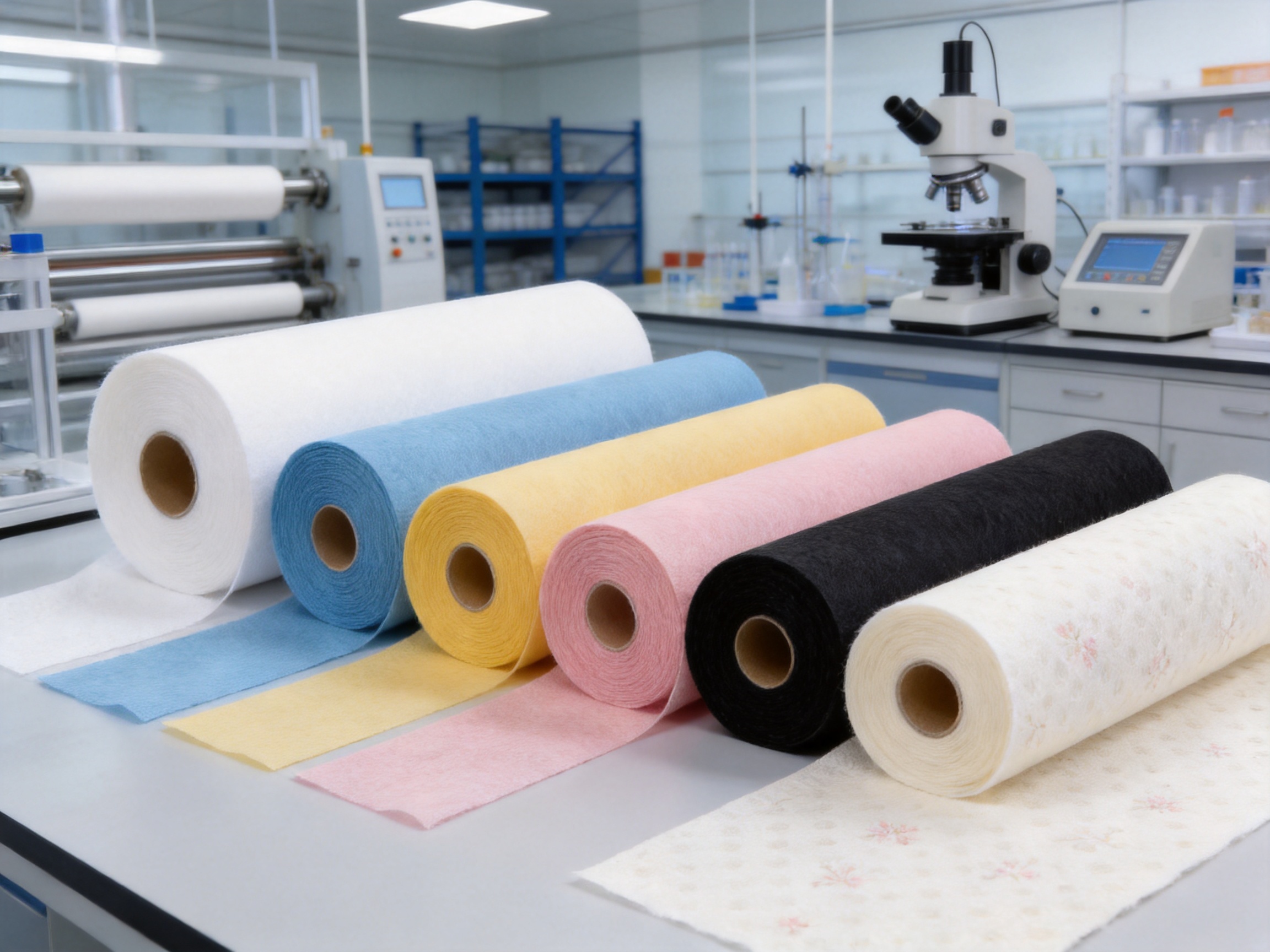
One of the most recognizable features of this product is the Plum Blossom Dot pattern. The pattern is not only decorative; it also contributes to surface identity, bonding uniformity, and product differentiation. The pattern can be customized, as can the color, weight, softness, scent, function, and final performance level. Standard colors include white, blue, yellow, pink, and black, while custom colors can be developed for brand owners and manufacturers who require a specific visual identity.
Plum Blossom Dot Spunbond & Meltblown(Spunmelt) Non-woven Fabric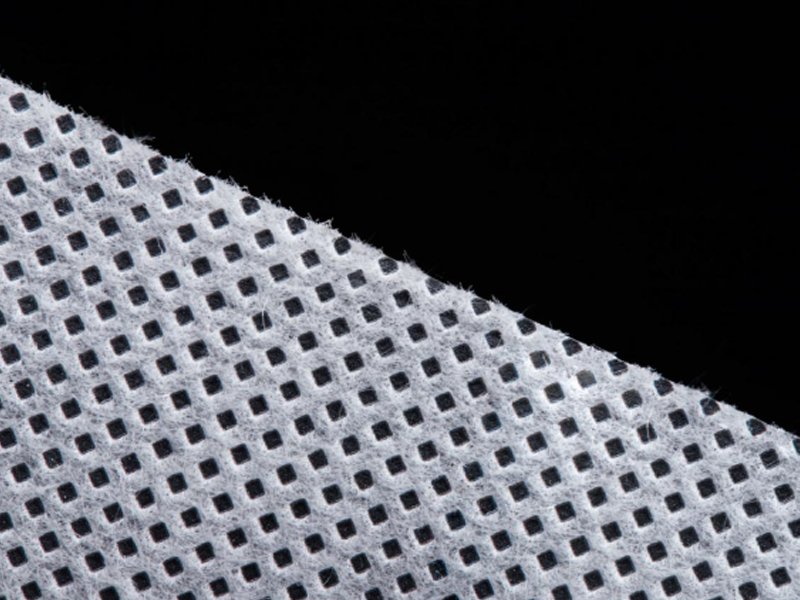
Product Overview and Core Material Design
The fabric is based on polypropylene, a widely used polymer in the nonwoven industry because of its light weight, processability, chemical resistance, and suitability for hygiene and medical applications. Polypropylene can be converted into continuous filaments through spunbond technology or into very fine fibers through meltblown technology. By combining these technologies, the fabric can achieve both mechanical strength and filtration or barrier properties.
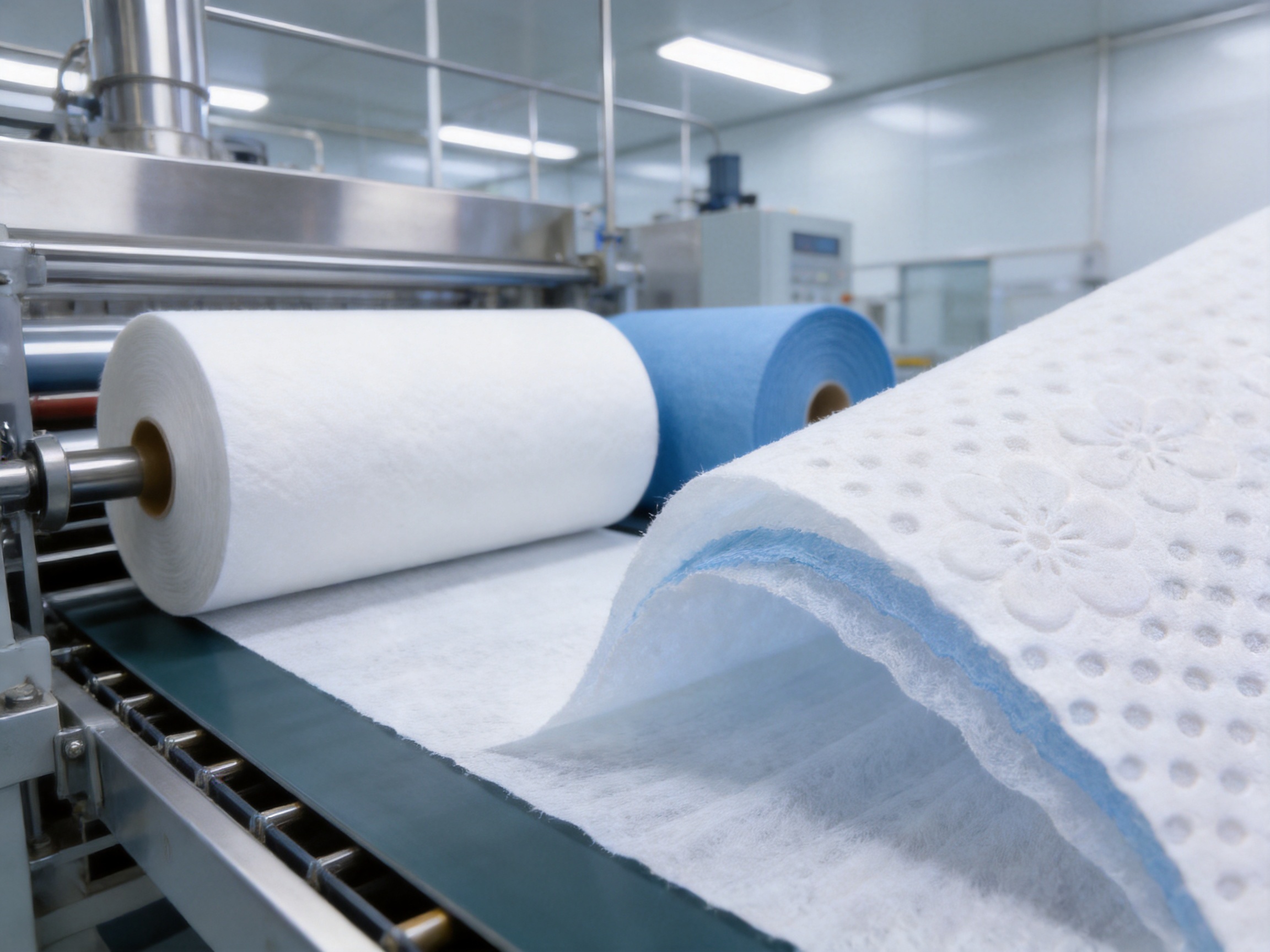
In spunbond production, molten polypropylene is extruded through spinnerets to form continuous filaments. These filaments are drawn, laid onto a moving belt, and bonded to form a web. Spunbond layers generally provide strength, dimensional stability, and surface durability. In meltblown production, high-velocity hot air attenuates molten polymer into microfibers, creating a web with fine pore structure. Meltblown layers are particularly useful for filtration, bacterial barrier performance, and liquid resistance.
Spunmelt structures such as SMS, SMMS, and SSMMS integrate these benefits. The outer spunbond layers provide strength and comfort, while the inner meltblown layers improve barrier and filtration performance. This structure is especially important for medical gowns, protective garments, isolation apparel, masks, and hygiene products where both comfort and protection are required.
Unlike basic single-layer nonwovens, this product can be engineered as a multilayer composite directly during production. This helps reduce the need for secondary lamination while maintaining consistency across the fabric width. For manufacturers, this means stable processing, better conversion efficiency, and fewer quality variations in the final product.
Key Technologies: SS, SSS, SMS, SMMS, SSMMS, SSSMS, and Meltblown
The product can be produced through multiple technical routes. Each structure offers a different balance of softness, strength, barrier performance, breathability, and cost efficiency. This flexibility is a major advantage over suppliers that offer only simple spunbond or single-function nonwoven fabrics.
SS is a two-beam spunbond structure. It is commonly used where moderate strength, softness, and economical performance are required. SSS is a three-beam spunbond structure, offering improved uniformity, tensile strength, and surface coverage. It is suitable for mask surface and inner layers, hygiene materials, car covers, agricultural sheds, car interiors, and other applications that require stable fabric formation.
SMS combines spunbond, meltblown, and spunbond layers. It provides stronger barrier properties than pure spunbond while retaining useful mechanical strength and comfort. SMMS uses two meltblown layers between spunbond layers, improving barrier protection and filtration consistency. SSMMS and SSSMS add further spunbond reinforcement, improving strength, surface uniformity, and processing stability for demanding medical and protective applications.
The M structure refers to meltblown fabric, which is commonly used as a mask filter layer. Meltblown products can be manufactured as water electret meltblown or electric electret meltblown. Water electret meltblown can reach filtration performance aligned with European FFP2 and FFP3 requirements, while electric electret meltblown can achieve BFE99+ and PFE99 performance levels. These options provide manufacturers with flexibility for different mask standards, market positioning, and regulatory requirements.
Plum Blossom Dot Pattern and Custom Surface Engineering
The Plum Blossom Dot pattern gives the fabric a recognizable bonding appearance. In nonwoven manufacturing, bonding pattern design affects more than aesthetics. It influences softness, tensile performance, abrasion behavior, drape, thickness, and the tactile impression experienced by users. A well-designed dot pattern can help maintain fabric integrity while preserving a pleasant hand feel.
Many commodity nonwovens use standard square or diamond embossing patterns with limited differentiation. The Plum Blossom Dot pattern offers a more distinctive surface, helping downstream brands create a more refined product experience. This is particularly valuable in hygiene, medical, and personal care products, where the user may associate surface softness and visual cleanliness with product quality.
The pattern can be customized. For private-label manufacturers, medical product producers, hygiene brands, and industrial converters, this means the fabric can be matched to a product family, customer specification, or performance objective. Pattern customization can also support anti-counterfeiting differentiation and brand recognition in competitive markets.
Functional Advantages Over Conventional Nonwoven Fabrics
The product offers several advantages compared with conventional nonwoven alternatives. First, it provides broad structural flexibility. Many suppliers can produce only SS or SMS material, but this fabric can be manufactured in SS, SSS, SMS, SMMS, SSMMS, SSSMS, and M structures. This allows buyers to select a precise structure rather than compromise with a general-purpose fabric.
Second, the functional range is wide. The fabric can be made with three anti performance, meaning anti-alcohol, anti-blood, and anti-grease properties. It can also be made anti-static, water-repellent, hydrophilic, super soft, soft, flame-retardant, anti-skid, anti-bacterial, or ageing-resistant. This breadth of functionality allows one material platform to serve medical apparel, diaper components, masks, automotive interiors, agricultural covers, non-slip mats, and more.
Third, the weight range is highly customizable. Spunbond and spunmelt products can be manufactured from 8 gsm to 80 gsm, while meltblown products can be manufactured from 20 gsm to 50 gsm. This gives converters the ability to balance cost, strength, barrier performance, opacity, softness, and final product weight. Lightweight materials are useful for hygiene products and mask inner layers, while heavier structures are suitable for protective garments, industrial covers, and specialty applications.
Fourth, the fabric can be customized in color and sensory features. White, blue, yellow, pink, black, and other colors can be produced. Scent options such as mint and apple can be customized, and aloe essence can be added to hydrophilic products. This is especially useful in personal care categories where softness, skin feel, fragrance, and perceived freshness influence consumer choice.
Fifth, the product benefits from advanced manufacturing control. High-performance nonwovens require stable fiber formation, precise web uniformity, accurate gram weight control, reliable bonding, and consistent functional treatment. Manufacturing strength is therefore not only about equipment capacity; it is about process knowledge, quality management, raw material control, and application understanding.
Application-Specific Performance Table
Application |
Recommended Structure or Material |
Typical Specification |
Main Function |
Surgical gowns |
SSMMS |
37 gsm or 45 gsm, blue |
Anti-alcohol, anti-blood, anti-grease barrier performance |
Isolation clothing |
SMMS |
26 gsm, yellow |
Water repellency and medical protection support |
Isolation or protective clothing |
SSMMS |
45 gsm, white |
Water repellency and improved barrier strength |
Mask surface and inner layer |
SSS |
20 gsm, 25 gsm, 30 gsm, or 50 gsm, white |
Anti-bacterial, skin-friendly, and super soft performance |
Diaper anti-leakage protection |
SSMMS |
12 gsm, white or creamy white |
Water repellency with soft or cotton-soft touch |
Diaper core cover |
SS, SSS, or SMS |
12 gsm, white |
Hydrophilic liquid transfer |
Pull-ups or period pants waist |
SS or SSS |
15 gsm or 16 gsm, creamy white |
Soft, super soft, or cotton-soft comfort |
Car covers and agricultural sheds |
SSS |
35 gsm, white |
Ageing resistance |
Car interiors |
SSS |
40 gsm, white |
Flame retardant performance |
Non-slip mats |
SSS |
36 gsm, white |
Single-side anti-skid function |
Mask filter layer |
Meltblown |
25 gsm, white |
Water electret FFP2 or FFP3 performance, or electric electret BFE99+ and PFE99 performance |
Medical Protection Applications
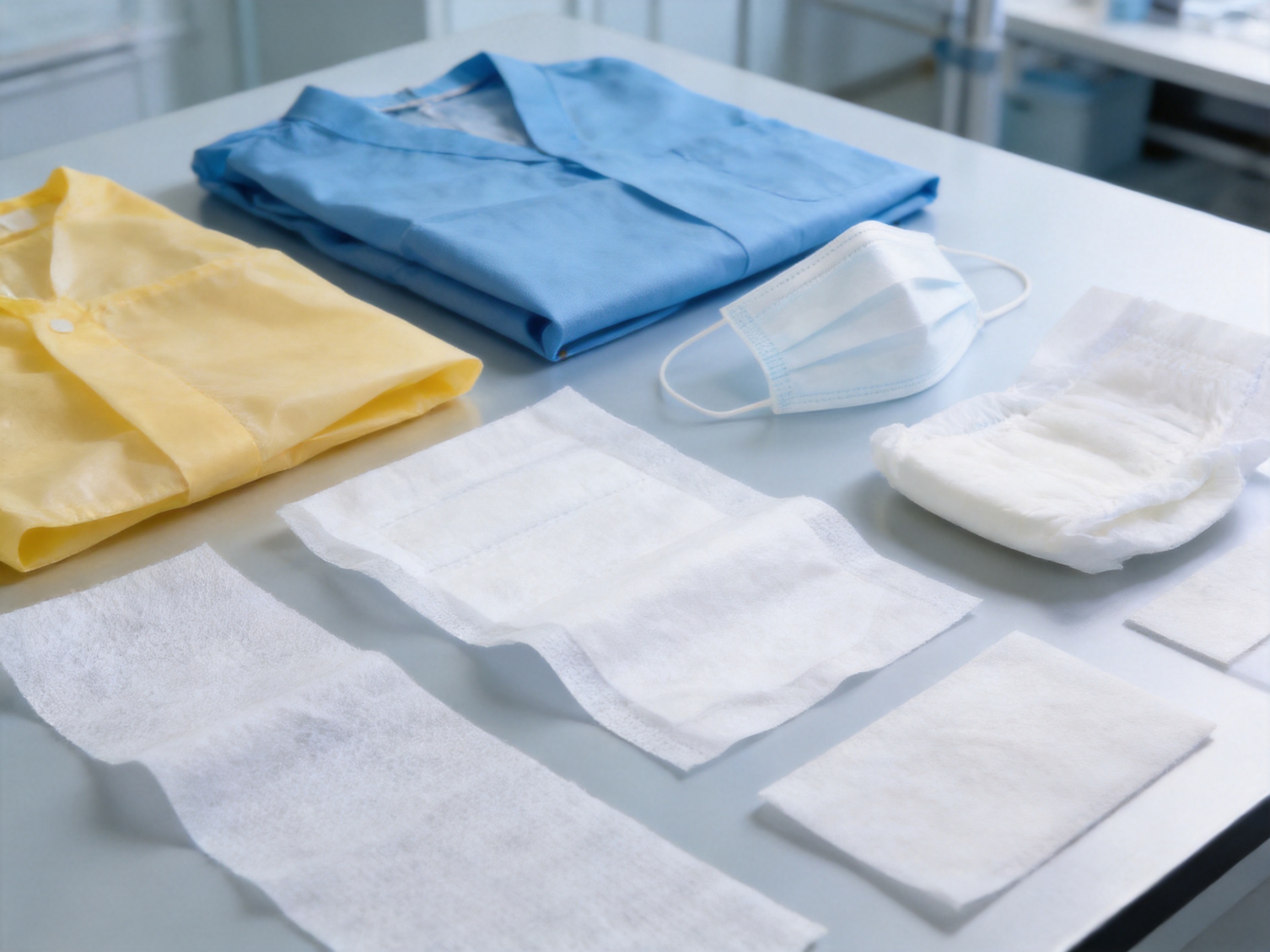
Medical protective textiles must meet demanding requirements. They need to protect against liquid penetration, support comfort during long wear, maintain strength during movement, and remain compatible with garment conversion processes. Plum Blossom Dot spunmelt fabric is especially suited for surgical gowns, isolation clothing, protective clothing, and mask components because it can combine strength, breathability, liquid repellency, and barrier performance.
For surgical gowns, 37 gsm and 45 gsm SSMMS blue fabric with three anti performance can be used. The three anti function provides resistance to alcohol, blood, and grease, which is important in operating rooms, clinical settings, and other environments where exposure to fluids may occur. The SSMMS structure provides multiple layers, allowing the fabric to maintain strength while supporting barrier requirements.
For isolation clothing, 26 gsm SMMS yellow fabric with water repellency can meet the needs of disposable protective apparel where light weight and barrier support are both important. For isolation or protective clothing requiring higher strength, 45 gsm SSMMS white water-repellent fabric provides a heavier and more robust option.
Compared with lower-grade nonwovens, the major advantage is the ability to tune the fabric according to the protective level. A simple spunbond material may be comfortable but insufficient in barrier performance. A heavy laminated material may provide protection but reduce breathability and comfort. Spunmelt structures provide a balanced solution because the meltblown layer contributes barrier properties while spunbond layers support strength and wearing comfort.
Mask Materials and Filtration Performance
Mask manufacturing requires multiple fabric layers with different functions. The surface layer must provide a clean appearance, stability, and often water repellency. The inner layer must be skin-friendly, soft, and comfortable against the face. The filter layer must provide particle and bacterial filtration efficiency while keeping breathing resistance within acceptable limits.
For mask surface and inner layers, SSS white fabric in 20 gsm, 25 gsm, 30 gsm, or 50 gsm specifications can be made anti-bacterial, skin-friendly, and super soft. These qualities help improve the wearer experience and support efficient mask conversion. The softness of the inner layer is especially important because discomfort can reduce user compliance during extended wear.
For the filter layer, 25 gsm meltblown fabric can be produced as water electret meltblown or electric electret meltblown. Water electret meltblown can reach filtration performance corresponding to FFP2 and FFP3 requirements. Electric electret meltblown can reach BFE99+ and PFE99 performance. This range gives mask manufacturers options for medical masks, respirator-type products, and high-filtration protective masks.
Electret treatment is a key technology in modern meltblown filtration. It improves filtration by adding electrostatic attraction, allowing the fabric to capture particles efficiently without relying only on dense physical structure. This helps maintain filtration efficiency while supporting breathability. Compared with ordinary meltblown fabric without reliable electret stability, a well-controlled electret process can deliver better and more durable filtration performance.
Hygiene and Personal Care Applications
In hygiene products, nonwoven fabrics directly influence comfort, dryness, softness, liquid management, and consumer perception. Diapers, pull-ups, period pants, core covers, and anti-leakage structures require different fabric behaviors. Some layers must repel liquid, while others must quickly transfer liquid into an absorbent core. Some layers must be extremely soft, while others must provide elasticity support or structural stability.
For diaper anti-leakage protection, 12 gsm SSMMS white or creamy white fabric can be made water-repellent and super soft, cotton soft, or soft. This is valuable for three-dimensional leak guards where liquid resistance and skin comfort are both necessary. A harsh or stiff material may irritate skin, while an insufficiently water-repellent material may reduce leakage protection. The ability to provide both softness and repellency is a competitive advantage.
For core covers, 12 gsm SS, SSS, or SMS white hydrophilic fabric can help transfer liquid into the absorbent core. Hydrophilicity is essential in absorbent hygiene products because the material must allow fluid to pass through quickly rather than remaining on the surface. By adjusting hydrophilic treatment, the fabric can be matched to diaper design, absorbent core structure, and product positioning.
For pull-ups and period pants waist components, 15 gsm and 16 gsm SS or SSS creamy white fabric can be made super soft, cotton soft, or soft. Waist materials require a pleasant touch, stable processing, and compatibility with elastic components. A uniform SSS structure can improve surface consistency and strength, helping converters maintain production efficiency.
Special sensory customization also adds value in hygiene applications. Mint and apple scents can be customized, while aloe essence can be added to hydrophilic products. These features can help consumer brands develop differentiated product lines. In competitive diaper and feminine care markets, sensory details often influence repeat purchase behavior.
Industrial, Automotive, Agricultural, and Home Uses
Beyond medical and hygiene categories, Plum Blossom Dot spunbond and spunmelt nonwoven fabric can be used for cotton cloth substitutes, mattress surface layers, car covers, car interiors, agricultural sheds, and non-slip mats. These applications require a different balance of properties such as ageing resistance, flame retardancy, anti-skid surface behavior, strength, and appearance.
For car covers and agricultural sheds, 35 gsm SSS white fabric with ageing resistance can be used. Ageing resistance helps the material withstand environmental exposure, extending useful life compared with ordinary nonwoven fabrics that may degrade quickly under sunlight, heat, or weathering conditions. This makes the product suitable for protective coverings and temporary outdoor or semi-outdoor use.
For car interiors, 40 gsm SSS white fabric with flame-retardant function provides a solution for applications where safety and interior material performance matter. Flame retardancy must be carefully engineered so that it supports safety performance without excessively compromising processing stability or fabric feel.
For non-slip mats, 36 gsm SSS white fabric with single-side anti-skid performance can improve grip and stability. This function is useful for household, industrial, and converted mat products where surface friction is important. Compared with standard nonwovens that may slip easily, anti-skid treatment improves practical usability.
Customization Capabilities
Customization is one of the strongest features of this product platform. Buyers can specify structure, pattern, color, weight, softness, barrier function, hydrophilic or hydrophobic behavior, special additive, scent, and application requirement. The fabric can be developed for high-speed conversion lines, private-label products, medical protective apparel, hygiene brands, or industrial materials.
The weight range is broad. Spunbond and spunmelt fabric can be customized from 8 gsm to 80 gsm, covering ultra-light hygiene layers through heavier protective and industrial materials. Meltblown fabric can be customized from 20 gsm to 50 gsm, supporting different filtration and barrier designs.
Color customization allows the fabric to match product categories and market expectations. Blue is common for surgical gowns, yellow for isolation clothing, white for masks and hygiene products, creamy white for diaper and waist components, and black or other colors for specialty applications. Color masterbatch selection must be controlled carefully to maintain uniformity, safety, and compatibility with functional treatments.
Functional customization includes water repellency, hydrophilicity, anti-static behavior, anti-bacterial treatment, anti-skid treatment, flame retardancy, ageing resistance, and three anti performance. These functions can be selected individually or in combination, depending on the material structure and application requirement. This allows the fabric to move beyond commodity status and become an engineered material.
Advanced Manufacturing Processes and Quality Strength
High-quality nonwoven production depends on process discipline. The manufacturer behind this product has developed extensive experience in medical and hygienic nonwoven materials, nursing products, and high-end clothing interlining. Founded in 1987, Zhejiang Uniquality Nursing Products Technology Co., Ltd., together with Kingsafe and Uniquality operations, has built decades of expertise in research, production, and sales of nonwoven materials and related finished products.
The company has introduced advanced production equipment and technologies from Germany, France, and Italy. These international production resources support stable extrusion, filament drawing, web formation, bonding, meltblown fiber control, and finishing processes. In nonwoven manufacturing, equipment quality is critical because slight instability in temperature, air flow, spinneret condition, bonding pressure, or line speed can affect thickness, strength, filtration, and appearance.
The company has also developed multiple production bases in China, including locations in Guangdong, Jiangsu, and Hubei, with headquarters in Changxing, Huzhou, Zhejiang. This production network helps support large-scale supply, diversified product manufacturing, and reliable delivery. For global and domestic customers, supply stability is a major purchasing factor, especially in medical and hygiene markets where interruptions can affect public health and consumer product availability.
Over more than three decades, the company has become a leading enterprise in China’s industrial textile sector. It has ranked among the top companies in China’s nonwovens industry for many consecutive years and has been listed among the top global nonwovens manufacturers for multiple years. This industrial position reflects not only capacity but also sustained product development, customer cooperation, and process improvement.
R&D and Application Knowledge
Research and development is especially important for nonwoven materials because the same polymer can behave very differently depending on fiber diameter, web uniformity, layer structure, additive formula, bonding pattern, and finishing chemistry. A supplier with strong R&D capability can help customers solve practical application problems rather than simply provide fabric rolls.
For medical applications, R&D must consider liquid barrier performance, strength, linting, breathability, and compatibility with garment cutting, sewing, or ultrasonic sealing. For hygiene applications, research must focus on softness, skin friendliness, hydrophilic speed, rewet performance, and comfort. For masks, filtration efficiency, breathing resistance, charge stability, and layer compatibility must be balanced. For automotive or industrial uses, flame retardancy, ageing resistance, anti-skid performance, and dimensional stability may be the priority.
This broad application understanding allows the product to be developed in a customer-oriented way. Instead of forcing customers to adapt to a standard material, the fabric can be adjusted to meet the conversion process and end-use environment. This is a strong advantage over low-cost competitors that may offer limited technical support, narrow weight ranges, or unstable functional treatment.
Quality Consistency and Conversion Efficiency
For converters, fabric quality is measured not only in laboratory values but also in production performance. A roll of nonwoven fabric must unwind smoothly, maintain consistent width and weight, resist breaks, bond or seal reliably, and produce minimal waste. Poor uniformity can cause defects in surgical gowns, diapers, masks, or industrial products. Even small variations can create problems during high-speed manufacturing.
Plum Blossom Dot spunbond and meltblown nonwoven fabric is designed with conversion efficiency in mind. Consistent gram weight supports predictable cutting, folding, sealing, and lamination. Stable bonding helps reduce linting and delamination. Uniform surface pattern improves appearance and product recognition. Functional treatments are selected according to application, helping the fabric perform as intended in the final product.
This consistency can reduce hidden costs. A cheaper nonwoven fabric may appear economical at the purchase stage, but if it causes machine downtime, high scrap rate, customer complaints, or inconsistent final performance, the total cost can be higher. A stable engineered fabric helps manufacturers protect efficiency and brand reputation.
Comfort, Protection, and Sustainability Considerations
Comfort and protection are often seen as competing goals. A fabric with higher barrier properties may feel stiff or less breathable, while a soft and breathable fabric may lack sufficient protection. The advantage of multilayer spunmelt technology is that it can balance these requirements. Spunbond layers support strength and surface comfort, while meltblown layers improve barrier and filtration performance.
In hygiene applications, softness is essential because the material may contact sensitive skin. Super soft, cotton soft, and soft finishes help improve comfort for babies, women, and other users of personal care products. Hydrophilic treatments support quick liquid transfer, while water-repellent finishes help prevent leakage. These functional contrasts can be combined within a product design to improve overall performance.
In medical applications, the fabric must support worker protection while remaining wearable. Lightweight structures such as 26 gsm SMMS can be used for isolation clothing, while heavier 37 gsm or 45 gsm SSMMS structures can be used for surgical gowns and higher-barrier protective applications. This allows manufacturers to select the appropriate comfort-protection balance.
Polypropylene nonwovens are also lightweight, which can reduce material consumption compared with heavier textile alternatives. Custom gram weight selection helps avoid overengineering. By choosing the right weight and function, customers can reduce waste, control costs, and maintain required performance.
Why This Fabric Is a Strong Choice for OEM and ODM Development
OEM and ODM customers often need more than a standard material. They need a supplier that can understand product positioning, regulatory expectations, user comfort, packaging requirements, and high-volume production schedules. This product platform supports OEM and ODM development because it offers structural variety, functional customization, and application-specific material options.
For medical product manufacturers, the fabric can support surgical gown, isolation clothing, protective clothing, and mask production. For hygiene brands, it can support diapers, pull-ups, period pants, core covers, anti-leakage structures, and skin-contact layers. For industrial customers, it can support covers, interiors, mats, and other nonwoven applications.
The company’s broader product portfolio includes spunlace nonwoven fabrics, spunmelt nonwoven fabrics, hot air through nonwoven fabrics, flushable and degradable nonwoven fabrics, wet wipes, dry wipes, baby diapers, pull-ups, wet toilet paper, cleansing wipes, and related nursing products. This broad production background gives the company insight into both raw material production and finished product manufacturing. As a result, fabric development can be aligned with real conversion and consumer-use requirements.
Compared with suppliers focused only on raw fabric output, a manufacturer with finished product experience can better understand how nonwoven materials behave in final goods. This can shorten development cycles, reduce trial-and-error, and improve the final product experience.
Competitive Advantages in Global Supply
The global nonwoven market is competitive, with many suppliers offering basic polypropylene fabrics. However, not all suppliers can provide stable multilayer structures, reliable meltblown filtration, broad customization, large-scale production, and deep application knowledge at the same time. This fabric stands out because it is supported by integrated manufacturing strength and an established industrial background.
The first competitive advantage is technology depth. The ability to produce SS, SSS, SMS, SMMS, SSMMS, SSSMS, and M materials provides a wider solution range than ordinary single-line producers. Customers can select the structure that best meets protection, softness, strength, or filtration requirements.
The second competitive advantage is functional diversity. Anti-alcohol, anti-blood, anti-grease, anti-static, water-repellent, hydrophilic, super soft, flame-retardant, anti-skid, anti-bacterial, and ageing-resistant functions can be customized. This enables the fabric to serve multiple industries from one engineering platform.
The third competitive advantage is manufacturing scale and continuity. Multiple production bases and decades of industry participation support capacity, delivery reliability, and product continuity. This is especially important for medical and hygiene supply chains, where customers need dependable long-term supply rather than occasional spot purchasing.
The fourth competitive advantage is quality recognition. Sustained ranking among leading nonwoven manufacturers reflects industry trust and operational maturity. While rankings alone do not define product quality, they indicate the company’s ability to compete in demanding markets over time.
Selection Guidance for Buyers
When selecting Plum Blossom Dot spunbond or meltblown nonwoven fabric, buyers should begin with the final application. A surgical gown requires different performance from a diaper core cover or car interior. The key decision factors include structure, gram weight, barrier requirement, softness, color, functional treatment, and conversion process.
For surgical gowns, SSMMS structures in 37 gsm or 45 gsm with three anti performance are suitable reference options. For isolation clothing, SMMS or SSMMS structures with water repellency should be considered. For mask layers, SSS fabric can be selected for surface and inner layers, while meltblown fabric should be selected for filtration layers.
For diaper and feminine care applications, buyers should decide whether the layer must be hydrophilic or water-repellent. Core covers usually require hydrophilicity, while anti-leakage protection usually requires repellency. Skin-contact comfort should be specified carefully, including softness grade and any special additive such as aloe essence.
For industrial or automotive applications, functional requirements such as flame retardancy, ageing resistance, and anti-skid performance should be discussed early. These treatments may affect hand feel, color, bonding behavior, and conversion compatibility, so they should be integrated into the development plan from the beginning.
Q&A Section
What is Plum Blossom Dot spunbond and meltblown nonwoven fabric?
It is a polypropylene-based nonwoven fabric platform that can be produced through spunbond, spunmelt, and meltblown technologies. It is available in structures such as SS, SSS, SMS, SMMS, SSMMS, SSSMS, and M. The Plum Blossom Dot pattern is a customizable bonding pattern that helps provide a distinctive surface appearance and stable fabric performance.
What are the main applications of this fabric?
The fabric can be used in surgical gowns, isolation clothing, protective clothing, mask surface layers, mask inner layers, mask filter layers, diapers, pull-ups, period pants, diaper core covers, anti-leakage guards, mattress surface layers, car covers, car interiors, agricultural sheds, non-slip mats, and other converted nonwoven products.
What is the difference between spunbond and meltblown layers?
Spunbond layers are made from continuous filaments and mainly provide strength, surface stability, and durability. Meltblown layers are made from much finer fibers and are especially useful for filtration and barrier performance. Spunmelt structures combine these layers to balance strength, comfort, and protection.
Can the product be customized?
Yes. The fabric can be customized by structure, pattern, color, gram weight, function, softness, scent, and additive. Spunbond and spunmelt fabric can be customized from 8 gsm to 80 gsm, while meltblown fabric can be customized from 20 gsm to 50 gsm.
What filtration performance can the meltblown fabric achieve?
Water electret meltblown can achieve filtration performance corresponding to FFP2 and FFP3 requirements. Electric electret meltblown can achieve BFE99+ and PFE99 performance levels. Actual selection depends on mask design, testing requirements, and final product standards.
Why is this fabric suitable for surgical gowns?
For surgical gowns, the fabric can be produced as SSMMS in 37 gsm or 45 gsm blue specifications with three anti performance, meaning anti-alcohol, anti-blood, and anti-grease properties. The multilayer structure supports barrier protection while maintaining strength and wearability.
Why is the fabric useful for diapers and hygiene products?
It can be made soft, super soft, cotton soft, hydrophilic, or water-repellent depending on the layer. Hydrophilic fabric is useful for core covers, while water-repellent fabric is useful for anti-leakage protection. Softness and optional additives such as aloe essence can improve skin-contact comfort.
How does the Plum Blossom Dot pattern improve product value?
The pattern provides a distinctive surface appearance and can support product differentiation. Bonding pattern design also influences hand feel, strength, drape, and surface stability. Custom pattern options help brands create more recognizable finished products.
What makes the manufacturing background important?
Nonwoven performance depends on stable process control, raw material selection, fiber formation, bonding, and finishing. The company behind this product has decades of nonwoven manufacturing experience, advanced equipment introduced from Europe, multiple production bases, and broad application knowledge in medical, hygiene, home, and industrial fields.
How should buyers choose the right specification?
Buyers should define the application first, then select structure, gram weight, function, color, and softness. Medical garments may require SSMMS or SMMS with repellency or three anti treatment. Masks require SSS layers and meltblown filter media. Hygiene products require careful selection of hydrophilic or water-repellent behavior according to layer function.
Conclusion
Plum Blossom Dot Spunbond and Meltblown nonwoven fabric is a versatile engineered material for modern medical, hygiene, filtration, and industrial manufacturing. Its value is not limited to its polypropylene base. The true advantage comes from the combination of multilayer structures, customizable functions, stable manufacturing, distinctive pattern design, and broad application support.
Compared with ordinary nonwoven fabrics, it offers more structure options, wider functional customization, better suitability for demanding applications, and stronger support for OEM and ODM development. It can serve as a protective barrier in surgical gowns, a comfortable surface in masks, a high-efficiency filter layer, a soft component in diapers, a hydrophilic core cover, a water-repellent leak guard, an ageing-resistant cover, a flame-retardant interior material, or an anti-skid mat layer.
Supported by advanced production technologies, long-term industry experience, and large-scale manufacturing capability, this product platform gives buyers a dependable path from material selection to final product performance. For companies seeking a nonwoven fabric that can be tailored to technical, sensory, and commercial requirements, Plum Blossom Dot spunbond and meltblown spunmelt fabric is a strong and future-ready choice.
References
1. Russell, S. J. Handbook of Nonwovens. Woodhead Publishing.
2. Hutten, I. M. Handbook of Nonwoven Filter Media. Elsevier.
3. INDA and EDANA. Standard Test Methods for the Nonwovens Industry.
4. ISO 9073 Series. Textiles: Test Methods for Nonwovens.
5. EN 149. Respiratory Protective Devices: Filtering Half Masks to Protect Against Particles.
6. ASTM F2100. Standard Specification for Performance of Materials Used in Medical Face Masks.
7. AAMI PB70. Liquid Barrier Performance and Classification of Protective Apparel and Drapes Intended for Use in Health Care Facilities.