中文简体
中文简体 English
 日本語
日本語 русский
 Español
Plain spunlace non-woven fabric has become one of the most important materials in modern hygiene, medical, beauty, home care, and industrial cleaning markets. It combines softness, strength, absorbency, cleanliness, and customization flexibility in a way that many traditional textiles and ordinary non-woven materials cannot easily match. For manufacturers of wet wipes, dry wipes, facial masks, medical gauze, diaper core materials, mask cloth, cotton wipes, and composite products, this fabric provides a reliable foundation for both daily-use consumer products and professional-grade applications.
The plain pattern is especially valuable because it offers a clean, uniform, and versatile surface. It can be engineered for smooth touch, stable wiping performance, efficient liquid absorption, and excellent compatibility with downstream converting processes. Whether the final product is a gentle baby wipe, a facial mask sheet, an absorbent dry wipe, a medical dressing component, or a functional laminated substrate, plain spunlace non-woven fabric can be customized through fiber selection, carding technology, web formation, hydroentanglement, finishing, and quality control.
Zhejiang Uniquality Nursing Products Technology Co., Ltd., supported by the long industrial background of Kingsafe and Uniquality, provides a strong manufacturing platform for this product. Founded in 1987, the enterprise has developed from a specialized nonwoven producer into a large-scale group with research, development, manufacturing, and sales capabilities across medical, hygienic, maternal and baby care, beauty care, home care, industrial cleaning, clothing interlining, and related fields. Its experience in spunlace non-woven fabric, spunmelt non-woven fabric, hot air through non-woven fabric, flushable and degradable non-woven fabric, wet wipes, dry wipes, baby diapers, pull-ups, wet toilet paper, and cleansing wipes gives the company a broad understanding of both upstream material engineering and downstream finished product performance.
Plain Spunlace Non-woven Fabric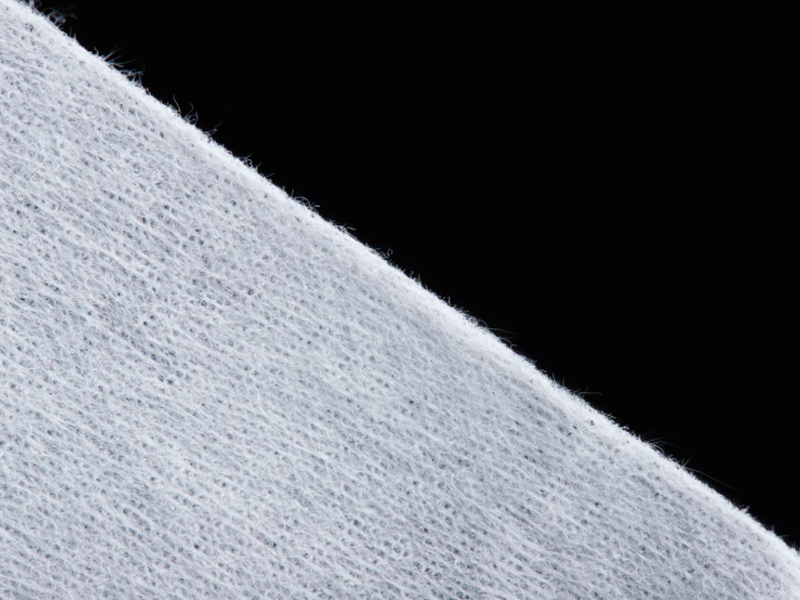
Product Overview: What Makes Plain Spunlace Non-Woven Fabric Valuable
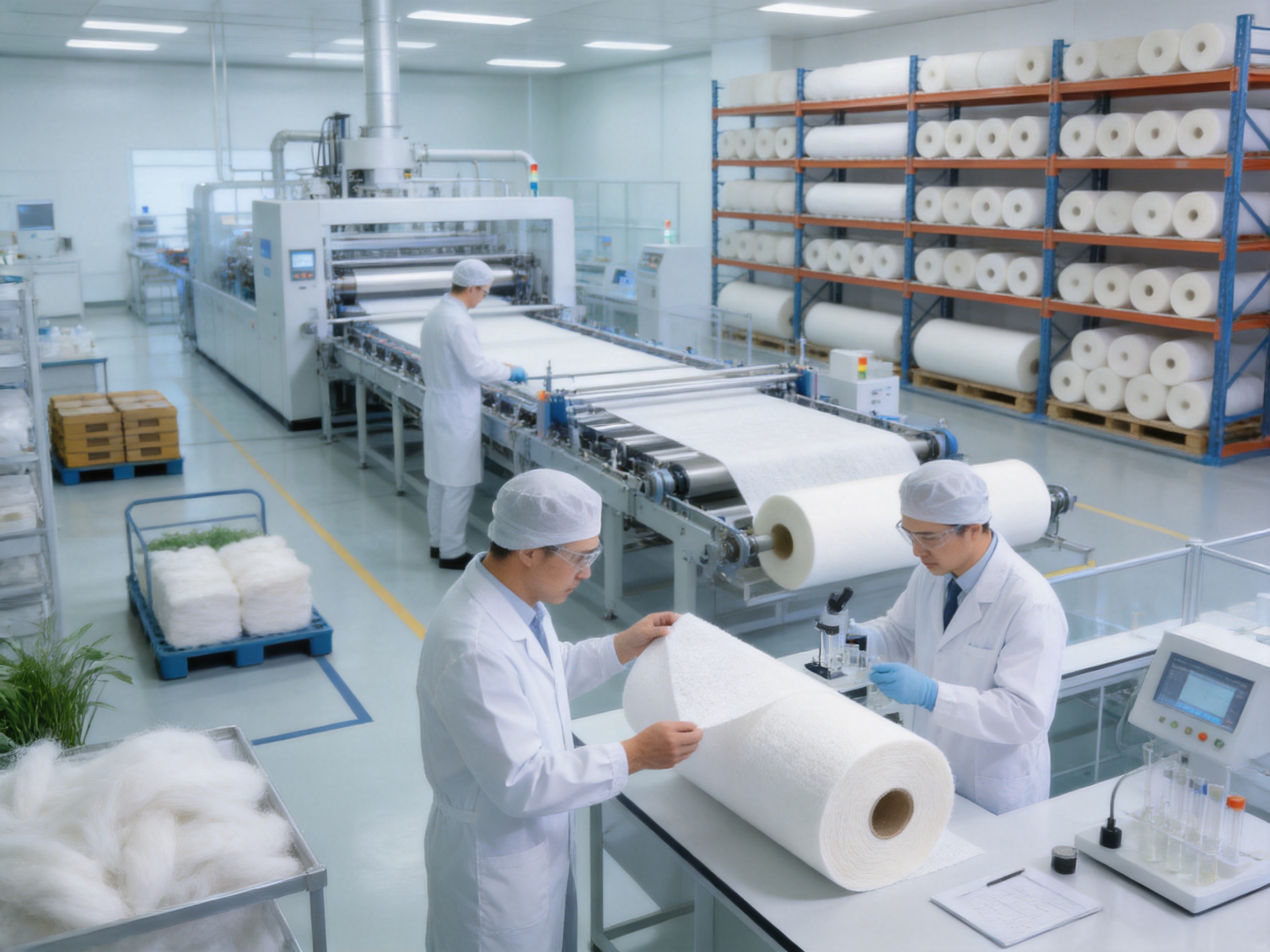
Plain spunlace non-woven fabric is produced by forming a web of fibers and then bonding them through high-pressure water jets. Unlike chemical bonding methods that may rely heavily on adhesives, spunlace technology mechanically entangles fibers, helping the fabric achieve softness, strength, bulk, and cleanliness. This process is particularly suitable for hygiene and skin-contact products because it can create a fabric with a pleasant hand feel, low linting tendency, and good absorbent behavior, depending on the selected raw materials and structure.
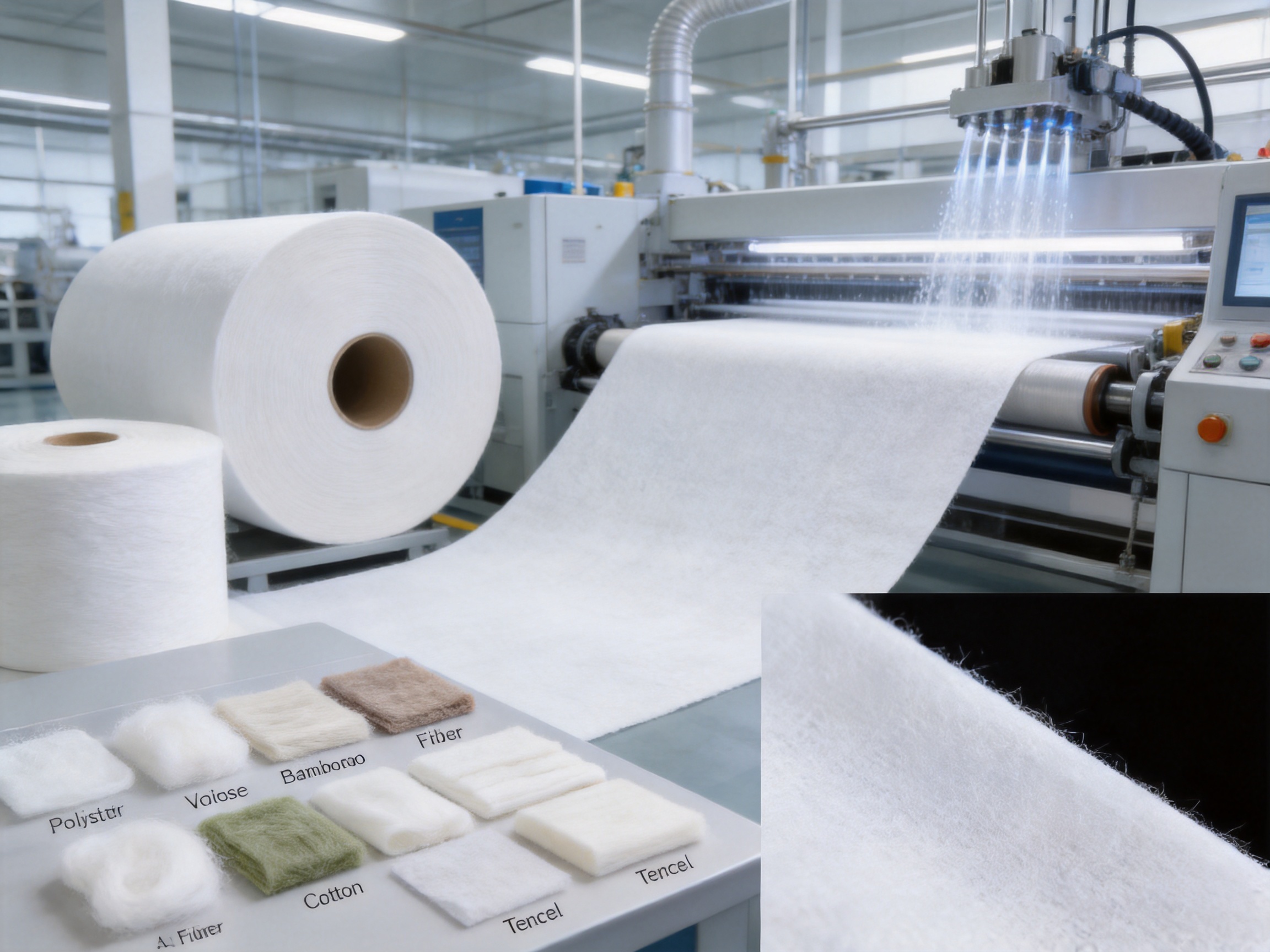
The product can be made from polyester, viscose, bamboo fiber, tencel fiber, cotton, low melt polyester fiber, and other fibers. Blending ratios can be customized, which is a major advantage for customers who need a fabric tailored to a specific market position or technical requirement. For example, viscose can support absorbency and softness, polyester can improve strength and dimensional stability, bamboo can offer a natural-feel selling point, cotton can improve skin-friendly appeal, and low melt polyester fiber can help create a stiffer or more structured fabric when required.
The gram weight can generally be customized from 20 grams per square meter to 100 grams per square meter. This range allows the same product family to serve lightweight facial mask materials, medium-weight wet wipe and dry wipe substrates, and higher-basis-weight materials for industrial wiping or specialized composite use. The ability to modify gram weight is important because end products have different expectations for thickness, drape, absorbency, cost, and mechanical strength.
The plain pattern is simple but powerful. It gives the fabric a smooth and even appearance, making it suitable for products that need a clean visual impression and consistent surface contact. While patterns can be customized, the plain version is highly practical for wide market coverage. It is especially suitable for facial masks, baby wipes, personal care wipes, dry wipes, diaper core layers, medical gauze materials, and mask cloth because it offers a balanced combination of softness, uniformity, and process adaptability.
Core Raw Materials and Their Functional Contributions
The performance of spunlace non-woven fabric begins with fiber selection. A supplier with strong technical capability does not simply offer one fixed composition; instead, it helps customers select the best fiber system for the intended application. Zhejiang Uniquality can customize blending ratios using polyester, viscose, bamboo, tencel, cotton, low melt polyester fiber, and other materials. This flexibility is one of the reasons the product stands out against ordinary competitors that may only offer limited standard formulas.
Polyester is widely used because it contributes tensile strength, dimensional stability, abrasion resistance, and durability. In wipe applications, polyester helps the substrate maintain integrity during use, especially when the wipe is pulled, folded, rubbed, or saturated with liquid. For mask cloth and composite substrates, polyester can provide structural reliability and consistent processing behavior. When a fabric requires higher strength or lower deformation, polyester is often an important part of the blend.
Viscose, also called rayon in many specifications, is valued for absorbency, softness, and a pleasant hand feel. A 100 percent rayon spunlace fabric is often used for wet wipes, dry wipes, and facial masks because it can hold liquid effectively and provide a comfortable sensation on skin. Viscose-rich fabrics can create a soft, smooth, and premium wiping experience, which is particularly important for baby care, beauty care, and personal care products.
Bamboo fiber is often selected for products that aim to communicate a more natural or eco-conscious image. A 100 percent bamboo, 40 gram, double-carding, semi-cross, plain fabric, for example, can be suitable for dry wipes where softness, absorbency, and natural appeal are important. Bamboo-based substrates can help brands differentiate their products in competitive markets where consumers increasingly pay attention to material origin and comfort.
Cotton is another valuable option for skin-contact products. A 100 percent cotton, 60 gram, double-carding, semi-cross, plain fabric can be positioned for premium dry wipes or care products where natural softness and familiarity matter. Cotton can help support a high-end product story, especially in baby care, beauty care, and intimate personal care segments. However, cotton also requires careful manufacturing control to achieve consistent web quality and strength, which makes advanced production experience important.
Tencel fiber can be used when softness, smoothness, and refined touch are desired. It is suitable for beauty and personal care products, including facial mask substrates and gentle cleansing materials. Low melt polyester fiber, meanwhile, can be included in special formulations when a stiffer feel or structural function is required. For instance, a composition containing rayon, polyester, and low melt polyester fiber can create a fabric with a different hand feel and better form stability.
Advanced Manufacturing Technologies Behind the Fabric
The fabric can be manufactured using single-carding, double-carding, triple-carding, sandwich structures, parallel web formation, semi-cross web formation, and tambour transfert technology. Each technology has a distinct influence on fabric behavior, and the ability to select the right process is a major competitive advantage. Many competitors can produce basic spunlace substrates, but not all can offer a broad and controlled combination of fiber formulation, carding structure, web direction, pattern design, and finishing.
Single-carding is suitable for certain lightweight or functional constructions where efficient fiber web formation and cost control are priorities. It is used in examples such as medical gauze, diaper core materials, composite substrates, and specialty fabrics. A 70 percent rayon and 30 percent polyester, 30 gram, single-carding, parallel, mesh fabric can serve medical gauze applications, while a 30 percent rayon and 70 percent polyester, 31 gram, single-carding, parallel, plain fabric may be suitable for diaper core use.
Double-carding is widely used for wipe and mask applications because it helps improve web uniformity, thickness control, and surface quality. Double-carding can support products such as 100 percent rayon wet wipes at 60 grams, dry wipes at 60 grams, bamboo dry wipes at 40 grams, cotton dry wipes at 60 grams, facial mask substrates at 42 grams, and polyester mask cloth at 45 grams. The result is a fabric that can feel more balanced, with better consistency across the roll and better suitability for consumer-facing products.
Triple-carding can be applied where even more complex layering, uniformity, or specialized performance is required. Although not every product needs triple-carding, having this capability allows the manufacturer to meet advanced customization requests. For customers developing premium hygiene products, thick wipes, composite layers, or high-performance industrial cleaning materials, triple-carding can create additional design options.
Parallel web formation creates a fabric with fibers arranged more in the machine direction. This can produce specific strength behavior and is useful for certain converting or functional requirements. Semi-cross web formation helps balance the relationship between machine direction and cross direction strength, supporting better multidirectional performance. The choice between parallel and semi-cross structures depends on the final product. Wet wipes may need high integrity during pulling and wiping, facial masks may need drape and uniformity, and medical gauze may require a combination of lightness and stability.
Tambour transfert technology is another important capability. It can help produce fabrics with a low machine direction to cross direction ratio, which means the fabric can show more balanced mechanical properties. This is especially valuable when the downstream product must resist tearing in multiple directions or maintain stable behavior during converting. Balanced strength can reduce production losses, improve user experience, and support more demanding product designs.
The sandwich structure, described as fibers, polypropylene, and fibers, is a patented or specialty construction designed to achieve high cross breaking strength and a thicker fabric feel. This type of product can be particularly attractive for applications requiring stronger mechanical performance, more bulk, or enhanced layered function. A representative structure may include 50 percent rayon, 32 percent polyester, and 18 percent polypropylene at 45 grams with double carding, parallel formation, and a dot pattern. Even when customers choose a plain pattern for standard use, the availability of sandwich technology demonstrates the producer's broader engineering capability.
Key Performance Advantages Over Conventional Competitors
One of the biggest advantages of this plain spunlace non-woven fabric is the combination of softness and strength. In many hygiene materials, improving softness can reduce strength, while increasing strength can make the fabric rough or stiff. Through controlled fiber blending and hydroentanglement, the fabric can be engineered to maintain a fluffy and soft feel while still achieving high tenacity and friction resistance. This balance is valuable because end users expect comfort, while brand owners and converters need stable performance during production, packaging, transportation, and use.
Another advantage is uniform appearance. The fabric is described as uniform and beautiful, with fine and rich textures. This matters in consumer products because appearance affects perceived quality. A wipe or facial mask substrate with inconsistent thickness, visible defects, uneven fiber distribution, or poor surface smoothness can damage a brand's reputation. Uniform fabric also supports better lotion distribution in wet wipes, more consistent absorption in dry wipes, and cleaner die-cutting in facial mask production.
Customization is a central competitive strength. Some suppliers only sell standard specifications, which may force customers to adjust their product design around available materials. In contrast, this fabric can be customized by raw material, blending ratio, carding method, web structure, pattern, gram weight, and afterfinish. This allows customers to develop differentiated products for different price levels and market segments. A value-oriented wet wipe may use a practical rayon and polyester blend, while a premium beauty wipe may use viscose, cotton, bamboo, or tencel-rich compositions.
The available gram weight range from 20 to 100 grams per square meter gives customers more control over cost and performance. Lightweight products can reduce material consumption and improve drape, while heavier products can offer more absorbency, thickness, and premium feel. This wide range gives manufacturers the flexibility to develop baby wipes, adult care wipes, makeup removal wipes, facial mask sheets, medical materials, household cleaning wipes, and industrial cleaning substrates without changing suppliers.
Compared with ordinary chemically bonded non-woven fabrics, spunlace material can deliver a softer and more textile-like feel. Because bonding is achieved mainly by water jet entanglement, the fabric can be more suitable for skin-contact uses. This is especially important in baby care, facial care, and medical-related applications, where customers are highly sensitive to irritation, harshness, and material safety. The absence of a heavy adhesive bonding approach can also improve absorbency and touch, depending on formulation.
The fabric also supports functional finishing. Hydrophilic finishing improves liquid absorption and wetting behavior, making the fabric more suitable for wipe and hygiene applications. Coating can add specialized surface properties or functional layers for particular products. Antistatic finishing helps reduce static electricity, which can be important in industrial, electronic, medical, or packaging environments. A 100 percent polyester, 50 gram, double-carding, semi-cross, plain, antistatic fabric shows how polyester strength can be combined with an added functional finish.
For wet wipes, the fabric offers good liquid management, softness, and mechanical integrity. Wet wipes must remain strong when saturated with liquid, resist tearing during use, and release lotion smoothly onto the skin or surface. A 100 percent rayon, 60 gram, double-carding fabric can be configured in semi-cross dot or parallel plain constructions, giving customers options for texture, strength direction, and feel. The plain version can be particularly useful where a smooth wiping experience is preferred.
For dry wipes, the fabric can be designed for absorbency, softness, and low linting. Dry wipes may be used in personal care, medical care, beauty, cleaning, or industrial settings. Depending on the target market, a customer may select 100 percent rayon, 100 percent bamboo, or 100 percent cotton. These natural or regenerated fiber options can support a soft and premium hand feel, while proper carding and entanglement help preserve web integrity.
For facial masks, the fabric needs softness, smoothness, liquid retention, and conformability. A 100 percent rayon, 42 gram, double-carding, semi-cross fabric is a typical example. Although the table lists a dot pattern, similar engineering principles can be applied to plain patterns when a smooth surface is preferred. The fabric should carry essence evenly, adhere comfortably to the face, and remain stable during unfolding and application.
For medical gauze and related medical materials, cleanliness, strength, absorbency, and consistency are important. The fabric can be made from rayon and polyester blends to balance absorption with mechanical support. While specific medical compliance depends on final product requirements and regulatory validation, the material platform offers a strong base for medical and hygienic uses due to its controllable structure and broad manufacturing experience.
Typical Specifications and Application-Oriented Options
The following table summarizes representative product directions based on available specification examples. These examples show the flexibility of the fabric platform and demonstrate how raw material, weight, carding, web formation, pattern, and finishing can be adjusted for different applications.
| Application | Representative Composition | Typical Weight | Process and Structure | Key Performance Target |
| Wet wipes | 100 percent rayon | 60 gsm | Double-carding, parallel or semi-cross, plain or textured | Softness, absorption, wet strength, smooth wiping |
| Dry wipes | 100 percent rayon, bamboo, or cotton | 40 to 60 gsm | Double-carding, semi-cross, plain | Gentle touch, absorbency, low linting, premium hand feel |
| Facial mask | 100 percent rayon or customized blend | About 42 gsm | Double-carding, semi-cross, plain or customized pattern | Essence retention, facial conformability, soft skin contact |
| Medical gauze | 70 percent rayon and 30 percent polyester | About 30 gsm | Single-carding, parallel, mesh or customized pattern | Absorbency, stability, lightness, medical material suitability |
| Diaper core | 30 percent rayon and 70 percent polyester | About 31 gsm | Single-carding, parallel, plain | Core support, liquid transfer, stable processing |
| Composite substrate | 100 percent polyester | About 35 gsm | Single-carding, parallel, plain | Strength, dimensional stability, lamination compatibility |
| Mask cloth | 100 percent polyester | About 45 gsm | Double-carding, semi-cross, plain | Shape support, durability, smooth surface |
| Antistatic fabric | 100 percent polyester | About 50 gsm | Double-carding, semi-cross, plain, antistatic finish | Static reduction, strength, industrial suitability |
| Hydrophilic fabric | 100 percent polyester | About 40 gsm | Double-carding, parallel, plain, hydrophilic finish | Improved liquid wetting with polyester strength |
| Stiffer feel specialty fabric | Rayon, polyester, and low melt polyester fiber | About 30 gsm | Single-carding, parallel, plain | Enhanced structure, controlled stiffness, specialized converting |
Application Value in Wet Wipes
Wet wipes are among the most important uses for plain spunlace non-woven fabric. A high-quality wet wipe substrate must solve several problems at the same time. It must be soft enough for skin, strong enough when wet, absorbent enough to carry lotion, stable enough for converting machines, and uniform enough to provide predictable product performance. Plain spunlace fabric is well suited to these needs because the hydroentangled structure creates mechanical bonding without making the material feel overly rigid.
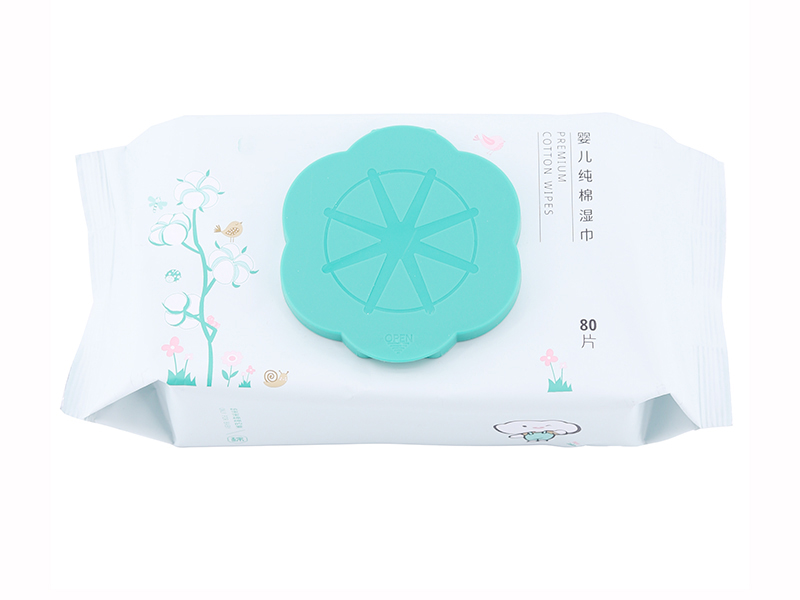
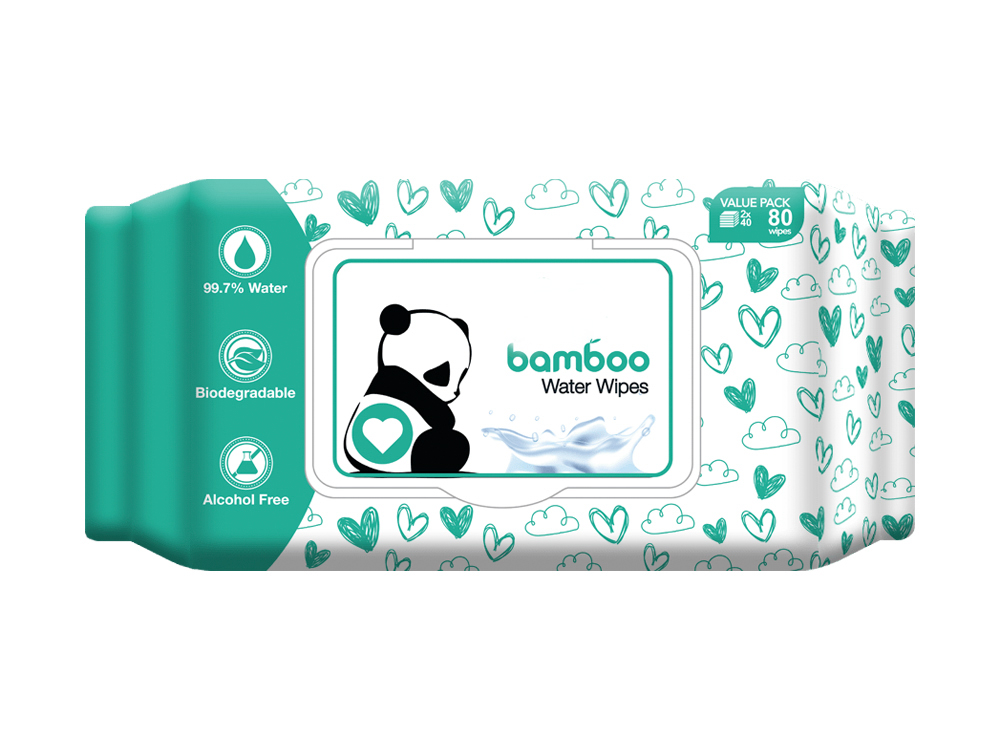
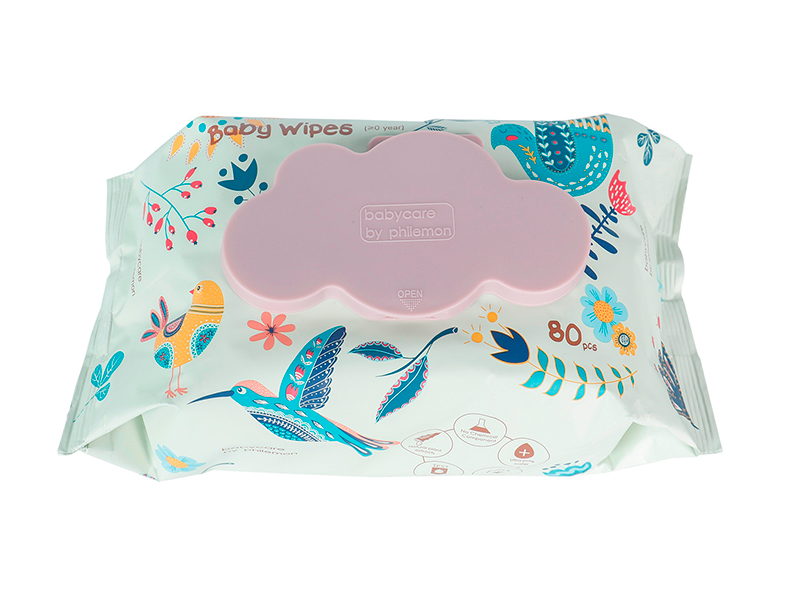
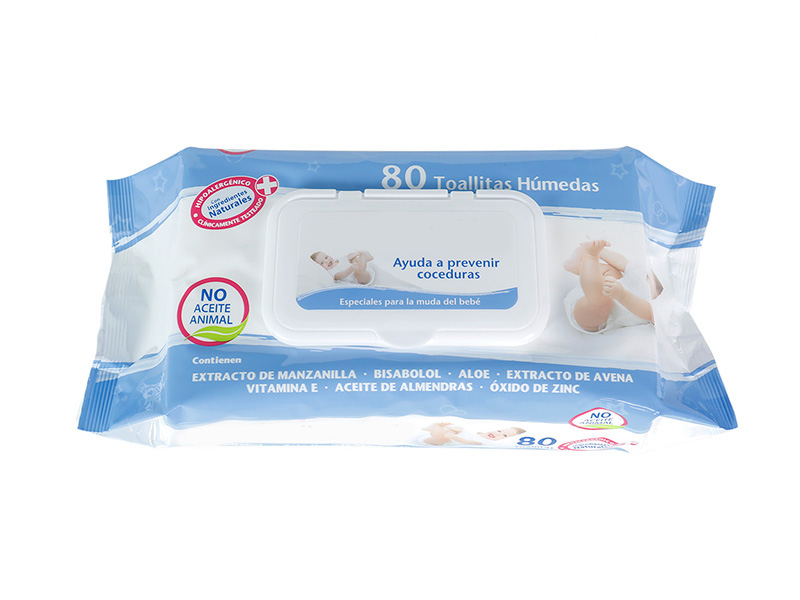
In baby wipes, softness and safety perception are essential. Parents expect a wipe that feels gentle, does not tear during use, and releases liquid evenly. A 100 percent rayon formulation can provide strong absorbency and smooth touch, while blends with polyester can improve strength when needed. The plain surface provides a clean and mild wiping action for delicate skin. If the customer wants a more natural product story, cotton, bamboo, or tencel can be incorporated into the formulation.
In personal cleansing wipes and adult care wipes, the fabric must handle larger wiping areas and sometimes heavier lotion loading. The 20 to 100 gsm customization range allows developers to choose higher weights for a thicker and more premium wipe. Semi-cross web formation can help improve strength balance, reducing the risk of tearing when the wipe is pulled from the package or used with multidirectional rubbing.
In household and surface cleaning wipes, abrasion resistance and tensile strength become more important. Polyester-rich blends can support friction resistance and durability. Hydrophilic finishing can improve liquid uptake if the base fiber is less absorbent. Antistatic or coating options can be considered for specialized industrial cleaning applications. Compared with low-grade wiping substrates, this spunlace fabric can deliver better stability, a cleaner surface, and a more professional hand feel.
Application Value in Dry Wipes and Cotton Wipes
Dry wipes require a different performance balance from wet wipes. They may be used dry, wetted by the user, or combined with liquids during use. They often need high absorbency, low linting, softness, and enough wet strength after liquid contact. Plain spunlace fabric is advantageous because it can be produced from absorbent fibers such as rayon, bamboo, or cotton, while the spunlace entanglement process maintains useful mechanical integrity.
For cosmetic use, dry wipes must feel gentle and refined. A 100 percent cotton or rayon composition can create a skin-friendly experience. For household and multipurpose dry wipes, polyester blends can improve durability. For eco-positioned product lines, bamboo fiber can help create a differentiated market image. The plain surface is especially suitable for gentle wiping, makeup removal preparation, baby care, and multipurpose personal cleaning.
Converters also benefit from roll uniformity. Dry wipe manufacturing often involves slitting, folding, stacking, perforating, and packaging. Poor fabric uniformity can cause web breaks, inaccurate folding, inconsistent pack height, and customer complaints. A manufacturer with advanced carding and web control can help reduce these risks. This is one of the hidden but critical advantages of working with a large-scale experienced nonwoven producer rather than a small commodity supplier.
Application Value in Facial Masks and Beauty Care
Facial mask materials must satisfy demanding sensory and functional requirements. They should feel soft and smooth, absorb essence effectively, release liquid gradually, fit the contours of the face, resist tearing during unfolding, and look clean and premium. Plain spunlace non-woven fabric can meet these needs through careful selection of rayon, tencel, cotton, bamboo, or customized blends.
A facial mask substrate that is too weak may tear during use, while one that is too stiff may fail to adhere to the face. A fabric that is too uneven may carry essence inconsistently, creating dry spots or dripping. Through double-carding and semi-cross formation, the fabric can achieve a better balance of drape, strength, and uniformity. The plain pattern creates a smooth contact surface that many beauty brands prefer for sensitive skin and premium positioning.
The manufacturing background of Zhejiang Uniquality is particularly valuable here because the company understands both material production and finished care products. Knowledge of wet wipes, dry wipes, cleansing wipes, and other personal care items helps the company design fabrics that perform not only in laboratory tests but also in real consumer use and automated production environments.
Application Value in Medical, Diaper, Composite, and Mask Materials
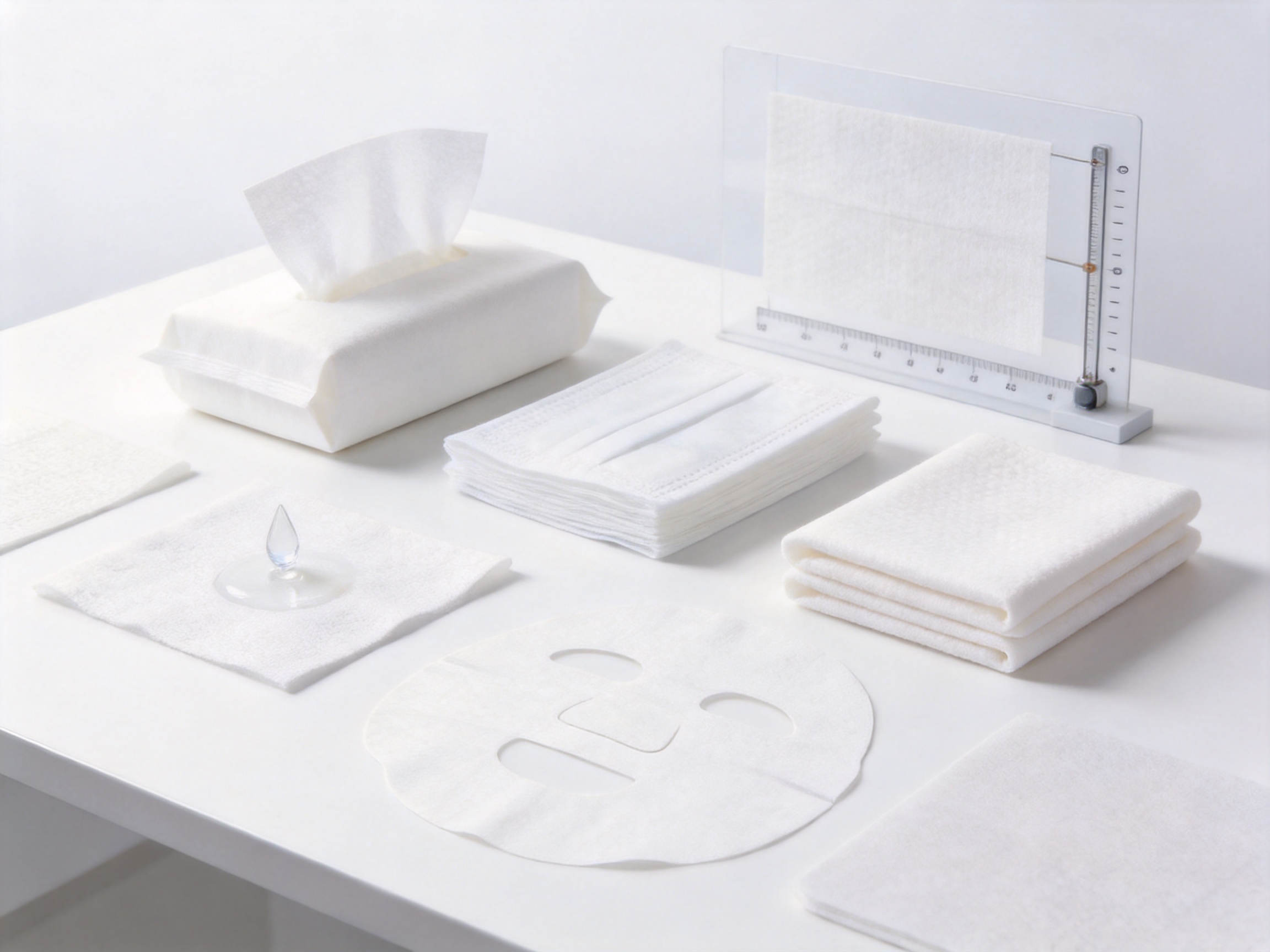
In medical gauze and related medical materials, non-woven substrates are expected to deliver absorbency, stability, and cleanliness. A rayon and polyester blend can combine the fluid-handling benefits of rayon with the strength and dimensional support of polyester. Single-carding and parallel formation may be selected for lightweight constructions. Depending on the final product and market, further testing, sterilization compatibility, and regulatory evaluation may be required, but the spunlace platform provides a technically sound base.
For diaper core applications, the fabric can serve as a functional layer that supports liquid movement, core stability, or structural integrity. A 30 percent rayon and 70 percent polyester, 31 gsm, single-carding, parallel, plain fabric is an example of how the material can be engineered for hygiene product systems. Polyester helps maintain strength and shape, while rayon contributes absorbent behavior. In diaper manufacturing, stable roll quality and consistent gram weight are important because high-speed machines require predictable material feeding.
Composite applications often require the fabric to bond or laminate with other materials. A 100 percent polyester, 35 gsm, single-carding, parallel, plain fabric can provide strength, stability, and compatibility with composite processes. The plain surface can improve contact with films, membranes, adhesives, or other nonwoven layers. Composite products may be used in hygiene, filtration, packaging, clothing interlining, cleaning, or protective applications.
Mask cloth applications can benefit from a 100 percent polyester, 45 gsm, double-carding, semi-cross, plain fabric. While final mask performance depends on the complete mask structure, filtration layers, design, and certification, a stable nonwoven layer can contribute to comfort, shape, and mechanical durability. The fabric's smooth surface and consistent weight make it suitable for further processing and assembly.
Afterfinishing Options: Hydrophilic, Coating, and Antistatic Treatment
Afterfinishing gives plain spunlace non-woven fabric additional value beyond its base structure. Hydrophilic finishing is used when improved liquid absorption or wetting is required. This is especially useful for polyester-rich fabrics, which naturally have lower absorbency than rayon or cotton. A hydrophilic polyester spunlace fabric can combine polyester's strength with improved liquid-handling behavior, expanding its use in hygiene and cleaning applications.
Coating can provide specialized surface performance. Depending on the product requirement, coating may help modify touch, barrier behavior, adhesion, printability, or compatibility with other materials. Coated spunlace can be used in composite products, technical cleaning materials, or customized hygiene layers. Because coating must be controlled carefully to avoid damaging softness or absorbency, manufacturing experience is important.
Antistatic finishing helps reduce static buildup. This can be important in electronic cleaning, industrial wiping, medical environments, packaging, and production conditions where static can attract dust, interfere with handling, or create user inconvenience. A 100 percent polyester antistatic spunlace fabric is a good example of how base strength and functional finishing can be combined.
The availability of afterfinishing options makes the product more competitive than ordinary plain nonwoven substrates. Instead of purchasing a basic material and seeking separate treatment elsewhere, customers can work with a technically capable supplier to develop a more complete and controlled solution.
Company Manufacturing Strength and Industrial Foundation
Zhejiang Uniquality Nursing Products Technology Co., Ltd. benefits from more than three decades of industrial development under the Kingsafe and Uniquality manufacturing background. Founded in 1987, the company has grown into a national high-tech enterprise specializing in research, development, production, and sales of medical and hygienic nonwoven materials, nursing products, and high-end clothing interlining. This long history matters because nonwoven manufacturing is highly technical, requiring expertise in fiber behavior, web formation, water jet bonding, drying, finishing, quality testing, roll handling, and customer-specific development.
The company is headquartered in Changxing, Huzhou, in the Yangtze River Delta region, an area known for convenient access to land, sea, and air transportation networks. This location supports efficient logistics, supplier coordination, export operations, and customer service. The company has also established multiple production bases in Foshan, Guangdong, Nantong, Jiangsu, and Wuhan, Hubei, among other regions in China. A distributed manufacturing footprint strengthens supply reliability and production capacity.
The enterprise has ranked among the leading companies in China's industrial textile industry, including recognition among the top companies in the nonwovens sector and among major nonwovens manufacturers globally for consecutive years. Such scale and reputation are meaningful to customers who require stable long-term supply. For brand owners, private label manufacturers, and OEM or ODM partners, the risk of supply interruption, inconsistent quality, or limited technical support can be costly. Working with an experienced and large-scale producer helps reduce these risks.
Kingsafe introduced advanced production equipment and technology from Germany, France, and Italy. International equipment and technical learning help improve line stability, process accuracy, and product consistency. In spunlace production, the quality of carding, hydroentanglement, drying, winding, and inspection systems directly affects fabric performance. Advanced machinery supports better uniformity, more stable tensile properties, cleaner surfaces, and more efficient production.
The company has a broad product portfolio covering spunlace non-woven fabrics, spunmelt non-woven fabrics, hot air through non-woven fabrics, flushable and degradable non-woven fabrics, wet wipes, dry wipes, baby diapers, pull-ups, wet toilet paper, cleansing wipes, and other related products. This breadth creates a strong advantage: the company does not only make raw material; it also understands finished product requirements. This integrated knowledge helps customers choose materials that work in real applications, not merely in specification sheets.
For example, a supplier that also understands wet wipe converting can advise on fabric strength, folding behavior, liquid absorption, and packaging stability. A supplier familiar with diaper production can understand core layer requirements, roll stability, and high-speed machine compatibility. A supplier active in facial mask and cleansing wipe markets can understand the importance of softness, liquid retention, and premium appearance. This practical experience improves product development efficiency for customers.
Research, Development, and Customization Capabilities
Modern nonwoven customers increasingly need differentiated products. Retail competition, private label growth, environmental awareness, consumer comfort expectations, and functional product trends all push brands to move beyond standard materials. The plain spunlace non-woven fabric platform supports this need through deep customization.
Customization can begin with fiber selection. Customers may request 100 percent rayon for absorbency and softness, 100 percent polyester for strength, cotton for natural appeal, bamboo for eco-positioning, tencel for premium softness, or blended formulas for balanced performance and cost. The blending ratio can be adjusted to achieve target absorbency, wet strength, hand feel, thickness, stiffness, and price.
Customization can continue through process selection. Single-carding may fit lightweight or cost-sensitive materials. Double-carding may support wipe, mask, and premium care products. Triple-carding may be considered for more complex structures. Parallel web formation can provide specific direction strength, while semi-cross formation can help balance machine and cross direction properties. Tambour transfert technology can further improve strength balance when low machine direction to cross direction ratio is needed.
Pattern customization is also possible, even though the plain pattern is the focus of this product. Some customers may choose dot, mesh, or other textures for wiping power, appearance, or product differentiation. The plain pattern remains one of the most versatile options because it supports smooth contact, clean appearance, and broad downstream compatibility.
Afterfinish customization adds another layer of differentiation. Hydrophilic finishing can improve liquid absorption, antistatic finishing can serve technical markets, and coating can create specialized surface functions. These options help customers launch products for baby care, beauty care, medical care, household cleaning, industrial cleaning, and composite applications with more precise performance profiles.
The company's ability to meet needs for differentiation, functionalization, and customization is supported by its enterprise culture of dedication, innovation, inclusiveness, delicacy, and cooperation. In practical terms, this means customers can expect not only material supply but also technical communication, sample development, parameter adjustment, and long-term cooperation.
Quality Control and Consistency as Competitive Advantages
In nonwoven fabric supply, consistency is as important as innovation. A material may perform well in a sample but fail commercially if roll-to-roll quality is unstable. Key quality factors include basis weight uniformity, tensile strength, elongation, thickness, absorbency, moisture level, surface cleanliness, linting behavior, roll width accuracy, winding tension, and visual defect control. Large-scale experienced manufacturers are better positioned to control these factors through equipment, process discipline, and inspection systems.
Plain spunlace fabric must maintain consistent performance throughout production. Wet wipe manufacturers need stable lotion absorption and folding behavior. Facial mask converters need predictable die-cutting and essence loading. Medical material producers need clean appearance and controlled mechanical properties. Diaper manufacturers need roll stability for high-speed converting. Industrial wipe producers need durable fabric that can resist rubbing and tearing.
Advanced carding and hydroentanglement processes help distribute fibers evenly and bond them effectively. Drying and winding must be controlled to avoid wrinkles, edge defects, excessive tension, or uneven moisture. Finishing processes must be applied uniformly so that hydrophilic or antistatic effects remain consistent. These manufacturing details are not always visible to consumers, but they strongly influence the success of the final product.
Compared with smaller or less experienced competitors, Zhejiang Uniquality's long operating history, production scale, and broad category experience create strong quality assurance advantages. Customers can benefit from professional technical support, stable production planning, and the ability to develop materials for different market requirements. This is especially important for OEM and private label customers that must protect retailer relationships and brand reputation.
Sustainability and Market Trends
The hygiene and care markets are changing rapidly. Consumers want products that are soft, safe, effective, and increasingly environmentally responsible. Retailers and brand owners are looking for materials with better user experience, lower waste, and clearer product stories. Plain spunlace non-woven fabric can support these trends through fiber choices such as bamboo, cotton, viscose, and tencel, as well as through lightweight design and customized performance.
While sustainability depends on the full product life cycle, including fiber sourcing, manufacturing energy, packaging, use, and disposal, the ability to design fiber blends is an important advantage. Some products may emphasize natural-origin fibers, while others may seek durability to reduce material waste during use. Flushable and degradable non-woven technologies within the broader company portfolio also show that the manufacturer has experience with evolving environmental requirements.
For brand owners, sustainability should not mean sacrificing performance. A wipe that tears easily, releases too much lint, or fails to absorb properly may create more waste and customer dissatisfaction. The best strategy is to balance responsible material choices with strong functional performance. Plain spunlace fabric provides a flexible platform for that balance.
Why This Fabric Is Suitable for OEM, ODM, and Private Label Development
OEM, ODM, and private label customers need materials that can be adapted to brand positioning, retail price, regulatory expectations, and consumer preferences. Plain spunlace non-woven fabric is highly suitable for such development because it can be adjusted at many technical levels. A customer can start from an existing specification, such as 100 percent rayon 60 gsm for wet wipes, and then modify fiber blend, weight, pattern, finishing, or strength balance to create a differentiated product.
Private label wet wipes may require cost-efficient but reliable substrates. Premium facial masks may require superior softness and liquid retention. Medical or care wipes may require specific strength and cleanliness. Household cleaning wipes may require durability and friction resistance. Baby care wipes may require a gentle touch and consistent lotion absorption. Because the fabric platform covers these needs, customers can develop multiple product lines with one experienced manufacturing partner.
Another advantage is the company's downstream product experience. Since the enterprise also manufactures nursing products and hygiene products such as wet wipes, dry wipes, diapers, pull-ups, and cleansing wipes, it can better understand the requirements of retailers and consumers. This helps shorten development cycles and reduce trial-and-error costs. Customers can receive guidance on practical product performance, not just raw material data.
Q&A Section
What is plain spunlace non-woven fabric?
Plain spunlace non-woven fabric is a nonwoven material made by forming a fiber web and bonding the fibers with high-pressure water jets. The plain surface gives it a smooth, clean, and versatile appearance. It is widely used in wet wipes, dry wipes, facial masks, medical gauze, diaper core materials, composite substrates, cotton wipes, and mask cloth.
What raw materials can be used in this fabric?
The fabric can be made from polyester, viscose, bamboo fiber, tencel fiber, cotton, low melt polyester fiber, and other fibers. The blending ratio can be customized according to required softness, strength, absorbency, stiffness, cost, and product positioning.
What is the available gram weight range?
The fabric can generally be customized from 20 gsm to 100 gsm. Lightweight grades are suitable for applications such as facial masks and light hygiene layers, while heavier grades can be used for premium wipes, industrial cleaning materials, and products requiring more thickness or absorbency.
Why is the plain pattern important?
The plain pattern provides a smooth and uniform surface. It is suitable for skin-contact products, facial masks, dry wipes, wet wipes, diaper core layers, and composite materials. It also supports clean visual appearance and stable downstream processing.
How does spunlace fabric compare with chemically bonded nonwoven fabric?
Spunlace fabric is mechanically bonded by water jet entanglement, which can produce a soft, textile-like hand feel without relying heavily on chemical adhesive bonding. This makes it highly suitable for hygiene, beauty, and medical-related applications where softness, absorbency, and skin comfort are important.
What finishing options are available?
Available finishing options include hydrophilic finishing, coating, and antistatic finishing. Hydrophilic treatment improves wetting and liquid absorption. Coating can add specialized surface properties. Antistatic finishing helps reduce static buildup for technical or industrial uses.
What are the advantages of double-carding?
Double-carding can improve fabric uniformity, surface quality, and structural balance. It is commonly used for wet wipes, dry wipes, facial masks, and mask cloth where consistent appearance, softness, and reliable mechanical performance are required.
What is the benefit of semi-cross web formation?
Semi-cross web formation helps balance strength in the machine direction and cross direction. This can reduce tearing risk and improve performance during converting and use, especially for wipes and other products exposed to multidirectional forces.
What is a sandwich spunlace structure?
A sandwich structure usually refers to a layered construction such as fibers, polypropylene, and fibers. It can provide high cross breaking strength and a thicker fabric feel. It is useful for special applications that require enhanced strength, bulk, or structural performance.
Why should customers choose this manufacturer for plain spunlace fabric?
Customers benefit from a long industrial history, advanced equipment introduced from Germany, France, and Italy, multiple production bases, broad nonwoven expertise, strong customization capability, and experience in both raw materials and finished hygiene products. These strengths support stable quality, technical development, and reliable long-term supply.
Conclusion
Plain spunlace non-woven fabric is a versatile, high-performance material platform for hygiene, medical, beauty, home care, industrial cleaning, diaper, composite, and mask applications. Its value comes from the balanced combination of softness, strength, absorbency, uniformity, and customization flexibility. Through choices in fiber composition, gram weight, carding method, web formation, pattern, and afterfinish, the fabric can be engineered for many different market needs.
Compared with ordinary nonwoven substrates, this product offers stronger customization potential, better sensory performance, and broader application coverage. It can be made from rayon, polyester, bamboo, cotton, tencel, low melt polyester fiber, and other materials. It can be produced with single-carding, double-carding, triple-carding, parallel formation, semi-cross formation, tambour transfert technology, and specialty sandwich structures. It can also be finished for hydrophilic, coated, or antistatic functions.
Zhejiang Uniquality Nursing Products Technology Co., Ltd. brings significant manufacturing strength to this product. With roots dating back to 1987, multiple production bases, advanced international equipment, and deep experience in nonwoven materials and finished hygiene products, the company is well positioned to serve OEM, ODM, private label, and industrial customers. Its ability to combine material engineering with application knowledge helps customers develop reliable, differentiated, and competitive products.
For brands and converters seeking a dependable substrate for wet wipes, dry wipes, facial masks, medical gauze, diaper core materials, cotton wipes, composite products, or mask cloth, plain spunlace non-woven fabric provides a strong foundation. It supports comfort for end users, efficiency for converters, differentiation for brand owners, and technical reliability for demanding applications. As hygiene and care markets continue to evolve, this flexible and customizable material will remain an essential component in high-quality product development.
References
1. EDANA. Nonwovens Standard Procedures and Industry Guidelines.
2. INDA Association of the Nonwoven Fabrics Industry. Nonwoven Materials, Processes, and Applications.
3. Russell, S. J. Handbook of Nonwovens. Woodhead Publishing.
4. Krcma, R. Manual of Nonwovens. Textile Trade Press.
5. Albrecht, W., Fuchs, H., and Kittelmann, W. Nonwoven Fabrics: Raw Materials, Manufacture, Applications, Characteristics, Testing Processes. Wiley-VCH.
6. Industry technical literature on spunlace hydroentanglement, carding technology, absorbent hygiene materials, and wipe substrate development.