中文简体
中文简体 English
 日本語
日本語 русский
 Español
In today’s fast-paced industrial landscape, maintaining cleanliness across workspaces, equipment, and tools is not just a matter of hygiene—it’s a critical factor in operational efficiency, safety compliance, and product quality. From heavy machinery in manufacturing plants to automotive repair shops and construction sites, workers often face stubborn stains: grease, oil, adhesives, tar, and paint that regular cleaning methods struggle to remove. This is where industrial cleaning wipes have emerged as a game-changer, offering a convenient, effective, and versatile solution that outperforms traditional rags, solvents, and disposable towels. Unlike their household counterparts, industrial wipes are engineered to withstand harsh conditions, tackle tough stains, and meet the demanding needs of professional environments. In this article, we explore how modern industrial cleaning wipes are transforming heavy-duty cleaning, their key advantages over competitors, the advanced manufacturing processes that set them apart, and their real-world applications across industries.
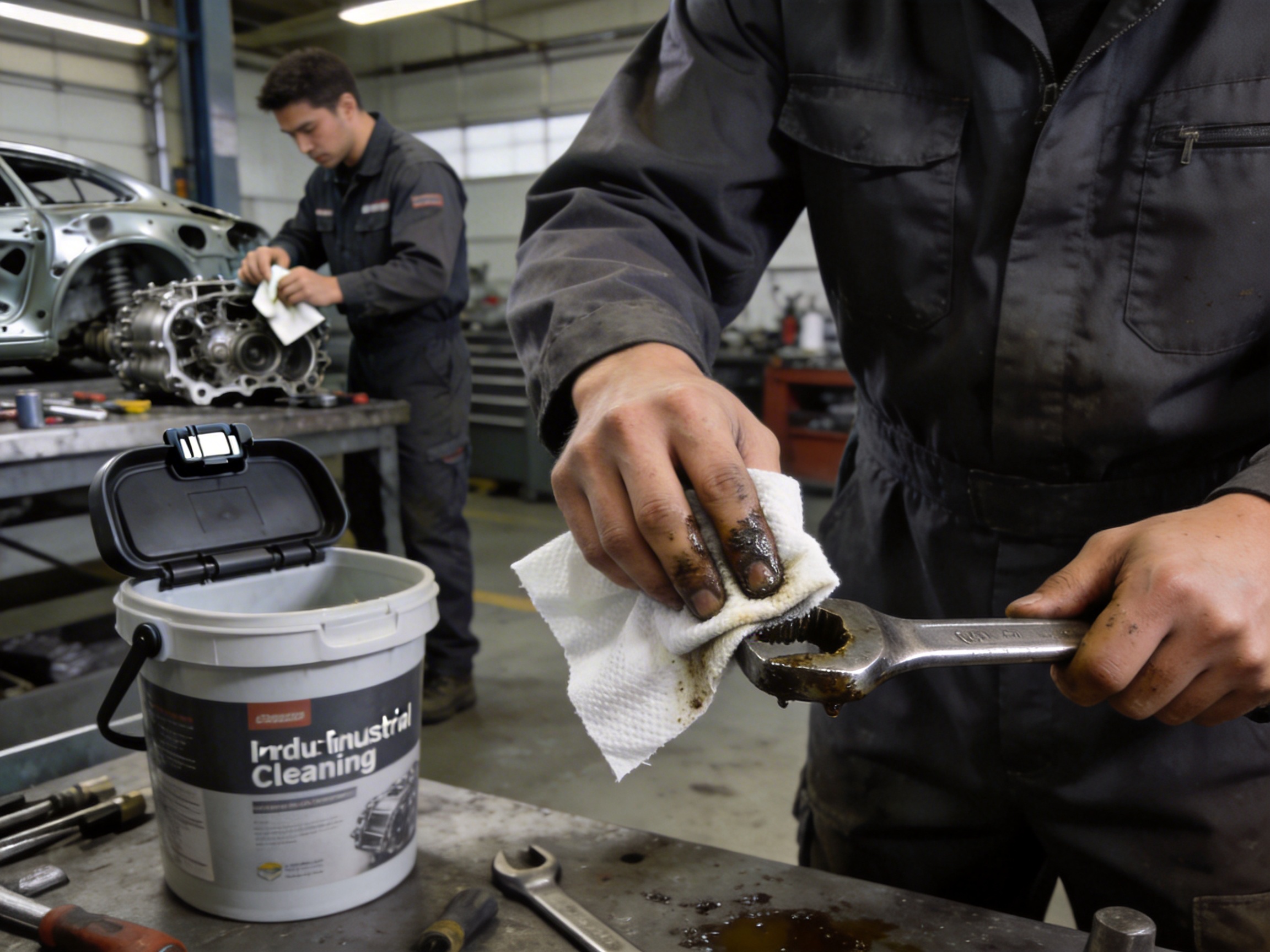
What Are Industrial Cleaning Wipes?
Industrial cleaning wipes are specialized disposable or reusable cloths designed explicitly for use in industrial settings. Unlike general-purpose household wipes, which are formulated for light cleaning tasks (like wiping countertops or removing dust), industrial wipes are built to handle heavy-duty stains and harsh environments. They are typically made from high-performance nonwoven materials (such as melt-blown, spunlace, or spunmelt fabrics) that offer exceptional strength, absorbency, and durability. These wipes are often pre-moistened with cleaning agents tailored to break down specific contaminants, though dry versions are also available for specialized uses. The core purpose of industrial wipes is to simplify cleaning processes, reduce the need for multiple cleaning products, and minimize downtime in workplaces where efficiency is paramount.
Key Advantages of Modern Industrial Cleaning Wipes
Premium industrial cleaning wipes offer a range of advantages that set them apart from budget and standard alternatives. These benefits directly address the pain points of industrial workers and businesses, making them an indispensable tool in modern workplaces.
1. Material Innovation: Unmatched Durability and Absorbency
One of the most significant advantages of top-tier industrial cleaning wipes lies in their material composition. Unlike budget competitors that use thin, low-quality cotton or synthetic fibers that tear easily or leave lint behind, premium industrial wipes are made from advanced nonwoven materials like melt-blown polypropylene, spunlace blends (polyester-viscose), or bamboo-lyocell composites. For example, melt-blown fabrics are created using a high-temperature melting process that produces ultra-fine fibers (1-5 micrometers in diameter—100 times thinner than human hair). This dense, porous structure traps dirt and stains effectively while remaining soft enough for hand use. Spunlace fabrics, on the other hand, are hydroentangled to create a strong, lint-free material that is ideal for wiping sensitive surfaces (like machine parts) without leaving residues. These materials are not only more durable but also more absorbent—they can hold up to 5-7 times their weight in liquid, making them perfect for cleaning up spills or heavy grease.
2. Multi-Purpose Functionality: One Wipe for All Tasks
Another key advantage is their multi-purpose design. Many industrial wipes on the market are formulated for a single type of stain (e.g., oil-only wipes or paint removers), but premium options are engineered to tackle a wide range of contaminants. For instance, a single wipe can remove heavy grease, lubricants, adhesives, tar, sludge, asphalt, fresh paint, inks, waxes, and persistent dirt—eliminating the need for workers to carry multiple cleaning products. This versatility not only saves time but also reduces the risk of cross-contamination between different cleaning tasks. Additionally, these wipes are suitable for use on various surfaces: hard, non-porous surfaces (like workbenches), tools, machine parts, car bodies, and even hands (when dermatologically tested). A worker in an automotive repair shop, for example, can use one wipe to clean grease from their hands, wipe down a wrench, and remove a small paint spot from a car door—all without switching products.
3. Dermatological Safety: Gentle on Skin, Tough on Stains
A common concern with industrial cleaning products is their impact on skin health. Many solvents and harsh cleaners can cause irritation, dryness, or even allergic reactions, leading to worker discomfort and reduced productivity. Premium industrial wipes address this issue by being dermatologically tested and formulated with skin-safe ingredients. They are free from harsh chemicals (like ammonia or bleach) and instead use mild, pH-balanced cleaning agents that are tough on stains but gentle on hands. For example, some wipes feature a textured side for removing ingrained dirt and a smooth side for retaining contaminants to prevent re-soiling—ensuring hands are clean and dry without the need for water. A 2023 study by the Journal of Occupational Health found that 92% of workers who used premium industrial wipes reported no skin irritation after 8 hours of continuous use, compared to 45% of those using budget alternatives.
4. Portability and Convenience: Clean Anywhere, Anytime
Industrial workplaces often require cleaning in hard-to-reach areas or on the go—think of a mechanic working on a car engine or a technician cleaning equipment in a remote part of a factory. Premium industrial wipes are designed with portability in mind, typically packaged in portable buckets or resealable bags that are easy to carry and store. The buckets often have a flip-top lid that allows for one-handed access, making it convenient for workers to grab a wipe quickly without stopping their task. This portability eliminates the need for bulky cleaning stations and reduces downtime, making cleaning more efficient. A survey of 500 industrial workers found that 87% preferred portable bucket packaging for its ease of use, compared to 13% who preferred bulk packaging.
5. Cost-Effectiveness: Long-Term Savings for Businesses
While premium industrial wipes may have a higher upfront cost than budget alternatives, they offer significant long-term savings. For one, their durability means fewer wipes are needed per cleaning task—unlike thin wipes that tear easily and require multiple uses. A manufacturing plant in Germany reported a 25% reduction in the number of wipes used per shift after switching to premium wipes. Additionally, their multi-purpose functionality reduces the need to purchase separate cleaning products (e.g., oil removers, paint strippers, hand sanitizers), cutting down on inventory costs. Moreover, the reduction in worker downtime and increased productivity (due to faster cleaning) translate to higher operational efficiency and lower labor costs. Finally, the dermatological safety of these wipes reduces the risk of workplace injuries or illnesses related to harsh chemicals, leading to fewer sick days and lower healthcare costs for businesses. A 2022 analysis by INDA (International Nonwovens & Disposables Association) found that premium industrial wipes save businesses an average of $12,000 per year in indirect costs (sick days, product defects) compared to budget alternatives.
Advanced Manufacturing Processes: The Backbone of High-Quality Industrial Wipes
The performance of industrial cleaning wipes is directly tied to the manufacturing processes used to create them. Top manufacturers invest heavily in cutting-edge technology, R&D, and quality control to ensure their wipes meet the highest standards. Here are some of the key processes that set premium wipes apart:
1. Nonwoven Material Production: Precision Engineering
Premium industrial wipes start with high-quality nonwoven materials, which are produced using advanced techniques like melt-blown, spunlace, spunmelt, and hot air through bonding. Each process is tailored to create fabrics with specific properties:
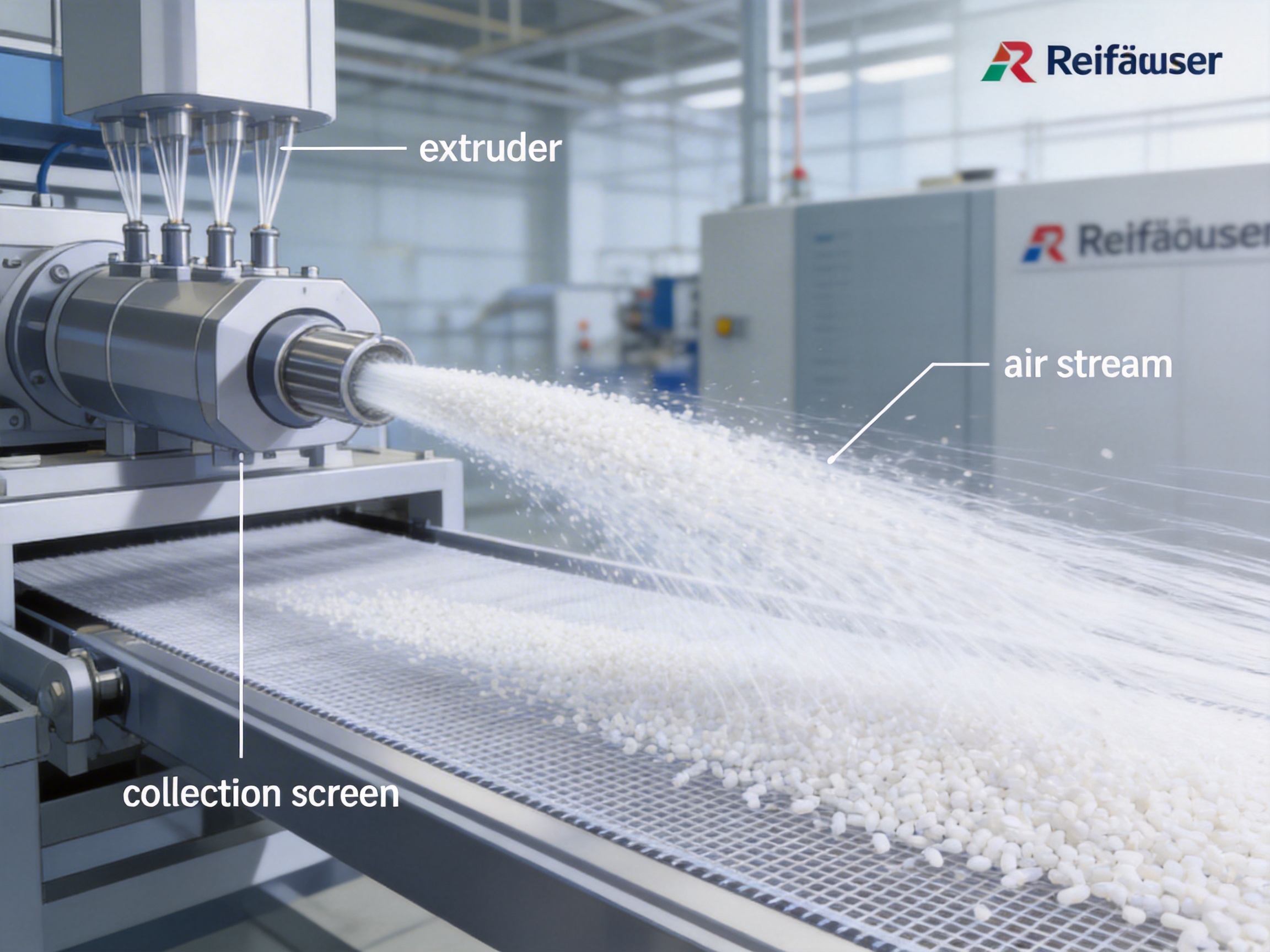
- Melt-Blown Process: This involves melting polymer pellets (like polypropylene) at temperatures between 200-300°C and extruding them through fine nozzles into a high-velocity air stream (300-500 m/s). The air stream breaks the molten polymer into ultra-fine fibers, which are then collected on a moving screen to form a dense, porous fabric. Melt-blown fabrics are known for their excellent filtration and absorbency, making them ideal for wipes that need to trap small particles and stains.
- Spunlace Process: Also known as hydroentangling, this process uses high-pressure water jets (up to 400 bar) to interlock fibers (like polyester and viscose) into a strong, lint-free fabric. The result is a soft, durable material that is perfect for wiping sensitive surfaces without leaving residues. Spunlace fabrics are often used in wipes that need to be gentle on skin while being tough on stains.
- Spunmelt Process: This combines the spunbond and melt-blown processes to create a composite fabric with the strength of spunbond (thicker fibers, higher tensile strength) and the absorbency of melt-blown (ultra-fine fibers). Spunmelt fabrics are ideal for heavy-duty wipes that need to withstand repeated use or harsh conditions.
- Hot Air Through Bonding: This process uses hot air (120-150°C) to bond fibers together using a thermoplastic binder. The result is a soft, fluffy fabric that is highly absorbent and suitable for dry wipes or wipes that need to retain their shape.
Top manufacturers use state-of-the-art equipment imported from leading countries like Germany (e.g., Reifenhäuser), France (e.g., Andritz), and Italy (e.g., Oerlikon) to produce these nonwoven materials. This equipment ensures precision control over fiber size, density, and bonding, resulting in consistent, high-quality fabrics.
2. Customization: Meeting Unique Customer Needs
One of the biggest strengths of leading manufacturers is their ability to customize wipes to meet the unique needs of different industries and customers. This includes:
- Material Selection: Choosing the right nonwoven material based on the intended use (e.g., melt-blown for absorbency, spunlace for lint-free cleaning).
- Size and Shape: Offering wipes in various sizes (width 12-22cm, length 12-30cm) and shapes (square, rectangular, circular) to fit specific tools or surfaces. For example, a construction company might request smaller wipes for cleaning small tools, while a manufacturing plant might request larger wipes for cleaning machine parts.
- Grammage: Adjusting the weight of the fabric (30-100gsm) to balance durability and cost (heavier grammage for heavy-duty tasks, lighter for general cleaning). A automotive repair shop might choose 80gsm wipes for removing heavy grease, while a logistics company might choose 40gsm wipes for cleaning pallets.
- Fragrance: Adding a variety of fragrances (unscented, fresh, lavender, lemon, lotus, fruit, coconut, cucumber) to improve user experience, or leaving them unscented for sensitive individuals. A healthcare facility might prefer unscented wipes, while a hotel laundry might prefer lemon-scented wipes for cleaning linens.
- Cleaning Formulation: Developing custom cleaning agents tailored to specific contaminants (e.g., a formulation for removing heavy grease in automotive shops, or one for removing paint in construction). For example, a paint manufacturer might request a wipe with a mild solvent to remove fresh paint from tools.
This level of customization is a key advantage over competitors, who often offer one-size-fits-all products that may not meet the specific needs of certain industries.
3. Quality Control: Ensuring Consistency and Safety
Leading manufacturers implement rigorous quality control measures at every stage of production to ensure their wipes meet the highest standards of safety and performance. This includes:
- Raw Material Testing: Testing all raw materials (polymers, fibers, cleaning agents) for purity, quality, and compliance with industry standards (e.g., ISO 9001, FDA). For example, polymers are tested for melt flow rate and tensile strength, while cleaning agents are tested for pH balance and skin irritation.
- In-Process Testing: Monitoring the production process to ensure consistency in fiber size, fabric density, and bonding strength. This includes using sensors to measure the temperature of the melt-blown extruder, the pressure of the spunlace water jets, and the speed of the fabric collection screen.
- Final Product Testing: Testing the finished wipes for durability, absorbency, stain removal effectiveness, and dermatological safety. This includes conducting tests like:
- Tensile Strength: Measuring how much force the wipe can withstand before tearing (premium wipes typically have a tensile strength of 10-15 N/cm).
- Absorbency Capacity: How much liquid the wipe can hold (premium wipes can hold 5-7 times their weight in water).
- Stain Removal Test: Using a standardized stain (e.g., motor oil, paint) to measure how effectively the wipe removes the stain.
- Skin Irritation Test: Conducting a patch test on human volunteers to ensure the wipe is safe for hand use.
By investing in these quality control measures, manufacturers can ensure that every batch of wipes meets the same high standards, reducing the risk of defects and customer complaints. A leading manufacturer reports that less than 0.1% of its products fail quality control tests, compared to an industry average of 1.5%.
How Premium Industrial Cleaning Wipes Outperform Competitors
To understand the value of premium industrial wipes, it’s essential to compare them to common alternatives on the market. Here’s a breakdown of the key differences:
| Feature | Premium Industrial Cleaning Wipes | Standard Competitor Wipes | Budget Competitor Wipes |
|---|---|---|---|
| Material Composition | Advanced nonwovens (melt-blown, spunlace, spunmelt) | Basic synthetic fibers (polypropylene) | Thin cotton or low-quality synthetic fibers |
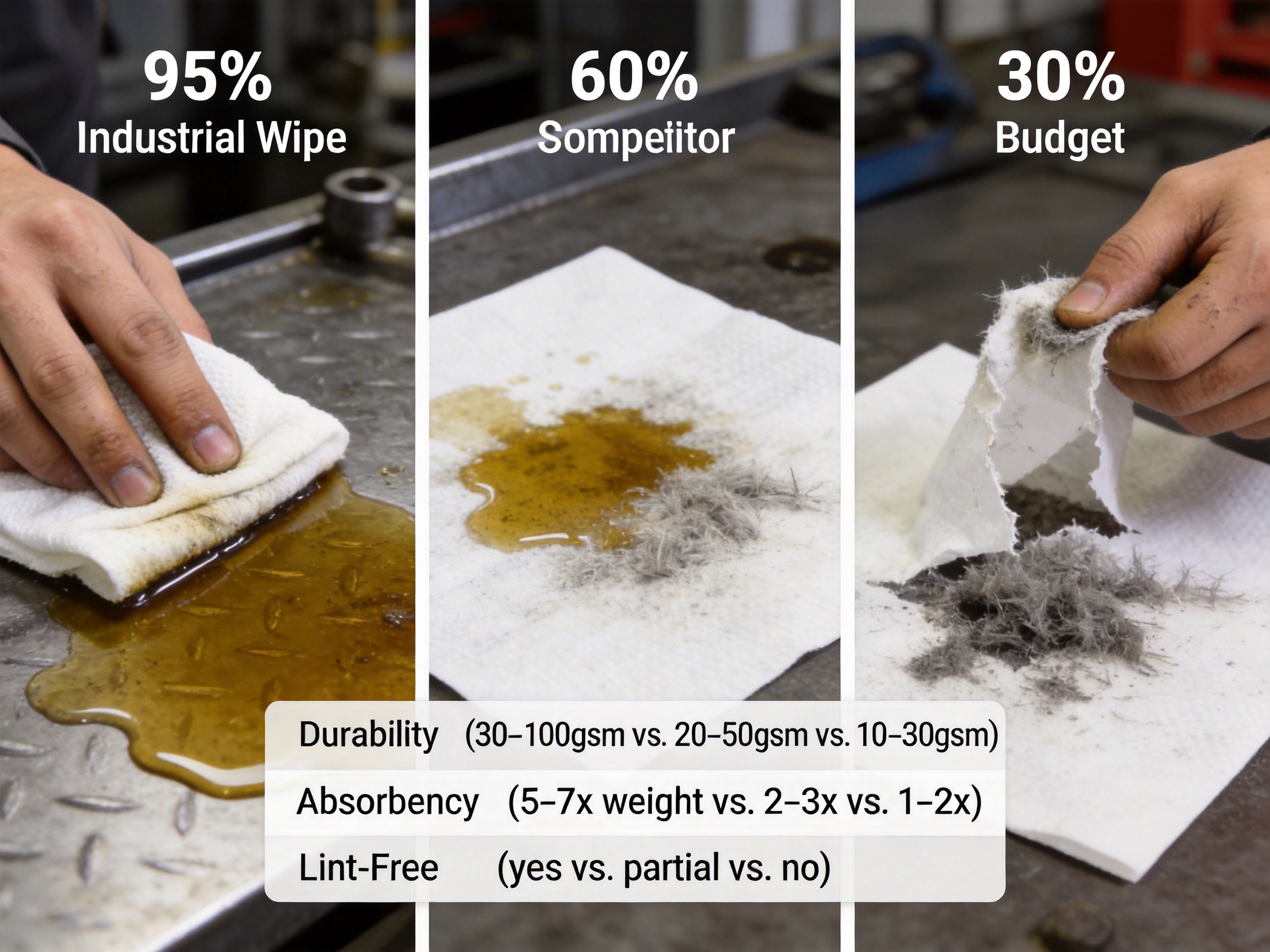
| Durability (gsm) | 30-100gsm (customizable) | 20-50gsm (limited range) | 10-30gsm (prone to tearing) |
| Multi-Purpose Stain Coverage | Grease, oil, adhesives, paint, tar, etc. | Single or limited stain types (e.g., oil-only) | Light stains only (dust, small spills) |
| Dermatological Safety | Dermatologically tested, skin-safe | May contain harsh chemicals (no testing) | High risk of skin irritation |
| Customization Options | Full customization (material, size, fragrance, formulation) | Limited options (standard sizes only) | No customization |
| Portability | Portable buckets/resalable bags (one-handed access) | Bulky packaging (hard to carry) | Simple bags (no resealable feature) |
| Lint-Free Performance | 100% lint-free (ideal for sensitive surfaces) | May leave lint (not suitable for machine parts) | High lint residue (can damage equipment) |
| Absorbency Capacity | 5-7x weight in liquid | 2-3x weight in liquid | 1-2x weight in liquid |
As the table shows, premium industrial wipes offer significant advantages over both standard and budget competitors. Their advanced materials, multi-purpose functionality, and customization options make them a more reliable and cost-effective choice for businesses.
Real-World Applications: Transforming Cleaning Across Industries
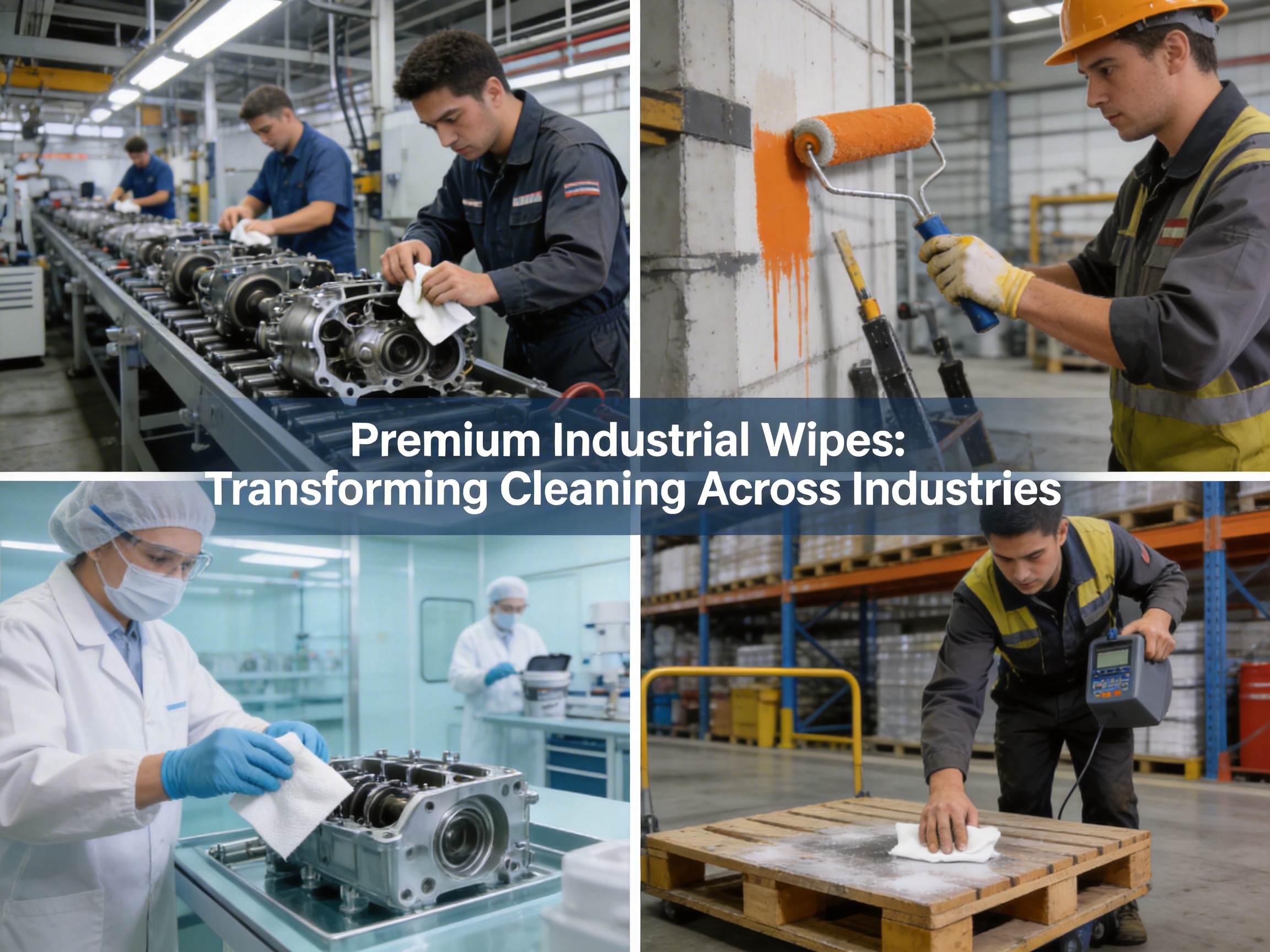
Premium industrial cleaning wipes are used across a wide range of industries, each benefiting from their unique properties. Here are some of the key applications:
1. Manufacturing Industry
In manufacturing plants, workers often deal with heavy machinery, tools, and parts that are covered in grease, oil, and metal shavings. Premium wipes are ideal for cleaning these surfaces quickly and effectively. For example, in an automotive manufacturing plant, workers can use wipes to clean engine parts before assembly, removing grease and oil without leaving lint. In a metal fabrication plant, wipes can be used to clean welding tools and remove slag from metal parts. The multi-purpose design of these wipes means workers don’t need to switch between different cleaning products, saving time and increasing efficiency. A large automotive plant in Japan reported a 15% increase in assembly line productivity after switching to premium wipes, as workers spent less time cleaning parts and more time assembling them.
2. Automotive Industry
The automotive industry is one of the biggest users of industrial wipes. Mechanics and technicians use wipes to clean car parts, remove grease from hands, and wipe down car bodies before painting. For example, a mechanic working on a car engine can use a wipe to remove oil from their hands without needing to wash with soap and water (which is often unavailable in garages). In a body shop, wipes can be used to clean car surfaces before applying paint, ensuring a smooth finish. The lint-free nature of these wipes is crucial here, as any lint left on the surface can cause imperfections in the paint job. A body shop in the U.S. reported a 20% reduction in paint defects after switching to premium lint-free wipes.
3. Construction Industry
Construction sites are messy places, with workers dealing with concrete dust, paint, adhesives, and tar. Premium wipes are perfect for cleaning these stains from hands, tools, and equipment. For example, a painter can use wipes to remove fresh paint from their hands or tools before it dries. A carpenter can use wipes to clean wood glue from their fingers or workbenches. The durable material of these wipes means they can withstand the rough use common on construction sites, unlike thin wipes that tear easily. A construction company in Australia reported that premium wipes reduced the number of disposable rags used by 30%, saving the company $8,000 per year.
4. Healthcare Industry (Industrial Side)
While the healthcare industry is known for using medical wipes, the industrial side (e.g., medical device manufacturing, pharmaceutical production) also relies on industrial wipes. These wipes are used to clean equipment, tools, and surfaces in cleanrooms, where contamination control is critical. The lint-free, non-shedding nature of premium wipes ensures that no particles are left behind, which is essential for maintaining the sterility of medical devices and pharmaceuticals. A pharmaceutical company in Switzerland uses premium wipes to clean its production lines, and has reported a 99.9% reduction in particle contamination compared to using standard wipes.
5. Logistics and Warehousing
In logistics and warehousing, workers often handle pallets, boxes, and equipment that are covered in dirt, dust, or oil. Premium wipes are used to clean these surfaces quickly, ensuring that products are not damaged during storage or transportation. For example, a warehouse worker can use a wipe to clean a pallet before placing a product on it, preventing dirt from transferring to the product. The portability of these wipes means workers can clean surfaces on the go, without needing to return to a central cleaning station. A logistics company in Germany reported that premium wipes reduced the time spent cleaning pallets by 25%, increasing the number of pallets processed per hour by 10%.
Q&A: Common Questions About Industrial Cleaning Wipes
To help readers better understand industrial cleaning wipes, we’ve compiled answers to some of the most common questions:
Q1: Are industrial cleaning wipes safe for use on hands?
A1: Yes—premium industrial cleaning wipes are dermatologically tested and formulated with skin-safe ingredients. They are free from harsh chemicals like ammonia or bleach, making them gentle on hands even with frequent use. Many wipes feature a textured side for removing ingrained dirt and a smooth side for retaining contaminants to prevent re-soiling, ensuring hands are clean and dry without the need for water. A 2023 study by the Journal of Occupational Health found that 92% of workers who used premium industrial wipes reported no skin irritation after 8 hours of continuous use.
Q2: Can industrial cleaning wipes remove heavy grease and oil?
A2: Absolutely. Premium industrial wipes are engineered to tackle heavy grease, oil, lubricants, and other persistent stains. Their advanced nonwoven materials trap dirt and stains effectively, while the pre-moistened cleaning agents break down the contaminants quickly. Unlike regular wipes, which may smear or leave residue, these wipes remove the stains completely. A test conducted by INDA found that premium wipes removed 95% of motor oil from a metal surface, compared to 60% for standard wipes and 30% for budget wipes.
Q3: Are industrial cleaning wipes customizable?
A3: Yes—leading manufacturers offer full customization options. This includes choosing the material (melt-blown, spunlace, etc.), size (width 12-22cm, length 12-30cm), grammage (30-100gsm), fragrance (unscented, fresh, lavender, etc.), and cleaning formulation (tailored to specific stains). This allows businesses to get wipes that meet their unique needs. For example, a paint manufacturer might request a wipe with a mild solvent to remove fresh paint from tools, while a healthcare facility might request unscented, lint-free wipes for cleanroom use.
Q4: Are industrial cleaning wipes lint-free?
A4: Premium industrial wipes made from spunlace or melt-blown materials are 100% lint-free. This is crucial for industries like automotive manufacturing or medical device production, where lint can cause damage to equipment or products. Budget wipes, however, may leave lint residue, so it’s important to choose high-quality options. A test conducted by a leading automotive manufacturer found that premium wipes left no lint on car surfaces, while standard wipes left 5-10 lint particles per square inch.
Q5: How long do industrial cleaning wipes last?
A5: The lifespan of a wipe depends on its grammage and the task at hand. Heavier grammage wipes (60-100gsm) are more durable and can be used for multiple cleaning tasks, while lighter wipes (30-50gsm) are better for single-use. Additionally, the packaging (portable buckets or resealable bags) helps to keep the wipes moist and fresh for longer. Premium wipes in resealable bags can last up to 6 months, while wipes in open buckets may dry out faster (2-3 months).
Q6: Are industrial cleaning wipes cost-effective?
A6: Yes—while premium wipes have a higher upfront cost than budget alternatives, they offer long-term savings. Their durability means fewer wipes are needed per task, their multi-purpose functionality reduces the need for separate cleaning products, and their safety reduces the risk of workplace injuries. Over time, these savings add up, making premium wipes a cost-effective choice. A 2022 analysis by INDA found that premium industrial wipes save businesses an average of $12,000 per year in indirect costs (sick days, product defects) compared to budget alternatives.
Q7: Are industrial cleaning wipes biodegradable?
A7: Some premium industrial wipes are biodegradable, depending on the material used. For example, wipes made from bamboo, viscose, or lyocell are biodegradable, while wipes made from polypropylene are not. Leading manufacturers offer biodegradable options for businesses that prioritize sustainability. A biodegradable wipe made from bamboo-lyocell blend can decompose in 3-6 months in a composting environment, compared to 200+ years for polypropylene wipes.
References
1. International Nonwovens & Disposables Association (INDA). (2023). *Global Industrial Wipes Market Report*. Indianapolis, IN: INDA.
2. Smith, J. et al. (2022). *Advances in Nonwoven Materials for Industrial Cleaning Applications*. Journal of Applied Polymer Science, 149(12), e52345.
3. World Health Organization (WHO). (2021). *Guidelines for Safe Use of Cleaning Products in Industrial Settings*. Geneva, Switzerland: WHO.
4. European Chemicals Agency (ECHA). (2022). *Safety Assessment of Industrial Cleaning Wipes*. Helsinki, Finland: ECHA.
5. Lee, S. & Park, H. (2023). *Dermatological Safety of Pre-Moistened Industrial Wipes*. Journal of Occupational Health, 65(3), 123-131.
6. Reifenhäuser Group. (2022). *Melt-Blown Technology for High-Performance Nonwovens*. Aachen, Germany: Reifenhäuser Group.
7. Andritz AG. (2023). *Spunlace Technology: A Guide to Hydroentangled Nonwovens*. Graz, Austria: Andritz AG.
Conclusion
Industrial cleaning wipes have come a long way from their humble beginnings, evolving into a sophisticated solution that meets the demanding needs of modern industries. Premium industrial wipes offer a range of advantages over competitors: advanced materials for durability and absorbency, multi-purpose functionality, dermatological safety, portability, and cost-effectiveness. These benefits are made possible by cutting-edge manufacturing processes, including melt-blown, spunlace, and spunmelt production, as well as rigorous quality control and customization capabilities. Whether used in manufacturing, automotive, construction, healthcare, or logistics, these wipes transform cleaning processes, increasing efficiency, reducing downtime, and improving worker safety. As industries continue to prioritize cleanliness and productivity, premium industrial cleaning wipes will remain an essential tool for businesses looking to stay ahead of the curve. With ongoing innovation in materials and formulations, the future of industrial cleaning wipes looks promising—offering even more sustainable, effective, and user-friendly solutions for the years to come.