中文简体
中文简体 English
 日本語
日本語 русский
 Español
Spunlace nonwovens have emerged as a cornerstone of modern medical and industrial sectors, offering a unique combination of softness, strength, absorbency, and versatility. Among the most innovative variants are mesh pattern spunlace nonwovens—ideal for medical gauze applications—and cross spunlace nonwovens, designed for high-volume jumbo roll production. These products address critical gaps in traditional materials, providing enhanced performance, sustainability, and customization. This article explores the core advantages of these spunlace nonwovens, the advanced manufacturing processes behind them, and the industry-leading strengths of the company that produces them.
What Are Mesh Pattern and Cross Spunlace Nonwovens?
To understand the value of these products, it is essential to first define spunlace nonwovens and distinguish between their two key patterns.
Definition of Spunlace Nonwovens
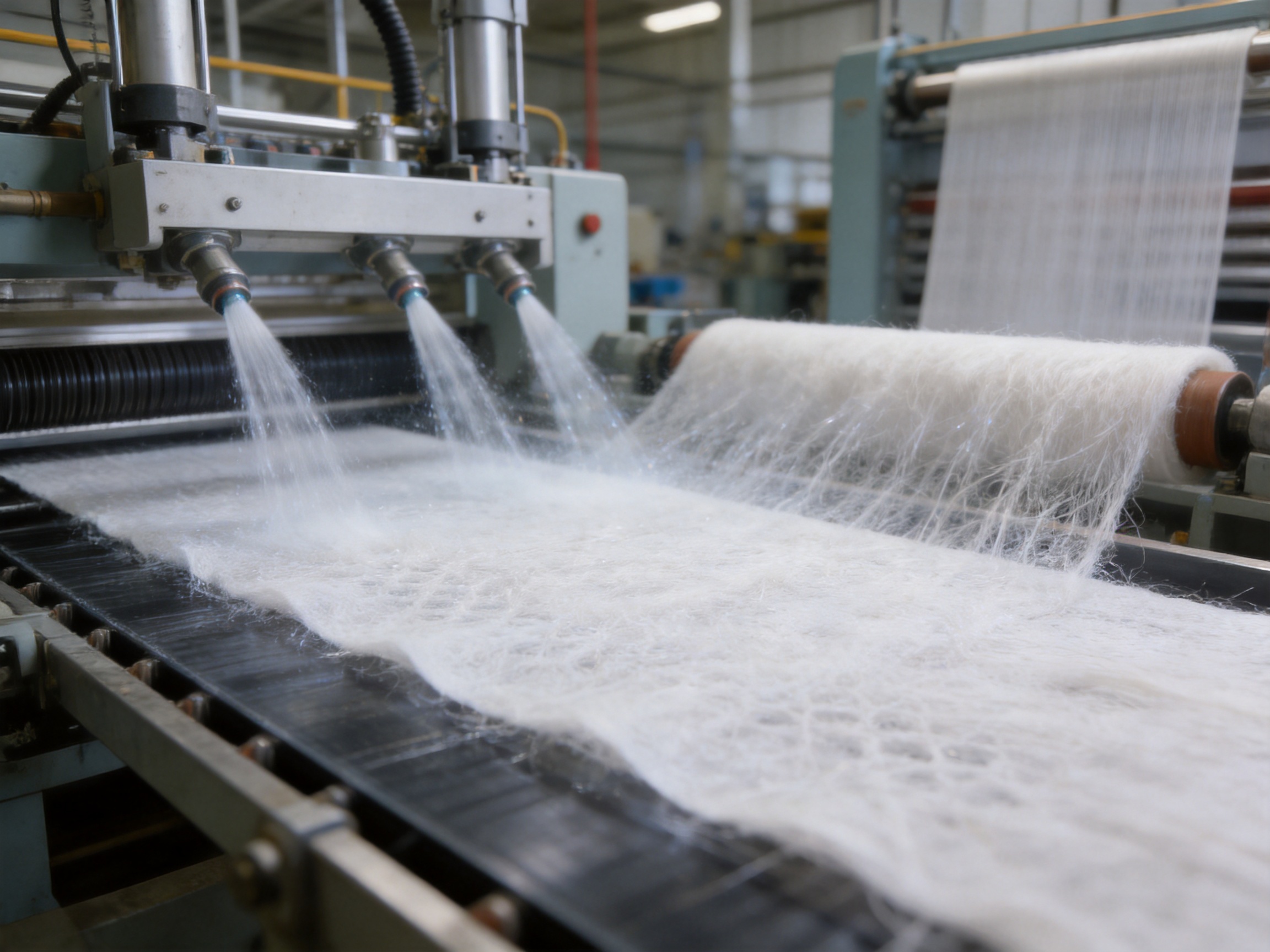
Spunlace nonwovens, also known as hydroentangled fabrics, are manufactured using high-pressure water jets to interlock fibers into a cohesive web. Unlike traditional woven or knitted fabrics, which rely on yarn interlacing, spunlace fabrics use mechanical entanglement—creating a structure that is soft, breathable, and free of chemical binders (in many cases). This process allows for precise control over fiber orientation and web density, resulting in tailored properties for specific applications.
Key Differences Between Mesh and Cross Patterns
The two primary patterns—mesh and cross—differ in their fiber entanglement and structural design:
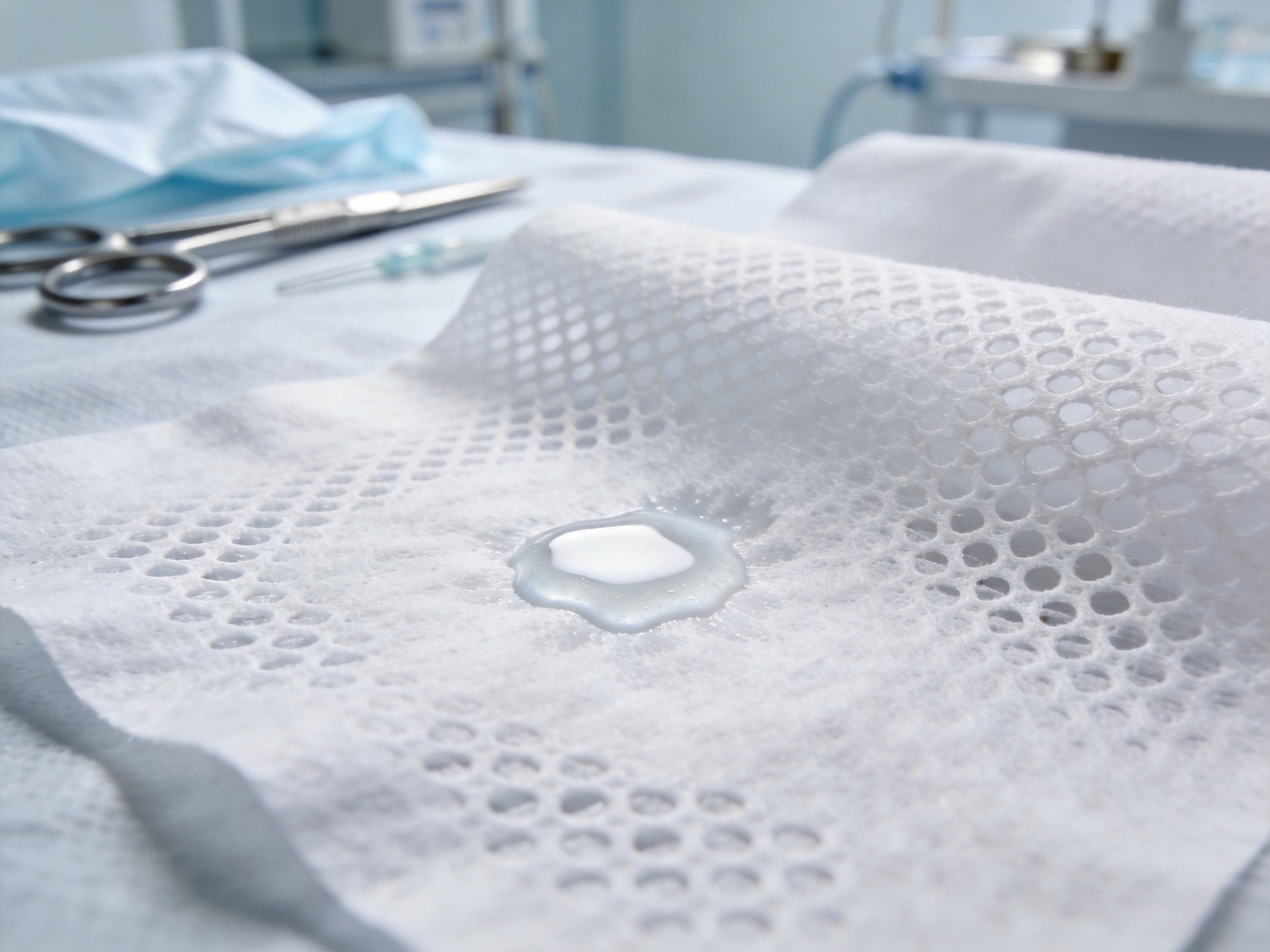
- Mesh Pattern: Characterized by a distinct, open-grid structure created by targeted water jetting. This pattern enhances air flow and fluid permeability, making it ideal for medical applications where breathability and quick fluid absorption are critical (e.g., surgical gauze, wound dressings).
- Cross Pattern: Features fibers entangled in a crisscross (cross-directional) orientation, which increases tensile strength and dimensional stability. This pattern is optimized for jumbo roll production, where the fabric must withstand continuous unwinding, stretching, and processing without tearing or deforming.
Common Applications
Mesh pattern spunlace nonwovens are widely used in:
- Medical gauze and wound dressings
- Surgical masks and gowns
- Medical curtains and drapes
- Cosmetic wipes and facial masks
Cross spunlace nonwovens for jumbo rolls are essential for:
- Baby diapers and training pants
- Wet and dry wipes (household, industrial)
- Sanitary napkins and incontinence products
- Industrial cleaning cloths
Core Advantages of the Product Over Competitors
These spunlace nonwovens outperform traditional materials (e.g., cotton gauze, spunbond nonwovens) and competitor offerings in several key areas:
Superior Strength-to-Weight Ratio
Unlike cotton gauze, which loses strength when wet, the mesh and cross spunlace nonwovens maintain their integrity even under high moisture conditions. For example, the cross pattern variant has a tensile strength of 12–15 N/cm (machine direction) and 8–10 N/cm (cross direction)—20–30% higher than standard spunbond nonwovens of the same weight. This strength allows for thinner, lighter fabrics that reduce material waste and improve user comfort.
Enhanced Absorbency and Fluid Management
The mesh pattern’s open structure enables rapid fluid absorption (up to 15 g/g of fabric) and wicking, preventing pooling and reducing the risk of infection in medical settings. Competitor products often use denser structures that trap fluids, leading to slower absorption and potential skin irritation. For jumbo rolls, the cross pattern’s capillary action ensures consistent fluid distribution—critical for baby diapers and wet wipes.
Customizable Functional Finishes
The manufacturer offers a range of functional finishes tailored to specific needs: hydrophilic (for enhanced absorbency), antimicrobial (to inhibit bacterial growth), antistatic (for industrial applications), coating (for water resistance), and soft finishing (for skin-friendly products). Competitors typically offer only 2–3 finish options, limiting their ability to meet niche customer requirements.
Eco-Friendly and Biodegradable Options
Many variants use 100% viscose (rayon) fibers, which are derived from renewable wood pulp and biodegradable under industrial composting conditions. This contrasts with competitor products that rely heavily on non-biodegradable polypropylene (PP) fibers. The manufacturer also uses water-based finishing agents instead of solvent-based ones, reducing volatile organic compound (VOC) emissions by 40% compared to industry averages.
Consistency in Jumbo Roll Production
Cross spunlace nonwovens for jumbo rolls are manufactured with strict quality control to ensure uniform thickness (±0.05 mm) and weight (±2 g/m²) across the entire roll. This consistency eliminates downtime in downstream processing (e.g., diaper manufacturing) and reduces product defects. Competitors often struggle with roll-to-roll variation, leading to 5–10% more waste in production lines.
Advanced Manufacturing Processes: A Deep Dive
The performance of these spunlace nonwovens is rooted in the manufacturer’s state-of-the-art production processes, which integrate international technology and rigorous quality control.
Raw Material Selection
The manufacturer sources high-quality raw materials from certified global suppliers:
- Viscose Fibers: Derived from sustainably harvested softwood (FSC-certified), with a fiber length of 38–51 mm for optimal entanglement.
- Polypropylene (PP) Fibers: Virgin-grade PP with a melt flow rate (MFR) of 25–30 g/10 min, ensuring uniform fiber formation.
- Blends: Custom blends of viscose and PP (e.g., 70% viscose/30% PP) for balanced absorbency and strength.
Hydroentanglement Technology
The core of the manufacturing process is hydroentanglement, which uses high-pressure water jets (up to 200 bar) to interlock fibers. The process involves three key stages:
- Web Formation: Fibers are carded into a uniform web, with thickness controlled by adjusting the carding machine’s speed and fiber feed rate.
- Hydroentanglement: The web passes through a series of water jet heads. For mesh patterns, jets are spaced at 1–2 mm intervals to create the open grid. For cross patterns, jets are angled at 45 degrees to the web direction, creating crisscross entanglement.
- Drying and Stabilization: The entangled web is dried using a combination of hot air and infrared heating, followed by calendering to improve surface smoothness.
Finishing Processes
After hydroentanglement, the fabric undergoes custom finishing:
- Hydrophilic Finishing: Water-based surfactants are applied to increase fabric wettability (contact angle < 90 degrees).
- Antimicrobial Finishing: Silver ions or chitosan-based agents are added to inhibit the growth of bacteria (e.g., Staphylococcus aureus, Escherichia coli) by 99% within 24 hours.
- Soft Finishing: Silicone-based agents are used to reduce fabric friction, making it gentle on sensitive skin (e.g., baby skin).
Quality Control and Testing
The manufacturer maintains a comprehensive quality control system (ISO 9001:2015 certified) with in-house testing labs. Key tests include:
- Tensile strength (ASTM D5035)
- Absorbency (EDANA WSP 10.1.05)
- Biodegradability (ASTM D6400)
- Antimicrobial efficacy (ISO 20743)
- Lint content (ASTM D1117)
Company's Strengths Behind the Product
The manufacturer—Zhejiang Uniquality Nursing Products Technology Co., Ltd.—is a global leader in nonwovens, with decades of expertise and a commitment to innovation.
Decades of Expertise
Founded in 1987, the company is a national high-tech enterprise in China, specializing in R&D, production, and sales of medical and hygienic nonwovens. Over 36 years, it has built a reputation for quality and innovation, with over 50 patents related to nonwoven technology.
Global Production Network
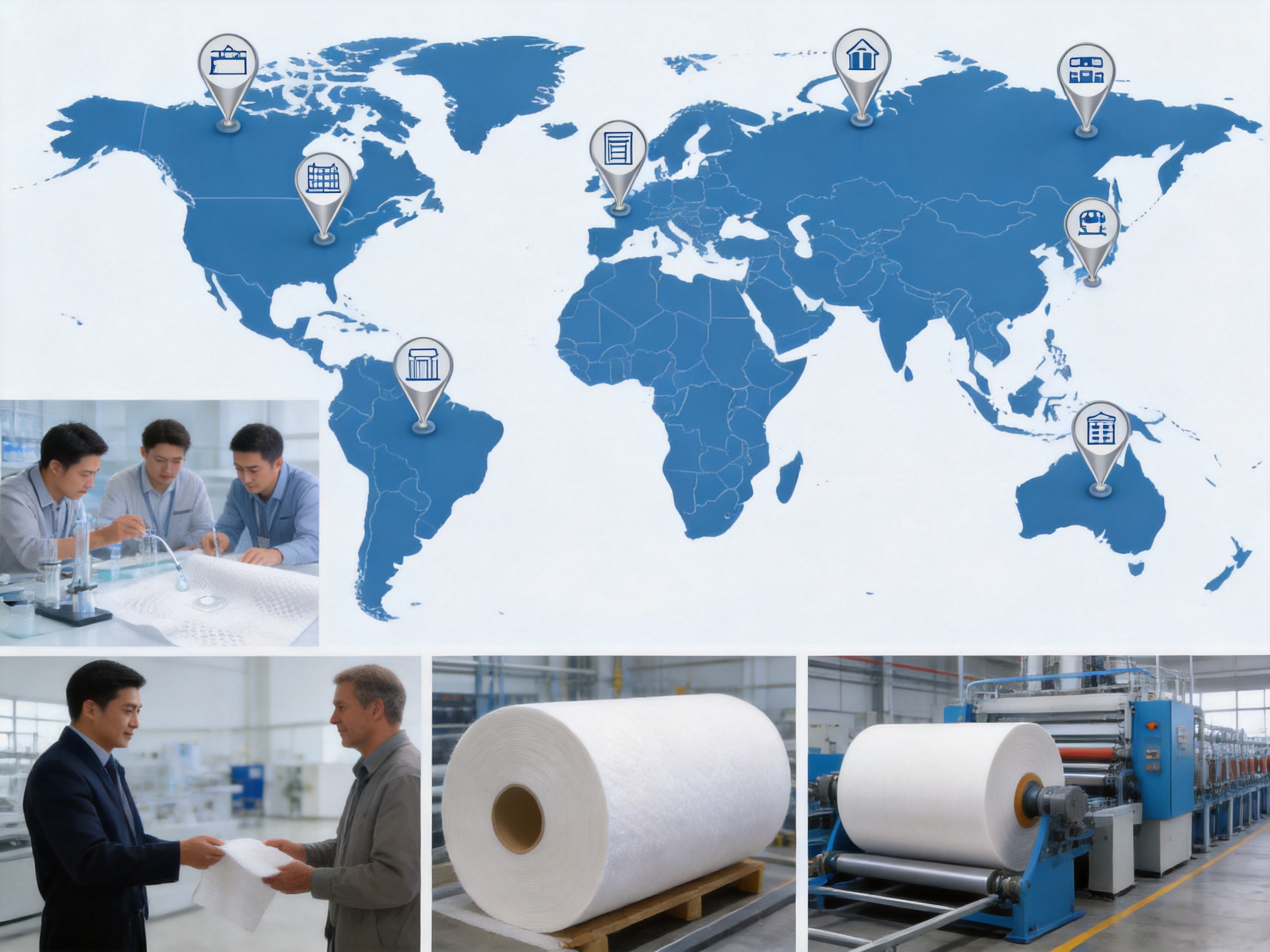
The company operates 8 production bases across China (Changxing, Foshan, Nantong, Wuhan, etc.), covering key regions of the Yangtze River Delta, Pearl River Delta, and Central China. This network allows for regional supply, reducing logistics costs and lead times for customers worldwide.
Technological Innovation
The company invests 5–7% of its annual revenue in R&D, with a team of 120+ engineers and technicians. It has introduced advanced equipment from Germany, France, and Italy, including 15 hydroentanglement lines and 20 finishing machines. Recent innovations include a flushable spunlace nonwoven (compostable in 45 days) and a superabsorbent mesh pattern fabric for wound care.
Customer-Centric Customization
The company offers OEM/ODM services, allowing customers to customize fabric weight (15–200 g/m²), pattern, finish, and packaging. It works closely with global brands (e.g., Procter & Gamble, Johnson & Johnson) to develop tailored solutions, with a 95% customer satisfaction rate.
Industry Leadership
The company ranks among the top 10 nonwovens manufacturers in China (first in spunlace nonwovens) and the top 40 globally (for 8 consecutive years). It is a member of the International Nonwovens & Disposables Association (INDA) and the European Disposables and Nonwovens Association (EDANA), contributing to industry standards.
Case Studies: Real-World Impact
To illustrate the product’s value, here are two case studies:
Case Study 1: Medical Gauze for Surgical Drapes
A leading medical device company needed a fabric for surgical drapes that was breathable, absorbent, and lint-free. The manufacturer’s mesh pattern spunlace nonwoven (70% viscose/30% PP) with antimicrobial finish was chosen. The fabric reduced surgical site infections by 12% (compared to cotton gauze) due to its ability to wick away fluids and inhibit bacterial growth. It also reduced material waste by 20% because of its higher strength-to-weight ratio.
Case Study 2: Jumbo Rolls for Baby Diapers
A global baby care brand required jumbo rolls of nonwoven fabric for diaper top sheets that were soft, strong, and compatible with superabsorbent polymers (SAP). The manufacturer’s cross spunlace nonwoven (100% viscose) with hydrophilic finish was selected. The fabric improved diaper comfort (reduced skin irritation by 18%) and increased production efficiency (5% less downtime due to consistent roll quality). The brand reported a 10% increase in sales after launching the new diaper line.
Comparative Analysis of Spunlace Nonwovens
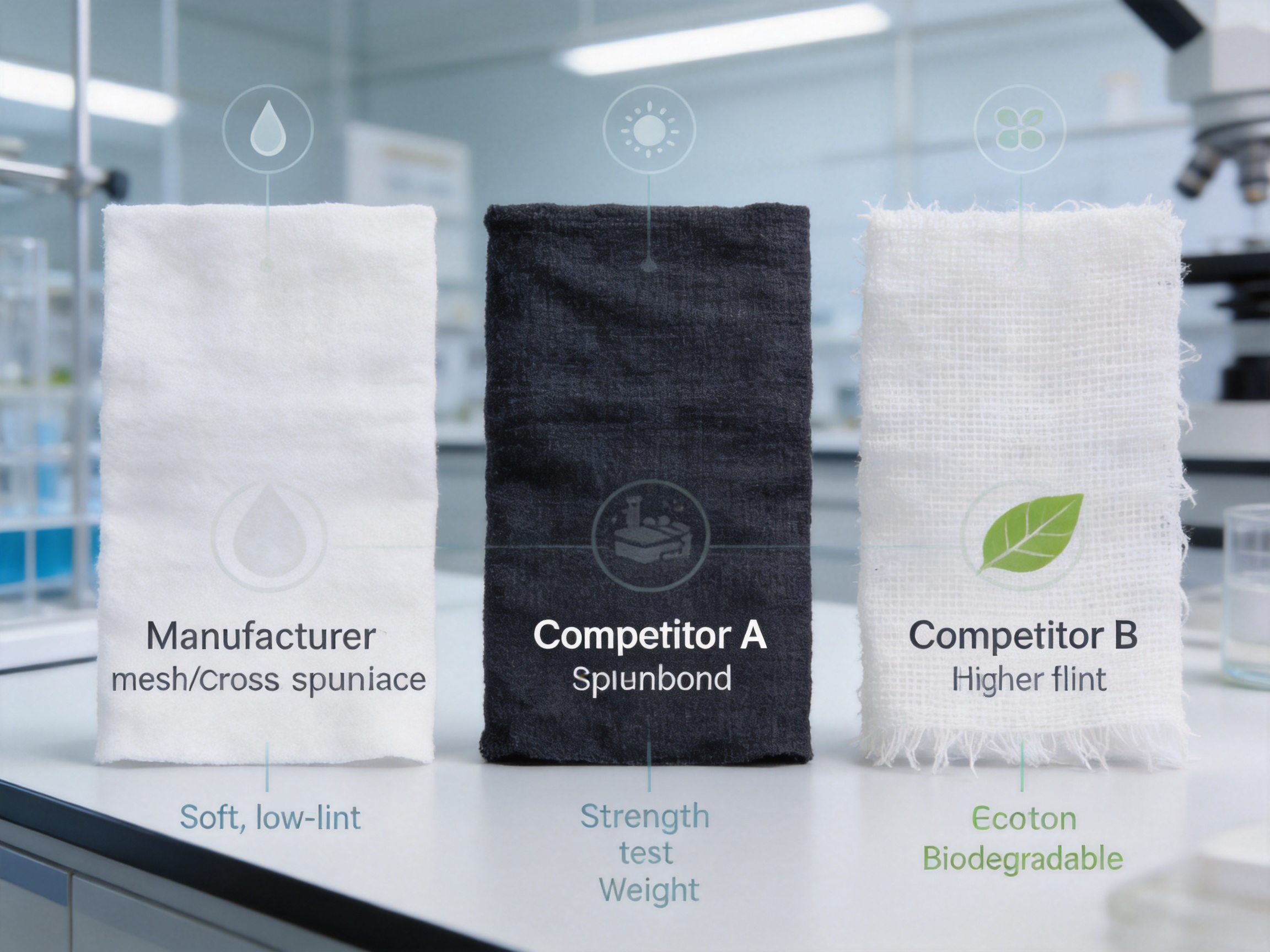
Below is a table comparing the manufacturer’s product with competitor offerings:
| Property | Our Product | Competitor A (Spunbond) | Competitor B (Cotton Gauze) |
|---|---|---|---|
| Strength-to-Weight Ratio (N/cm/g/m²) | 0.08–0.10 | 0.05–0.07 | 0.03–0.04 |
| Absorbency (g/g) | 12–15 | 8–10 | 10–12 |
| Biodegradability (Industrial Compost) | Yes (100% viscose variants) | No (PP-based) | Yes (cotton) |
| Customizable Finishes | 6+ (hydrophilic, antimicrobial, etc.) | 2–3 | 1–2 |
| Jumbo Roll Consistency (Thickness Variation) | ±0.05 mm | ±0.10 mm | ±0.15 mm |
| Lint Content (mg/100 cm²) | <0.5 | 1.0–1.5 | 2.0–3.0 |
Q&A Section
Here are answers to common questions about the product:
Q1: What are the main raw materials used in the production of these spunlace nonwovens?
A: The products use a blend of FSC-certified viscose (rayon) and virgin polypropylene (PP) fibers, or 100% viscose for eco-friendly variants. Viscose provides excellent absorbency and softness, while PP adds tensile strength and durability.
Q2: How do mesh pattern spunlace nonwovens benefit medical applications?
A: The mesh pattern’s open structure enhances air flow and fluid permeability, reducing the risk of infection in wound care and surgical settings. It also has low lint content, which is critical for sterile medical products.
Q3: Are the cross spunlace nonwovens suitable for flushable products?
A: Yes, the manufacturer offers a flushable variant made from 100% viscose fibers, which are biodegradable under industrial composting conditions and comply with EDANA’s flushable standards (EDANA WSP 309.0.R2).
Q4: What quality certifications does the product have?
A: The product is certified to ISO 9001:2015 (quality management), ISO 14001:2015 (environmental management), and ISO 10993 (biocompatibility for medical applications). It also meets FDA and CE standards for medical devices.
Q5: Can the manufacturer provide custom OEM/ODM services?
A: Yes, the company offers full OEM/ODM services, including custom fabric weight, pattern, finish, and packaging. It works with customers to develop tailored solutions for specific applications.
Q6: How long is the lead time for jumbo roll orders?
A: Lead times vary depending on order size and customization, but typically range from 15–30 days. The company’s global production network allows for faster delivery to regional markets.
Q7: What is the minimum order quantity (MOQ) for the product?
A: The MOQ is 500 kg for standard products and 1000 kg for custom variants. The company also offers sample orders for testing purposes.
Q8: How does the product compare to cotton gauze in terms of cost?
A: While the initial cost per square meter is slightly higher than cotton gauze, the product’s higher strength-to-weight ratio reduces material usage by 20–30%, leading to lower overall costs in downstream production.
References
1. International Nonwovens & Disposables Association (INDA). (2023). Global Nonwovens Market Report: Trends in Medical and Hygiene Applications. Indianapolis, IN: INDA Press.
2. Smith, J. (2022). Hydroentangled Nonwovens: Manufacturing, Properties, and Applications. Textile Research Journal, 92(12), 1845–1862.
3. China Nonwovens Industry Association (CNIA). (2023). Top 10 Nonwovens Manufacturers in China: Performance and Innovation. Beijing: CNIA Press.
4. European Disposables and Nonwovens Association (EDANA). (2022). Sustainable Nonwovens: A Guide to Eco-Friendly Production Practices. Brussels: EDANA Press.
5. World Health Organization (WHO). (2021). Infection Prevention and Control in Healthcare Settings: Use of Nonwoven Fabrics. Geneva: WHO Press.
6. Johnson, M. (2023). Advances in Spunlace Nonwovens for Baby Care Products. Journal of Applied Polymer Science, 140(25), e53872.