中文简体
中文简体 English
 日本語
日本語 русский
 Español
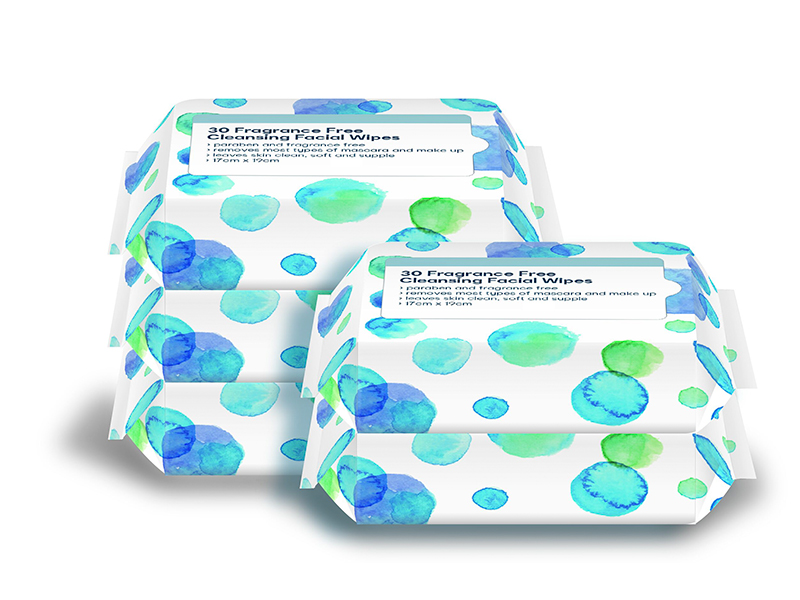
Modern skincare is no longer limited to creams, serums, and cleansers used only at home. Consumers want convenient, effective, skin-friendly solutions that fit into busy routines, travel bags, fitness schedules, family care needs, and professional beauty environments. Skincare wipes have become an essential product in this changing landscape because they combine cleansing, refreshing, and moisturizing benefits in a single ready-to-use format. Designed for daily skincare routines, these wipes help remove surface impurities while supporting a soft, hydrated skin feel.
Unlike ordinary wet wipes that may focus only on quick cleaning, skincare wipes are developed with skin comfort and cosmetic performance in mind. They are enriched with moisturizing ingredients and manufactured with soft nonwoven materials to reduce friction during use. The result is a wipe that feels gentle on facial skin while still delivering reliable cleansing action. For consumers, this means a more convenient skincare step. For private label buyers, retailers, and beauty brands, it means an attractive product category with strong repeat-purchase potential.
Zhejiang Uniquality Nursing Products Technology Co., Ltd. brings more than three decades of experience in nonwoven materials, hygiene products, wet wipes, dry wipes, baby diapers, training pants, and personal care solutions. Founded in 1987, the company has grown into a national high-tech enterprise with advanced research, production, and quality control capabilities. Its background in medical and hygienic nonwoven materials gives it an important advantage in developing skincare wipes that balance softness, strength, liquid absorption, skin compatibility, and manufacturing consistency.
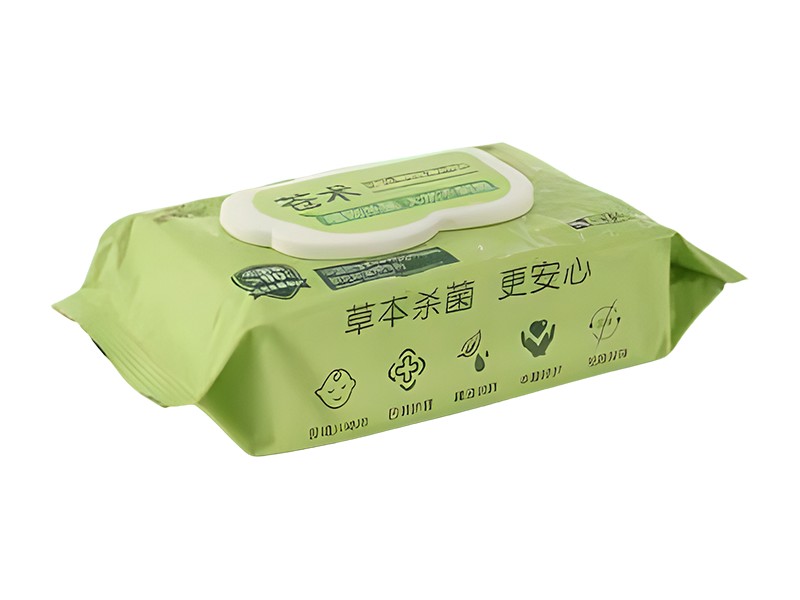
Why Skincare Wipes Are Becoming a Daily Essential
Consumers increasingly expect skincare products to be portable, hygienic, and easy to use without sacrificing performance. Skincare wipes meet these expectations by offering pre-moistened cleansing in a disposable format. They are especially useful for people who need quick facial cleansing after commuting, traveling, exercising, wearing sunscreen, or spending time outdoors. A wipe can help remove sweat, dust, excess oil, and daily residue while leaving the skin feeling fresher and more comfortable.
The facial wipes category has evolved significantly. Earlier wipes were often evaluated only by their ability to clean quickly. Today, consumers pay much closer attention to formula mildness, fabric softness, fragrance profile, ingredient transparency, packaging design, and sustainability options. This creates an opportunity for manufacturers with strong material science and formulation experience to produce wipes that compete not only on price but also on performance, safety, and user experience.
Skincare wipes are particularly appealing because they are suitable for many usage scenarios. A student may keep them in a school bag. A professional may use them after a long commute. A traveler may rely on them during flights or hotel stays. A fitness enthusiast may use them after exercise before showering. A parent may choose them for quick personal care during a busy day. Beauty brands may include them as a supporting product in cleansing, moisturizing, or makeup preparation routines.
The product described here is designed to cleanse while nourishing the skin, helping it remain hydrated and soft. This positioning makes it different from commodity wipes that may leave skin feeling dry or tight. When properly designed, skincare wipes can support the skin barrier by avoiding overly harsh cleansing systems and by incorporating humectants, emollients, or soothing ingredients. For daily-use products, this distinction is crucial because consumers are more likely to repurchase wipes that feel gentle and pleasant after repeated use.
Product Positioning: Facial Wipes with Skincare Value
As a facial wipe, the product must meet higher expectations than general-purpose wet wipes. Facial skin is thinner and often more sensitive than skin on the hands or body. It may also be affected by cosmetics, sunscreen, environmental pollutants, shaving, seasonal dryness, and personal skin conditions. A skincare wipe must therefore be engineered to provide effective cleansing without unnecessary irritation.
The core value of these skincare wipes lies in the combination of three elements: a soft nonwoven substrate, a skin-friendly cleansing lotion, and reliable moisture retention in packaging. The substrate determines touch, strength, absorption, and release of the liquid formula. The lotion determines cleansing feel, after-use comfort, and moisturizing effect. The packaging determines freshness, convenience, and shelf performance. When all three are carefully coordinated, the user experiences a product that feels premium and dependable.
Compared with many competitor wipes that may use rougher fabrics or overly simple formulas, a well-made skincare wipe can offer a softer hand feel, smoother wiping motion, more balanced wetness, better liquid distribution, and reduced dryness after cleansing. These advantages are especially important for facial applications because consumers notice even small differences in fabric texture and after-use sensation.
The product is also suitable for private label development. Retailers and brand owners can adapt wipe size, fabric weight, fragrance, active ingredients, packaging count, lid style, pouch design, and claims according to their target market. This flexibility allows one product platform to serve multiple segments, from value-oriented everyday facial wipes to premium moisturizing skincare wipes for beauty channels.
Key Product Advantages Over Competitors
Gentle Cleansing with Moisturizing Support
A major advantage of skincare wipes is that they can cleanse and condition the skin at the same time. Standard wipes may remove dirt but leave the skin feeling stripped. In contrast, skincare wipes are enriched with moisturizing ingredients that help maintain a soft and comfortable feel. This benefit is particularly important for daily use because repeated cleansing can affect skin comfort if the formula is not balanced.
Moisturizing ingredients may include humectants that attract water, botanical extracts that provide a soothing sensory profile, or mild emollients that improve after-feel. The formulation can be customized depending on market needs, but the central goal remains the same: remove unwanted residue while helping the skin feel hydrated rather than dry.
Soft Nonwoven Material for Facial Comfort
Fabric quality is one of the most visible differences between premium skincare wipes and lower-cost alternatives. A facial wipe must be soft enough for delicate skin but strong enough to resist tearing during use. Zhejiang Uniquality’s long experience in spunlace, spunmelt, hot air through nonwovens, and other nonwoven materials supports better control over fiber selection, web formation, bonding, absorbency, and tactile performance.
Softness is not simply a marketing claim. It is influenced by fiber fineness, fabric structure, surface smoothness, thickness, and liquid loading. A wipe that feels soft when dry may behave differently when wet, so manufacturers must evaluate the product in actual use conditions. Advanced nonwoven expertise allows the company to design substrates that retain pleasant touch after saturation with lotion.
Balanced Wetness and Efficient Liquid Release
A skincare wipe should be moist enough to cleanse comfortably but not so wet that it drips or feels messy. It should also release liquid evenly across the skin rather than holding too much solution inside the fabric. Balanced wetness improves both cleansing performance and consumer satisfaction.
Competitor products sometimes suffer from inconsistent wetness, especially if liquid distribution during production is not carefully controlled. Some wipes at the top of a pack may feel too dry, while others near the bottom may feel overly wet. Strong manufacturing control helps reduce this problem by ensuring accurate lotion dosing, uniform saturation, and packaging integrity.
Convenience Without Compromising Hygiene
Skincare wipes are individually touched during use, so packaging design and product preservation are important. Resealable pouches, flip-top lids, and controlled production environments help maintain freshness. For consumers, a pack that opens easily, dispenses one wipe at a time, and reseals properly offers a better experience than packaging that dries out quickly or dispenses multiple wipes unintentionally.
For private label customers, packaging quality also affects brand perception. Even a well-formulated wipe can be judged poorly if the pack leaks, dries out, or looks unattractive on shelf. A manufacturer with integrated wet wipe production experience can support both product performance and retail presentation.
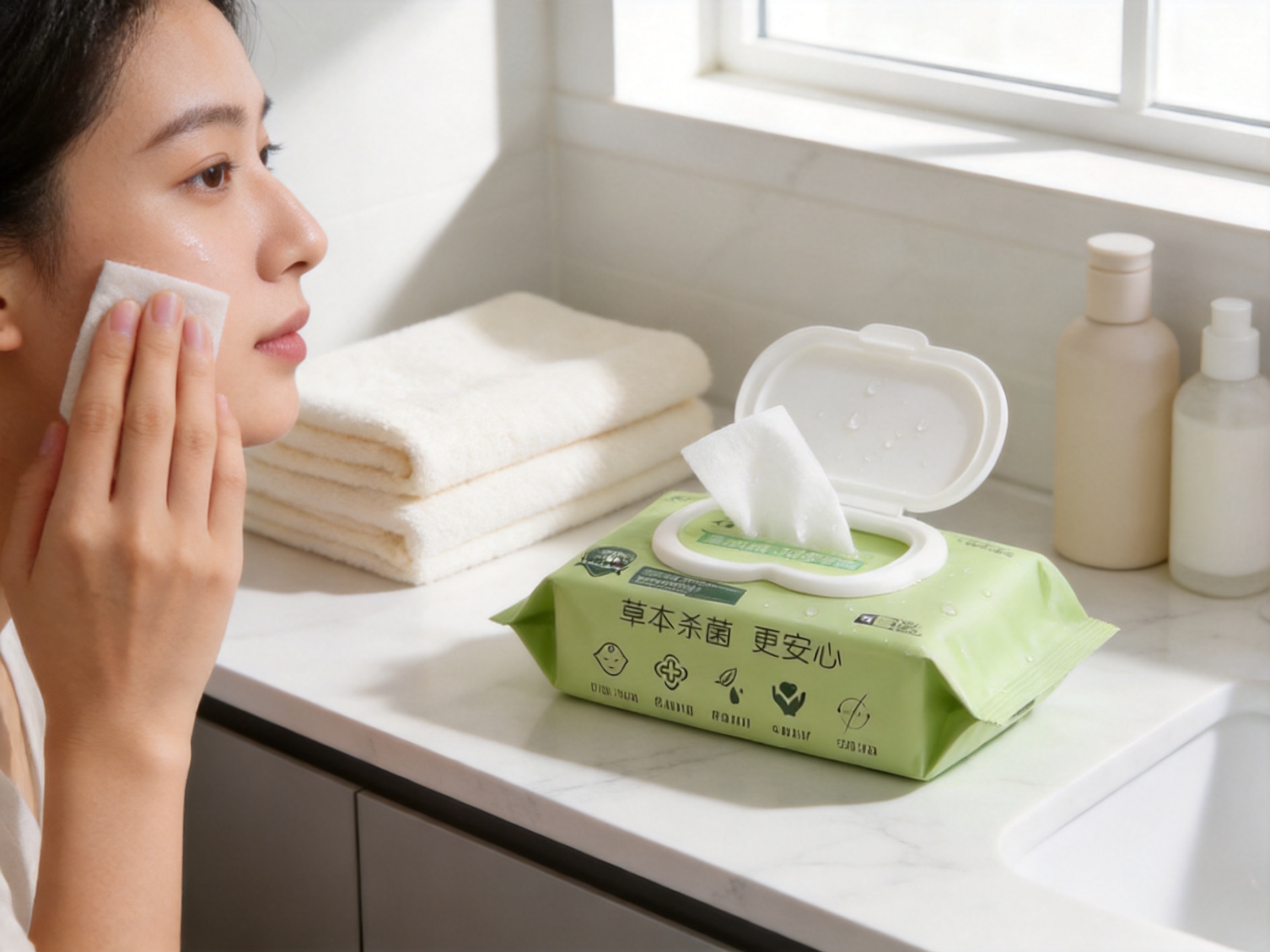
Advanced Manufacturing Strengths Behind the Product
The manufacturing background of Zhejiang Uniquality Nursing Products Technology Co., Ltd. is a key reason why its skincare wipes can be positioned strongly in competitive markets. The company was founded in 1987 and has developed through more than 30 years of continuous growth. It specializes in research and development, production, and sales of medical and hygienic nonwoven materials, nursing products, wet wipes, dry wipes, baby diapers, pull-ups, wet toilet paper, cleansing wipes, and other personal care products.
The company is headquartered in Changxing, Huzhou, within the Yangtze River Delta region, an area known for convenient transportation and strong manufacturing infrastructure. This location supports efficient logistics, supplier coordination, export operations, and customer service. The company has also established multiple production bases in regions including Guangdong, Jiangsu, and Hubei, enabling broader production capacity and supply flexibility.
One of the company’s important strengths is its deep foundation in nonwoven materials. Many wet wipe producers purchase base materials from outside suppliers and focus only on converting and packaging. By contrast, a company with expertise in nonwoven production can better control the relationship between fabric structure and final wipe performance. This is especially valuable for facial wipes, where softness, absorbency, tensile strength, lint level, and liquid release all influence the user experience.
The company has introduced advanced production equipment and technology from Germany, France, and Italy. Internationally advanced equipment contributes to process stability, production efficiency, dimensional accuracy, hygiene control, and product consistency. In wet wipe manufacturing, consistency is critical because a pack may contain dozens of wipes, and each one should perform similarly. High-quality equipment helps control cutting, folding, stacking, liquid addition, sealing, and coding processes.
The company’s product range covers medical, maternal and baby, beauty, home, industrial cleaning, clothing, and other fields. This broad experience helps it understand different market standards. Medical and baby care products require strict attention to safety and hygiene. Beauty products require strong sensory performance and attractive packaging. Home and industrial cleaning products require durability and function. Combining these perspectives supports the development of skincare wipes that are soft, effective, hygienic, and commercially adaptable.
Nonwoven Expertise: The Foundation of Premium Wipes
A wipe is not simply a piece of fabric soaked in liquid. Its performance depends heavily on nonwoven engineering. The nonwoven substrate acts as the delivery system for the lotion and as the physical cleansing surface. If the fabric is too weak, it tears. If it is too rough, it irritates. If it holds too much liquid, it may not release enough formula. If it releases too much too quickly, it may feel wet and uncomfortable.
Spunlace nonwoven materials are commonly used in wet wipes because they can provide softness, drape, strength, and absorbency. The process uses high-pressure water jets to entangle fibers, creating a fabric without requiring traditional weaving or knitting. Depending on fiber selection and web design, spunlace substrates can be adjusted for different wipe applications, from baby wipes and facial wipes to household cleaning wipes and medical wipes.
For skincare wipes, the substrate should glide smoothly across the face. It should also have enough texture to lift impurities without abrasive rubbing. This balance is achieved through careful selection of fiber blends, fabric weight, surface pattern, and finishing process. Manufacturers with strong nonwoven capabilities can refine these variables to meet specific customer requirements.
Another important factor is lint control. Facial wipes should not leave visible fibers on the skin, especially when used before makeup application or after cleansing. Stable fiber entanglement and appropriate finishing help reduce linting. This provides a cleaner after-use appearance and reinforces the perception of quality.
Absorption and liquid retention are also essential. The wipe must carry enough solution from production to final use, even after storage and transportation. At the same time, the lotion should transfer efficiently when the wipe contacts the skin. Advanced material design helps optimize this balance, giving consumers a consistent moist feel from the first wipe to the last.
Formulation Considerations for Skin-Friendly Performance
The liquid formula in skincare wipes determines much of the product’s cleansing character and after-feel. A well-designed lotion should be mild, stable, pleasant to use, and compatible with the nonwoven substrate and packaging. It should cleanse daily residue without requiring aggressive rubbing. It should also leave the skin feeling refreshed and comfortable.
Moisturizing ingredients are central to the product’s value proposition. Humectants, for example, help attract and bind water, supporting a hydrated sensation. Soothing ingredients may help improve perceived comfort. Mild cleansing agents can assist in removing oil, sweat, sunscreen residue, and environmental particles. The formula may be fragrance-free for sensitive skin positioning or lightly fragranced for a refreshing sensory profile.
Preservation is another crucial area. Wet wipes contain water and are stored for extended periods, so the formula must be protected from microbial contamination. A suitable preservative system must be effective, safe within regulatory limits, and compatible with the product’s intended market. Production hygiene, packaging integrity, and quality testing all work together with formulation to maintain product safety.
pH balance is also important for facial wipes. Skin has a naturally acidic surface environment, and products that are too alkaline may contribute to dryness or discomfort. A skincare wipe intended for daily use should be formulated with attention to skin compatibility. This helps differentiate it from lower-end wipes that may be designed primarily for general cleaning rather than facial care.
For private label customers, formula customization can create market differentiation. Options may include aloe-inspired soothing concepts, hyaluronic acid moisturizing concepts, vitamin-enriched positioning, botanical extract themes, sensitive skin formulas, alcohol-free formulas, fragrance-free formulas, or biodegradable substrate combinations. Each concept can be aligned with local consumer preferences and regulatory requirements.
Quality Control from Raw Material to Finished Pack
Quality control is fundamental in skincare wipes because the product is used directly on the face. A complete quality system begins with raw material inspection and continues through production, filling, packaging, storage, and shipment. Each stage affects final product reliability.
Raw material control includes checking nonwoven fabric specifications such as weight, thickness, width, tensile strength, softness, absorbency, and appearance. Lotion ingredients must be verified for identity, quality, and compliance. Packaging materials must be checked for sealing performance, print quality, barrier properties, and compatibility with the formula.
During production, process parameters must be controlled to ensure consistent wipe size, folding style, stack count, liquid loading, pack sealing, and labeling accuracy. For wet wipes, the uniform addition of lotion is especially important. Under-dosing can cause dryness and poor cleansing; over-dosing can cause leakage and discomfort. Automated and well-controlled production equipment reduces variation.
Finished product testing may include microbiological tests, appearance checks, pack integrity tests, wipe count verification, liquid content measurement, pH testing, stability observation, and sensory evaluation. For export and private label programs, documentation is also important. Customers may request product specifications, safety information, ingredient lists, test reports, packaging artwork confirmation, and production batch records.
Strong quality control provides a direct competitive advantage. Retailers and brand owners need suppliers who can deliver repeated orders with stable quality. A wipe that performs well in one batch but inconsistently in the next can damage brand trust. Manufacturing discipline helps protect both the supplier’s reputation and the customer’s market position.
Comparison of Skincare Wipes with Ordinary Wet Wipes
| Evaluation Area | Skincare Wipes | Ordinary Wet Wipes | Competitive Advantage |
|---|---|---|---|
| Primary Use | Facial cleansing, refreshing, and moisturizing support | General cleaning or basic hygiene | Better aligned with beauty and daily skincare routines |
| Material Feel | Soft nonwoven fabric designed for facial comfort | May use rougher or less refined substrates | Lower friction and more pleasant touch on delicate skin |
| Formula Design | Enriched with moisturizing and skin-conditioning ingredients | Often focuses mainly on simple cleansing | Improved after-use hydration and comfort |
| Wetness Control | Balanced liquid loading for smooth wiping | May be uneven, too dry, or too wet | More consistent consumer experience |
| Private Label Potential | Highly customizable in formula, fabric, pack, and claims | Limited differentiation in many low-cost options | Supports premium branding and retailer exclusivity |
| Quality Requirements | Designed with attention to facial skin compatibility | May not be optimized for frequent facial use | Stronger suitability for beauty and personal care markets |
OEM and Private Label Opportunities
The private label wipes market continues to grow as retailers, distributors, e-commerce sellers, and beauty brands seek products that can be customized quickly and manufactured reliably. Skincare wipes are especially attractive because they have broad consumer appeal, relatively compact packaging, frequent-use behavior, and strong potential for line extensions.
Zhejiang Uniquality Nursing Products Technology Co., Ltd. offers OEM and ODM capabilities for wet and dry wipes, diapers, growing training pants, and other hygiene products. For skincare wipes, OEM and ODM support can include product concept development, substrate selection, lotion formulation, packaging structure, artwork coordination, specification confirmation, trial production, quality testing, and mass production.
Private label customers may choose from several strategic directions. A mass-market retailer may want an affordable daily facial wipe with reliable softness and moisturizing properties. A beauty brand may prefer a premium wipe with a luxurious fabric, elegant packaging, and a skincare-focused formula. A travel retailer may require compact packs for handbags and suitcases. A wellness brand may choose fragrance-free, alcohol-free, or plant-inspired formulas. A sustainability-focused brand may explore biodegradable or degradable nonwoven options where technically and commercially feasible.
The company’s manufacturing scale supports both repeat supply and product diversification. Buyers value suppliers who can handle growth as a product gains market acceptance. A successful wipe launch can quickly expand into different pack counts, promotional multipacks, seasonal editions, or related cleansing products. A capable manufacturing partner helps customers respond to demand without sacrificing consistency.
Another advantage is cross-category experience. Because the company also produces baby diapers, pull-ups, wet toilet paper, cleansing wipes, dry wipes, and other nursing products, it understands absorbent hygiene markets from multiple angles. This allows buyers to develop broader private label portfolios through one supplier, improving coordination and potentially simplifying procurement.

Packaging Design and Consumer Experience
Packaging plays a major role in the success of skincare wipes. It protects the formula, preserves moisture, communicates brand identity, and affects daily usability. A pack that dries out before all wipes are used creates consumer dissatisfaction. A pack that leaks during transport can damage cartons and retail shelves. A pack that is difficult to open or reseal may reduce repeat purchase. Therefore, packaging must be treated as part of product performance, not only as decoration.
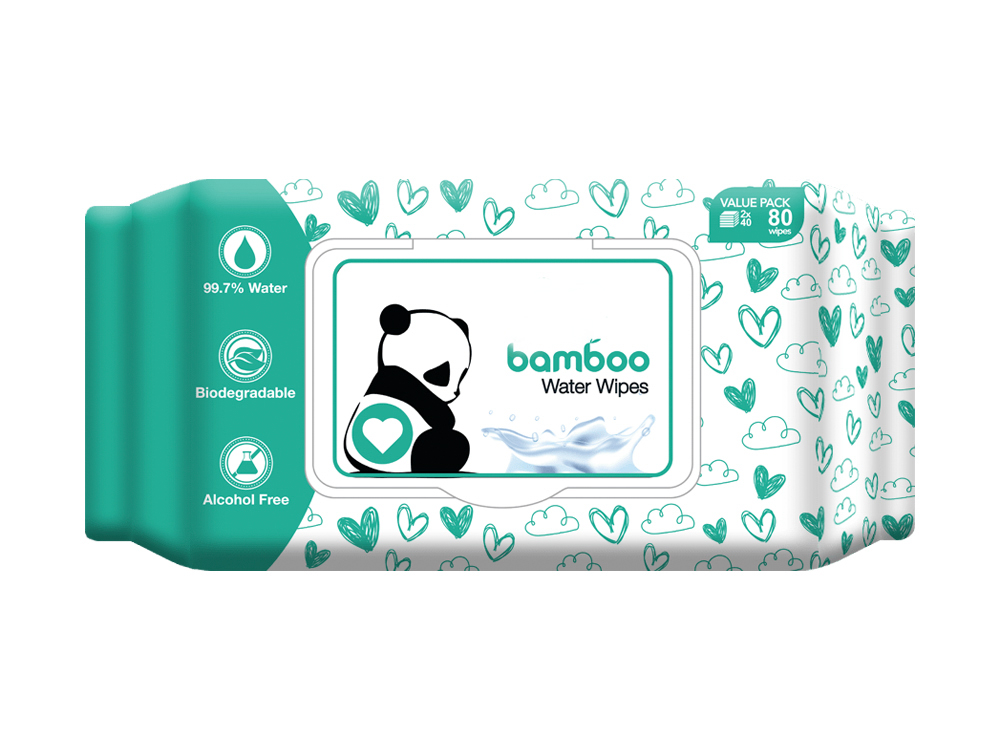
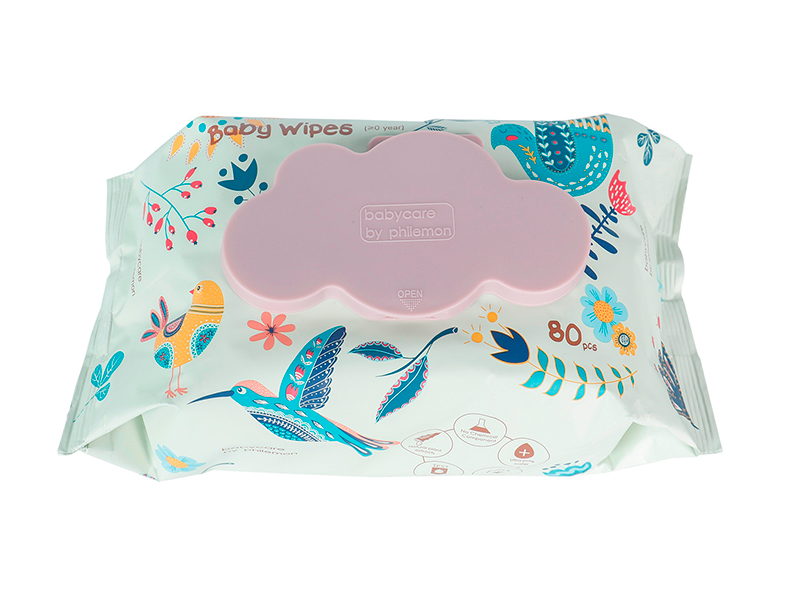
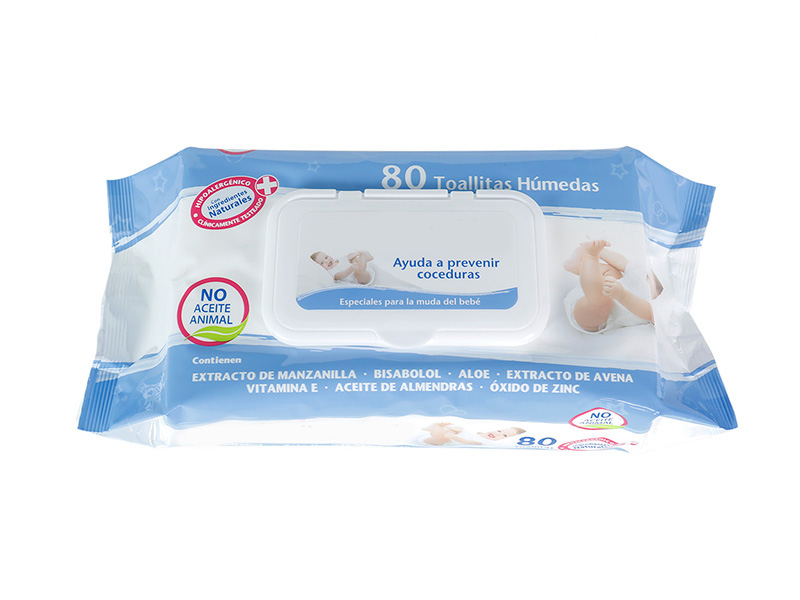
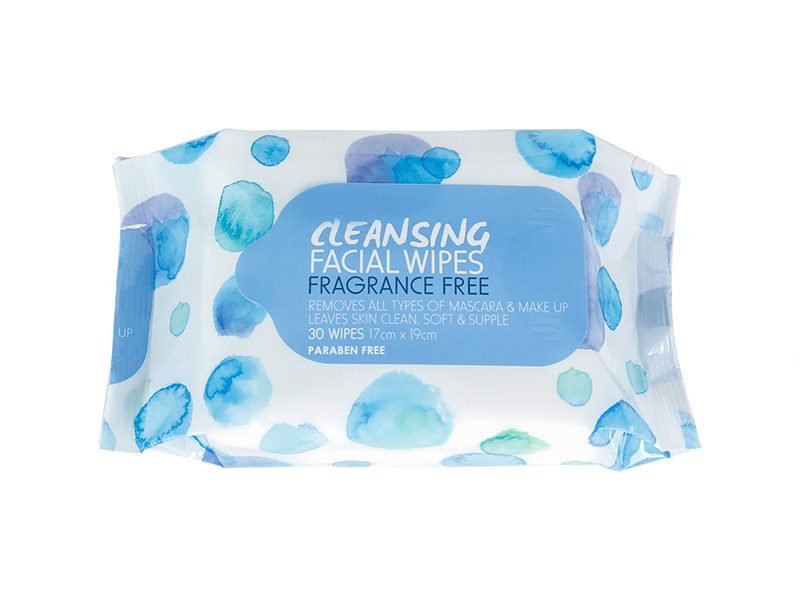
Common packaging options include soft flow packs with resealable labels, flow packs with plastic flip-top lids, travel-size pouches, canisters, and multipack formats. For facial wipes, soft pouches with a flip lid are popular because they combine convenience, moisture protection, and attractive shelf appearance. Travel packs are suitable for promotional use, hotels, airlines, gyms, and e-commerce bundles.
Artwork and claims should match the target consumer. A moisturizing skincare wipe may use clean, soft, and calming design cues. A refreshing wipe may emphasize water, freshness, and active lifestyles. A sensitive skin wipe may use minimalist design and fragrance-free communication. For private label customers, the manufacturer’s ability to support different packaging specifications is valuable because packaging is often the first point of contact between product and consumer.
Dispensing performance is also important. Wipes should separate easily, ideally dispensing one at a time. If several wipes come out together, the consumer may waste product. Folding style, fabric friction, wetness level, and pack opening design all influence dispensing. Experienced wet wipe production teams can adjust these variables to improve user experience.
Moisture retention depends on packaging film barrier performance, seal quality, lid or label adhesion, and consumer resealing behavior. During production, sealing parameters must be controlled carefully. A weak seal may cause leakage or contamination risk. An overly aggressive seal may affect pack appearance or opening performance. Quality control checks help ensure the final pack is stable through storage, shipping, and retail handling.
Manufacturing Scale and Supply Chain Reliability
In the global hygiene and personal care market, a good product concept is only valuable if it can be delivered consistently and on time. Supply chain reliability is particularly important for private label buyers who must maintain retail shelves, e-commerce inventory, and promotional schedules. Manufacturing scale, production planning, raw material sourcing, logistics access, and quality management all influence delivery performance.
The company’s development into a leading enterprise in China’s industrial textile industry reflects its long-term manufacturing strength. It has ranked among major nonwoven manufacturers and has maintained a strong position in the nonwovens field for many years. This background indicates not only production capacity but also technical continuity, industry relationships, and operational maturity.
Multiple production bases support flexibility. If demand increases or if customers need diversified product lines, a larger manufacturing network can provide better capacity planning. It can also improve resilience by reducing dependence on a single location. For international customers, this kind of manufacturing structure helps support stable supply.
Advanced production technology from Europe contributes to efficiency and product uniformity. In wipe manufacturing, even small process variations can affect the final product. For example, uneven cutting can cause poor pack appearance; unstable liquid dosing can create inconsistent wetness; weak sealing can cause moisture loss; poor folding can affect dispensing. High-quality equipment, trained operators, and process monitoring reduce these risks.
Logistics advantages also matter. The company’s location in the Yangtze River Delta region supports access to transportation networks, ports, suppliers, and skilled labor. This can benefit export orders by improving coordination between production, inspection, warehousing, and shipment.
Research, Development, and Customization Capabilities
Skincare wipe innovation depends on the ability to combine material science, formulation knowledge, packaging engineering, and consumer insight. Research and development capabilities help a manufacturer move beyond basic production into customized product solutions. This is particularly important for customers who want to differentiate their private label products in crowded retail markets.
Customization may begin with the nonwoven substrate. Customers can select fabric weight, fiber composition, pattern, thickness, softness level, tensile strength, absorbency, and biodegradability direction where applicable. A premium facial wipe may use a heavier, softer material for a luxurious feel, while a value product may prioritize cost efficiency while maintaining acceptable softness and strength.
Formula customization is equally important. A customer may request moisturizing, refreshing, soothing, cleansing, makeup-removing, fragrance-free, alcohol-free, or sensitive-skin concepts. The manufacturer can help evaluate whether a formula is suitable for wet wipe use, stable in packaging, compatible with the substrate, and aligned with applicable requirements.
Packaging customization includes pack count, pack size, film structure, label or lid type, opening size, printing, carton arrangement, and shelf-ready packaging. E-commerce customers may also consider shipping durability, leak resistance, and pack weight. Retailers may prioritize shelf impact and barcode accuracy. Professional beauty channels may prefer elegant, compact, premium-looking packaging.
R&D support can also help customers respond to market trends. For example, demand for gentle skincare, convenience cleansing, travel care, sustainable materials, and private label beauty products continues to expand. A manufacturer with broad nonwoven and personal care experience can help customers translate these trends into practical product specifications.
Applications and Target Markets
Skincare wipes can serve multiple consumer groups and retail channels. Their versatility is one reason they are attractive to private label buyers. The same core technology can be adapted for different markets through changes in formula, fabric, packaging, and claims.
In beauty retail, skincare wipes can be positioned as daily cleansing wipes, pre-makeup skin refreshers, post-workout facial wipes, travel skincare essentials, or moisturizing cleansing wipes. In supermarkets and drugstores, they can be offered as convenient everyday facial care products. In e-commerce, they can be bundled with cleansers, masks, cotton pads, travel kits, or hygiene products.
For hospitality and travel, compact skincare wipe packs can be useful in hotels, airlines, cruise lines, gyms, spas, and wellness centers. Consumers appreciate single-use or small-pack products when traveling because they reduce the need to carry bottles of liquid cleanser. For outdoor activities, skincare wipes can help remove sweat, sunscreen residue, and dust when water is not readily available.
For family use, skincare wipes can be kept at home, in cars, or in bags for quick refreshing. While facial wipes are intended for face care, many consumers also value them for neck and hand refreshing during hot weather or after light activity. Clear labeling should guide proper usage and avoid confusion with disinfecting or medical products unless specifically formulated and approved for such purposes.
How the Product Supports a Better Daily Routine
A successful skincare product must fit naturally into the consumer’s life. Skincare wipes are effective because they remove barriers to routine. They require no water, no cotton pads, no separate bottle, and no complicated steps. A consumer can open the pack, remove a wipe, cleanse or refresh the skin, and reseal the pack in seconds.
For morning use, a skincare wipe can help refresh the face before applying sunscreen or makeup. During the day, it can help remove oil and environmental residue. After travel or exercise, it can provide a quick clean feeling. In the evening, it may support a first-step cleansing routine, especially when the consumer needs convenience. Depending on the formula and claims, it may be used alone or followed by additional skincare products.
The moisturizing benefit is important because convenience should not come at the cost of comfort. Many consumers have experienced wipes that clean quickly but leave skin tight. By focusing on hydration and softness, skincare wipes can encourage more frequent and satisfied use. This supports repeat purchase and brand loyalty.
Texture also affects routine quality. A wipe that is too thin may feel cheap and may require multiple pieces. A wipe that is too rough may discourage facial use. A wipe that is too dry may not cleanse well. A wipe that is too wet may feel inconvenient. The ideal product balances these factors so that one wipe feels sufficient, pleasant, and controlled.
Sustainability and Responsible Product Development
Sustainability has become an important topic in the wipes industry. Consumers, retailers, and regulators are paying closer attention to material choices, disposal habits, plastic packaging, and environmental claims. Skincare wipe manufacturers must address these concerns responsibly and accurately.
The company’s experience with flushable and degradable nonwoven fabrics can support development of more environmentally conscious wipe options. However, sustainability claims must be based on appropriate testing, local regulations, and clear usage instructions. Not all wipes should be flushed, and facial wipes are commonly disposed of in household waste unless specifically designed and validated for another disposal route. Clear labeling helps avoid misuse.
Material innovation may include biodegradable fiber options, plastic-reduced packaging concepts, refill formats, lighter packaging films, or responsible sourcing. Each choice must be balanced with product safety, moisture retention, shelf life, strength, softness, and cost. A wipe that degrades but fails during use will not satisfy consumers. A package that uses less material but dries out quickly will create waste. Responsible development requires evaluating the full product system.
Private label customers can work with the manufacturer to define realistic sustainability goals. Some markets may prioritize biodegradable substrates. Others may focus on recyclable packaging where infrastructure exists. Some may require specific certifications or test methods. A technically experienced supplier can help customers avoid vague claims and build credible product positioning.
Why Manufacturing Experience Matters in Facial Wipes
Facial wipes appear simple to consumers, but the manufacturing process is technically demanding. A finished wipe must combine fabric, liquid, packaging, preservation, hygiene, and logistics into one stable product. If any part fails, the consumer notices immediately. Manufacturing experience reduces the risk of such failure.
For example, fabric softness must be maintained after wetting. Some substrates feel acceptable before lotion is added but become rough, limp, or weak after saturation. An experienced manufacturer tests materials under realistic conditions. Similarly, a formula may perform well in a laboratory beaker but interact poorly with packaging film, adhesive labels, or nonwoven fibers. Compatibility testing is therefore essential.
Production environment also matters. Wet wipes require hygienic handling because they contain water and contact skin. Equipment cleaning, operator training, process flow, material storage, and microbiological monitoring all contribute to safe production. A manufacturer with experience in medical and baby care products is more likely to understand the importance of hygiene discipline.
Scale brings another advantage: data. Long-term production across many wipe categories helps a manufacturer understand common problems and how to prevent them. This practical knowledge supports smoother product launches, fewer quality issues, and better customer service.
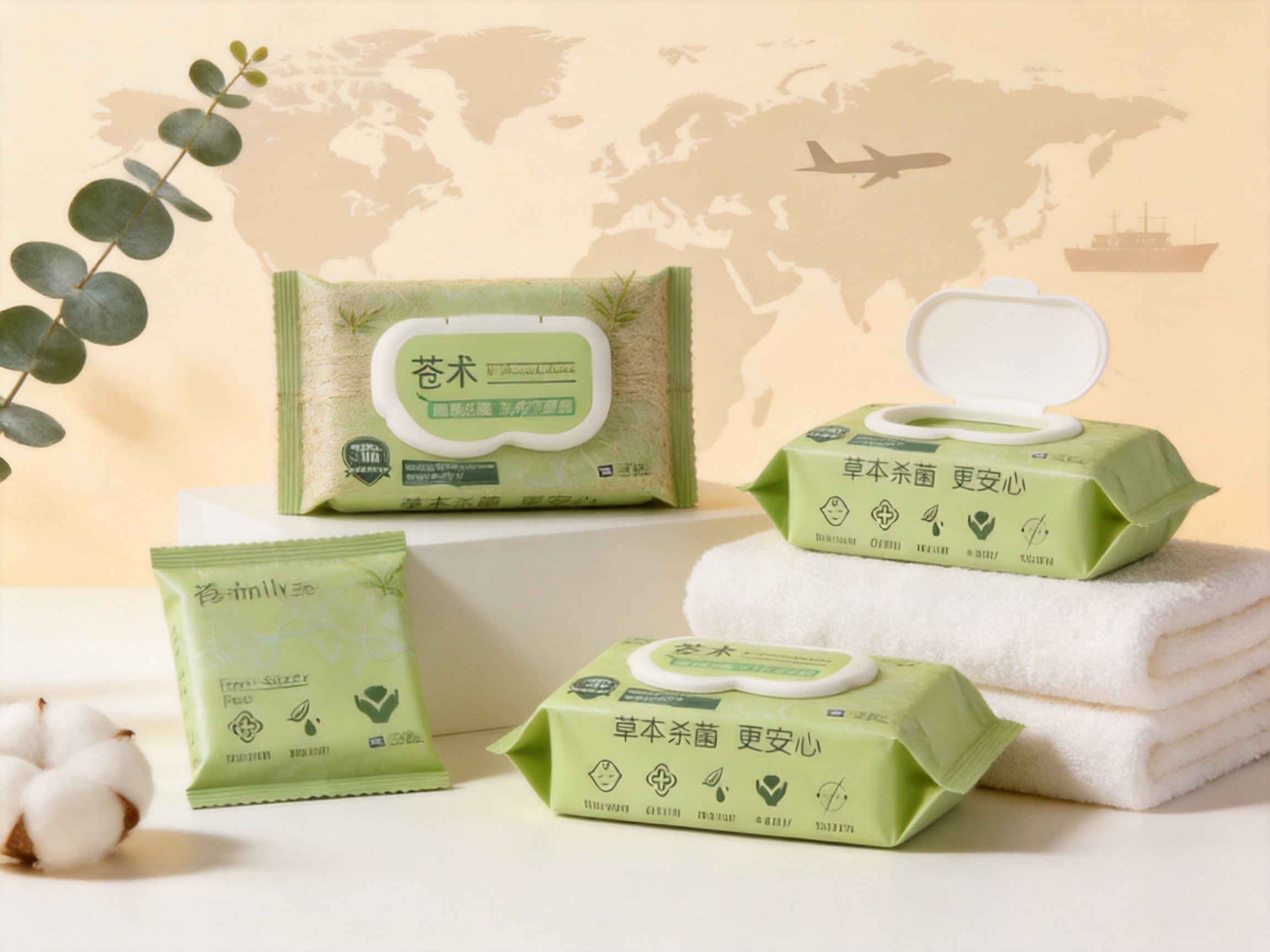
Company Strengths Supporting Global Buyers
Zhejiang Uniquality Nursing Products Technology Co., Ltd. combines nonwoven manufacturing knowledge, personal care product experience, advanced equipment, and OEM/ODM service capability. These strengths are particularly relevant to global buyers seeking private label skincare wipes with stable quality and customization potential.
The company’s history since 1987 demonstrates durability in a competitive manufacturing sector. Over time, it has expanded from nonwoven materials into a wide range of hygiene and nursing products. This evolution reflects both technical development and market responsiveness. Its position among leading nonwoven industry enterprises further supports confidence in its production foundation.
Internationally introduced equipment from Germany, France, and Italy strengthens production precision and process efficiency. Advanced machinery is especially important when producing high-volume wipe orders, where each pack must meet the same expectations. Combined with established quality control practices, this equipment helps deliver products suitable for demanding retail and private label markets.
The company’s broad product portfolio also creates synergy. Experience in baby diapers and training pants supports knowledge of absorbency, skin contact safety, and consumer comfort. Experience in wet toilet paper and cleansing wipes supports lotion control and flushable or degradable material development. Experience in medical and hygienic nonwovens supports hygiene awareness and material performance. These capabilities come together in skincare wipes.
Global buyers often look for suppliers who can do more than manufacture according to a basic specification. They need partners who can advise on materials, suggest formula directions, support packaging choices, maintain quality, and scale production. This is where the company’s integrated strengths become valuable.
Recommended Product Development Directions
Skincare wipes can be developed in several directions depending on market positioning. For a standard daily-use product, the focus should be soft fabric, gentle cleansing, moisturizing after-feel, stable packaging, and cost-effective production. This type is suitable for supermarkets, drugstores, family use, and e-commerce multipacks.
For a premium beauty product, the wipe can use a thicker and softer substrate, a refined formula, elegant packaging, and claims related to hydration, radiance, or sensitive-skin comfort. The sensory experience should feel noticeably better than ordinary wipes. Premium consumers often judge products by fabric touch, fragrance elegance, packaging design, and skin after-feel.
For travel and sports positioning, compact pack sizes and refreshing formulas are important. The product should be easy to carry, leak-resistant, and effective after sweating or exposure to outdoor conditions. Packaging durability is especially important because travel packs are often stored in bags and pockets.
For sensitive skin positioning, fragrance-free or low-irritation concepts may be preferred. The formula should avoid unnecessary harshness and be tested appropriately. Communication should be clear, simple, and credible. Consumers with sensitive skin tend to be cautious, so trust-building through quality and transparency is important.
For sustainability-focused positioning, customers can explore biodegradable substrate options and responsible packaging improvements. Claims should be carefully supported by testing and aligned with local market rules. This segment can be attractive, but only if performance remains strong.
Q&A: Common Questions About Skincare Wipes
What are skincare wipes used for?
Skincare wipes are used for convenient facial cleansing and refreshing. They help remove daily residue such as sweat, dust, excess oil, and light impurities while supporting a hydrated and soft skin feel. They are useful at home, during travel, after exercise, or whenever water-based cleansing is not convenient.
How are skincare wipes different from ordinary wet wipes?
Skincare wipes are designed specifically for facial and personal care routines. They usually use softer nonwoven materials and milder formulas enriched with moisturizing or skin-conditioning ingredients. Ordinary wet wipes may focus mainly on general cleaning and may not provide the same level of facial comfort or after-use hydration.
Can skincare wipes be customized for private label brands?
Yes. Skincare wipes can be customized in fabric type, wipe size, formula, fragrance, packaging count, lid or label type, artwork, and market positioning. OEM and ODM services allow retailers and brands to create products for value, premium, sensitive-skin, travel, sports, or sustainability-focused segments.
Why is nonwoven material important in skincare wipes?
The nonwoven material determines softness, strength, absorbency, texture, lint level, and liquid release. For facial wipes, the material must be gentle enough for delicate skin while still strong enough to cleanse effectively. High-quality nonwoven engineering is one of the main factors that separates premium wipes from lower-quality alternatives.
Do skincare wipes help keep skin hydrated?
They can support a hydrated feeling when formulated with moisturizing ingredients and mild cleansing systems. The goal is to clean without leaving the skin feeling dry or tight. However, skincare wipes are not always a replacement for all moisturizers; many consumers may still follow with cream, lotion, or serum depending on their skincare routine.
Are skincare wipes suitable for daily use?
Skincare wipes can be suitable for daily use when they are formulated to be gentle and skin-compatible. Consumers should follow product instructions and choose formulas appropriate for their skin type. For very sensitive or reactive skin, fragrance-free or sensitive-skin versions may be preferred.
Why choose an experienced manufacturer for skincare wipes?
An experienced manufacturer can control fabric quality, formula compatibility, liquid loading, hygiene conditions, packaging integrity, and batch consistency. This reduces quality risks and supports stable private label supply. Manufacturing expertise is especially important for facial wipes because users quickly notice differences in softness, wetness, and after-feel.
Can skincare wipes be made with more sustainable materials?
Yes, depending on the desired specification, market regulations, and performance requirements. Options may include biodegradable or degradable nonwoven materials and improved packaging concepts. Any environmental claim should be supported by suitable testing and clear disposal instructions.
Conclusion: A Strong Product Platform for Beauty and Personal Care Markets
Skincare wipes offer a compelling combination of convenience, cleansing, moisturizing support, and portability. As consumers continue to seek practical skincare products that fit modern lifestyles, facial wipes with soft materials and skin-friendly formulas are well positioned for growth. The product’s ability to cleanse while nourishing the skin gives it an advantage over ordinary wipes that may focus only on basic cleaning.
The strongest skincare wipes are built from an integrated understanding of nonwoven materials, formulation science, packaging performance, and quality control. Zhejiang Uniquality Nursing Products Technology Co., Ltd. brings extensive experience in these areas. With a history dating back to 1987, advanced equipment introduced from Germany, France, and Italy, multiple production bases, and broad expertise across medical, hygiene, baby care, beauty, home, and cleaning products, the company has the capabilities needed to support competitive OEM and private label skincare wipe programs.
For retailers and brand owners, this product category provides flexibility. It can be developed as an affordable daily facial wipe, a premium moisturizing beauty wipe, a travel-friendly cleansing wipe, a sensitive-skin product, or a sustainability-oriented line. By adjusting material, formula, packaging, and claims, buyers can create differentiated products for diverse markets.
In a crowded wipes industry, success depends on more than low price. Consumers value softness, moisture balance, gentle cleansing, attractive packaging, and consistent quality. A manufacturer with deep nonwoven expertise and advanced production capability can help deliver these qualities at scale. Skincare wipes therefore represent not only a convenient consumer product but also a strategic private label opportunity for brands seeking dependable performance and long-term market appeal.
References
1. Draelos, Z. D. Cosmetic Dermatology: Products and Procedures. Wiley-Blackwell.
2. Elsner, P., and Maibach, H. I. Cosmeceuticals and Active Cosmetics. CRC Press.
3. Barel, A. O., Paye, M., and Maibach, H. I. Handbook of Cosmetic Science and Technology. CRC Press.
4. EDANA. Guidelines for Nonwoven Wipes: Quality, Safety, and Performance Considerations.
5. Kissa, E. Wet Wipes and Nonwoven Substrates in Personal Care Applications. Textile and Hygiene Materials Review.
6. Lodén, M., and Maibach, H. I. Dry Skin and Moisturizers: Chemistry and Function. CRC Press.