中文简体
中文简体 English
 日本語
日本語 русский
 Español
In the fast-growing market for dry wipes and wet wipes, the substrate is the foundation of product performance. A wipe can only be as reliable, comfortable, absorbent, and distinctive as the nonwoven fabric from which it is made. The viscose and polyester ginkgo dot style spunlace nonwoven is designed for manufacturers that want a wipe material with enhanced strength, a fuller hand feel, an attractive texture, and dependable performance in both dry and wet applications.
This product combines a customizable blend of viscose and polyester with double-carding and semi-cross spunlace technology. Compared with ordinary parallel-lapped spunlace fabrics, the semi-cross structure delivers a thicker style and superior mechanical strength. The ginkgo leaf pearl pattern adds a unique visual identity and improves the wiping experience by creating a pleasant textured surface. For brands and manufacturers competing in baby care, personal care, household cleaning, beauty, medical-adjacent hygiene, and industrial wiping categories, this fabric provides a strong platform for product differentiation.
The material is suitable for wet wipes, dry wipes, cleansing wipes, household cleaning wipes, personal hygiene wipes, beauty wipes, and other disposable or semi-disposable wiping products. With a gram weight range from 40 g/m² to 100 g/m² and roll widths from 10 cm to 320 cm, it supports flexible downstream converting, folding, cutting, lotion impregnation, and packaging operations. Finishing options such as hydrophilic treatment, coating, and antistatic treatment further expand its application possibilities.
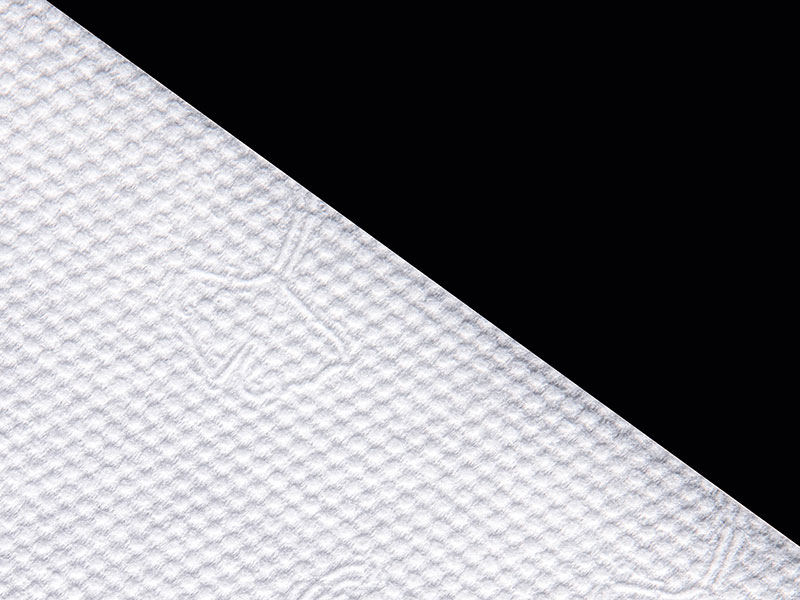
Viscose And Polyester Ginkgo Dot Style Spunlace Nonwoven For Dry Or Wet Wipes
Why the Wipe Substrate Matters
Many consumers evaluate wipes by softness, wet strength, thickness, appearance, and cleaning ability. However, these properties are not created only by lotion formulation or packaging design. They begin with the structure of the nonwoven fabric. A high-quality spunlace substrate must balance several requirements at the same time: it must feel gentle on skin, resist tearing during use, absorb and release liquid effectively, maintain dimensional stability, and provide sufficient surface friction for cleaning.
In highly competitive wipe markets, small differences in substrate design can determine whether a product feels ordinary or premium. A thin, weak, or flat fabric may reduce cost, but it can also reduce consumer satisfaction. A wipe that tears easily, rolls up during use, or lacks texture may fail to meet expectations, especially in categories such as baby care, facial cleansing, personal hygiene, and household surface cleaning. The ginkgo dot semi-cross spunlace nonwoven is positioned to solve these common limitations by combining visual appeal with practical performance.
The semi-cross structure offers a more balanced fiber orientation than conventional parallel lapping. This contributes to higher strength and a more substantial fabric style. The ginkgo dot pattern improves surface character, helping the wipe glide, grip, and clean more effectively. The viscose component contributes softness and liquid absorption, while polyester improves durability, resilience, and wet strength. Together, these elements create a substrate that can support both mass-market and premium wipe products.
Product Overview
The viscose and polyester ginkgo dot style spunlace nonwoven is a semi-cross, double-carded fabric intended for dry and wet wiping applications. Its standard composition is 50% viscose and 50% polyester, although the blending ratio can be customized according to customer requirements. This flexibility allows wipe producers to adjust softness, absorbency, strength, cost, and sustainability positioning.
The fabric is produced by double-carding and semi-cross lapping before hydroentanglement. In spunlace technology, high-pressure water jets entangle fibers into a coherent web without the need for chemical binders. This helps preserve softness and cleanliness while producing a fabric with reliable integrity. The semi-cross process gives the material a thicker and stronger style than ordinary parallel-lapped spunlace fabrics, making it especially suitable for wipe products that require durability during use.
The ginkgo dot pattern is one of the product’s most distinctive features. Inspired by the shape and texture of ginkgo leaves, the pattern gives the fabric a refined, pearl-like surface. This pattern is not merely decorative; it also contributes to the tactile wiping experience. The textured surface can improve perceived cleaning power and create a more premium consumer impression.
Item |
Specification |
Composition |
50% viscose and 50% polyester; blending ratio can be customized |
Technology |
Double-carding and semi-cross spunlace |
Pattern |
Ginkgo dot |
Gram Weight |
40 g/m² to 100 g/m² |
Roll Width |
10 cm to 320 cm |
Finishing Options |
Hydrophilic treatment, coating, antistatic treatment, and other functional finishing options |
Main Uses |
Wet wipes, dry wipes, cleansing wipes, household wipes, personal care wipes, and related wiping products |
Material Composition: The Performance Balance of Viscose and Polyester
The product’s standard 50% viscose and 50% polyester composition provides a balanced combination of comfort and durability. Viscose is widely valued in hygiene and personal care nonwovens because of its softness, moisture absorption, and skin-friendly hand feel. It helps the wipe feel comfortable against the skin and contributes to efficient liquid uptake when the substrate is impregnated with lotion, water-based cleaning solution, or other functional formulas.
Polyester, by contrast, is known for strength, dimensional stability, and resistance to deformation. In wet wipe applications, polyester helps maintain the fabric’s structure after liquid loading. It reduces the likelihood of tearing, stretching, or linting during use. This is particularly important for household cleaning wipes, industrial wipes, baby wipes, and personal hygiene wipes, where users expect the wipe to remain intact from the first pull to the final wiping motion.
The combination of these two fibers creates a substrate that can perform across multiple use scenarios. For a gentle baby wipe, the formulation can emphasize softness and absorbency. For a household cleaning wipe, strength and surface friction may be prioritized. For facial cleansing or beauty wipes, smoothness, moisture handling, and aesthetic texture may be more important. Because the blending ratio can be customized, the material can be engineered to match the target market and final product positioning.
Compared with single-fiber substrates, the viscose-polyester blend provides broader formulation flexibility. Pure viscose may offer excellent absorbency but may require reinforcement for demanding wet strength applications. Pure polyester may offer durability but may lack the same natural softness and liquid absorption. The blend offers a practical middle ground, helping manufacturers create wipes that feel pleasant while still withstanding real-world use.
Semi-Cross Technology: A Structural Advantage Over Parallel Lapping
One of the most important differentiators of this product is its semi-cross technology. In traditional parallel lapping, fibers are arranged mainly in the machine direction. This can produce good lengthwise strength, but cross-direction strength may be more limited. For wipes, uneven strength can lead to problems during converting, folding, dispensing, and consumer use. A wipe may tear more easily in one direction, especially after being wetted or pulled from a package.
Semi-cross lapping improves the distribution of fibers across the fabric. By creating a more balanced web structure, it enhances strength in both machine and cross directions. The result is a substrate that feels fuller and more stable. This added stability benefits wipe manufacturers during high-speed converting and benefits consumers during use. A wipe that holds together better creates confidence and reduces frustration.
The semi-cross structure also contributes to a thicker style. Thickness does not simply mean higher gram weight; it also relates to the way fibers are distributed and entangled. A well-structured nonwoven can feel more cushioned and substantial at the same weight than a flatter fabric. This gives the final wipe a premium touch without necessarily requiring excessive material usage.
For brands competing on quality, this structural difference is significant. Many wipe products look similar on the shelf, but consumers quickly notice differences when they remove a wipe from the pack. A fuller, stronger wipe creates a better first impression. It unfolds more reliably, covers the hand better, and provides a more satisfying cleaning experience. The semi-cross technology helps manufacturers deliver these advantages consistently.
Double-Carding: Uniformity, Formation, and Consistency
Double-carding is another important part of the product’s manufacturing design. Carding opens, separates, and aligns fibers to form a uniform web before subsequent bonding. Double-carding enhances web uniformity and helps reduce defects such as thin spots, uneven fiber distribution, and inconsistent surface appearance. In wipe production, uniformity is essential because downstream operations depend on stable fabric behavior.
A nonuniform substrate may cause difficulties during slitting, folding, stacking, lotion impregnation, and packaging. Thin areas may tear; thick areas may absorb too much liquid or create packaging irregularities. Uneven surfaces may reduce consumer perception of quality. Double-carding supports a more consistent fabric base, improving both manufacturing efficiency and final product reliability.
When combined with semi-cross lapping and spunlace hydroentanglement, double-carding helps create a substrate with balanced strength and refined texture. This is especially important for patterned products such as the ginkgo dot style. A clear and attractive pattern depends on a stable web. The more uniform the base web, the more consistent the final embossed or patterned appearance can be.
For OEM and ODM wipe manufacturers, consistency is a direct business advantage. Retailers and brand owners expect each production batch to match approved samples. A reliable nonwoven supplier with advanced web-forming capability can help reduce variation, simplify quality control, and support long-term product programs.
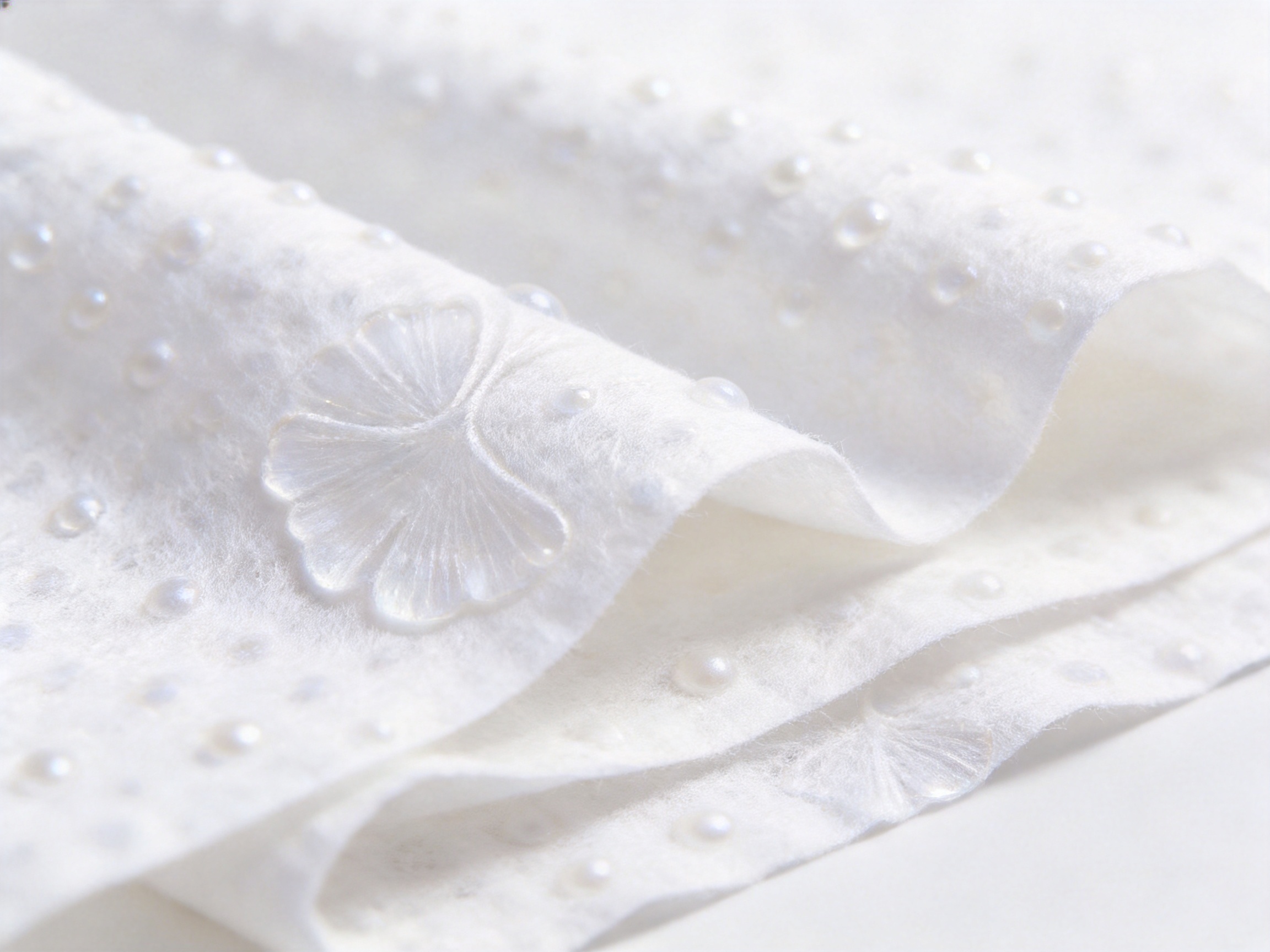
Ginkgo Dot Pattern: Visual Identity and Functional Texture
The ginkgo dot pattern gives this spunlace nonwoven a unique style that distinguishes it from ordinary flat or generic pearl-pattern fabrics. In wipes, surface pattern plays several roles. It affects appearance, hand feel, friction, liquid distribution, and perceived cleaning performance. A recognizable pattern can also help a finished product stand out in a crowded market.
The ginkgo-inspired pattern creates a refined, natural, and elegant appearance. This can be valuable for brands that want to communicate softness, freshness, botanical care, or premium hygiene. In beauty and personal care applications, consumers often associate a delicate pattern with better quality and greater attention to detail. In household or multipurpose wipes, a textured surface can suggest stronger cleaning power.
Functionally, the pattern increases surface complexity. A perfectly flat wipe may glide smoothly but may not provide enough grip for certain cleaning tasks. A textured wipe can help lift particles, spread liquid, and improve contact with uneven surfaces. The ginkgo dot surface offers a balanced friction experience: it is distinctive enough to improve wiping performance, yet still comfortable enough for personal care applications when properly finished and formulated.
Patterned substrates also provide branding opportunities. Even before printing or packaging, the fabric itself has a recognizable identity. This can help private label and branded products create a premium impression. For customers seeking differentiation, the ginkgo dot style offers a way to move beyond ordinary commodity wipe substrates.
Hydrophilic and Functional Finishing Options
Finishing technology plays a major role in adapting a nonwoven substrate to specific applications. The ginkgo dot semi-cross spunlace nonwoven can be supplied with hydrophilic treatment, coating, antistatic treatment, and other finishing options. These treatments allow the fabric to perform more precisely in different wet and dry wipe categories.
Hydrophilic finishing improves the fabric’s ability to absorb and distribute water-based solutions. This is essential for wet wipes, cleansing wipes, baby wipes, and personal hygiene wipes. A hydrophilic substrate helps lotion spread evenly throughout the fabric, reducing dry spots and improving user experience. It can also support more consistent dosing during production.
Coating options can add functional properties depending on the intended use. For example, coatings may be designed to adjust surface feel, enhance cleaning performance, modify absorbency, or support specialized product claims. The exact coating system should be selected based on the final formulation, regulatory requirements, and market positioning.
Antistatic finishing can be valuable for dry wipes and industrial wiping applications, where static build-up may attract dust or interfere with performance. In environments involving electronics, delicate surfaces, or dry cleaning tasks, antistatic properties can improve handling and usability. The availability of these finishing options means the same base technology can serve many product categories.
Gram Weight Flexibility from 40 g/m² to 100 g/m²
The product’s gram weight range from 40 g/m² to 100 g/m² provides broad design flexibility. Lighter weights can be suitable for economical wipes, facial cleansing sheets, general personal care wipes, or applications where softness and cost efficiency are priorities. Heavier weights can be used for premium wipes, heavy-duty cleaning wipes, medical-adjacent care wipes, or products requiring extra thickness and strength.
A 40 g/m² substrate may be selected when the finished product must be lightweight, compact, and cost-effective. With the semi-cross structure, even lighter weights can benefit from improved strength compared with ordinary parallel-lapped alternatives. This helps manufacturers maintain product quality while controlling material consumption.
Medium weights may be ideal for mainstream wet wipes, baby wipes, and household wipes. They provide a good balance among softness, absorbency, durability, and packaging efficiency. The ginkgo dot pattern can add a premium appearance without requiring excessive weight.
Higher weights up to 100 g/m² are suitable for more demanding applications. These may include larger cleaning wipes, thick personal care wipes, industrial wiping products, or premium dry towels. At heavier weights, the semi-cross structure and viscose-polyester blend can deliver a particularly substantial hand feel and excellent resistance to tearing.
Roll Width Flexibility for Efficient Converting
The available roll width range from 10 cm to 320 cm supports a wide variety of converting requirements. Narrow rolls can be used for specialized products or smaller-width formats, while wide rolls can improve efficiency for large-scale converting operations. This flexibility is important for manufacturers producing multiple wipe sizes, folding styles, or package formats.
In wipe manufacturing, substrate width affects cutting efficiency, waste rate, machine compatibility, and production speed. A supplier capable of providing suitable widths helps converters optimize their operations. Reduced trimming waste can improve cost control, while stable roll quality can reduce downtime and improve productivity.
Wide-width capability also reflects manufacturing strength. Producing consistent nonwoven fabric across large widths requires advanced equipment, precise web control, and stable process management. When roll width is combined with customized gram weight, composition, pattern, and finishing, customers gain a high degree of product development flexibility.
Advantages Over Ordinary Parallel-Lapped Spunlace Fabrics
The most direct comparison for this product is ordinary parallel-lapped spunlace nonwoven. While parallel-lapped fabrics are widely used and may be suitable for basic wipe applications, they often have limitations in cross-direction strength, fabric fullness, and premium tactile quality. The ginkgo dot semi-cross spunlace nonwoven is designed to overcome these limitations.
First, the semi-cross structure provides superior strength balance. Wipes are pulled, stretched, folded, and rubbed in many directions. A fabric with improved cross-direction integrity is less likely to tear during use. This advantage is especially important for wet wipes, because liquid loading can change fabric behavior and increase the stress placed on the substrate.
Second, the material has a thicker style. Consumers often associate thickness with quality, comfort, and value. A wipe that feels too thin may be perceived as low-end even if it technically performs adequately. The semi-cross structure gives the substrate a fuller hand feel, helping finished wipes create a premium impression.
Third, the ginkgo dot pattern adds distinctive visual and tactile value. Many ordinary spunlace fabrics have plain, mesh, or generic dot patterns. The ginkgo dot style gives the product a more memorable appearance and a better friction experience. This can help brands differentiate their wipes without relying only on packaging or fragrance.
Fourth, the material supports customization. Composition, gram weight, width, and finishing can be adjusted to meet specific requirements. This makes it more versatile than a standard commodity substrate. Manufacturers can develop different product lines using the same basic technology platform while adjusting details for each market segment.
Application in Wet Wipes
Wet wipes place demanding requirements on nonwoven substrates. The fabric must absorb lotion evenly, remain strong when wet, dispense cleanly from packaging, and feel comfortable during use. The viscose and polyester ginkgo dot semi-cross spunlace nonwoven meets these requirements through a combination of fiber selection, structural design, and finishing options.
Viscose helps the substrate absorb and retain liquid, while polyester contributes wet strength and dimensional stability. Semi-cross lapping reduces directional weakness and supports more reliable dispensing. The ginkgo dot pattern enhances surface contact and creates a premium feel. Hydrophilic finishing can further improve lotion distribution and liquid management.
For baby wipes, the fabric can be engineered for softness, mildness, and suitable absorbency. A fuller substrate can help caregivers feel that the wipe is protective and effective. For personal hygiene wipes, strength and comfort are both important, because the wipe must remain intact while contacting sensitive areas. For cleansing wipes, the textured surface can help remove residue while still offering pleasant skin contact.
Household wet wipes may require stronger friction and durability. In these applications, the polyester component and semi-cross structure become especially valuable. The fabric can resist tearing during repeated wiping on countertops, appliances, bathroom surfaces, or other household areas. A suitable finishing or cleaning solution can be paired with the substrate to create a wipe with strong overall performance.
Application in Dry Wipes
Dry wipes require a different performance balance. They may be used as dry cleansing cloths, disposable towels, industrial wipes, dusting sheets, or substrates that consumers wet before use. In these cases, the fabric must feel substantial, resist linting, and provide effective surface contact. The ginkgo dot semi-cross spunlace nonwoven is well suited to these applications.
The semi-cross structure helps the dry wipe maintain strength during folding, pulling, and rubbing. The ginkgo dot pattern improves tactile grip and surface interaction. Depending on the chosen gram weight, the material can be made light and flexible or thick and towel-like. This gives manufacturers the freedom to design products for different consumer expectations.
For beauty and facial care dry wipes, softness and cleanliness are essential. Viscose contributes a gentle hand feel, while controlled processing helps maintain fabric uniformity. For household dry wipes, stronger friction and durability may be prioritized. For industrial dry wipes, antistatic treatment or customized finishing may be useful depending on the working environment.
Dry wipe products can also benefit from the material’s premium appearance. A patterned, full-feeling substrate may command greater perceived value than a plain sheet. This is especially important in private label categories, where retailers often want to offer high-quality alternatives to national brands.
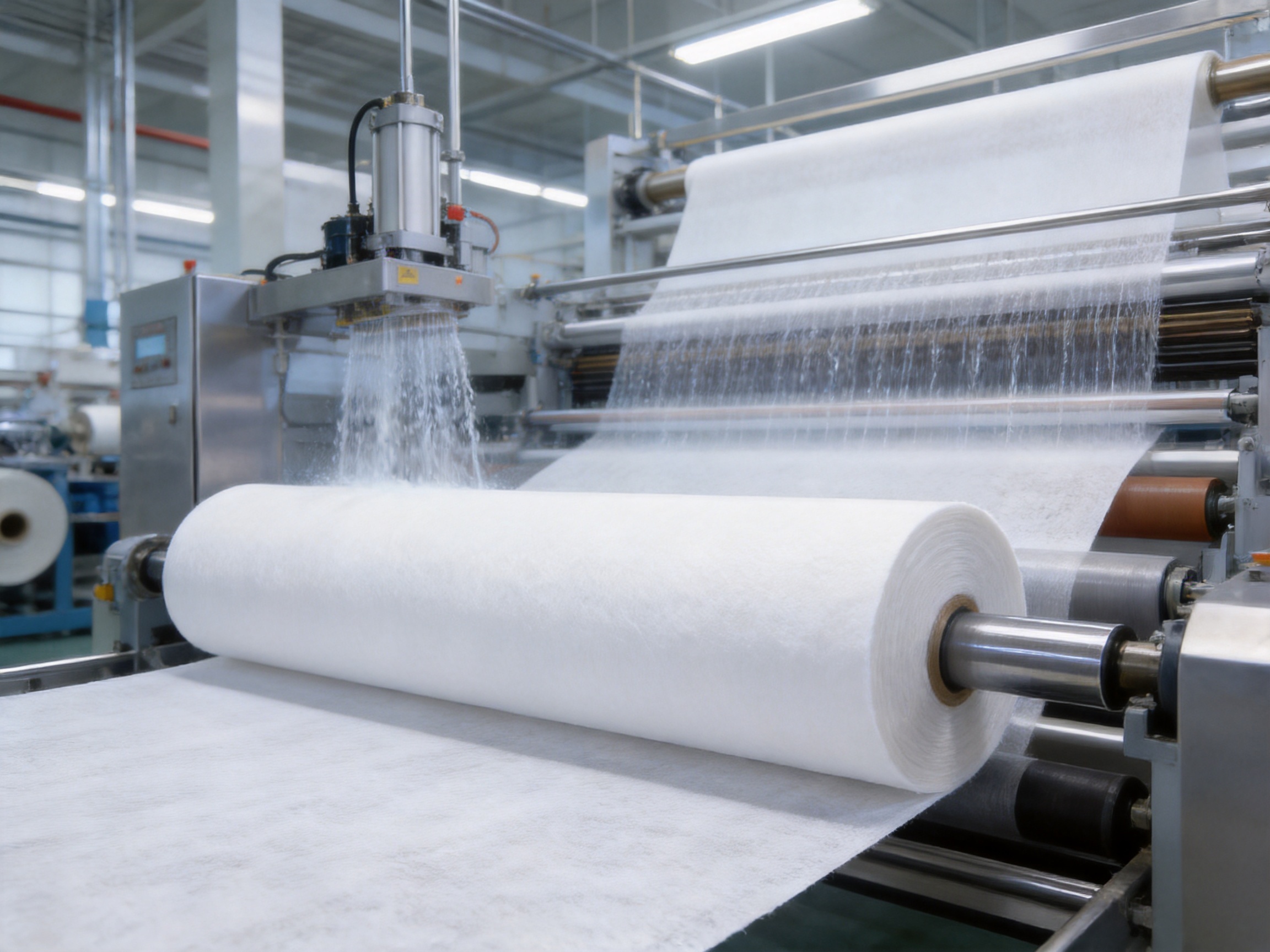
Manufacturing Strength Behind the Product
The quality of a spunlace nonwoven depends not only on raw materials but also on the manufacturer’s technical capability. Zhejiang Uniquality Nursing Products Technology Co., Ltd., together with Kingsafe, brings decades of experience in nonwoven materials, hygienic products, and related finished goods. Founded in 1987, the enterprise has developed into a major participant in the industrial textile field, with extensive experience in research, development, production, and sales.
The company’s strengths include advanced production equipment, international process technology, strong customization capability, and a broad product portfolio covering spunlace nonwoven fabrics, spunmelt nonwoven fabrics, hot air through nonwoven fabrics, flushable and degradable nonwoven materials, wet wipes, dry wipes, baby diapers, pull-ups, wet toilet paper, cleansing wipes, and other hygiene products. This integrated experience is valuable because the company understands both the substrate and the final product.
Advanced equipment and technology introduced from Germany, France, and Italy support stable manufacturing and process innovation. In nonwoven production, equipment precision influences web formation, fiber entanglement, pattern consistency, thickness control, and roll quality. Internationally advanced technology helps the company produce materials that meet the expectations of demanding domestic and global customers.
The company has established multiple production bases in China, including locations in Guangdong, Jiangsu, and Hubei, in addition to its headquarters in Changxing, Huzhou, Zhejiang. This production network supports capacity, supply stability, and responsiveness. For customers ordering wipe substrates or finished wipe products, stable supply is as important as product performance. A supplier with extensive production resources can better support long-term programs, seasonal demand, and customized development.
Research, Development, and Customization Capabilities
Modern wipe markets are increasingly segmented. A baby wipe, a makeup remover wipe, a kitchen cleaning wipe, and an industrial dry wipe cannot all use the same substrate design. Each application requires a different balance of softness, strength, absorbency, thickness, liquid compatibility, surface texture, and cost. The ginkgo dot semi-cross spunlace nonwoven is built on a customizable platform that can be adjusted to meet these diverse needs.
Customization may begin with fiber composition. Although the standard blend is 50% viscose and 50% polyester, the ratio can be adjusted. Increasing viscose may enhance softness and absorbency, while increasing polyester may improve durability and wet strength. The best ratio depends on the final product’s use conditions and target price level.
Gram weight customization allows customers to create different product tiers. A brand may choose a lighter substrate for everyday economical wipes and a heavier substrate for premium wipes. Pattern and finishing choices can further distinguish product lines. Hydrophilic treatment may be selected for wet wipes, while antistatic treatment may be chosen for dry cleaning wipes. Coating can be developed for specialized performance requirements.
Roll width customization helps customers align the material with their converting machines. This reduces waste and improves production efficiency. A supplier that can provide both material design support and manufacturing flexibility becomes more than a raw material vendor; it becomes a development partner.
Quality Control and Process Stability
Consistency is essential in nonwoven production. Even a well-designed substrate can fail in the market if batch-to-batch variation is high. Quality control must cover raw material selection, fiber opening, carding, web formation, lapping, hydroentanglement, drying, finishing, winding, slitting, inspection, and packaging. Each step influences final fabric performance.
In the ginkgo dot semi-cross spunlace nonwoven, process stability is especially important because the material combines structure, pattern, and functional finishing. The fabric must maintain consistent gram weight, thickness, tensile strength, liquid absorption, surface pattern, and roll quality. Variations in any of these properties can affect downstream converting and final wipe performance.
Advanced manufacturing systems support consistent process control. Precise carding helps maintain uniform fiber distribution. Semi-cross lapping must be controlled to achieve the intended balance of strength and thickness. Hydroentanglement must be optimized so that fibers are securely bonded without making the fabric harsh. Drying and winding must preserve fabric structure and avoid defects such as wrinkles, uneven tension, or roll deformation.
For wipe manufacturers, reliable quality reduces production risk. Stable substrate rolls run more smoothly on converting lines, generate fewer rejects, and support predictable lotion loading. This improves operational efficiency and helps protect brand reputation.
Support for OEM and ODM Wipe Development
The company’s background in both nonwoven materials and finished hygiene products makes it well positioned to support OEM and ODM development. Customers may require only substrate supply, or they may need assistance with finished wipes, packaging concepts, product positioning, and technical matching. A manufacturer with experience across the value chain can provide more practical guidance.
For private label wipes, the substrate must match retailer expectations for performance, price, and appearance. The ginkgo dot semi-cross spunlace nonwoven is suitable for private label programs that need visible differentiation. Its textured appearance helps retailers offer a product that looks and feels more premium than basic alternatives. Because the material can be customized, it can support multiple private label tiers.
For branded products, the substrate can become part of the product story. A brand may emphasize softness, durability, unique texture, or enhanced wiping experience. The ginkgo dot pattern can support a visual identity that is recognizable to consumers. The semi-cross structure can support claims related to strength and fullness when properly validated.
For export-oriented customers, manufacturing scale and experience are important. International markets may require stable supply, documentation, quality assurance, and the ability to meet different product specifications. A supplier with decades of experience and advanced production resources can help customers respond to these requirements.
Consumer Experience: From First Touch to Final Wipe
The consumer experience begins when the wipe is removed from the pack or roll. A good wipe should dispense smoothly, unfold easily, feel pleasant in the hand, and remain intact during use. If the wipe tears, clumps, feels too thin, or lacks cleaning power, the user may reject the product. The ginkgo dot semi-cross spunlace nonwoven is designed to improve this experience.
The thicker style created by semi-cross technology gives the wipe a more substantial feel. This can make users feel that they need fewer sheets to complete a task. Stronger structure helps the wipe resist tearing while being pulled from packaging or rubbed on surfaces. The viscose-polyester blend provides both comfort and durability. The patterned surface improves friction and gives the user a more confident wiping sensation.
In wet wipes, liquid distribution is another part of consumer experience. A well-designed hydrophilic substrate can carry lotion evenly, helping each wipe feel consistently moist. Too much liquid release can feel messy, while too little can reduce cleaning performance. The right substrate helps balance absorption and release.
In dry wipes, the fabric’s hand feel and lint control become especially important. A dry wipe should not feel scratchy or flimsy. The ginkgo dot surface and semi-cross structure support a pleasant and effective wiping motion, whether the wipe is used dry or moistened by the user.
Brand Differentiation in a Competitive Wipe Market
The global wipe market includes many products with similar packaging claims. Words such as soft, strong, gentle, absorbent, and premium are widely used. To stand out, a product needs physical characteristics that consumers can actually see and feel. The ginkgo dot semi-cross spunlace nonwoven provides such characteristics through its appearance, texture, and fabric body.
A distinctive pattern helps the product look different immediately. When consumers open the package, the fabric itself communicates quality. This is especially important for private label products competing against established brands. A retailer can use the substrate’s unique appearance to reinforce premium positioning.
Strength differentiation also matters. Consumers may not know the term semi-cross spunlace, but they understand when a wipe does not tear easily. A stronger wipe can create repeat purchase loyalty. It can also reduce the number of sheets used per cleaning task, improving perceived value.
Thickness and hand feel support premium pricing. A wipe that feels full and soft can justify a higher price point or help a product compete in the upper tier of private label categories. The ginkgo dot semi-cross substrate helps manufacturers build these tangible advantages into the product from the material level.
Sustainability and Material Efficiency Considerations
Sustainability is an important concern in the nonwoven and wipes industries. While each final product must be evaluated according to its specific materials, usage, disposal route, and local regulations, substrate design can contribute to more responsible product development. A stronger and more efficient nonwoven may allow manufacturers to meet performance goals without unnecessary over-engineering.
The viscose-polyester blend can be customized, allowing customers to adjust fiber selection according to performance and market needs. Viscose is cellulose-derived and valued for absorbency and softness, while polyester contributes durability. Finding the right balance helps avoid waste caused by poor product performance, tearing, or excessive sheet usage.
Manufacturing consistency also supports sustainability by reducing production rejects and downstream waste. Stable roll quality helps converters run efficiently, minimizing off-spec material. Appropriate roll width selection can reduce trimming waste. Functional finishing can be tailored so that the fabric performs properly without excessive chemical usage.
In addition, the company’s broader experience with flushable and degradable nonwoven materials indicates an understanding of evolving sustainability trends. Customers interested in environmentally oriented product development can benefit from a manufacturer that is familiar with multiple nonwoven technologies and market requirements.
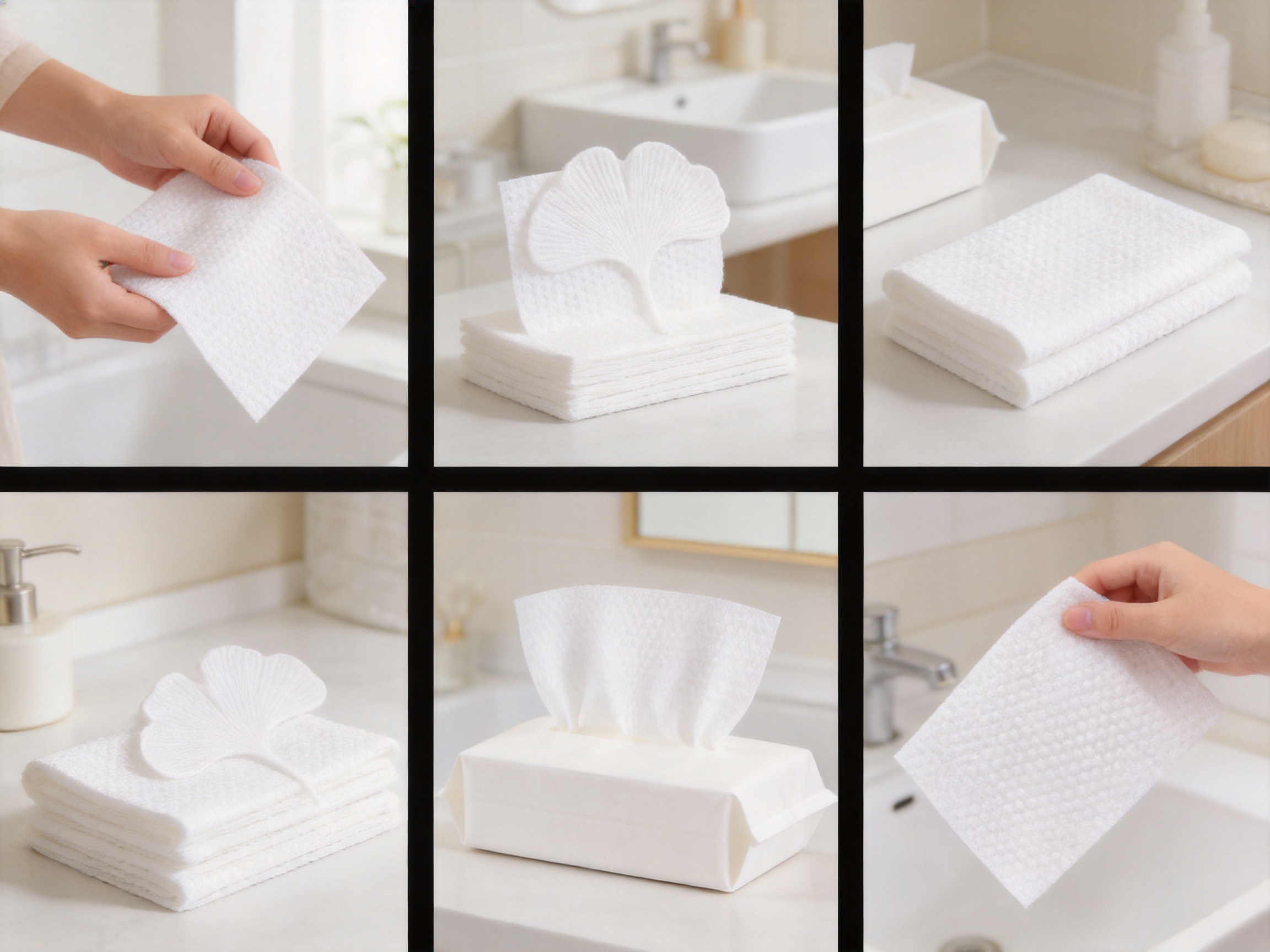
Recommended Product Development Directions
The ginkgo dot semi-cross spunlace nonwoven can support several product development strategies. For baby care wipes, a medium gram weight with a soft viscose-rich feel and hydrophilic finishing may be appropriate. The ginkgo dot pattern can provide gentle texture while maintaining a caring appearance. The semi-cross structure helps ensure that the wipe remains intact during diaper changes and hand cleaning.
For beauty and facial cleansing wipes, the substrate can be optimized for softness, lotion compatibility, and elegant appearance. The pattern may help remove makeup or residue more effectively than a flat surface. A carefully selected finishing process can support smooth skin contact and even liquid distribution.
For household cleaning wipes, a stronger formulation with higher polyester contribution or heavier gram weight may be selected. The textured ginkgo dot surface can improve cleaning friction on hard surfaces. Antistatic or specialized coating options may be considered depending on the application.
For dry wipes and disposable towels, heavier gram weights can create a substantial, cloth-like feel. The semi-cross structure supports strength during dry rubbing or when the consumer wets the wipe before use. This makes the material suitable for travel towels, cleansing cloths, multipurpose dry wipes, and industrial wiping sheets.
Technical Selection Guidance for Buyers
When selecting a nonwoven substrate, buyers should begin by defining the final wipe application. The first question is whether the product will be used wet, dry, or both. Wet wipes require careful attention to liquid absorption, wet strength, lotion compatibility, and packaging stability. Dry wipes may require softness, dust removal, antistatic properties, or low linting.
The second question is target market positioning. Economy products may require lighter gram weights and cost-efficient specifications. Premium products may require heavier weights, enhanced softness, distinctive patterning, and special finishing. The ginkgo dot semi-cross spunlace nonwoven can be adapted across these tiers.
The third question is the desired balance between softness and strength. Increasing viscose may improve comfort and absorbency, while polyester supports durability. The semi-cross structure helps improve strength regardless of the exact blend, but fiber ratio remains an important design variable.
The fourth question is converting compatibility. Roll width, roll diameter, winding tension, and fabric stability must match the customer’s production line. Early communication with the supplier can help reduce waste and avoid production problems. Because this product can be supplied in widths from 10 cm to 320 cm, it offers strong compatibility with many converting formats.
Why This Product Is a Strong Choice for Competitive Wipe Manufacturing
The ginkgo dot semi-cross spunlace nonwoven offers a combination of performance, appearance, customization, and manufacturing reliability. Its key advantages are not limited to one property. Instead, it integrates multiple features that matter to wipe manufacturers and consumers: strength, thickness, softness, absorbency, texture, and visual differentiation.
Compared with ordinary parallel-lapped spunlace fabrics, the semi-cross technology provides a stronger and fuller substrate. Compared with plain or generic patterned fabrics, the ginkgo dot style offers a more distinctive appearance and improved friction experience. Compared with rigid standard specifications, the customizable composition, weight, width, and finishing options provide development flexibility.
The company’s manufacturing background strengthens the product’s value. With decades of experience, advanced international equipment, multiple production bases, and knowledge of both nonwoven substrates and finished hygiene products, the manufacturer can support customers from material selection to product development. This is especially valuable in OEM, ODM, and private label markets, where speed, consistency, and differentiation are essential.
For buyers seeking a substrate that can improve wipe quality and market appeal, this material offers a practical and technically sound solution. It can help create wipes that feel thicker, perform stronger, look more refined, and provide a better wiping experience.
Q&A Section
What is the main advantage of semi-cross spunlace technology?
Semi-cross spunlace technology improves fiber distribution and provides better strength balance than ordinary parallel lapping. This gives the fabric a thicker style and superior strength, especially in applications where the wipe is pulled or rubbed in multiple directions.
Why is the ginkgo dot pattern important?
The ginkgo dot pattern improves both appearance and user experience. It gives the fabric a distinctive premium look and provides a textured surface that can enhance friction during wiping. This helps finished wipes stand out from plain or generic patterned products.
What is the standard composition of this nonwoven fabric?
The standard composition is 50% viscose and 50% polyester. This blend balances softness, absorbency, durability, and wet strength. The blending ratio can be customized based on the final product’s requirements.
Can this material be used for both wet wipes and dry wipes?
Yes. The material is suitable for both wet and dry wipe applications. Hydrophilic finishing can improve performance in wet wipes, while antistatic or other functional finishing options can support dry wipe applications.
What gram weights are available?
The material can be produced from 40 g/m² to 100 g/m². Lighter weights are suitable for economical and general-purpose wipes, while heavier weights are suitable for premium, thick, or heavy-duty wiping products.
What roll widths can be supplied?
Roll widths can range from 10 cm to 320 cm. This wide range supports different converting lines, product sizes, folding styles, and packaging formats.
How does viscose contribute to wipe performance?
Viscose contributes softness, moisture absorption, and a comfortable hand feel. It is particularly valuable in personal care, baby care, facial cleansing, and hygiene wipes where skin comfort is important.
How does polyester contribute to wipe performance?
Polyester improves strength, resilience, and dimensional stability. It helps the wipe resist tearing, stretching, and deformation, especially when used wet or under friction.
Is the blending ratio fixed?
No. Although 50% viscose and 50% polyester is the standard specification, the blending ratio can be adjusted. This allows manufacturers to tailor softness, absorbency, strength, and cost according to their product goals.
What finishing technologies are available?
Available finishing options include hydrophilic treatment, coating, antistatic treatment, and other functional finishes. The appropriate finishing method depends on the final application and desired product performance.
Why is double-carding beneficial?
Double-carding improves fiber distribution and web uniformity. This helps create more consistent fabric formation, clearer pattern appearance, better roll quality, and more reliable converting performance.
How can this substrate help private label wipe products?
The substrate provides visible and tactile differentiation through its ginkgo dot pattern, thicker style, and improved strength. These features can help private label products compete with established brands and support premium positioning.
What types of wipes are suitable for this material?
Suitable applications include baby wipes, personal care wipes, cleansing wipes, beauty wipes, household cleaning wipes, dry wipes, disposable towels, hygiene wipes, and other wet or dry wiping products.
Why is manufacturing experience important when choosing this type of nonwoven?
Spunlace nonwoven quality depends on stable control of fiber blending, carding, lapping, hydroentanglement, finishing, and winding. An experienced manufacturer with advanced equipment can provide more consistent quality, better customization, and stronger technical support.
Conclusion
The viscose and polyester ginkgo dot style semi-cross spunlace nonwoven is a high-value substrate for manufacturers seeking stronger, thicker, and more distinctive dry or wet wipes. Its semi-cross structure improves strength and fabric fullness compared with ordinary parallel-lapped spunlace. Its ginkgo dot pattern enhances appearance and wiping friction. Its viscose-polyester composition provides a balanced combination of softness, absorbency, and durability.
With customizable fiber ratio, gram weight, roll width, and finishing technology, the material can be adapted to a wide range of wipe products. It supports both economical and premium product strategies, making it suitable for private label, OEM, ODM, and branded wipe development. Backed by advanced manufacturing processes, international equipment, large-scale production resources, and decades of nonwoven expertise, this product offers a reliable route to better wipe performance and stronger market differentiation.
For companies developing wet wipes, dry wipes, cleansing wipes, household wipes, or personal care wipes, the ginkgo dot semi-cross spunlace nonwoven provides a practical combination of technical performance and consumer appeal. It is not just a fabric; it is a foundation for wipes that look better, feel better, and perform better.
References
1. Russell, S. J. Handbook of Nonwovens. Woodhead Publishing.
2. EDANA. Nonwovens Standard Procedures and Industry Guidance Documents.
3. INDA. Nonwoven Fabrics Handbook.
4. Kissa, E. Wetting and Wicking. Textile Research and Surface Science Literature.
5. Albrecht, W., Fuchs, H., and Kittelmann, W. Nonwoven Fabrics: Raw Materials, Manufacture, Applications, Characteristics, Testing Processes. Wiley-VCH.
6. Horrocks, A. R., and Anand, S. C. Handbook of Technical Textiles. Woodhead Publishing.