中文简体
中文简体 English
 日本語
日本語 русский
 Español
Modern kitchens require cleaning materials that are hygienic, absorbent, strong, convenient, and cost-effective. Traditional reusable kitchen wipes can collect food residue, grease, moisture, and microorganisms, making them difficult to keep consistently clean in homes, restaurants, catering facilities, hotels, food-processing environments, and institutional kitchens. PP/pulp compound spunlace fabric offers a practical alternative: a disposable kitchen cloth material designed to combine the softness and absorbency of pulp with the strength and durability of polypropylene. This combination creates a versatile nonwoven fabric that supports cleaner working conditions, efficient wiping performance, and stable quality for private-label and OEM kitchen cloth products.
PP/pulp compound spunlace fabric is produced through wet-laid spunlace technology, a process that forms a uniform web and then entangles fibers using high-pressure water jets. The result is a fabric with excellent liquid absorption, oil pick-up, dimensional stability, and tear resistance. A typical composition is 30% PP and 70% pulp, while the blending ratio can be customized according to end-use needs. The fabric can be manufactured in gram weights from 35 gsm to 90 gsm and roll widths from 10 cm to 320 cm, making it suitable for a wide range of converting formats, including rolls, sheets, folded wipes, perforated kitchen towels, and other disposable cleaning cloth formats.
For brands and distributors seeking differentiated kitchen cleaning products, this material provides a strong foundation. It can be finished with hydrophilic treatment, coating, antistatic treatment, and other functional technologies. These options help create products suited for wiping countertops, stovetops, sinks, table surfaces, appliances, food-preparation areas, and general household or commercial kitchen environments. Compared with many conventional disposable cloths, PP/pulp compound spunlace fabric delivers a balanced performance profile: high absorption, improved wet strength, soft hand feel, good drape, and reliable cleaning efficiency.
PP/Pulp Compound Spunlace Fabric For Kitchen Cloth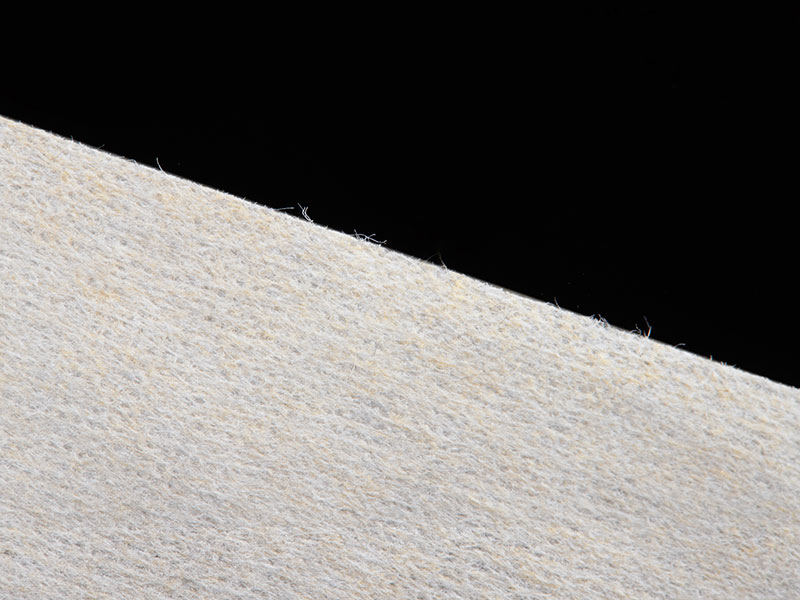
What Is PP/Pulp Compound Spunlace Fabric?
PP/pulp compound spunlace fabric is a composite nonwoven material made from polypropylene fibers and wood pulp fibers. Polypropylene contributes strength, toughness, flexibility, and resistance to deformation, while pulp contributes natural absorbency, wiping efficiency, and a paper-like clean feel. When these two fiber types are combined through wet-laid spunlace technology, they form a stable fabric structure that performs well in both wet and dry wiping applications.
The term “spunlace” refers to hydroentanglement, a process in which high-pressure water jets entangle fibers without the need for traditional chemical binders. This helps produce a clean, soft, and functional nonwoven fabric. The wet-laid stage supports even fiber dispersion, which is especially important for pulp-containing materials. Uniform formation improves the final fabric’s appearance, absorbency, converting performance, and usability in finished kitchen cloth products.
In kitchen cleaning, materials must handle different types of messes: water, sauces, oils, spills, crumbs, and residues from cooking. A fabric based only on paper pulp may absorb quickly but can lose strength when wet. A fabric based only on synthetic fibers may have good strength but may not absorb liquids as efficiently. PP/pulp compound spunlace fabric bridges this gap by combining the desirable properties of both fiber categories. This makes it a preferred choice for disposable kitchen wipes and dry kitchen cloths that need to remain intact during practical use.
Core Product Specifications
The product can be tailored to different market positions and converting requirements. The following table summarizes the key technical information for PP/pulp compound spunlace fabric for kitchen cloth applications.
Item |
Specification |
Composition |
30% PP and 70% pulp; blending ratio can be customized |
Technology |
Wet-laid spunlace |
Pattern |
Plain |
Gram Weight |
From 35 gsm to 90 gsm |
Roll Width |
From 10 cm to 320 cm |
Finishing Technology |
Hydrophilic, coating, antistatic, and other customized treatments |
Typical Usage |
Kitchen cloth, household cleaning wipes, disposable wiping cloths, and related cleaning products |
The wide range of available gram weights allows product developers to design lightweight economical wipes or thicker premium kitchen cloths. Lower gram weights can support cost-sensitive applications where single-use convenience is the priority. Higher gram weights can provide stronger wiping power, better hand feel, and enhanced durability for demanding cleaning tasks. The broad roll-width range gives converters flexibility when cutting, folding, perforating, rolling, or packaging the material into different consumer and commercial formats.
Why Disposable Kitchen Cloths Are Becoming More Important
Kitchen hygiene is a daily concern. Reusable cloths and sponges are often exposed to moisture, food particles, oils, proteins, and other residues. When they remain damp after use, they can become environments where microorganisms multiply. Even when rinsed, reusable wipes may retain invisible contamination. In busy kitchens, users may also wipe multiple surfaces with the same cloth, increasing the possibility of cross-contamination between sinks, cutting areas, tables, and appliance surfaces.
Disposable kitchen cloths address these challenges by offering a fresh wiping surface when needed. After use, the cloth can be discarded, reducing the burden of washing, disinfecting, drying, and storing reusable materials. This is particularly useful in food-service environments where consistent hygiene practices are important. It is also attractive to modern households seeking simpler cleaning routines and cleaner kitchen habits.
However, disposable does not have to mean weak or inefficient. A poorly made disposable wipe may tear, lint, fail to absorb grease, or require multiple sheets for one task. PP/pulp compound spunlace fabric improves the value proposition of disposable kitchen cloths by delivering strength and absorbency in a single material. It provides convenience without sacrificing practical performance. For brands competing in the home-care and kitchen-cleaning market, this balance can help build consumer trust and repeat purchases.
Key Performance Advantages
Excellent Water Absorption
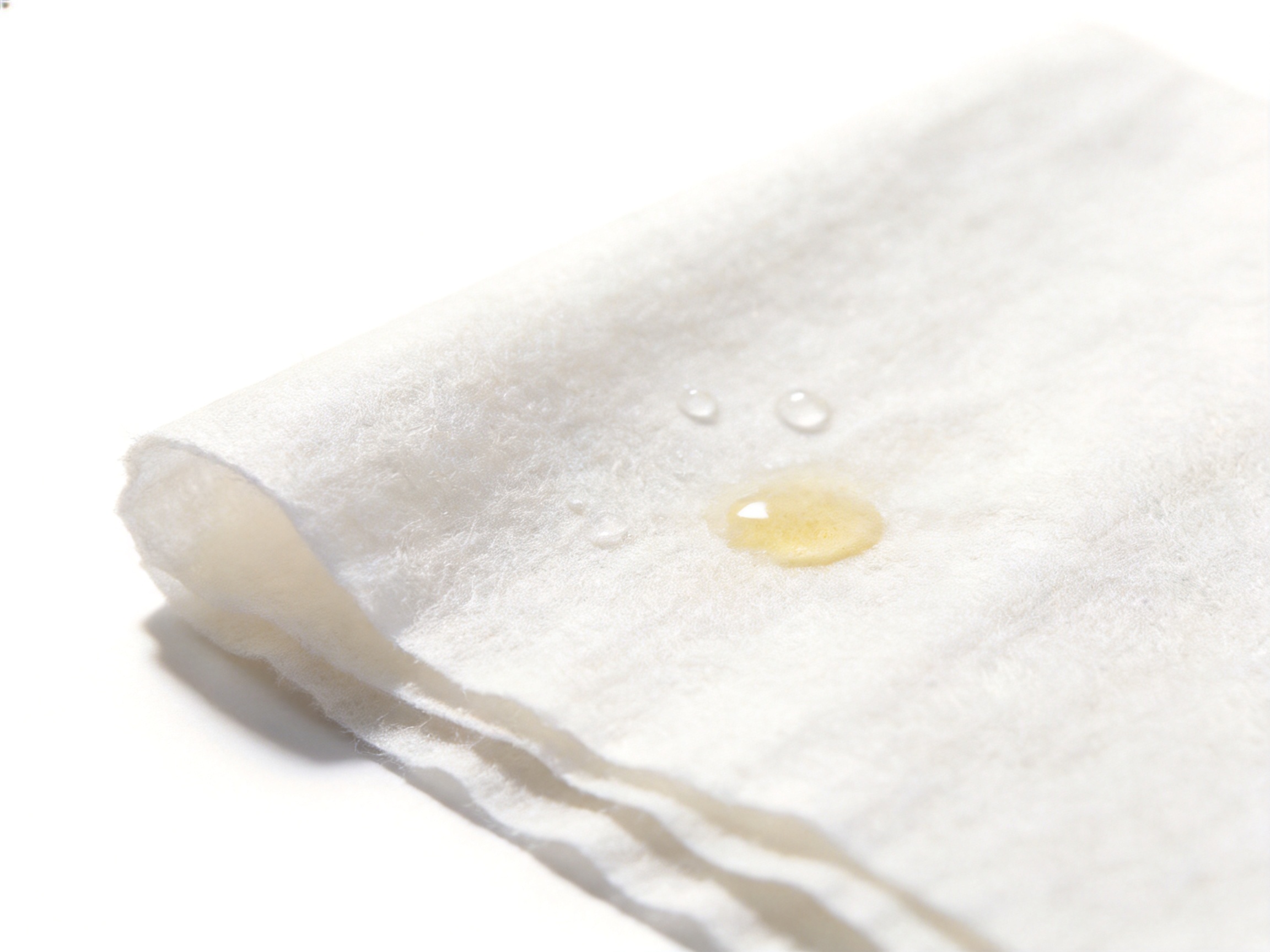
Water absorption is essential for kitchen cloths. Users need to wipe spills, dry surfaces, clean sinks, and remove moisture from countertops and appliances. The high pulp content of PP/pulp compound spunlace fabric gives the material strong hydrophilic behavior, especially when supported by additional hydrophilic finishing. The fabric can quickly take up water and distribute it through its structure, helping users clean efficiently with fewer sheets.
Compared with many synthetic-only nonwovens, the pulp-containing structure provides a more absorbent wiping experience. Compared with ordinary paper towels, the polypropylene reinforcement helps maintain strength during wet use. This means the cloth is less likely to fall apart while wiping wet surfaces, scrubbing light stains, or cleaning around sinks and stovetops. The result is improved efficiency, reduced waste, and a more satisfying user experience.
Strong Oil Absorption and Grease Pick-Up
Kitchens are not only wet environments; they are oily environments. Cooking oil, sauces, butter, grease splashes, and food residues require a wipe that can pick up both liquid and oily substances. PP/pulp compound spunlace fabric performs well in this area because the composite fiber structure provides a useful balance of absorbency and surface contact. The pulp component helps absorb and hold fluids, while the PP component contributes structure and wiping resilience.
For disposable kitchen cloths, oil absorption is a major competitive advantage. Consumers often judge cleaning cloths by how well they remove greasy residue from stovetops, range hoods, dining tables, microwave interiors, cookware surfaces, and preparation areas. A fabric that spreads grease rather than removing it will frustrate users. A fabric that absorbs and captures residue can improve perceived cleaning power and reduce the need for repeated wiping.
High Strength and Resistance to Deformation
One of the weaknesses of many disposable wiping products is low wet strength. Paper-based sheets can tear when saturated, especially when used with pressure. PP/pulp compound spunlace fabric is engineered to avoid this common problem. Polypropylene fibers reinforce the pulp network, and the spunlace process mechanically entangles the fibers into a cohesive structure. This creates improved resistance to tearing, stretching, and deformation.
In practical kitchen cleaning, users may twist, fold, squeeze, rinse, or scrub with the cloth. A high-strength material allows them to complete tasks without the wipe breaking apart. This is especially important for premium disposable kitchen cloths positioned as stronger alternatives to ordinary paper towels. It is also valuable in commercial and institutional settings where cleaning tasks may be more frequent and demanding.
Cleaner and More Hygienic Single-Use Experience
The disposable nature of the finished kitchen cloth supports a more hygienic cleaning routine. Instead of keeping a damp cloth near the sink for repeated use, consumers can use a fresh cloth and discard it after cleaning. This reduces odor, visible staining, and the risk of microbial buildup associated with reused kitchen rags. For families with infants, elderly members, or heightened hygiene concerns, this can be an important selling point.
Disposable kitchen cloths made from PP/pulp compound spunlace fabric can also be packaged in convenient formats that encourage proper use. Folded sheets, roll packs, and perforated rolls help users take only the amount they need. This supports controlled consumption and can make the product feel more economical in daily life.
Soft Hand Feel and Comfortable Use
A good kitchen cloth must be strong, but it should not feel rough or unpleasant. The spunlace process helps create a soft fabric surface because fibers are entangled by water jets rather than bonded with stiff resins. The pulp content gives a familiar absorbent texture, while the PP content helps preserve flexibility. The result is a cloth that feels comfortable in the hand during wiping, squeezing, and folding.
Softness also matters when wiping delicate surfaces such as appliance panels, polished countertops, glass areas, table surfaces, and certain cookware exteriors. While users should always follow surface-care instructions, a smooth plain-pattern nonwoven can help reduce the harsh feel associated with rough cleaning materials. This supports a more premium perception of the final product.
Advantages Over Competing Materials
Compared with Traditional Cotton Kitchen Rags
Cotton rags are reusable and familiar, but they require washing, drying, and storage. If they are not cleaned properly, they can develop odors and microbial contamination. They may also transfer residue from one surface to another. PP/pulp compound spunlace kitchen cloths offer a cleaner alternative for users who prefer disposable hygiene and convenience. They remove the need to launder greasy kitchen cloths and reduce the risk of repeatedly using contaminated material.
In addition, disposable kitchen cloths can be standardized in size, thickness, packaging, and performance. This makes them easier for brands to position and for consumers to use consistently. While reusable rags still have a place in some cleaning routines, disposable PP/pulp spunlace cloths are better suited to tasks where hygiene, convenience, and quick disposal are important.
Compared with Ordinary Paper Towels
Paper towels are widely used in kitchens, but many paper towels lose strength when wet or when used for scrubbing. They may tear into fragments, produce lint, or require several sheets for a single greasy spill. PP/pulp compound spunlace fabric offers a stronger alternative. The polypropylene component improves durability, while the pulp component maintains absorption. This allows a kitchen cloth to perform tasks that may be too demanding for ordinary paper towels.
For consumers, the value is not only in the cost per sheet but also in the number of sheets needed to complete a task. A stronger and more absorbent material can reduce sheet consumption and improve the overall cleaning experience. For brands, this creates an opportunity to position the product as a premium disposable kitchen cloth with superior performance compared with standard paper-based options.
Compared with Synthetic-Only Nonwoven Wipes
Synthetic-only nonwoven wipes often provide strength, but they may not match the absorbency and natural wiping feel of pulp-rich materials. PP/pulp compound spunlace fabric uses pulp to improve fluid management and surface cleaning efficiency. This is particularly important in kitchen use, where both water and oil residues are common. A synthetic-only wipe may move liquid around without absorbing enough, while a pulp-containing composite can help capture and retain messes more effectively.
The customizable PP/pulp ratio also allows the fabric to be optimized for different target markets. A higher pulp content can emphasize absorbency and cost efficiency, while a higher PP content can emphasize strength and durability. This flexibility gives product developers more control than many single-fiber material platforms.
Compared with Low-Quality Disposable Wipes
Not all disposable wipes deliver the same quality. Low-quality products may have uneven formation, inconsistent thickness, weak wet strength, rough texture, poor absorption, or unstable converting performance. Wet-laid spunlace PP/pulp fabric is designed for uniformity and reliability. The advanced manufacturing process helps create consistent web formation, stable roll quality, and predictable performance in downstream converting.
For OEM and private-label buyers, consistency is critical. A product that performs well in one batch but poorly in another can damage brand reputation. High-quality PP/pulp compound spunlace fabric supports stable finished-product quality, helping brands reduce complaints and build long-term consumer confidence.
Advanced Wet-Laid Spunlace Manufacturing Process
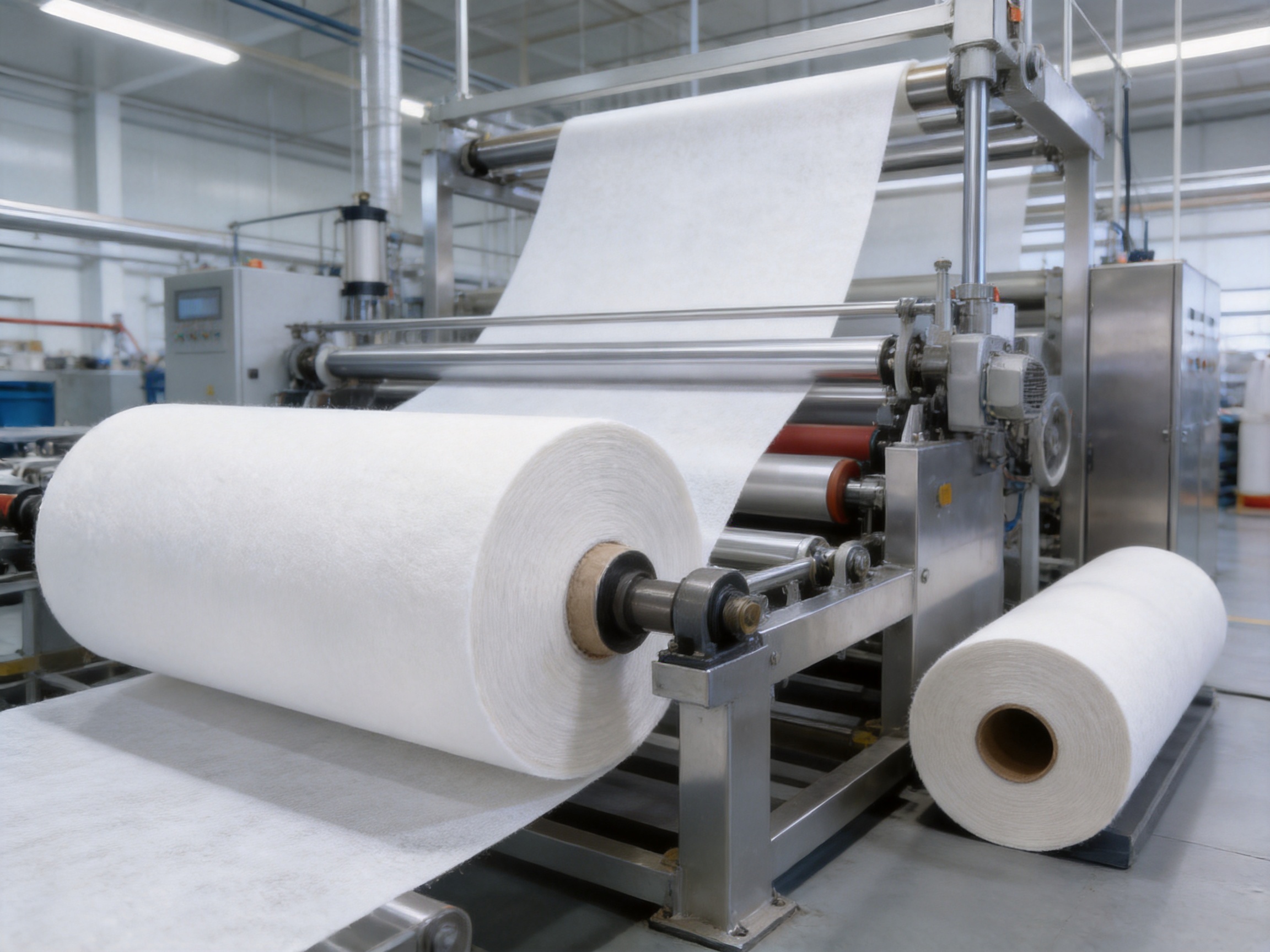
The performance of PP/pulp compound spunlace fabric is closely related to its manufacturing process. Wet-laid spunlace technology combines the uniform fiber dispersion advantages of wet-laid forming with the bonding and softness advantages of hydroentanglement. This process is especially suitable for composite materials containing pulp because it helps distribute short pulp fibers evenly throughout the web.
In a typical process, fibers are dispersed in water to form a slurry. The slurry is laid onto a forming wire, where water is removed and a wet fiber web is created. The web then passes through high-pressure water jets that entangle the fibers. These water jets create mechanical bonding by driving fibers around and through one another. After entanglement, the fabric is dewatered, dried, finished, inspected, and wound into rolls for shipment or further converting.
This method provides several benefits. First, it reduces dependence on chemical binders, supporting a cleaner fabric structure and softer hand feel. Second, it creates strong mechanical fiber entanglement, improving wet and dry strength. Third, wet-laid forming promotes uniform thickness and absorbency. Fourth, the process can be adjusted to produce various weights, widths, and functional finishes.
Advanced manufacturing also includes process control. Key parameters such as fiber ratio, slurry concentration, web formation, water-jet pressure, drying temperature, roll tension, and finishing application must be carefully managed. When these variables are controlled effectively, the fabric achieves stable quality across large production volumes. This is important for multinational brands, distributors, supermarkets, e-commerce sellers, and cleaning product companies that require reliable supply.
Manufacturing Strength and Industrial Capability
Zhejiang Uniquality Nursing Products Technology Co., Ltd., supported by the broader Kingsafe and Uniquality manufacturing system, has decades of experience in nonwoven materials and hygienic products. Founded in 1987, the enterprise has developed from a specialized manufacturer into a major industrial textile group with capabilities in research, production, and sales. Its product fields include medical and hygienic nonwoven materials, nursing products, wet wipes, dry wipes, baby diapers, pull-ups, wet toilet paper, cleansing wipes, spunlace nonwovens, spunmelt nonwovens, hot-air-through nonwovens, flushable and degradable nonwovens, and high-end clothing interlining.
The company’s headquarters are located in Changxing, Huzhou, in the Yangtze River Delta region, an area known for convenient land, sea, and air transportation. This geographic advantage supports raw-material sourcing, production coordination, domestic distribution, and export logistics. Over more than 30 years of development, the company has established multiple production bases in China, including locations in Guangdong, Jiangsu, and Hubei. This multi-base structure supports large-scale production, supply stability, and flexible response to customer needs.
Industrial strength is not only about production volume. It also includes engineering experience, technical know-how, quality management, innovation capability, and the ability to customize products for different markets. The company has introduced advanced production equipment and technology from countries such as Germany, France, and Italy. This international equipment foundation supports precision manufacturing, stable production, and the development of differentiated nonwoven materials.
The enterprise has been recognized as a national high-tech enterprise and has ranked among leading companies in China’s nonwovens industry for many consecutive years. It has also been listed among major global nonwoven manufacturers for multiple years. These achievements reflect long-term investment in technology, quality, and industrial development. For buyers of PP/pulp compound spunlace fabric, this background provides confidence that the product is supported by mature manufacturing infrastructure rather than short-term trading capability.
Customization for OEM and Private-Label Kitchen Cloths
One of the strongest advantages of PP/pulp compound spunlace fabric is customization. Different customers require different product concepts. A supermarket private label may need an economical disposable kitchen wipe for daily household use. A premium cleaning brand may want a thicker cloth with enhanced absorbency and a high-quality hand feel. A food-service supplier may need strong sheets for frequent cleaning in restaurants and catering kitchens. A converter may require a specific roll width to match existing folding or cutting equipment.
The product platform supports these needs through adjustable composition, weight, width, and finishing. The standard 30% PP and 70% pulp ratio is a balanced option, but the blending ratio can be customized. Increasing the pulp proportion can support stronger absorbency and a more paper-like feel. Increasing the PP proportion can improve strength and durability. Gram weight can be selected from 35 gsm to 90 gsm, allowing products to range from lightweight wipes to heavier cleaning cloths. Roll width from 10 cm to 320 cm gives converters broad flexibility.
Finishing technologies add further differentiation. Hydrophilic treatment can improve water absorption and wiping efficiency. Coating can be used to modify surface behavior or add functional performance, depending on regulatory and application requirements. Antistatic treatment may be useful in certain cleaning or industrial-adjacent applications where static control is desired. These finishing options make it possible to develop kitchen cloth products for different regions, channels, and consumer expectations.
OEM and ODM cooperation can include material development, product testing, roll supply, packaging concepts, specification matching, and continuous improvement. A manufacturer with experience across wipes, diapers, nursing products, and nonwoven materials can understand both raw-material performance and finished-product requirements. This integrated perspective helps reduce development time and improve the success rate of new kitchen cloth launches.
Applications in Household and Commercial Kitchens
Daily Household Cleaning
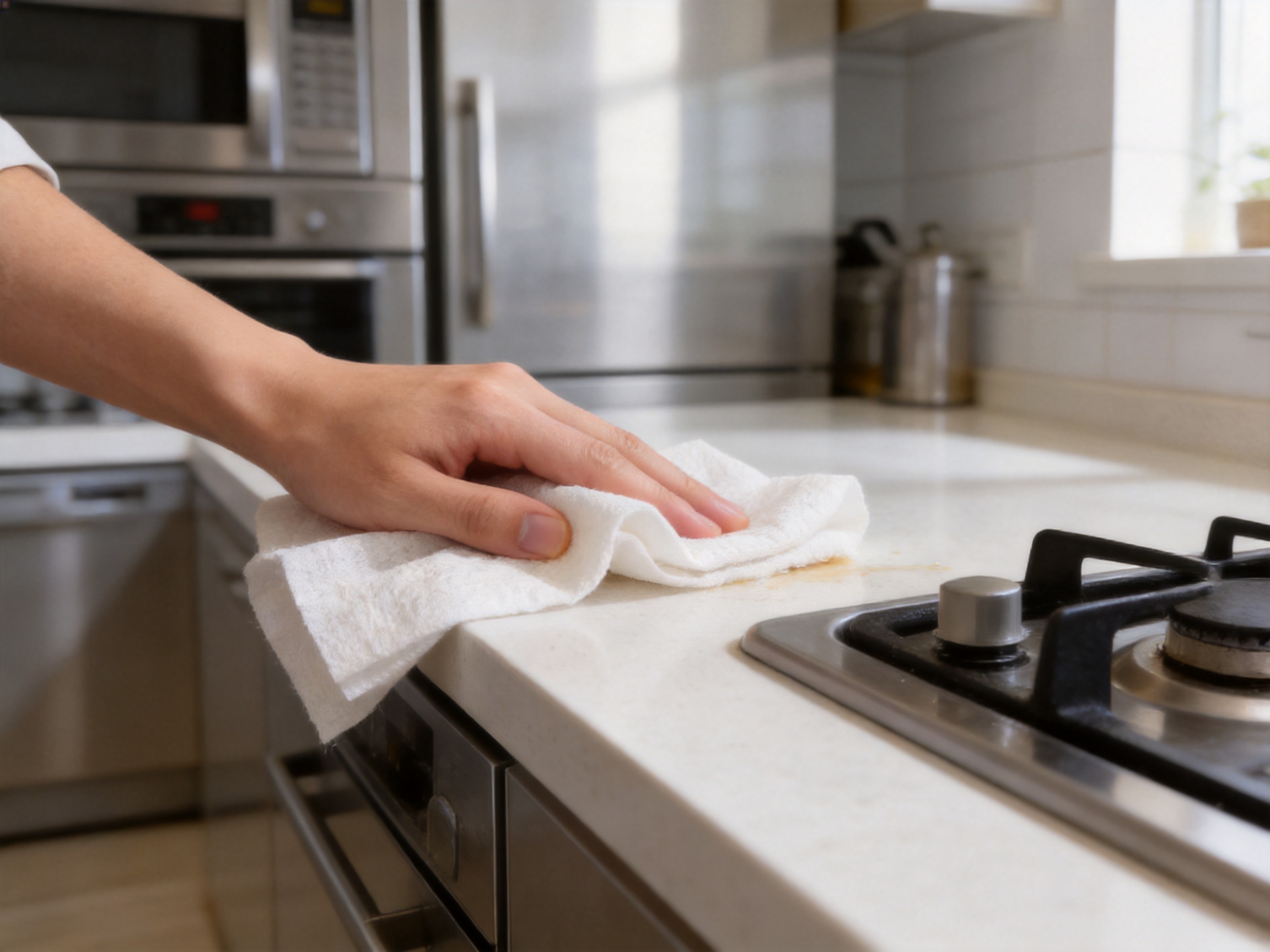
In homes, PP/pulp compound spunlace kitchen cloths can be used for wiping countertops, cleaning dining tables, drying sink areas, absorbing spills, wiping cabinet surfaces, cleaning microwave interiors, and removing light grease from cooking areas. The disposable format is convenient for quick tasks after meals or cooking. Users can take a sheet, clean the surface, and discard it, leaving no damp rag behind.
The material’s strength is useful when cleaning textured surfaces or wiping around edges and corners. Its absorbency helps manage water spills and food residues. Its oil pick-up capability helps remove grease from stovetops and range areas. For consumers who want a cleaner kitchen routine without washing reusable cloths, this fabric supports a practical and easy-to-understand product benefit.
Restaurants and Food-Service Environments
Restaurants, cafés, bakeries, cafeterias, and catering services often require frequent surface cleaning. Disposable kitchen cloths can help standardize hygiene practices and reduce laundry demands. Staff can use designated cloths for specific tasks and discard them after use, helping reduce cross-use between different work areas. While food-service operations must follow local hygiene regulations and cleaning protocols, high-performance disposable cloths can support cleaner workflow.
Strength and consistency are especially important in commercial use. A weak wipe that tears during service can slow down staff and increase waste. A reliable PP/pulp spunlace cloth can handle repeated wiping motions during a single cleaning task, absorb spills quickly, and provide a comfortable hand feel for frequent use. Roll and sheet formats can be selected to fit dispensing systems or workstation needs.
Hotels, Offices, and Institutional Facilities
Hotels, office pantries, schools, care facilities, and public institutions often maintain kitchen or food-preparation areas that require routine cleaning. Disposable kitchen cloths made from PP/pulp compound spunlace fabric can support housekeeping and facility-management teams by providing hygienic, ready-to-use wiping materials. They can be stored conveniently, distributed easily, and used for multiple light-to-medium cleaning tasks.
For facility managers, product consistency and supply reliability are key purchasing factors. A manufacturer with strong production capacity and logistics advantages can support regular procurement schedules. Custom roll widths and packaging formats can also help match institutional use patterns, reducing waste and improving operational efficiency.
Industrial and Professional Cleaning
Although the product is especially suitable for kitchen cloths, its performance characteristics may also be useful in broader cleaning contexts. Oil absorption, water absorption, strength, and disposable convenience are valuable in light industrial wiping, maintenance cleaning, and professional cleaning tasks. Depending on the selected gram weight and finishing treatment, the fabric can be adapted for different wiping demands. Buyers can work with the manufacturer to confirm suitability for specific chemical compatibility, linting, strength, and absorption requirements.
Quality Considerations for Buyers
When selecting PP/pulp compound spunlace fabric, buyers should evaluate more than the basic price per kilogram or price per roll. True product value depends on how the fabric performs in finished use and how consistently it converts into saleable goods. Important quality factors include basis weight uniformity, roll width accuracy, roll tension, fiber distribution, absorption speed, absorption capacity, wet tensile strength, dry tensile strength, linting behavior, surface cleanliness, and compatibility with converting equipment.
Uniform formation is particularly important. If the fabric has thick and thin areas, finished wipes may feel inconsistent and may absorb unevenly. Poor formation can also affect cutting and folding. Stable roll winding helps converters avoid production interruptions. Reliable wet strength helps ensure that consumers experience the product as durable rather than fragile. Good absorbency helps create immediate satisfaction during wiping.
Buyers should also consider the final claim and market positioning. A lightweight economy kitchen cloth may prioritize affordability and basic wiping. A premium cloth may require higher gram weight, softer feel, improved absorption, and stronger wet performance. A professional-use cloth may require enhanced durability and larger sheet sizes. Because PP/pulp compound spunlace fabric is customizable, the specification should be selected according to actual use rather than copied from a competitor without testing.
How the Fabric Supports Brand Differentiation
The kitchen cleaning market is competitive. Many products appear similar on shelves or online, and consumers often compare price, sheet count, thickness, absorbency, and user reviews. A stronger material platform can help brands stand out. PP/pulp compound spunlace fabric gives brands several angles for differentiation: hygienic disposable use, excellent water and oil absorption, reinforced strength, customizable thickness, soft touch, and suitability for everyday kitchen messes.
Packaging and messaging can highlight practical benefits. For example, a finished product may emphasize “strong when wet,” “absorbs oil and water,” “ideal for kitchen surfaces,” “disposable for cleaner use,” or “durable enough for daily wiping.” The exact wording should comply with local advertising and product regulations, but the material’s performance supports clear consumer-facing value.
Private-label brands can use the fabric to create good-better-best product tiers. A 35 gsm to 45 gsm option may serve entry-level daily wiping. A 50 gsm to 65 gsm option may serve mainstream household use. A 70 gsm to 90 gsm option may serve premium or professional cleaning applications. Different sheet sizes, pack counts, embossing or surface patterns if developed, and finishing treatments can create further variety. This flexibility allows retailers and distributors to build product portfolios rather than rely on a single generic wipe.
Cost-Effectiveness and Practical Value
Affordability is an important feature of disposable kitchen cloths. Consumers want convenience, but they also want value. PP/pulp compound spunlace fabric can be designed to balance cost and performance. The pulp component helps provide absorbency and cost efficiency, while the PP component improves strength. Because the ratio can be customized, customers can select a formulation that matches their desired price point and performance level.
Cost-effectiveness should be measured by task completion, not only by sheet price. If a cloth absorbs more and tears less, users may need fewer sheets per cleaning job. This can make a slightly stronger product feel more economical in practice. It can also reduce consumer frustration and improve repeat purchase behavior. For commercial buyers, fewer sheet changes and less tearing can improve cleaning efficiency and reduce waste.
Manufacturing scale also contributes to value. A company with large production capacity, advanced equipment, and multi-site operations can support stable supply and competitive pricing. This matters for brands planning continuous sales through supermarkets, e-commerce platforms, distributors, or food-service channels. Reliable supply helps avoid stockouts and supports long-term category growth.
Sustainability and Responsible Use Considerations
Disposable products must be designed and used responsibly. PP/pulp compound spunlace fabric combines synthetic and pulp fibers, so buyers should consider local waste-management practices, product labeling requirements, and consumer education. The product’s value lies in hygienic single-use convenience and performance, but it should be positioned honestly and used appropriately. It is suitable for disposal after use; it should not be marketed as flushable unless specifically designed, tested, and certified for that purpose.
At the same time, performance can contribute to responsible consumption. A stronger, more absorbent cloth may reduce the number of sheets needed per task compared with weaker alternatives. Customization can also prevent overengineering: customers can choose the appropriate gram weight rather than using unnecessarily heavy material for light-duty applications. Efficient production, stable quality, and reduced converting waste further support responsible manufacturing and supply-chain management.
As consumer expectations evolve, brands may also explore material optimization, packaging reduction, recycled-content packaging, and clear disposal instructions. A technically capable manufacturer can support these discussions by providing material knowledge, process control, and development experience.
Recommended Product Development Approach
Developing a successful disposable kitchen cloth begins with defining the target use. Product teams should identify whether the cloth is intended for household daily cleaning, heavy-duty kitchen wiping, food-service use, professional cleaning, or a value-oriented retail product. The target use will guide decisions about gram weight, sheet size, roll format, folding style, absorption requirements, and packaging.
Next, the team should select a preliminary PP/pulp ratio and fabric weight. A balanced 30% PP and 70% pulp construction is a strong starting point for kitchen cloths because it combines absorption and strength. If market testing shows that users want a more durable cloth, the formulation or weight can be adjusted. If users prioritize softness and high absorption, finishing and pulp proportion can be optimized. If price is the primary concern, a lighter gram weight may be considered while maintaining minimum acceptable performance.
Laboratory testing and practical use testing should both be performed. Laboratory tests can measure basis weight, tensile strength, absorption capacity, absorption speed, linting, and dimensional stability. Practical tests should include wiping water, oil, sauce, and food residue from common kitchen surfaces. Products should also be tested after folding, dispensing, or perforating to ensure that the finished format performs as expected.
Finally, packaging and claims should be aligned with actual performance. A premium cloth should look and feel premium from the moment the consumer opens the pack. An economy cloth should still deliver reliable basic cleaning. Clear instructions can help consumers use the product correctly, such as using separate cloths for different areas and disposing of cloths after cleaning dirty or greasy surfaces.
Why Partner with an Experienced Nonwoven Manufacturer
Kitchen cloth performance begins at the material level, but successful commercialization requires more than a good material. Buyers need specification guidance, production reliability, quality control, delivery coordination, and continuous improvement. Partnering with an experienced nonwoven manufacturer reduces development risk and helps ensure that the finished product meets market expectations.
Zhejiang Uniquality Nursing Products Technology Co., Ltd. brings extensive experience in nonwoven materials and hygiene-related products. With roots dating back to 1987, the company has built capabilities across R&D, production, and sales. Its industrial background includes spunlace, spunmelt, hot-air-through, flushable and degradable nonwoven materials, wet wipes, dry wipes, baby care products, and personal care products. This broad experience is valuable because kitchen cloths require knowledge of both nonwoven fabric engineering and finished consumer product requirements.
The company’s advanced equipment introduced from Germany, France, and Italy supports high-quality production. Its multiple production bases enhance capacity and supply security. Its location in the Yangtze River Delta region supports efficient logistics. Its long-term development and recognition in the nonwovens industry demonstrate technical strength and market credibility. For OEM and private-label customers, these strengths can translate into faster sampling, stable production, and a stronger foundation for long-term cooperation.
Practical Purchasing Scenarios
Scenario One: Retail Private-Label Kitchen Cloth
A retailer wants to launch a private-label disposable kitchen cloth for household users. The product must be affordable, absorbent, and stronger than ordinary paper towels. A PP/pulp compound spunlace fabric in a medium gram weight can provide the right balance. The cloth can be packaged in a roll or folded pack, with messaging focused on daily kitchen cleaning, oil and water absorption, and disposable hygiene.
Scenario Two: Premium Home-Care Brand
A home-care brand wants to offer a premium kitchen wiping cloth with a thicker hand feel and higher durability. A higher gram weight within the 35 gsm to 90 gsm range can be selected, possibly with enhanced hydrophilic finishing. The finished product can emphasize strong wet performance, comfortable hand feel, and efficient cleaning for greasy or wet surfaces. This approach can differentiate the brand from low-cost paper towels and generic wipes.
Scenario Three: Food-Service Distributor
A distributor serving restaurants and catering operations needs a reliable disposable wiping cloth. The material must resist tearing, absorb spills quickly, and be available in convenient sheet sizes. PP/pulp compound spunlace fabric can be supplied in roll widths suitable for converting into larger sheets or dispenser-compatible formats. The product can help food-service customers reduce reliance on reusable cloths and support cleaner workflows.
Scenario Four: Converter Seeking Stable Roll Goods
A converter already has cutting, folding, or perforating equipment and needs stable roll goods. The broad roll-width capability from 10 cm to 320 cm allows the material to be matched to equipment requirements. Consistent roll quality, uniform basis weight, and reliable tensile strength help reduce downtime and waste during converting. Custom finishing can be discussed based on the converter’s customer requirements.
Frequently Asked Questions
Q1: What is the main advantage of PP/pulp compound spunlace fabric for kitchen cloths?
The main advantage is its balanced performance. Pulp provides strong water absorption and wiping efficiency, while polypropylene improves strength and resistance to deformation. This makes the fabric more durable than ordinary paper towels and more absorbent than many synthetic-only wipes.
Q2: Is the blending ratio fixed?
No. A common composition is 30% PP and 70% pulp, but the blending ratio can be customized. This allows buyers to adjust the fabric for absorbency, strength, softness, cost, and target application.
Q3: What gram weights are available?
The fabric can be produced from 35 gsm to 90 gsm. Lower weights are suitable for economical daily-use wipes, while higher weights can support premium or more demanding cleaning cloths.
Q4: Why is wet-laid spunlace technology important?
Wet-laid spunlace technology helps disperse pulp and PP fibers uniformly and then mechanically entangles them using high-pressure water jets. This creates a soft, absorbent, and strong nonwoven fabric without relying primarily on stiff chemical bonding.
Q5: Can the fabric absorb both water and oil?
Yes. The fabric is designed for excellent water absorption and oil absorption, making it suitable for kitchen environments where spills, grease, sauces, and moisture are common.
Q6: Is the fabric suitable for disposable kitchen cloths?
Yes. It is especially suitable for disposable kitchen cloths because it supports cleaner single-use routines, reduces the problems associated with damp reusable rags, and offers reliable wiping performance.
Q7: What roll widths are available?
Roll widths can range from 10 cm to 320 cm. This wide range supports many converting formats, including rolls, folded sheets, perforated products, and custom private-label packaging.
Q8: What finishing options are available?
Available finishing technologies include hydrophilic treatment, coating, antistatic treatment, and other customized options. These treatments can help adapt the fabric to specific performance needs.
Q9: How does this material compare with reusable kitchen cloths?
Reusable cloths require washing and drying and may develop odors or microbial buildup if not maintained properly. Disposable PP/pulp spunlace kitchen cloths provide a fresh wiping material for each use and can be discarded after cleaning, supporting a more hygienic routine.
Q10: Why choose an experienced manufacturer for this product?
An experienced manufacturer can provide stable quality, advanced process control, customization support, reliable supply, and technical guidance. This is especially important for OEM and private-label customers who need consistent product performance and long-term supply security.
Conclusion
PP/pulp compound spunlace fabric is a high-performance material platform for disposable kitchen cloths. By combining polypropylene and pulp through wet-laid spunlace technology, it offers the qualities modern users expect: strong water absorption, effective oil pick-up, durable wet strength, soft hand feel, and cleaner single-use convenience. It addresses common weaknesses of traditional kitchen rags, ordinary paper towels, synthetic-only wipes, and low-quality disposable products.
The material’s customization potential makes it suitable for a wide range of product strategies. Buyers can adjust the PP/pulp ratio, gram weight, roll width, and finishing treatment to create economical, mainstream, premium, or professional kitchen cloth products. With available weights from 35 gsm to 90 gsm and roll widths from 10 cm to 320 cm, converters and brands have the flexibility needed to develop market-ready products.
Backed by advanced manufacturing processes, international equipment, multiple production bases, and decades of nonwoven industry experience, Zhejiang Uniquality Nursing Products Technology Co., Ltd. and the Kingsafe-Uniquality manufacturing system provide strong support for OEM and private-label cooperation. For brands seeking a cleaner, stronger, and more absorbent disposable kitchen cloth solution, PP/pulp compound spunlace fabric offers a compelling combination of performance, scalability, and practical value.
References
1. Russell, S. J. Handbook of Nonwovens. Woodhead Publishing.
2. INDA Association of the Nonwoven Fabrics Industry. Nonwoven Fabrics Handbook.
3. EDANA. Nonwovens Standard Procedures and Industry Guidelines.
4. Hutten, I. M. Handbook of Nonwoven Filter Media. Elsevier.
5. Kissa, E. Wetting and Wicking. Textile Research and Surface Science Literature.
6. Cook, J. G. Handbook of Textile Fibres: Man-Made Fibres. Woodhead Publishing.