中文简体
中文简体 English
 日本語
日本語 русский
 Español
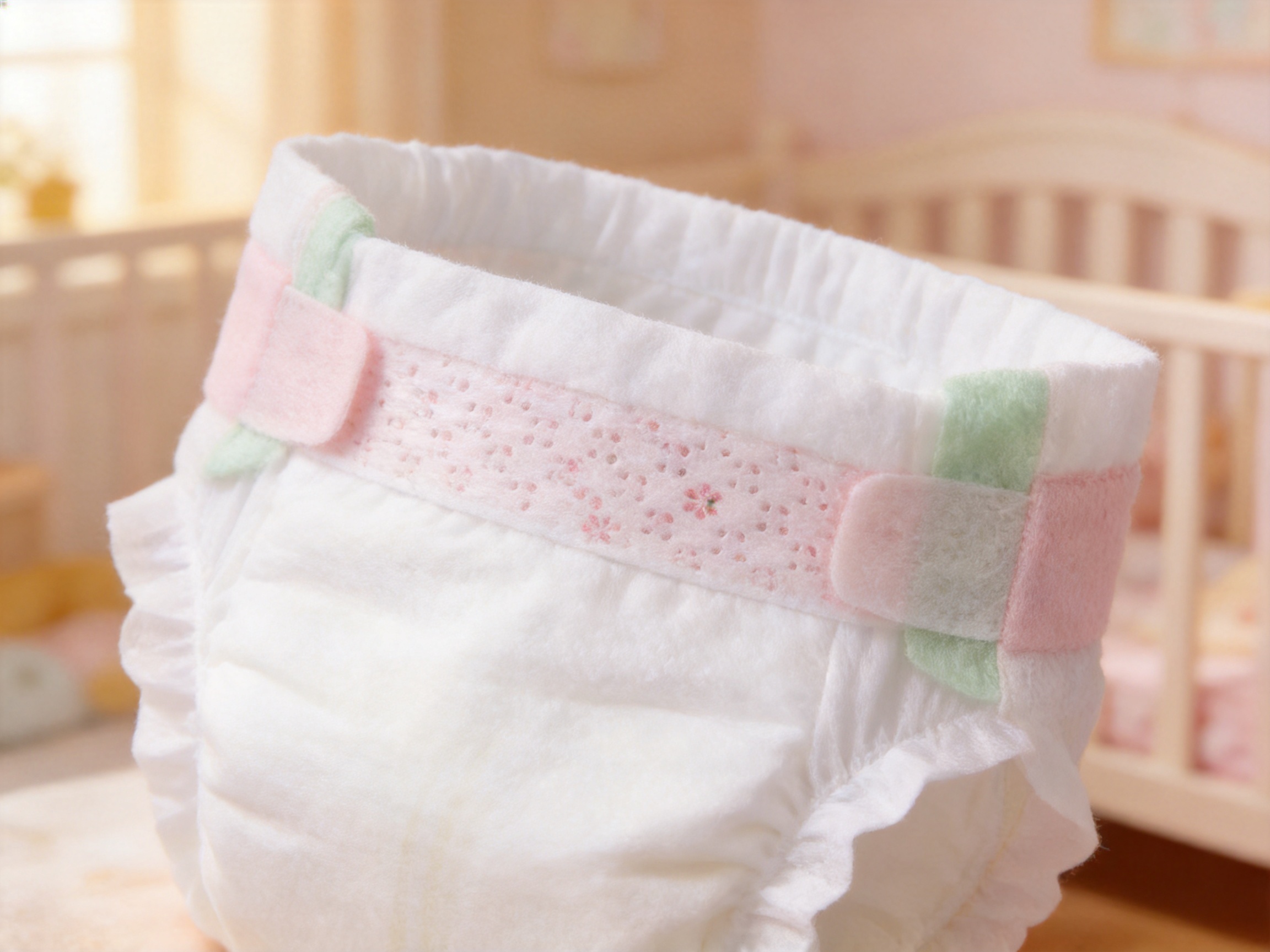
In modern hygiene products, comfort is no longer a secondary requirement; it is one of the most important indicators of product quality. Baby diapers, pull-up pants, adult incontinence products, and other absorbent hygiene items must not only manage liquid effectively but also provide a soft, breathable, skin-friendly experience during prolonged wear. Among all the components used in these products, the waist area is especially important because it is in close and continuous contact with sensitive skin and is subject to repeated stretching, friction, and movement.
Super soft polypropylene spunbond nonwoven fabric for the waist of diapers or pull-ups is designed to meet these demanding requirements. Made from polypropylene and produced using advanced SSS or SSSS spunbond technology, this material combines softness, uniformity, strength, breathability, and process stability. Its distinctive plum blossom dot pattern can enhance loft and softness compared with ordinary point-bonded spunbond nonwovens, while customized colors, weights, widths, and functional finishes allow it to meet the needs of different hygiene product manufacturers.
This article explores the technical characteristics, user benefits, manufacturing advantages, and commercial value of super soft PP spunbond nonwoven fabric for diaper and pull-up waist applications. It also explains why advanced nonwoven production capability, strict quality control, and customization strength are essential for manufacturers that want to create more comfortable, reliable, and competitive hygiene products.
Super Soft PP Spunbond Nonwoven Fabric For The Waist Of Diaper Or Pull Ups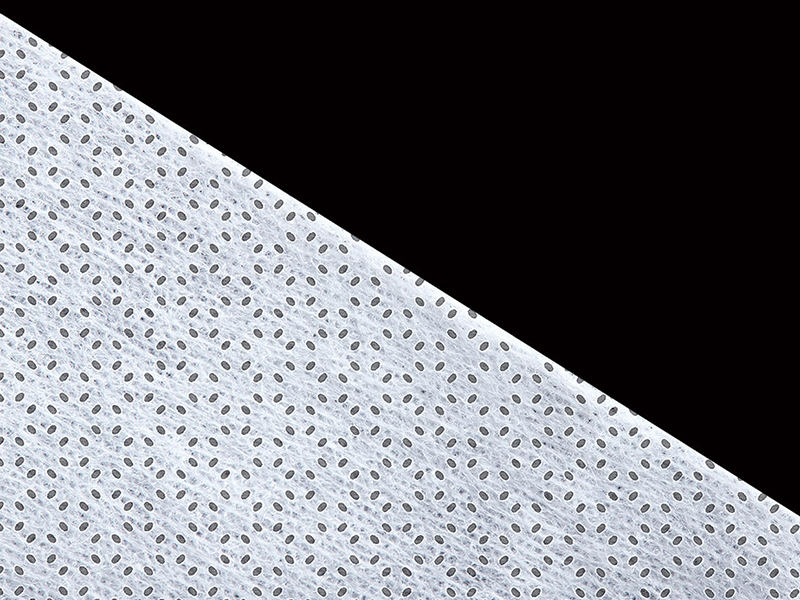
The Growing Importance of Softness in Diaper and Pull-Up Design
Consumer expectations for hygiene products have changed significantly. Parents, caregivers, and users increasingly pay attention to comfort, skin protection, appearance, and safety. In the past, absorbency was often considered the main selling point of a diaper. Today, absorbency remains essential, but it is not enough. A diaper that absorbs well but feels rough, stiff, hot, or irritating will not meet the standards of the modern market.
The waist area of a diaper or pull-up is one of the most sensitive contact zones. It wraps around the abdomen and back, moves with the body, and may rub against the skin during crawling, walking, sleeping, or daily activity. If the waist material is too hard or abrasive, it can create red marks, discomfort, or resistance from the wearer. For babies, who have delicate skin and limited ability to express discomfort, this issue is especially important. For adults using incontinence products, a comfortable waist material contributes to dignity, confidence, and product acceptance.
Super soft PP spunbond nonwoven fabric helps solve this challenge by providing a pleasant hand feel and a smoother skin-contact surface. Its fluffy texture and soft bonding pattern reduce the harshness often associated with ordinary spunbond materials. When used in the waist of diapers or pull-ups, it supports a more comfortable fit and helps improve the overall perceived quality of the finished product.
The shift toward softer materials also reflects the premiumization of hygiene products. Brands and private-label manufacturers increasingly compete through comfort features, textile-like feel, attractive colors, and improved skin-friendliness. A high-quality waist nonwoven is therefore not only a functional component but also a key contributor to product differentiation.
Product Overview
The product is a super soft PP spunbond nonwoven fabric intended for the waist of diapers, pull-ups, and related absorbent hygiene products. It is made primarily from polypropylene, a widely used polymer in hygiene applications because of its lightweight nature, chemical stability, processability, and suitability for skin-contact nonwoven materials.
The material is produced using SSS or SSSS spunbond technology. These multi-beam spunbond processes create a more uniform web than basic single-layer production methods. Better fiber distribution, consistent bonding, and stable physical properties contribute to softness, strength, and process reliability. The material can be supplied in gram weights from 8 gsm to 100 gsm and roll widths from 10 cm to 320 cm, allowing it to match different product structures, converting equipment, and market requirements.
The surface pattern is described as a plum blossom dot pattern, which can also be customized. Compared with ordinary bonding patterns, this type of point structure can help create a more fluffy and delicate tactile effect. The appearance is also visually appealing, which is useful for hygiene products where consumers increasingly associate texture and pattern with quality.
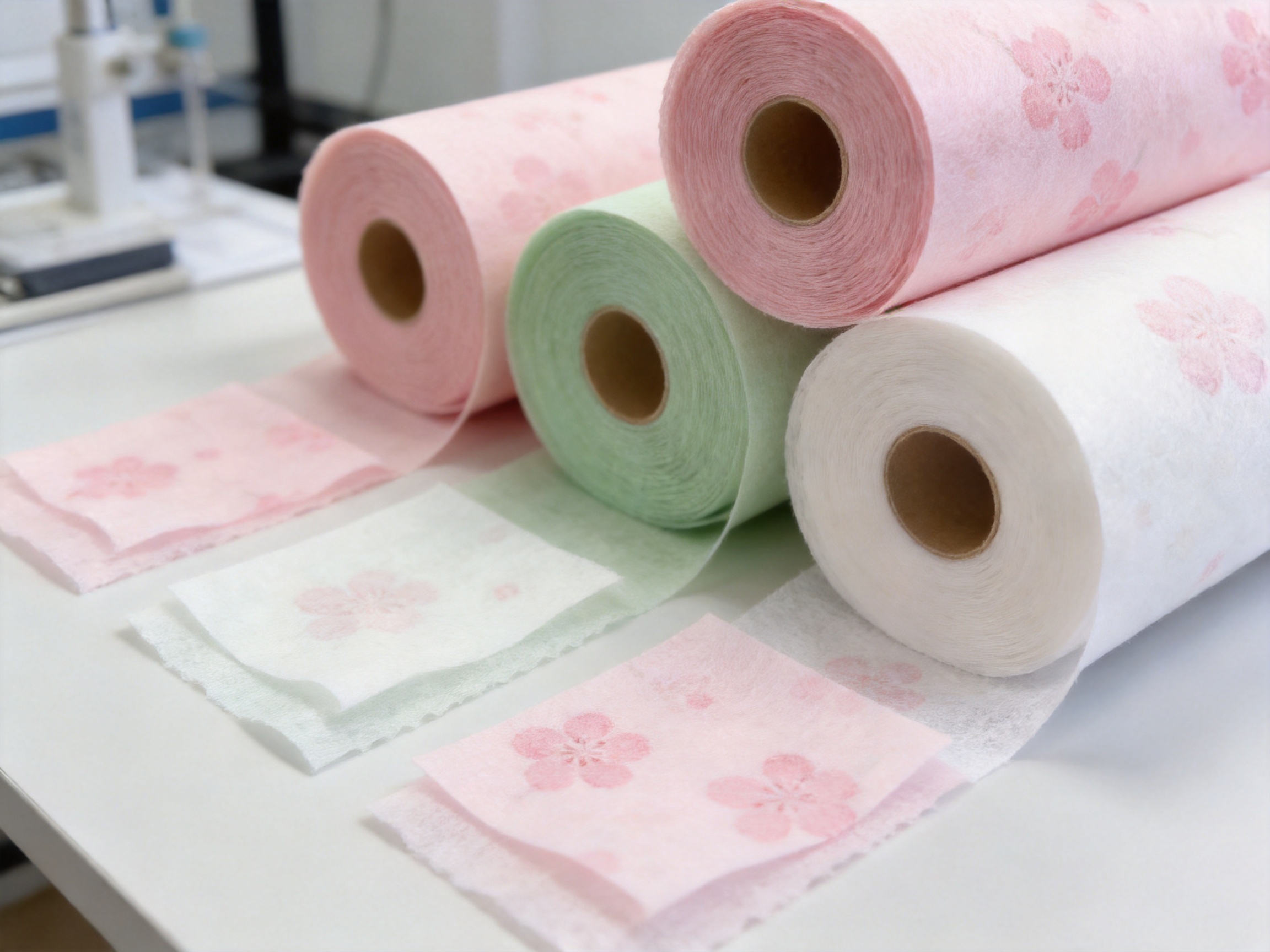
Colors such as pink and green are available, and additional colors can be customized. Functional finishing technologies may include super soft treatment, antistatic treatment, antibacterial treatment, and other value-added options. These finishing choices allow product developers to tailor the fabric for different application environments, regulatory expectations, and consumer preferences.
Item |
Specification |
Benefit for Diaper or Pull-Up Waist Applications |
Composition |
Polypropylene |
Lightweight, stable, suitable for hygiene nonwoven applications |
Technology |
SSS or SSSS spunbond |
Improved uniformity, softness, and production consistency |
Pattern |
Plum blossom dot, customizable |
Soft hand feel, fluffy texture, attractive surface appearance |
Color |
Pink, green, and customized colors |
Supports product differentiation and visual branding |
Gram Weight |
8 gsm to 100 gsm |
Flexible selection for light, soft, or stronger waist structures |
Roll Width |
10 cm to 320 cm |
Compatible with multiple converting line requirements |
Finishing |
Super soft, antistatic, antibacterial, and other options |
Enhances comfort, cleanliness, and processing performance |
Usage |
Waist of diapers, pull-ups, and similar products |
Improves wearer comfort and perceived product value |
Why Polypropylene Is Widely Used in Hygiene Nonwovens
Polypropylene is one of the most common raw materials for disposable hygiene nonwovens. Its popularity comes from several performance advantages. It is lightweight, which helps reduce the overall bulk of a finished diaper or pull-up. It can be converted into fine fibers through spunbond technology, enabling fabrics with good coverage at relatively low basis weights. It is also resistant to many chemicals and has stable performance under normal storage and use conditions.
Another important advantage of polypropylene is its suitability for thermal bonding. In spunbond production, filaments are laid into a web and bonded by heat and pressure. Polypropylene responds well to this process, enabling stable bond formation without the need for chemical binders. This is beneficial for hygiene products because it helps produce cleaner, more consistent nonwoven materials.
Polypropylene also has a naturally hydrophobic character, which can be useful in diaper components that are not intended to absorb liquid. For waist applications, hydrophobicity helps the material remain dry and comfortable when used as part of the outer or elasticized structure. If specific liquid management properties are required, surface treatments can be applied according to product design needs.
From a manufacturing perspective, polypropylene offers excellent processability. It can be used in high-speed spunbond lines, supports stable filament formation, and allows precise control of fabric weight and width. This makes it suitable for large-scale production where cost efficiency, consistency, and supply reliability are essential.
Advantages of SSS and SSSS Spunbond Technology
The terms SSS and SSSS refer to multi-beam spunbond production structures. Compared with simpler spunbond processes, these technologies can create fabrics with enhanced uniformity, better coverage, and more balanced mechanical properties. For hygiene applications, this matters because even small variations in thickness, strength, or softness can affect converting performance and final product quality.
In a multi-beam spunbond process, several layers of continuous filaments are laid together before bonding. This approach can improve web formation and reduce defects such as thin spots, uneven areas, or inconsistent texture. A more uniform fabric helps diaper manufacturers achieve stable cutting, lamination, elastic attachment, and assembly during high-speed production.
SSS and SSSS technology also supports the creation of lightweight fabrics that still provide adequate coverage. This is particularly valuable in modern hygiene product design, where manufacturers aim to reduce material usage without sacrificing performance. A fabric with good uniformity can often perform better at a lower weight than a less uniform fabric at a higher weight.
Softness is another major advantage. When filament distribution is even and bonding is well controlled, the fabric can feel smoother and more textile-like. Combined with a specialized bonding pattern such as the plum blossom dot, SSS or SSSS spunbond can deliver an improved hand feel compared with ordinary spunbond materials.
For brands and manufacturers, advanced spunbond technology also provides greater design freedom. It enables a wide range of basis weights, functional treatments, colors, and surface effects. This flexibility helps customers develop differentiated diaper and pull-up products for different price segments, age groups, and market preferences.
The Role of the Plum Blossom Dot Pattern
The bonding pattern of a nonwoven fabric has a strong influence on its softness, strength, bulk, and appearance. Ordinary spunbond fabrics often use standard dot bonding patterns that provide sufficient strength but may feel flatter or firmer. The plum blossom dot pattern offers a more distinctive surface structure that can improve tactile comfort and visual appeal.
By controlling the bonded and unbonded areas of the fabric, the pattern can help create a fluffier hand feel. The unbonded regions retain more loft, while the bonded points maintain fabric integrity. This balance is particularly important in waist applications, where the material must be soft against the skin but strong enough to withstand tension during wear and converting.
The plum blossom dot pattern also helps communicate quality. Consumers often judge hygiene products not only by technical performance but also by touch and appearance. A soft patterned nonwoven can make the waist area look more refined and premium. This can be especially valuable for pull-up pants, where the waist resembles underwear and contributes greatly to the user’s first impression.
Customization of the pattern gives product developers additional options. Different bonding shapes, densities, and layouts can be selected depending on the desired softness, strength, elongation behavior, and aesthetic effect. A manufacturer with advanced process control can help customers optimize these parameters for specific diaper or pull-up designs.
Comfort Benefits for Babies and Users
Comfort in hygiene products is a combination of softness, breathability, fit, dryness, and freedom of movement. Super soft PP spunbond nonwoven fabric contributes to several of these factors when used in the waist area.
First, the soft hand feel reduces the sensation of roughness. Baby skin is thinner and more delicate than adult skin, and it can be more vulnerable to irritation caused by repeated rubbing. A smooth and fluffy waist material can help reduce friction during movement, improving the wearing experience.
Second, the lightweight structure supports breathability. While the exact air permeability depends on basis weight, bonding pattern, and finishing, spunbond nonwoven materials generally allow air exchange through their porous structure. A breathable waist region can help reduce stuffiness and improve comfort, especially in warm climates or during long wear periods.
Third, the material supports flexibility. Diaper and pull-up waist areas must adapt to body movement. A fabric that is too stiff may restrict movement or create pressure points. A softer nonwoven can work more harmoniously with elastic components, helping the product fit securely while remaining comfortable.
Fourth, the fabric can enhance the premium feel of the finished product. Parents often touch the waist area when putting on or removing a diaper. If the material feels soft, smooth, and gentle, it can increase confidence in the product. For adult users, a soft waist can make the product feel less clinical and more like ordinary underwear.
Advantages Over Ordinary Spunbond Nonwoven Fabrics
Compared with ordinary spunbond nonwoven fabrics, this super soft PP spunbond material offers several clear advantages for diaper and pull-up waist applications. The first advantage is improved softness. The combination of SSS or SSSS technology, controlled bonding, and super soft finishing creates a more pleasant tactile experience than standard spunbond materials that may feel hard or papery.
The second advantage is better fluffiness. A fluffier fabric can create a cushioned feeling between the waist structure and the skin. This can help reduce the perception of pressure and improve comfort during extended use. In premium hygiene products, this fluffy texture is often associated with gentleness and care.
The third advantage is enhanced customization. Ordinary materials may be available only in limited weights, colors, or patterns. This fabric can be customized in gram weight, width, color, pattern, and functional finish. Such flexibility supports a wide range of product concepts, from economical baby diapers to high-end pull-up pants with soft, colorful, and distinctive waist designs.
The fourth advantage is improved production compatibility. A uniform spunbond fabric with stable width, weight, and tensile properties can run more smoothly on high-speed converting machines. This reduces the risk of web breaks, wrinkles, misalignment, and waste. For diaper manufacturers, converting efficiency is a major cost factor, so stable raw materials create real economic value.
The fifth advantage is functional upgrade potential. Antistatic finishing can improve handling and converting performance, especially in dry environments where static electricity may cause web control problems. Antibacterial finishing may be selected for products requiring additional hygiene-related features, subject to applicable standards and claims regulations. Super soft finishing can further enhance skin-contact comfort.
Customization for Different Market Needs
Different markets require different hygiene product designs. In some regions, consumers prefer ultra-thin diapers that feel light and breathable. In other regions, softness and plushness are major selling points. Some brands focus on natural-looking colors and gentle textures, while others prefer bright visual effects that distinguish product sizes or product lines. A customizable nonwoven fabric helps meet all these needs.
The available gram weight range from 8 gsm to 100 gsm gives designers significant freedom. Lightweight options can be used where softness, breathability, and cost efficiency are priorities. Heavier options may be selected where greater strength, opacity, or cushioning is needed. The proper choice depends on the waist structure, elastic system, lamination method, and target product positioning.
Roll widths from 10 cm to 320 cm allow the fabric to be supplied for narrow waist components or broader lamination processes. This reduces cutting waste and improves converting efficiency. Width customization is especially useful for large diaper manufacturers that operate high-speed equipment and require precise roll specifications.
Color customization can support both functional and marketing purposes. Soft pink, green, or other colors can be used to create a gentle and friendly appearance. Colors may also help differentiate sizes, genders, product lines, or private-label ranges. Since color consistency is important for consumer perception, stable production control is necessary.
Pattern customization allows brands to create a unique tactile and visual identity. The plum blossom dot pattern provides a soft and attractive standard option, but different pattern designs can be developed to meet specific softness, strength, and appearance goals. This is particularly valuable in competitive retail environments where small sensory differences can influence purchasing decisions.
Functional Finishing Options
Finishing technology can significantly expand the performance of PP spunbond nonwoven fabric. The super soft finish is central to this product, helping to create a gentle, smooth, and skin-friendly touch. For diaper waist applications, this finish is especially meaningful because the waist remains in continuous contact with the body.
Antistatic finishing can help reduce static buildup during production and converting. Static electricity can cause nonwoven webs to cling, repel, wrinkle, or misfeed on high-speed machinery. By improving web handling, antistatic treatment can contribute to better productivity and less material waste.
Antibacterial finishing may be considered for selected hygiene product designs. Such finishing must be developed and used responsibly, with attention to safety, regulatory requirements, and claim substantiation. When applied appropriately, antibacterial functionality can support product concepts that emphasize cleanliness and added protection.
Other finishing options may also be possible depending on customer needs. These can include hydrophilic or hydrophobic treatments, fragrance-free comfort finishes, enhanced softness treatments, or special surface effects. The key is to match the finishing technology to the intended application rather than applying functions unnecessarily. A reliable manufacturing partner can provide technical guidance to help customers select the right finish.
Manufacturing Strength and Process Control
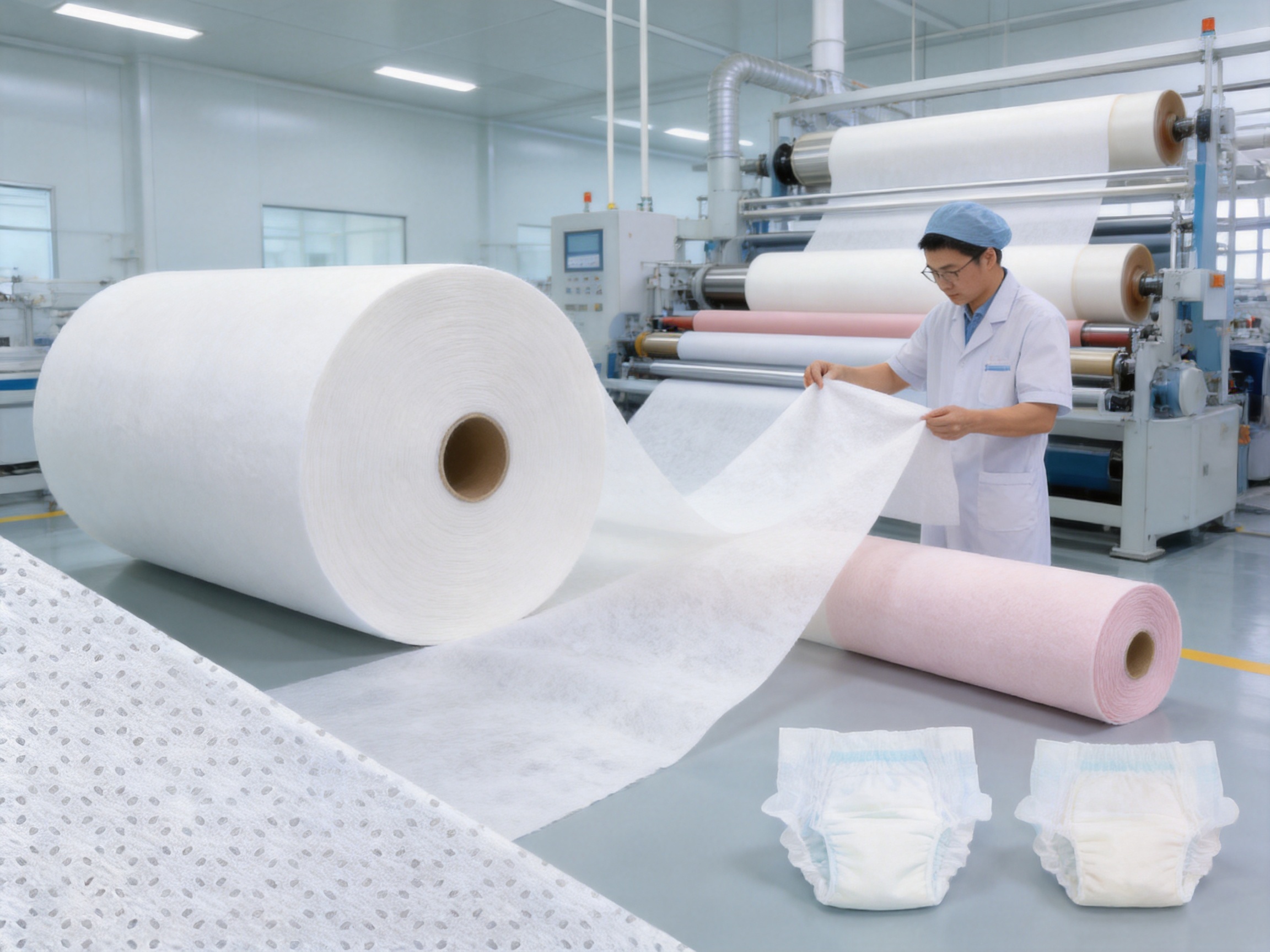
High-quality nonwoven fabric depends on more than raw materials and equipment. It requires integrated manufacturing strength, process knowledge, quality management, and experience in hygiene applications. Zhejiang Uniquality Nursing Products Technology Co., Ltd., together with Kingsafe’s long-developed industrial background, brings decades of experience in nonwoven materials and nursing products. Founded in 1987, the enterprise has grown into a major participant in China’s industrial textile and hygiene product fields, with strong capabilities in research, production, and sales.
The company’s manufacturing advantages are supported by advanced production equipment and technology introduced internationally from countries such as Germany, France, and Italy. This technical foundation helps ensure stable fiber spinning, web formation, bonding, finishing, slitting, and packaging. For a product such as super soft PP spunbond nonwoven fabric, every stage matters. Small deviations in temperature, pressure, filament distribution, or bonding pattern can affect softness, strength, or uniformity.
Advanced spunbond lines allow precise control of basis weight and web uniformity. This is essential for diaper manufacturers because nonwoven components must perform consistently across millions of pieces. A roll with uneven weight may cause wrinkles, tearing, poor lamination, or inconsistent product appearance. Stable production reduces these risks and improves downstream efficiency.
Bonding control is equally important. The plum blossom dot pattern must be applied accurately to achieve the intended balance of softness and strength. If bonding is too heavy, the fabric may become stiff. If bonding is too light, the fabric may lose strength or generate lint. Experienced process engineers can optimize bonding temperature, pressure, speed, and pattern design to achieve reliable results.
Finishing control is another key strength. Super soft, antistatic, antibacterial, or other finishes must be applied evenly and safely. Uneven finishing can create inconsistent hand feel, processing problems, or performance variation. A mature manufacturer uses controlled application systems, testing procedures, and quality checks to ensure that the finished fabric meets customer specifications.
Integrated Experience in Materials and Finished Hygiene Products
One of the most valuable strengths of an experienced manufacturer is understanding both nonwoven materials and finished hygiene products. A material supplier that also has deep knowledge of diapers, pull-ups, wipes, and nursing products can better understand how each nonwoven component behaves in real product structures.
The company’s product scope includes spunlace nonwoven fabrics, spunmelt nonwoven fabrics, hot air through nonwoven fabrics, flushable and degradable nonwoven fabrics, wet wipes, dry wipes, baby diapers, pull-ups, wet toilet paper, cleansing wipes, and other hygiene-related products. This broad experience helps connect raw material design with end-use performance.
For diaper waist applications, material performance cannot be judged by softness alone. The fabric must also work with elastic threads, films, adhesives, ultrasonic bonding, cutting systems, folding units, and packaging processes. It must remain stable during high-speed production and comfortable during actual use. A manufacturer familiar with the full hygiene product chain can provide more practical recommendations and faster problem solving.
For example, if a customer wants a softer waist but faces web breakage during converting, the solution may involve adjusting basis weight, bonding density, winding tension, or finishing formulation. If a customer wants a more premium appearance, color matching and pattern customization may be needed. If a customer wants better line speed, roll quality and antistatic performance may become priorities. Integrated technical understanding makes these optimizations more effective.
Quality Control for Reliable Performance
Quality control is essential in hygiene nonwovens because the material will be used in products that touch the skin, often for many hours. A reliable supplier must control raw material selection, production parameters, physical performance, visual appearance, hygiene conditions, and packaging integrity.
Important quality indicators for super soft PP spunbond nonwoven fabric include basis weight, width, tensile strength, elongation, thickness, softness, uniformity, color consistency, bonding pattern clarity, roll appearance, and contamination control. For functional finishes, additional tests may be required, such as antistatic performance or antibacterial effectiveness, depending on customer specifications and applicable standards.
Roll quality is particularly important for diaper converting. Rolls should have stable tension, neat edges, correct diameter, proper packaging, and minimal defects. Poor roll formation can cause downtime, waste, and operator difficulty. High-quality winding and slitting processes help ensure smooth unwinding at the customer’s production line.
Traceability is another important aspect. In large-scale hygiene production, customers may need batch records, inspection reports, and clear production identification. Strong traceability allows quick response if any issue arises and supports consistent supply chain management.
Quality also includes continuous improvement. A manufacturer with long industry experience can collect feedback from customers, monitor market trends, and refine product formulations or process settings. This makes the material more competitive over time and helps customers stay ahead in fast-changing hygiene markets.
How the Fabric Supports Brand Differentiation
In the diaper and pull-up market, many products may look similar at first glance. Differentiation often comes from details that consumers can feel immediately: softness, fit, stretch, waist comfort, surface texture, and overall appearance. Super soft PP spunbond nonwoven fabric helps brands create these differences.
A softer waist can become a selling point in product descriptions, packaging claims, and consumer demonstrations. Parents can touch the product and recognize the gentle texture. Retailers can position the product as more comfortable or premium. Private-label brands can use customized color and pattern options to create a distinctive identity without changing the entire diaper structure.
The fabric also supports comfort-focused product design. Pull-ups are often marketed as easy-to-wear, underwear-like products for active babies or toddlers. The waist area is central to this concept. If the waist feels soft and flexible, the product becomes more convincing as a comfortable daily-wear item. For adult pull-ups, a soft waist helps reduce the medical appearance of the product and improves user acceptance.
Customization can also help manufacturers respond to seasonal or regional preferences. For example, a market that values breathable lightness may choose lower basis weight and soft pastel colors. A market that values premium plushness may select a heavier fabric and a more pronounced texture. The same core material technology can be adapted to different consumer expectations.
Application in Baby Diapers
Baby diapers require a careful balance of absorbency, leakage protection, skin comfort, and fit. The waist material contributes to all-day wearing comfort. Babies move frequently, and their waist areas bend, twist, and stretch during play and sleep. A rough or stiff waist material can cause discomfort, while a soft and flexible fabric can help the diaper feel more natural.
Super soft PP spunbond nonwoven fabric is suitable for waist components because it provides a gentle tactile surface and can be integrated with elastic structures. It helps create a waist that hugs the body without feeling abrasive. The plum blossom dot pattern enhances the soft perception, while color customization allows brands to create friendly visual designs for baby care products.
Because babies’ skin is sensitive, material cleanliness and stability are also important. A well-controlled polypropylene spunbond fabric can meet the demands of disposable hygiene product manufacturing. When produced under strict quality systems, it supports consistent finished diaper quality and helps reduce the risk of defects that could affect comfort.
Application in Pull-Ups and Training Pants
Pull-ups and training pants place even greater importance on the waist area. Unlike tape diapers, pull-ups are worn like underwear, so the waist must stretch, recover, and feel soft around the body. Children who are learning toilet habits may pull the product up and down repeatedly, which requires both comfort and durability.
A super soft spunbond waist material helps pull-ups feel less like a disposable product and more like soft clothing. This can encourage acceptance by toddlers who are becoming more independent. The fabric’s gentle surface reduces friction during movement, while its uniformity supports stable integration with elastic components.
For manufacturers, pull-up waist structures can be technically demanding. They often involve multiple nonwoven layers, elastic strands, films, adhesives, and precise lamination. A stable SSS or SSSS spunbond fabric can help maintain production efficiency and finished product consistency. Customized roll widths and basis weights further support optimized converting.
Potential Use in Adult Incontinence Products
Although the listed usage focuses on diapers and pull-ups, the same material characteristics can be valuable in adult incontinence products. Adult users often require products that provide security while feeling discreet and comfortable. A soft waist material can reduce irritation and improve confidence during daily activity.
Adult products may require higher strength, wider widths, or different colors than baby products. The broad gram weight and width range of this fabric allows adaptation to these needs. A soft, textile-like waist can also help reduce the institutional feel of incontinence products, supporting a more dignified user experience.
Sustainability and Material Efficiency Considerations
Sustainability is becoming increasingly important in the hygiene industry. While disposable hygiene products must meet strict performance and safety requirements, manufacturers are also seeking ways to reduce waste, optimize material usage, and improve production efficiency. High-uniformity spunbond fabrics can contribute to these goals by enabling lower basis weights without sacrificing necessary performance.
When a fabric is more uniform, manufacturers may be able to use it more efficiently. Reduced variation means fewer defects, less converting waste, and more consistent finished products. Stable roll quality also reduces downtime and scrap during production. These efficiency gains support both economic and environmental objectives.
Polypropylene is lightweight, which helps reduce material mass. In hygiene products produced in very large quantities, even small reductions in basis weight can have a meaningful impact on total material consumption. However, lightweight design must be balanced with comfort, strength, and product integrity. Advanced SSS and SSSS technology helps support this balance.
Customization also contributes to sustainability by allowing customers to select the right material rather than over-engineering. If a lighter fabric meets the functional need, unnecessary material can be avoided. If a stronger fabric is needed, it can be selected precisely to prevent product failure or excessive waste.
Supply Capability and Customer Support
Reliable supply is critical for hygiene product manufacturers. Diaper and pull-up production lines operate at high speeds and often require continuous raw material availability. Delays or inconsistent quality can disrupt production schedules, increase costs, and affect customer commitments.
With multiple production bases and long experience in nonwoven materials and nursing products, the manufacturing organization behind this product has the scale and industry knowledge required to support customers in demanding markets. Its presence in several regions and its development over more than three decades demonstrate strong production organization and supply chain capability.
Customer support is not limited to delivering rolls of fabric. It includes technical consultation, product development assistance, sample evaluation, specification adjustment, quality documentation, and after-sales communication. For customers developing a new diaper or pull-up design, this support can shorten development time and reduce trial-and-error costs.
OEM and ODM experience in wipes, diapers, training pants, and related products further strengthens customer service capability. Customers can receive support not only for a single material but also for broader product development. This is valuable for private-label customers, emerging brands, and established manufacturers seeking material upgrades.
Key Purchasing Considerations
When selecting super soft PP spunbond nonwoven fabric for diaper or pull-up waist applications, buyers should consider several technical and commercial factors. The first is softness level. Buyers should evaluate the fabric by touch, bending behavior, and user comfort testing. Softness should be suitable for the target market and product positioning.
The second factor is basis weight. A lower basis weight may reduce cost and improve breathability, while a higher basis weight may improve strength, opacity, or cushioned feel. The ideal choice depends on the final product structure and performance requirements.
The third factor is tensile strength and elongation. Waist materials must withstand converting tension and wearing stress. Buyers should confirm machine direction and cross direction performance and ensure compatibility with their production lines.
The fourth factor is bonding pattern. The plum blossom dot pattern provides a distinctive soft effect, but customers may request customized patterns. Pattern selection should balance softness, appearance, and strength.
The fifth factor is finishing. Super soft finishing is important for comfort, while antistatic finishing may be useful for processing. Antibacterial or other functional finishes should be selected according to product claims, regulatory requirements, and safety considerations.
The sixth factor is supplier reliability. Buyers should evaluate production capacity, quality systems, technical support, customization ability, and delivery consistency. For hygiene products, a dependable material partner can be as important as the material specification itself.
Q&A Section
What is super soft PP spunbond nonwoven fabric?
It is a polypropylene-based nonwoven fabric produced by spunbond technology and specially designed to provide a soft, fluffy, and comfortable hand feel. In diaper and pull-up applications, it is commonly used in the waist area to improve skin-contact comfort and product quality.
Why is this fabric suitable for diaper and pull-up waist applications?
The waist area requires softness, flexibility, strength, and stable converting performance. This fabric offers a gentle touch, customizable weight and width, attractive pattern options, and compatibility with high-speed hygiene product production.
What makes it different from ordinary spunbond nonwoven fabric?
Compared with ordinary spunbond fabric, this material has a softer and fluffier feel, supported by SSS or SSSS technology, a plum blossom dot bonding pattern, and optional super soft finishing. It is designed for comfort-focused hygiene products where skin contact is critical.
What is the benefit of the plum blossom dot pattern?
The plum blossom dot pattern helps create a soft, textured, and visually refined surface. It balances bonded strength with unbonded loft, contributing to a more comfortable and premium tactile experience.
Can the color and pattern be customized?
Yes. Colors such as pink and green are available, and other colors can be customized. The bonding pattern can also be customized according to softness, strength, appearance, and brand differentiation requirements.
What gram weights are available?
The fabric can be supplied from 8 gsm to 100 gsm. This wide range allows customers to choose lightweight, breathable options or heavier, stronger, and more cushioned materials depending on product design.
What roll widths are available?
Roll widths can range from 10 cm to 320 cm. Width customization helps match different diaper and pull-up converting equipment and can reduce cutting waste.
What finishing options are possible?
Available finishing technologies may include super soft, antistatic, antibacterial, and other customized treatments. The proper finish should be selected according to the application, processing conditions, and market requirements.
How does SSS or SSSS technology improve fabric quality?
SSS and SSSS spunbond technologies use multiple spunbond layers to improve web uniformity, coverage, and consistency. This supports better softness, stable strength, and smoother converting performance compared with simpler spunbond structures.
How does the manufacturer support product development?
The manufacturer can provide customized specifications, technical consultation, sample support, finishing options, and quality control. Its experience in both nonwoven materials and finished hygiene products helps customers optimize materials for real production and market needs.
Conclusion
Super soft PP spunbond nonwoven fabric for the waist of diapers or pull-ups is a high-value material for modern hygiene products. It directly addresses one of the most important consumer demands: comfort. By combining polypropylene’s practical advantages with SSS or SSSS spunbond technology, a soft plum blossom dot pattern, customizable specifications, and functional finishing options, the fabric helps manufacturers create diapers and pull-ups that feel softer, look better, and perform more reliably.
Its advantages over ordinary spunbond nonwovens are clear. It offers improved softness, a fluffier hand feel, better customization potential, stable converting compatibility, and opportunities for functional upgrades. These qualities are especially important in the waist area, where skin contact, movement, pressure, and product perception all come together.
Behind the material is a strong manufacturing foundation built on decades of nonwoven and hygiene product experience, advanced equipment, multi-category production knowledge, and quality management. This combination of material innovation and manufacturing capability makes the fabric a practical choice for brands, private-label customers, and hygiene product producers seeking to improve product comfort and market competitiveness.
As the hygiene industry continues to evolve, softness, customization, and production reliability will remain essential. A well-designed super soft PP spunbond nonwoven fabric can help finished products stand out in crowded markets while giving users the gentle and comfortable experience they expect.
References
1. Russell, S. J. Handbook of Nonwovens. Woodhead Publishing.
2. Batra, S. K., and Pourdeyhimi, B. Introduction to Nonwovens Technology. Association of the Nonwoven Fabrics Industry.
3. Krcma, R. Nonwoven Textiles: Structure, Properties and Applications. Textile Progress Series.
4. EDANA. Nonwovens Standard Procedures and Guidelines for Hygiene Applications.
5. INDA. Nonwoven Materials: Manufacturing, Applications and Performance Principles.
6. Albrecht, W., Fuchs, H., and Kittelmann, W. Nonwoven Fabrics: Raw Materials, Manufacture, Applications, Characteristics, Testing Processes. Wiley-VCH.