中文简体
中文简体 English
 日本語
日本語 русский
 Español
In an era where healthcare-associated infections (HAIs) remain a global public health challenge, the role of effective surface disinfection cannot be overstated. According to the World Health Organization (WHO), HAIs affect approximately 1 in 10 patients globally, leading to millions of deaths each year. Among the tools that have revolutionized surface disinfection in healthcare settings, medical antibacterial wipes stand out as a versatile, efficient, and user-friendly solution. Unlike traditional liquid disinfectants or reusable cloths, these wipes offer a one-step approach to cleaning and disinfection, reducing the risk of human error and cross-contamination. This guide explores the core features of high-quality medical antibacterial wipes, their advantages over competitors, the advanced manufacturing processes that ensure their efficacy, and their wide-ranging applications in clinical environments.
Medical antibacterial wipes are specifically designed to eliminate a broad spectrum of pathogens—including bacteria, viruses, fungi, and spores—from non-porous and semi-porous surfaces in healthcare facilities. Their effectiveness depends on a combination of high-quality nonwoven materials, targeted disinfectant formulations, and rigorous manufacturing standards. In this article, we will dive deep into what makes these wipes a superior choice for healthcare providers, how they are made, and how they address the unique needs of different clinical settings.
What Are Medical Antibacterial Wipes?
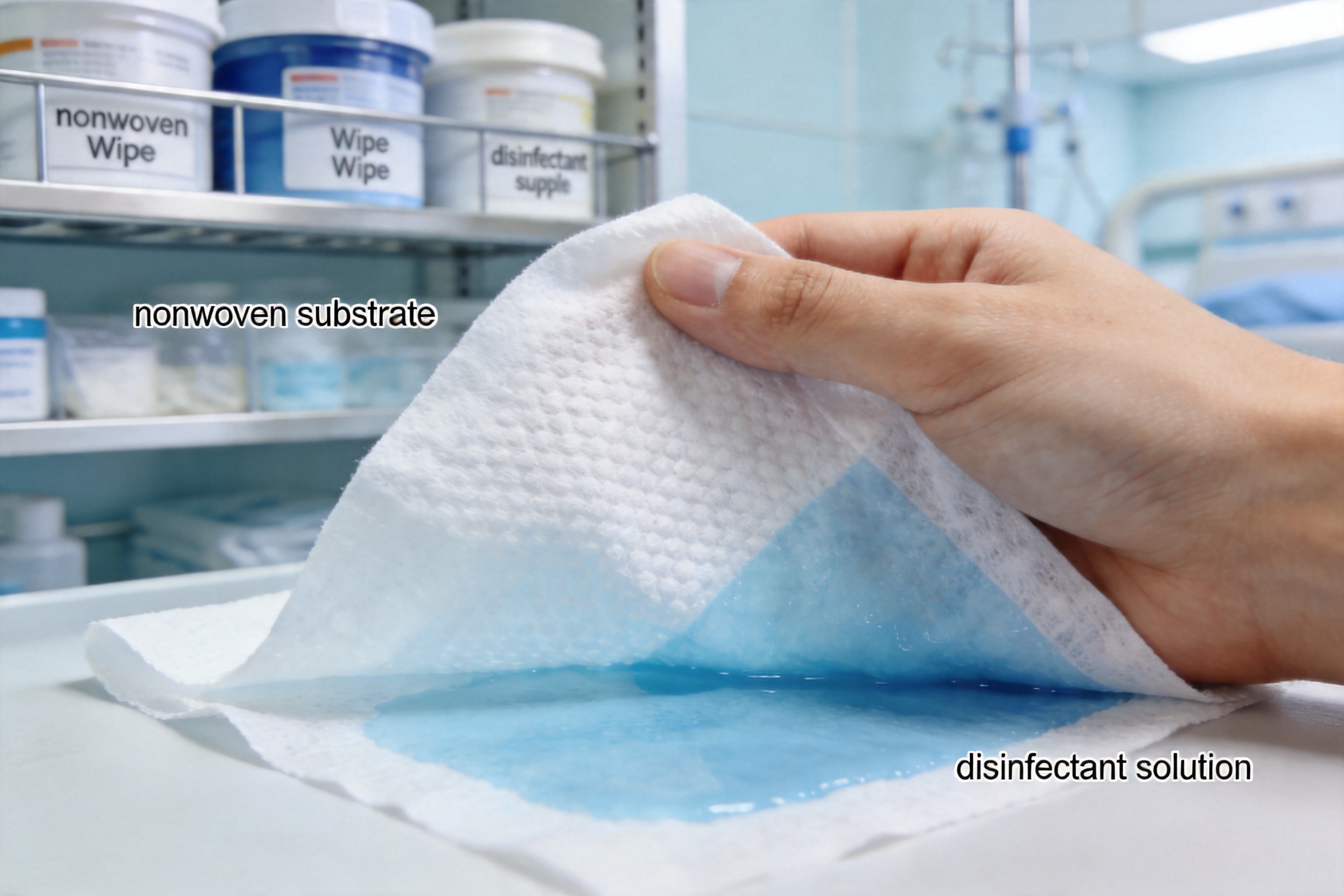
Medical antibacterial wipes are disposable, pre-saturated cloths made from nonwoven materials that are used to clean and disinfect surfaces in healthcare environments. Unlike general-purpose cleaning wipes, these products are regulated as medical devices (in many regions) and must meet strict efficacy and safety standards. Their primary function is to reduce the number of viable microorganisms on surfaces to levels that prevent the spread of HAIs.
Key components of a high-quality medical antibacterial wipe include:
- Nonwoven Substrate: The base material that holds the disinfectant solution. It must be strong, absorbent, and lint-free to ensure effective cleaning without leaving residues.
- Disinfectant Formulation: A solution of active ingredients (e.g., quaternary ammonium compounds, alcohol, biguanides) that kill or inactivate pathogens. The formulation must be stable, non-corrosive to surfaces, and safe for use in clinical settings.
- Packaging: Airtight, resealable packaging to maintain the integrity of the disinfectant solution and prevent contamination of unused wipes.
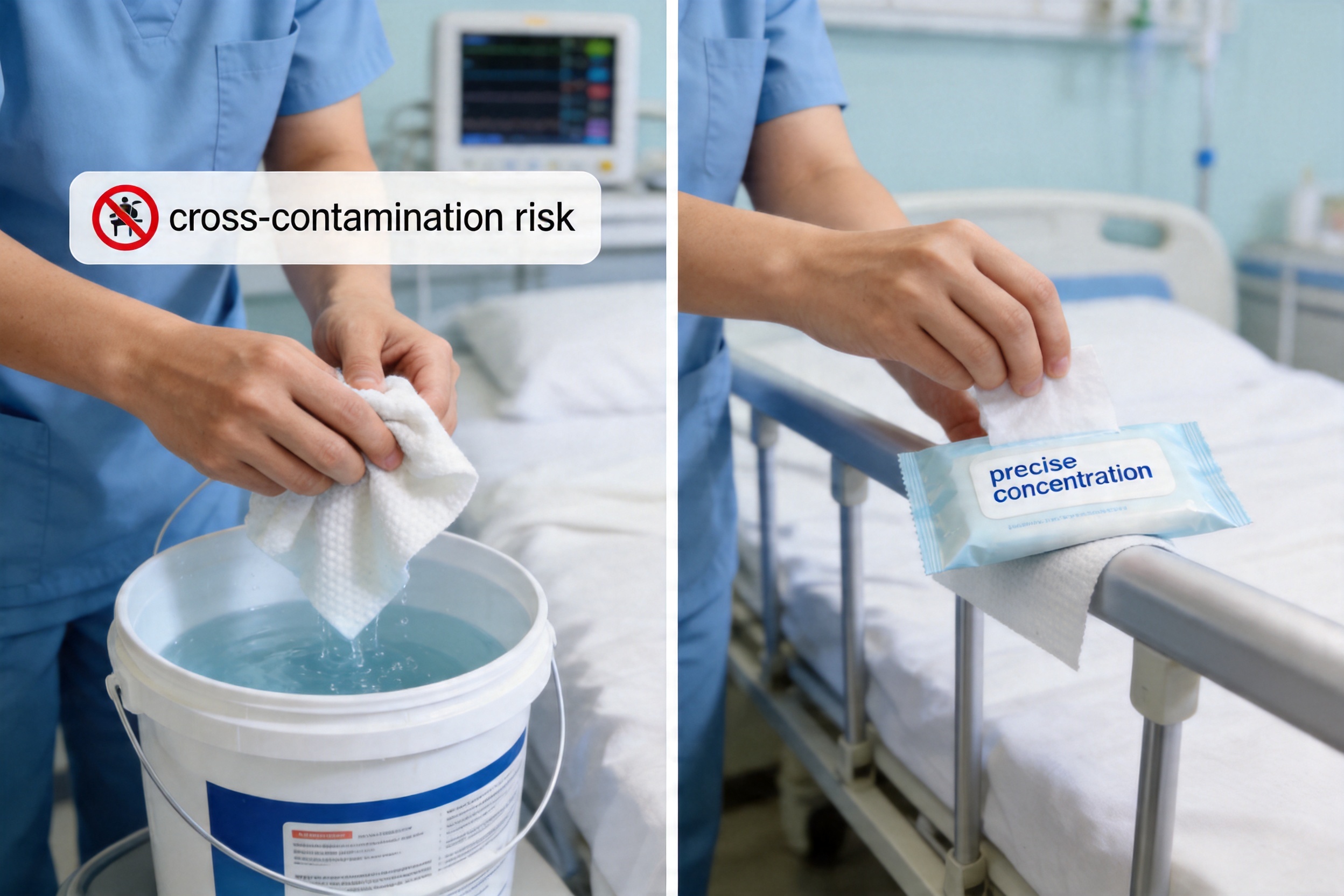
These wipes are designed for single-use, which eliminates the risk of cross-contamination associated with reusable cloths that are often soaked in shared disinfectant solutions. Additionally, their pre-saturated nature means there is no need for mixing or diluting, reducing the chance of incorrect concentration— a common issue with liquid disinfectants that can lead to either ineffective disinfection or surface damage.
Key Advantages Over Competitors
Medical antibacterial wipes offer several distinct advantages over traditional disinfection methods and lower-quality alternatives. Let’s compare them to common competitors:
1. Superior to Liquid Disinfectants
Liquid disinfectants require manual mixing, which can lead to human error (e.g., incorrect dilution ratios). For example, a study by the CDC found that up to 30% of healthcare facilities use incorrectly diluted disinfectants, reducing their efficacy by up to 50%. Medical wipes eliminate this risk by being pre-saturated with the exact concentration of disinfectant needed. They also:
- Reduce cross-contamination: Single-use wipes mean no shared cloths that can spread pathogens between surfaces.
- Save time: No need to prepare solutions, clean reusable cloths, or rinse surfaces (depending on the formulation).
- Improve compliance: Healthcare workers are more likely to follow disinfection protocols when wipes are convenient and easy to use.
2. Better Than General-Purpose Cleaning Wipes
General-purpose wipes are not designed for clinical use and often lack the efficacy to kill pathogens like MRSA (methicillin-resistant Staphylococcus aureus) or norovirus. Medical antibacterial wipes, by contrast:
- Meet strict regulatory standards (e.g., ISO 13485, FDA clearance in the U.S., CE marking in the EU).
- Contain higher concentrations of active ingredients tailored to healthcare pathogens.
- Use durable nonwoven materials that can withstand heavy use without tearing or shedding lint.
3. More Efficient Than Reusable Cloths
Reusable cloths are a major source of cross-contamination in healthcare settings. A 2022 study published in the Journal of Hospital Infection found that reusable cloths can harbor up to 10^6 colony-forming units (CFU) of bacteria per square centimeter, even after washing. Medical wipes:
- Are single-use, so each wipe is fresh and free of pathogens.
- Do not require washing, which saves water and energy and reduces the risk of recontamination during laundering.
- Are pre-saturated, so there is no need to soak cloths in disinfectant solutions that can become contaminated over time.
4. Customizable to Specific Needs
Unlike one-size-fits-all alternatives, high-quality medical antibacterial wipes can be customized to meet the unique needs of different healthcare settings. For example:
- Neonatal units may require unscented, hypoallergenic wipes made from soft materials like cotton or lyocell.
- Operating rooms may need large, heavy-duty wipes with fast-acting alcohol formulations for quick surface disinfection.
- Dental clinics may prefer wipes with quaternary ammonium compounds that are non-corrosive to dental equipment.
Manufacturing Excellence: Behind the Scenes
The quality of medical antibacterial wipes depends on the manufacturing process, from raw material selection to final packaging. Leading manufacturers invest in advanced equipment, strict quality control, and continuous innovation to ensure their products meet the highest standards. Here’s a look at the key steps in the manufacturing process:
1. Raw Material Selection
The nonwoven substrate is the foundation of any high-quality wipe. Leading manufacturers use a range of premium materials, each with unique properties:
- Polyester: Durable, lint-free, and resistant to chemicals. Ideal for heavy-duty cleaning tasks.
- Viscose: Highly absorbent and soft. Made from natural cellulose, it is biodegradable in some cases.
- Bamboo: Eco-friendly, antibacterial, and soft. A sustainable alternative to synthetic materials.
- Lyocell: Made from wood pulp, it is biodegradable and has excellent strength and absorbency.
- Cotton: Hypoallergenic and soft. Ideal for sensitive areas like neonatal units.
All raw materials are tested for purity, strength, and compliance with medical device standards before being used in production.
2. Advanced Manufacturing Technologies
Leading manufacturers use state-of-the-art equipment imported from Germany, France, and Italy to produce nonwoven substrates. Key technologies include:
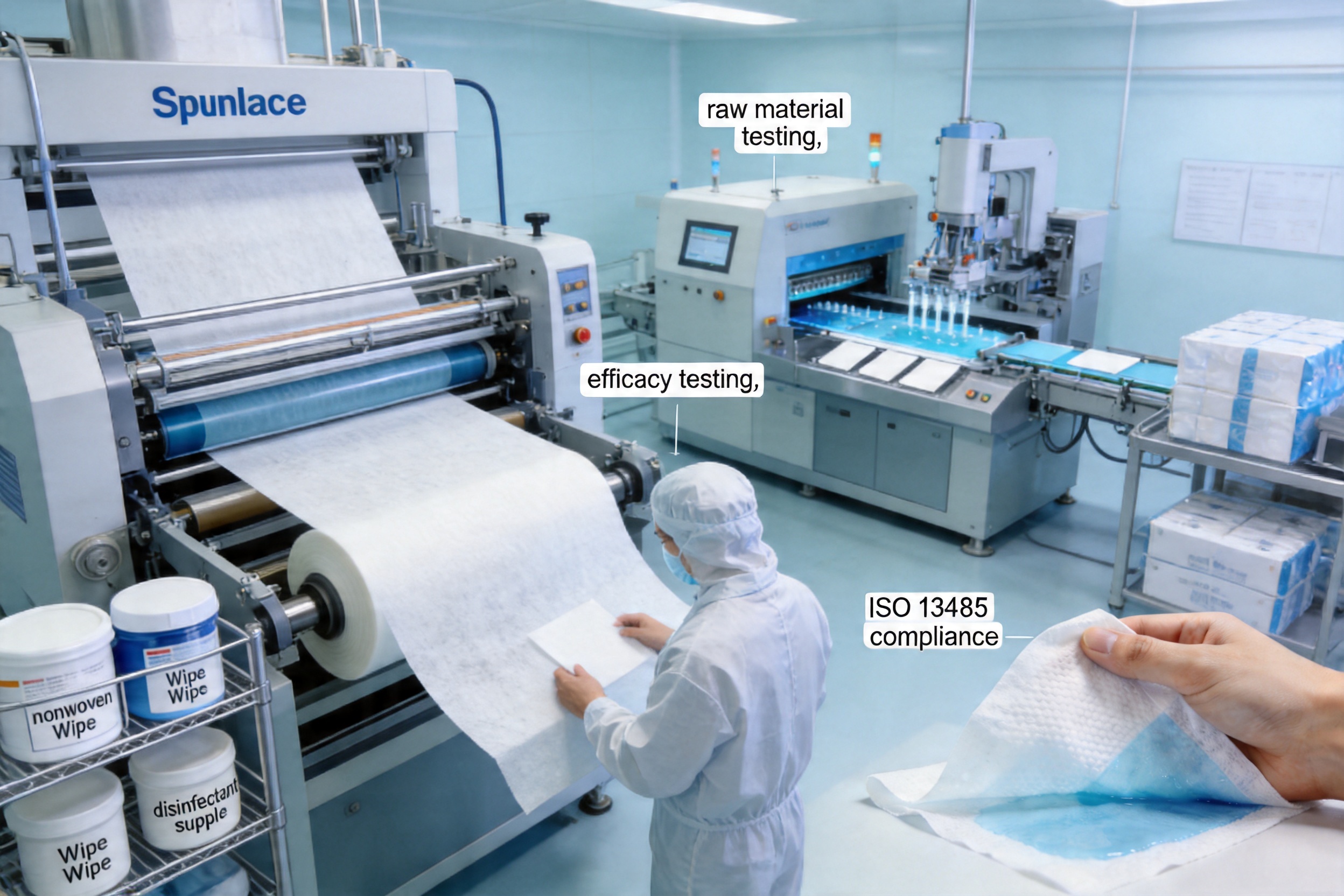
- Spunlace: A process that uses high-pressure water jets to entangle fibers, creating a strong, soft, and absorbent nonwoven fabric. This technology is ideal for wipes that need to be durable and lint-free.
- Spunmelt: Combines spunbond and meltblown technologies to create a fabric with excellent barrier properties. Used for wipes that need to protect against liquid splashes.
- Hot Air Through: Uses hot air to bond fibers, creating a lightweight, soft fabric with good absorbency. Ideal for general-purpose wipes.
After the nonwoven substrate is produced, it is cut into the desired size and shape. The disinfectant formulation is then applied in a controlled environment to ensure even saturation. This step is critical—too little solution can reduce efficacy, while too much can leave residues on surfaces.
3. Rigorous Quality Control
Quality control is an ongoing process throughout manufacturing. Key steps include:
- Raw Material Testing: Each batch of raw materials is tested for purity, strength, and compliance with regulatory standards.
- In-Line Inspections: Automated sensors and human inspectors check the substrate for defects (e.g., tears, uneven saturation) during production.
- Efficacy Testing: Finished wipes are tested against standard pathogens (e.g., E. coli, Staph aureus, Candida albicans) to ensure they meet or exceed regulatory requirements for disinfection.
- Stability Testing: Wipes are stored under different conditions (e.g., temperature, humidity) to ensure the disinfectant formulation remains effective over the product’s shelf life.
Leading manufacturers also adhere to strict regulatory standards, such as ISO 13485 (medical device quality management systems) and CE marking, to ensure their products are safe and effective for clinical use.
Detailed Specifications & Customization
High-quality medical antibacterial wipes offer a wide range of specifications to meet the needs of different healthcare settings. Below is a table summarizing the key specifications and customization options:
| Specification | Options | Application Notes |
|---|---|---|
| Pieces per Package | 1–200 pcs (bulk or individual packs) | Bulk packs for high-traffic areas (e.g., ICUs); individual packs for outpatient clinics or home healthcare. |
| Material | Polyester, Viscose, Bamboo, Lyocell, Cotton | Bamboo/Lyocell for eco-friendly options; Cotton for hypoallergenic needs; Polyester for heavy-duty use. |
| Technology | Parallel, Semi-cross | Semi-cross for better strength and absorbency; Parallel for softer, more flexible wipes. |
| Grams per Square Meter (gsm) | 30–100 gsm | 30–50 gsm for general use; 60–100 gsm for heavy-duty cleaning (e.g., operating tables). |
| Size | Width: 12–22 cm; Length:12–30 cm | 15x20 cm for dental chairs; 20x30 cm for operating tables; 12x12 cm for small equipment (e.g., stethoscopes). |
| Fragrance | Unscented, Fresh, Lavender, Lemon, Lotus, Fruit, Coconut, Cucumber | Unscented for neonatal units or sensitive areas; scented for areas needing fresh odor control (e.g., treatment rooms). |
| Pattern | Plain, Mesh, Dot Embossed, Flower, Stars | Mesh for better absorbency; Dot Embossed for increased friction (better cleaning); Plain for smooth surfaces. |
| Formulation | Quaternary Ammonium, Alcohol, Biguanide, Chlorine-Containing, Compound | Quaternary Ammonium for general use; Alcohol for fast disinfection; Chlorine-Containing for spore control. |
Customization options extend beyond these specifications. Manufacturers can also add functional additives to the wipes, such as:
- Antistatic agents: To prevent dust accumulation on electronic equipment (e.g., ventilators).
- Moisturizers: To prevent skin irritation if the wipe comes into contact with hands (though medical wipes are not intended for skin use).
- UV inhibitors: To protect the nonwoven substrate from degradation when exposed to sunlight.
For example, a hospital specializing in neonatal care might request unscented wipes made from cotton (30 gsm, 12x12 cm) with a quaternary ammonium formulation. A dental clinic might prefer mesh wipes (50 gsm,15x20 cm) with a non-corrosive quaternary ammonium formulation and a fresh fragrance.
Broad Applications in Healthcare Settings
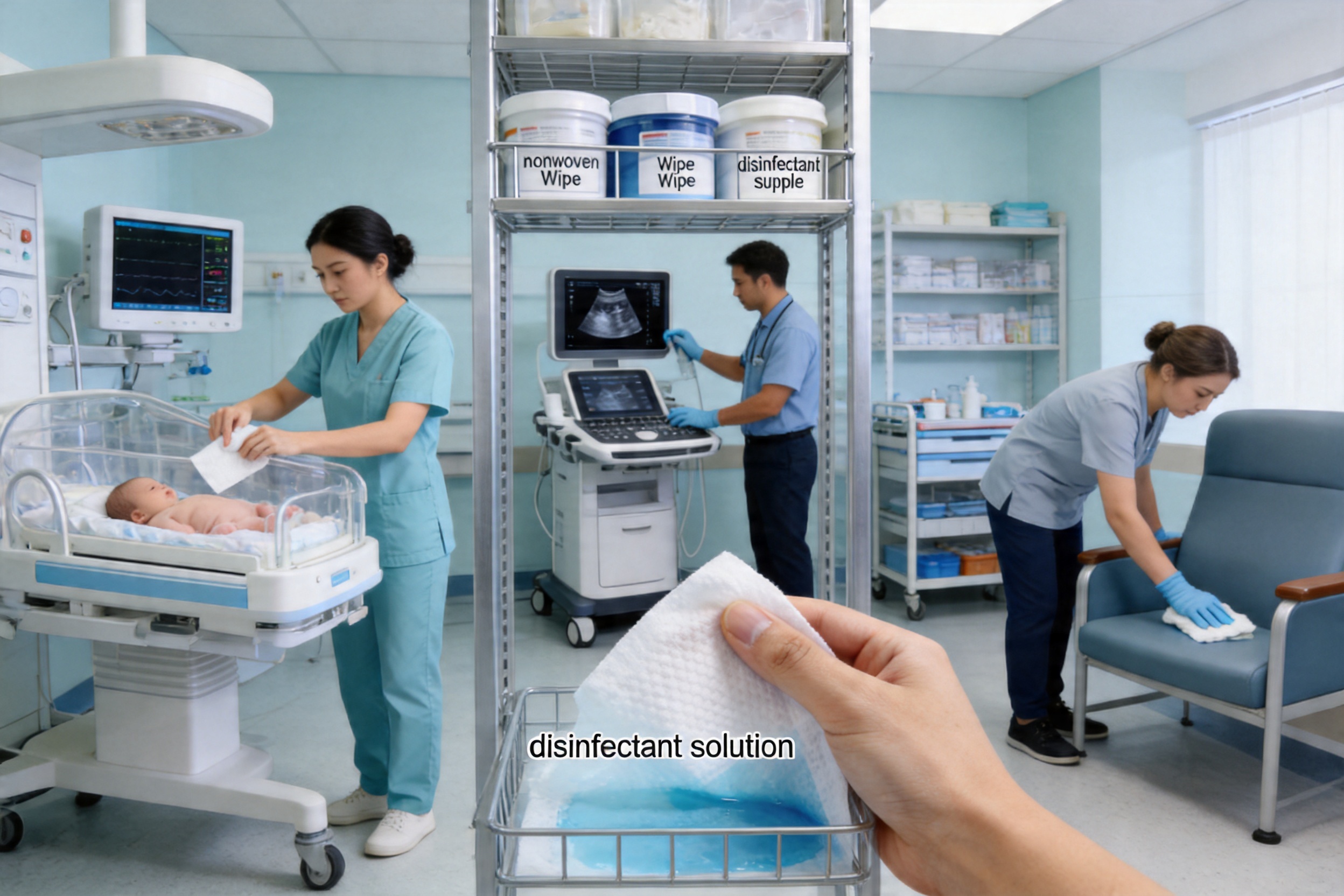
Medical antibacterial wipes are versatile tools that can be used in almost every area of a healthcare facility. Below are the key applications, as outlined by clinical guidelines:
1. Critical Care Areas (ICU, Neonatal ICU, Burn Ward, Hemodialysis Center)
Critical care areas are high-risk for HAIs due to the presence of immunocompromised patients and multi-drug resistant organisms (MDROs). Medical wipes are used to disinfect:
- Bedside surfaces and bed units (e.g., bed rails, overbed tables).
- Patient monitors, ventilators, and other critical care equipment.
- Neonatal incubators and hyperbaric oxygen chambers (gentle, non-irritating formulations).
For example, in a hemodialysis center, wipes are used to disinfect dialysis machines between patients to prevent the spread of bloodborne pathogens like hepatitis B and C.
2. Ward Treatment Rooms
Treatment rooms are used for procedures like wound care and injections. Wipes are used to disinfect:
- Treatment carts and trays.
- Countertops and other surfaces where supplies are stored.
- Equipment like syringes, needles, and bandage scissors (before use).
3. Diagnostic Equipment
Diagnostic equipment (e.g., X-ray machines, ultrasound scanners, dental chairs) can harbor pathogens if not disinfected properly. Wipes are used to disinfect:
- External surfaces of equipment (e.g., control panels, handles).
- Dental chair surfaces (e.g., headrests, armrests) between patients.
- Endoscope channels (though some equipment may require specialized disinfection methods).
4. Supply Room Packaging Surfaces
Supply rooms store sterile equipment and supplies. Wipes are used to disinfect packaging surfaces to prevent contamination of sterile items before use.
5. Post-Surgery Surfaces
After surgery, operating rooms and recovery areas are disinfected to prevent surgical site infections (SSIs). Wipes are used to disinfect:
- Operating tables and instrument trays.
- Surrounding work surfaces and equipment.
- Recovery room beds and monitors.
6. General Surfaces
Medical wipes are also used to disinfect general surfaces throughout the facility, including:
- Door handles and light switches.
- Telephones and computer keyboards.
- Waiting room chairs and tables.
Different Formulations & Their Target Uses
The efficacy of medical antibacterial wipes depends on the disinfectant formulation used. Different formulations target different pathogens and are suitable for different surfaces. Below are the most common formulations:
1. Quaternary Ammonium Compounds (Quats)
Quats are the most widely used formulation in medical antibacterial wipes. They are:
- Broad-spectrum: Effective against bacteria, viruses, and fungi (including MDROs like MRSA and VRE).
- Non-corrosive: Safe for use on most surfaces (e.g., plastic, metal, glass).
- Stable: Have a long shelf life and do not degrade easily.
- Fast-acting: Typically disinfect in 1–2 minutes.
Quat-based wipes are ideal for general use in healthcare settings, including ICUs, treatment rooms, and general surfaces. They are also non-irritating to most people, making them suitable for use in areas with sensitive patients (e.g., neonatal units).
2. Alcohol-Based Formulations
Alcohol (usually 70% isopropyl or ethyl alcohol) is a fast-acting disinfectant. It is:
- Effective against bacteria, viruses (including COVID-19), and fungi.
- Fast-acting: Disinfects in 30–60 seconds.
- Evaporates quickly: Leaves no residue on surfaces.
Alcohol-based wipes are ideal for quick disinfection of high-touch surfaces (e.g., door handles, stethoscopes) and equipment that needs to be used immediately. However, they can be corrosive to some plastics and metals, so they should be used with caution on sensitive equipment.
3. Biguanide Formulations
Biguanides (e.g., chlorhexidine gluconate) are:
- Broad-spectrum: Effective against bacteria, viruses, and fungi.
- Long-lasting: Remain effective for several hours after application.
- Gentle: Less irritating to skin than alcohol or quats.
Biguanide-based wipes are ideal for use on skin (though they are not intended for deep wound care) and surfaces that come into contact with sensitive skin (e.g., neonatal incubators). They are also used in oral care wipes for patients with dental infections.
4. Chlorine-Containing Formulations
Chlorine-containing formulations (e.g., sodium hypochlorite, bleach) are:
- Strong: Effective against spores (e.g., Clostridium difficile, which causes diarrhea).
- Broad-spectrum: Effective against bacteria, viruses, fungi, and spores.
Chlorine-based wipes are ideal for disinfecting surfaces contaminated with spores (e.g., in rooms of patients with C. difficile). However, they have a strong odor and can be corrosive to some surfaces (e.g., metal, fabric), so they should be used sparingly and rinsed if necessary.
5. Compound Formulations
Compound formulations combine two or more active ingredients to create a wipe with multiple benefits. For example:
- Quat + alcohol: Combines the broad-spectrum efficacy of quats with the fast-acting properties of alcohol.
- Quat + biguanide: Combines the long-lasting efficacy of biguanides with the non-corrosive properties of quats.
Compound wipes are ideal for settings that require both fast and long-lasting disinfection (e.g., operating rooms).
Q&A Section
Below are answers to common questions about medical antibacterial wipes:
Q1: How do medical antibacterial wipes differ from regular cleaning wipes?
A: Regular cleaning wipes are designed to remove dirt and dust, but they do not meet the strict efficacy standards required for healthcare settings. Medical antibacterial wipes are regulated as medical devices and must kill a broad spectrum of pathogens (including MDROs) to prevent HAIs. They also use higher-quality nonwoven materials and disinfectant formulations that are safe for clinical use.
Q2: Are medical antibacterial wipes safe for sensitive equipment (e.g., ventilators, ultrasound scanners)?
A: Yes, if the correct formulation is used. For example, quat-based wipes are non-corrosive and safe for most electronic equipment. Alcohol-based wipes can be used on some equipment, but they should be tested on a small, inconspicuous area first to ensure they do not damage the surface. Leading manufacturers provide compatibility guides for their wipes to help healthcare providers choose the right product for their equipment.
Q3: Can medical antibacterial wipes be customized for specific healthcare settings?
A: Yes. Leading manufacturers offer a wide range of customization options, including material (e.g., cotton for hypoallergenic needs), size (e.g., 20x30 cm for operating tables), formulation (e.g., quat for general use), and fragrance (e.g., unscented for neonatal units). Customization ensures that the wipes meet the unique needs of each facility.
Q4: How long do medical antibacterial wipes take to disinfect surfaces?
A: The disinfection time depends on the formulation. Quat-based wipes typically take 1–2 minutes, alcohol-based wipes take 30–60 seconds, and chlorine-based wipes take 5–10 minutes. It is important to follow the product instructions and allow the wipe to remain on the surface for the required contact time to ensure effective disinfection.
Q5: Are medical antibacterial wipes eco-friendly?
A: Some medical antibacterial wipes are eco-friendly. For example, wipes made from bamboo or lyocell are biodegradable. Additionally, single-use wipes reduce water waste from washing reusable cloths and eliminate the need for chemical disinfectants that can pollute the environment. Leading manufacturers are also investing in sustainable packaging (e.g., recyclable plastic) to reduce their environmental impact.
Q6: Do medical antibacterial wipes leave residues on surfaces?
A: High-quality medical antibacterial wipes are designed to leave no visible residues on surfaces. This is important because residues can attract dust and pathogens, reducing the effectiveness of subsequent disinfection. Leading manufacturers test their wipes for residue formation to ensure they meet regulatory standards.
Q7: Are medical antibacterial wipes effective against COVID-19?
A: Yes, if the wipe contains an EPA-registered (in the U.S.) or CE-marked (in the EU) disinfectant formulation that is effective against coronaviruses. Alcohol-based wipes (70%+) and quat-based wipes are both effective against COVID-19. It is important to check the product label to ensure it is registered for use against coronaviruses.
Conclusion
Medical antibacterial wipes are an essential tool in the fight against healthcare-associated infections. Their convenience, efficacy, and customization options make them a superior choice over traditional liquid disinfectants and reusable cloths. Leading manufacturers invest in advanced manufacturing processes, strict quality control, and continuous innovation to ensure their wipes meet the highest standards of safety and effectiveness.
As healthcare facilities continue to prioritize infection control, the demand for high-quality medical antibacterial wipes will only grow. By choosing the right formulation and customization options, healthcare providers can ensure that their facilities are clean, safe, and compliant with regulatory standards.
References
1. World Health Organization (WHO). (2020). Guidelines on Environmental Cleaning in Healthcare Facilities. Geneva: WHO Press.
2. Centers for Disease Control and Prevention (CDC). (2021). Surface Disinfection for Healthcare Settings. Atlanta: CDC.
3. International Nonwovens & Disposables Association (INDA). (2023). Global Nonwovens Market Report: Medical & Hygiene Segment. Raleigh: INDA.
4. ISO 13485:2016. Medical devices – Quality management systems – Requirements for regulatory purposes. Geneva: International Organization for Standardization.
5. European Centre for Disease Prevention and Control (ECDC). (2022). Prevention of Healthcare-Associated Infections (HAIs) Through Environmental Cleaning. Stockholm: ECDC.
6. Journal of Hospital Infection. (2022). "Cross-Contamination Risk of Reusable Cloths in Healthcare Settings." Vol. 123, pp. 45–52.
7. U.S. Environmental Protection Agency (EPA). (2023). "List N: Disinfectants for Use Against SARS-CoV-2." Washington, D.C.: EPA.