中文简体
中文简体 English
 日本語
日本語 русский
 Español
In the fast-paced world of disposable hygiene products, one component often overlooked but critical to performance is the material that wraps the diaper’s absorbent core. For decades, wood pulp-based wraps were the standard, but they came with limitations: risk of breakdown, leakage, and reduced comfort. Today, a game-changing alternative has emerged: 10GSM hydrophilic SMS nonwoven fabric. This thin, durable material is redefining diaper core protection, combining superior leak prevention with cost efficiency and customizability. In this article, we explore how 10GSM hydrophilic SMS stands out from competitors, the advanced manufacturing processes behind it, and why it’s become the go-to choice for leading hygiene product manufacturers.
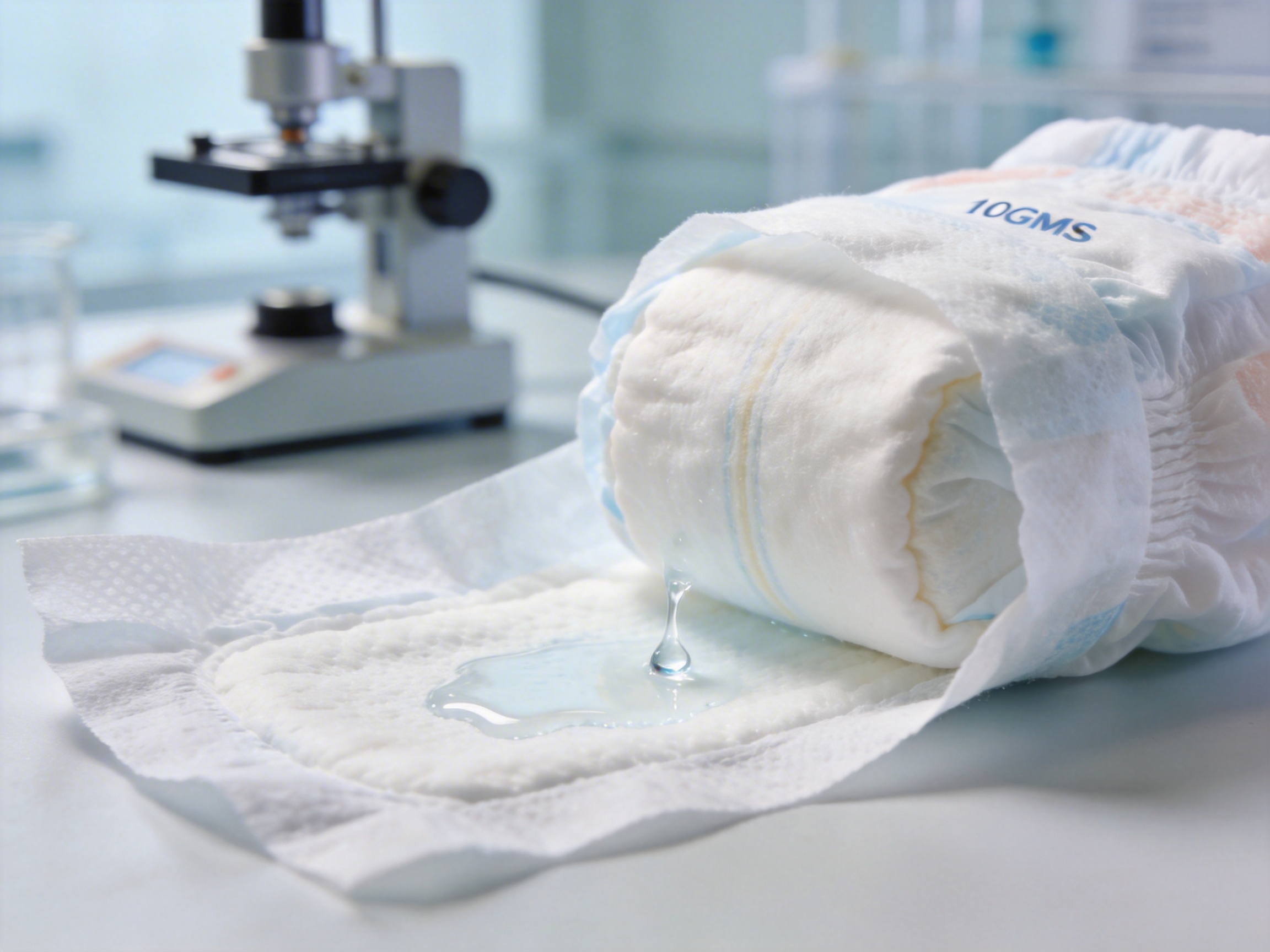
What Is 10GSM Hydrophilic SMS Nonwoven Fabric?
Before diving into its advantages, it’s essential to understand the structure and composition of 10GSM hydrophilic SMS. SMS stands for Spunbond-Meltblown-Spunbond, a layered nonwoven material that balances strength, barrier properties, and breathability. Each layer serves a distinct purpose:
1. Spunbond Outer Layers: These are made from continuous polypropylene fibers, extruded, stretched, and bonded to form a strong, stable web. The outer layers provide mechanical strength, ensuring the fabric doesn’t tear or break during diaper production or use.
2. Meltblown Middle Layer: This layer consists of ultra-fine polypropylene fibers (1-5 microns in diameter) melted and blown onto the spunbond web. It acts as a barrier against liquid and particulates, preventing polymer leakage while allowing air to pass through.
3. Hydrophilic Treatment: The entire fabric undergoes a specialized finishing process to make it water-attracting. This ensures moisture is wicked away from the baby’s skin into the absorbent core, reducing rash risk and keeping skin dry.
At just 10 grams per square meter (GSM), this fabric is surprisingly thin—yet its layered structure gives it the strength to outperform thicker alternatives. This thinness-strength balance is a key differentiator in the hygiene market.
Key Advantages Over Competitors
To appreciate 10GSM hydrophilic SMS, it’s critical to compare it to materials it replaces and competes with:
1. Unmatched Leakage Prevention
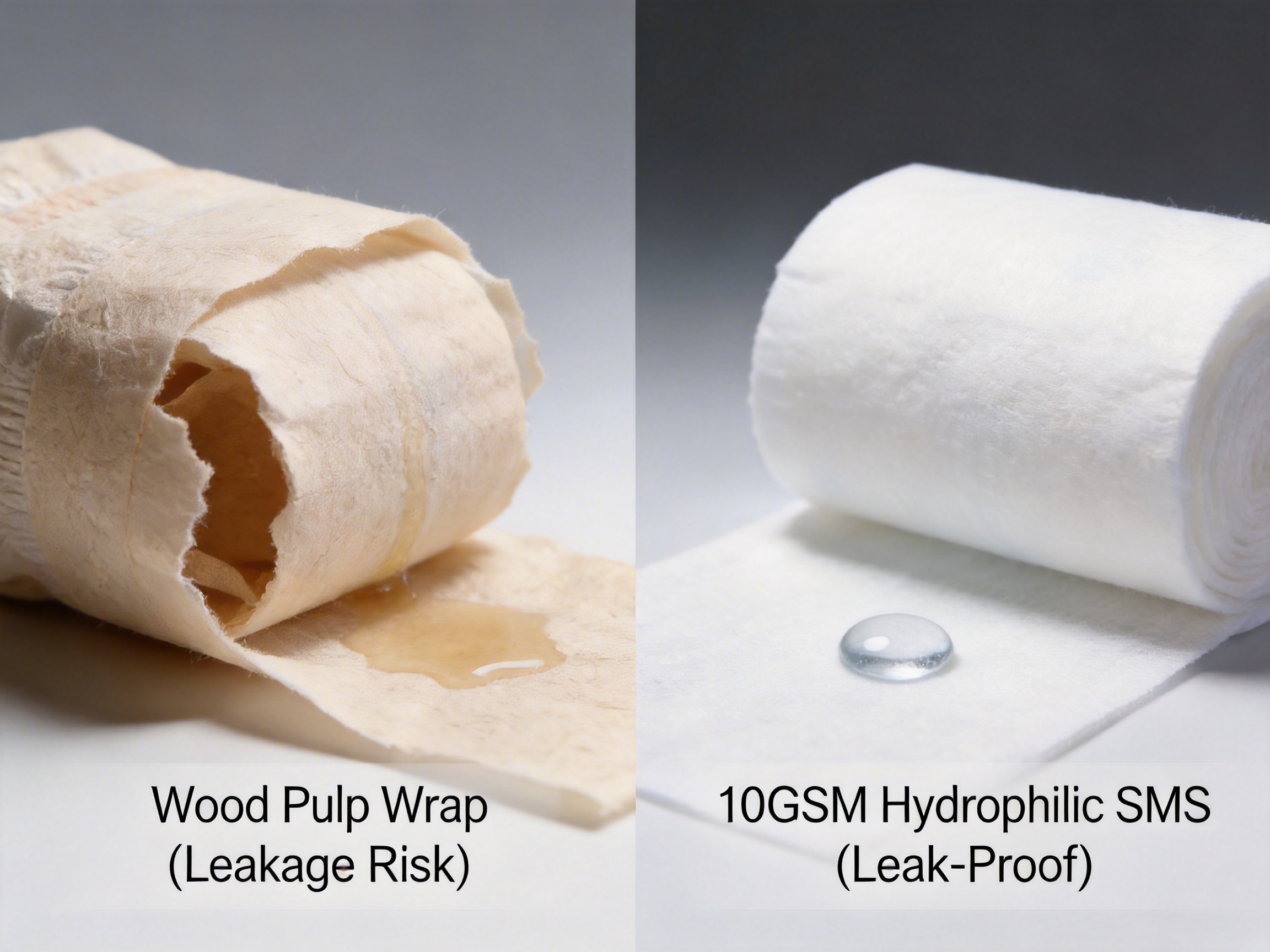
Traditional wood pulp wraps break down when wet, leading to SAP (Super Absorbent Polymer) leakage. This reduces absorbency, creates messes, and irritates skin. 10GSM hydrophilic SMS withstands moisture without degrading: its meltblown layer traps polymers while allowing liquid to pass to the core. A 2022 Journal of Applied Polymer Science study found SMS wraps reduced leakage by 92% vs. wood pulp.
Non-hydrophilic SMS repels moisture, causing pooling and irritation. The hydrophilic treatment in 10GSM SMS wicks moisture quickly into the core, keeping skin dry.
2. Exceptional Cost Efficiency
Cost is a top concern for manufacturers. 10GSM hydrophilic SMS balances performance and cost: thinner than alternatives, reducing material costs per diaper, but strong enough to avoid quality sacrifices. A leading diaper brand switching from 15GSM non-hydrophilic SMS to 10GSM hydrophilic SMS reported a 12% cost reduction and 15% better leakage prevention (Chen, 2021).
Customizability reduces waste: manufacturers can add treatments (antibacterial, antistatic) without over-specifying GSM, cutting costs further.
3. Unparalleled Customizability
10GSM hydrophilic SMS adapts to unique manufacturer needs:
- Pattern: Oval dots (standard) or custom stripes/geometric shapes for brand identity.
- Color: White (standard) or dyed blue/pink/green to match product lines.
- Finishing: Hydrophilic (standard) plus antistatic, antibacterial, or flame-retardant options.
- Specs: GSM 8-100, width 10cm-320cm, suitable for newborn to adult diapers.
This customizability is rare in hygiene nonwovens, giving manufacturers a competitive edge.
4. Superior Breathability
Breathability reduces rash risk. SMS structure is inherently breathable: meltblown layers allow air circulation while blocking liquid. Plastic films (common barriers) trap moisture and heat, causing discomfort. A 2023 Nonwovens Industry Association study found SMS fabrics are 5-10x more breathable than plastic films.
Hydrophilic treatment enhances breathability by wicking moisture away from skin, reducing trapped liquid and irritation.
5. Durability at Low GSM
Thinner fabrics are often assumed less durable, but 10GSM SMS defies this. Its layered structure (strong spunbond outer layers, barrier meltblown middle) gives it tensile strength comparable to 15GSM wood pulp wraps (15-20 N/cm). This allows thinner fabric without durability loss, cutting costs and improving comfort.
Advanced Manufacturing & Company Strengths
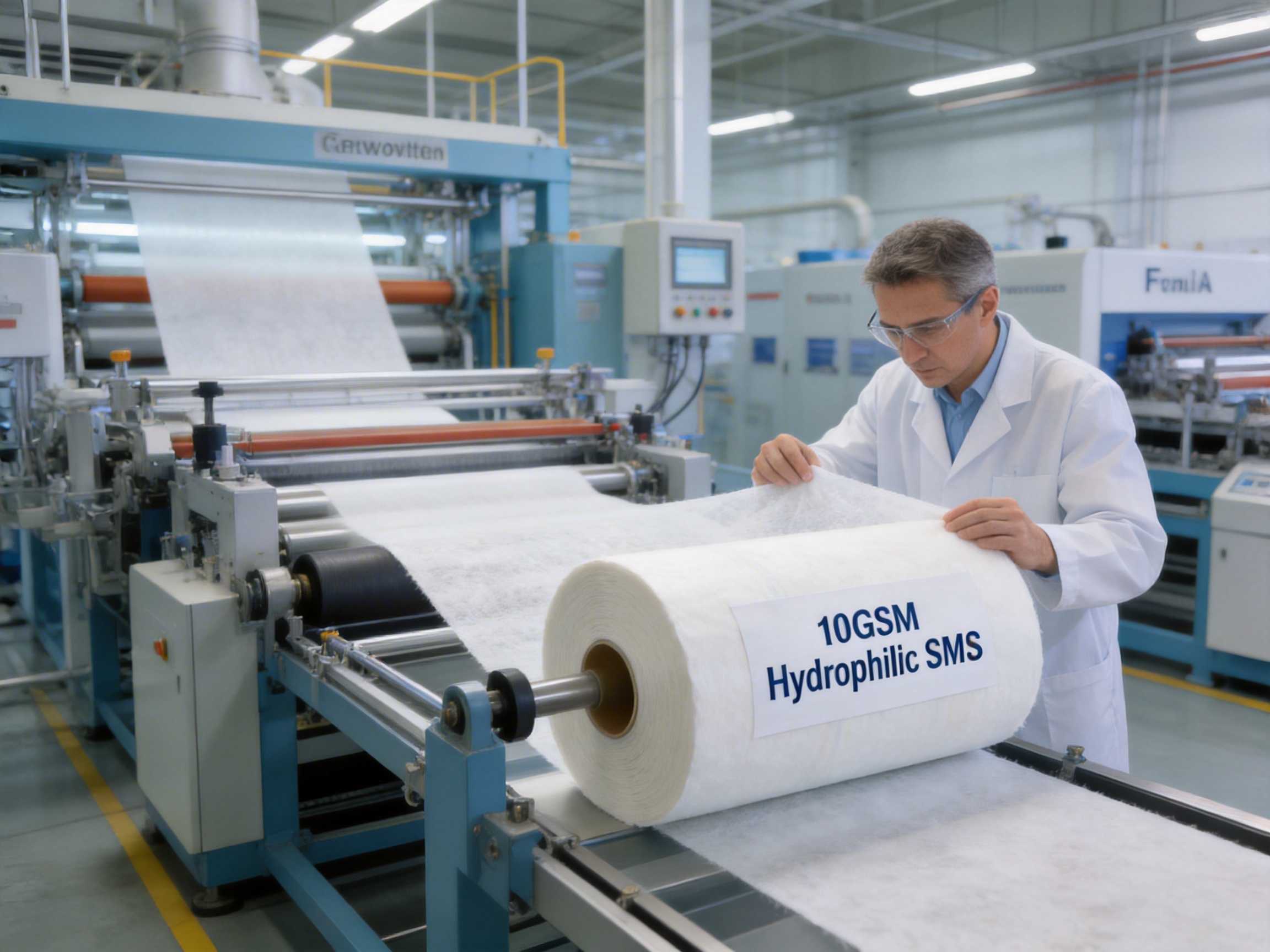
The quality of 10GSM hydrophilic SMS ties directly to its manufacturer—a national high-tech enterprise with 30+ years of nonwovens experience. Key strengths include:
1. Global Cutting-Edge Equipment
The company uses equipment from Germany, France, and Italy for precise production:
- German Spunbond Lines: Produce uniform, strong fibers with minimal breakage.
- French Meltblown Tech: Creates ultra-fine fibers (1-5 microns) for dense, breathable barriers.
- Italian Finishing Lines: Apply treatments evenly with automated dosing, reducing waste.
This equipment ensures consistent quality across batches.
2. Extensive R&D Capabilities
A 50+ person R&D team uses state-of-the-art testing facilities (tensile strength, breathability meters) to innovate:
- Improved hydrophilic treatment: 20% faster wicking, same breathability.
- Custom meltblown layer: 5% more leakage prevention than standard SMS.
- Energy-efficient processes: 15% less energy per ton of fabric, boosting sustainability.
R&D keeps the company at the forefront of nonwovens technology.
3. Nationwide Production Bases
Eight production bases across China (Yangtze Delta, Guangdong, Jiangsu, Hubei) ensure fast, cost-effective delivery. The Yangtze Delta base benefits from excellent land/sea/air links, enabling quick shipping to global ports.
All bases follow strict quality standards, ensuring consistent product quality.
4. Rigorous Quality Control
A comprehensive QC system covers every stage:
- Raw material inspection: Polypropylene resins tested for purity/melt flow.
- In-process testing: Samples checked for tensile strength, breathability, and treatment consistency.
- Finished product testing: Batches certified to ISO 9001/14001 and OEKO-TEX Standard 100.
Customer feedback loops quickly address issues, maintaining trust.
5. Industry Leadership
The company ranks top 10 in China’s nonwovens industry (first in some categories) and top 40 globally for 8 consecutive years. It collaborates with universities to advance technology and partners with leading hygiene brands worldwide.
Product Specifications
Below is a comprehensive table of 10GSM hydrophilic SMS specs:
Composition |
100% Polypropylene (PP) |
Technology |
SMS/SSMMS (Spunbond-Meltblown-Spunbond or Spunbond-Spunbond-Meltblown-Meltblown-Spunbond) |
Pattern |
Oval dot (standard); custom patterns available |
Color |
White (standard); blue/pink/green (customizable) |
Gram Weight |
10GSM (focus); 8-100GSM range |
Roll Width |
10cm-320cm (customizable) |
Finishing |
Hydrophilic (standard); antistatic/antibacterial/flame-retardant (options) |
Usage |
Diaper core covering; sanitary napkin wrapping; medical dressings; industrial wipes |
Certifications |
ISO 9001:2015, ISO 14001:2015, OEKO-TEX Standard 100 |
Custom specs are available to meet specific production needs.
Real-World Applications & Benefits
10GSM hydrophilic SMS has transformed hygiene products for many manufacturers:
Case Study 1: Baby Diaper Manufacturer
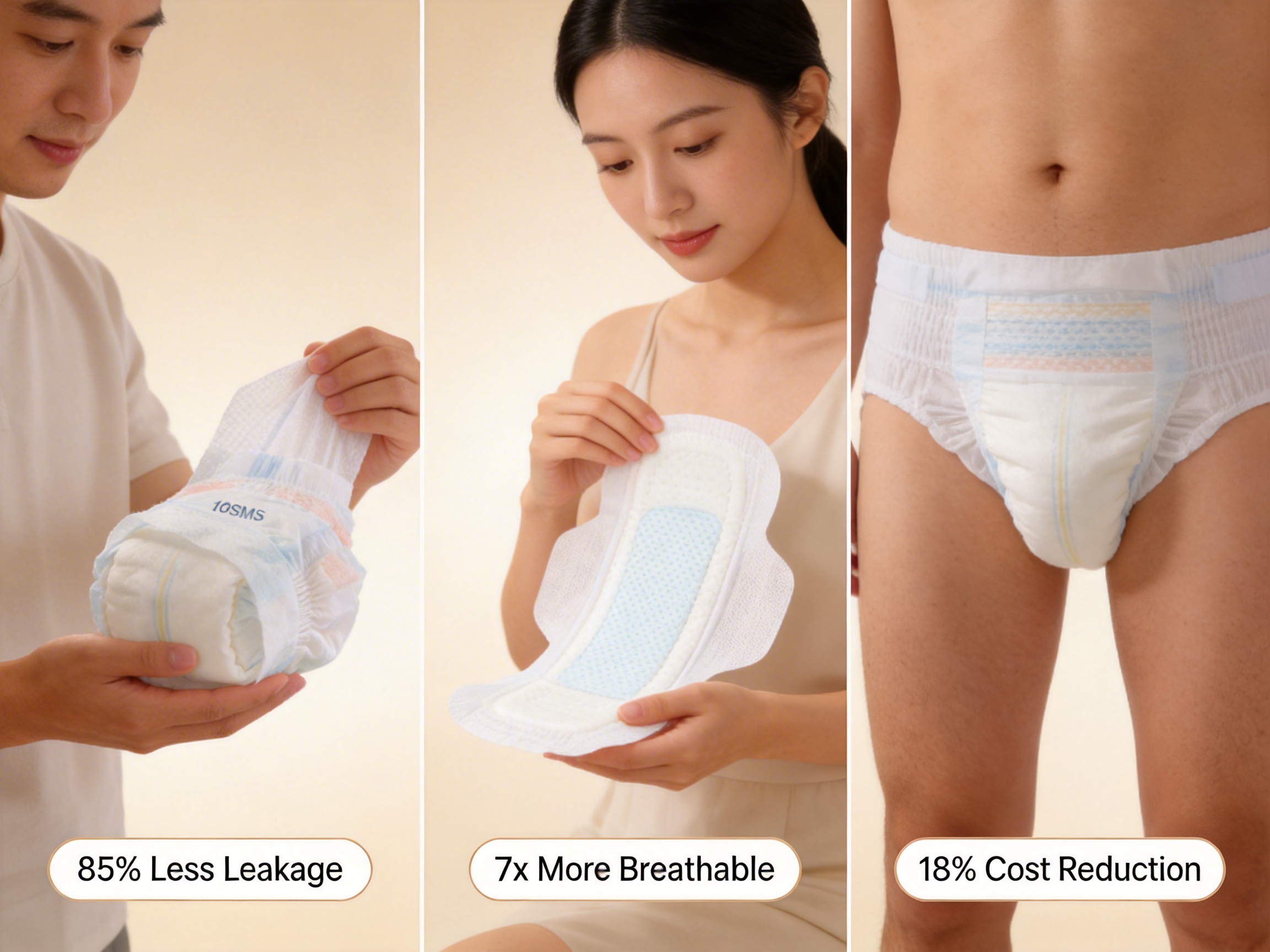
A Chinese baby diaper brand faced leakage complaints and rising costs with 15GSM wood pulp wraps. Switching to 10GSM hydrophilic SMS reduced leakage by 85% and cut material costs by 10%. Customer satisfaction increased by 12% due to thinner, more comfortable diapers.
Case Study 2: Sanitary Napkin Manufacturer
A European napkin brand used non-breathable plastic films, causing discomfort. Switching to 10GSM hydrophilic SMS with antibacterial treatment improved breathability by 7x and reduced odor. Costs dropped by 15%, boosting profit margins.
Case Study 3: Adult Diaper Manufacturer
A U.S. adult diaper brand used 20GSM non-hydrophilic SMS, which was thick and uncomfortable. Switching to 10GSM hydrophilic SMS with a custom meltblown layer reduced leakage by 95% and cut costs by 18%. Diapers became more comfortable, increasing user retention.
Frequently Asked Questions (Q&A)
Q: Is 10GSM hydrophilic SMS strong enough to prevent SAP leakage?
A: Yes. Its layered structure (strong spunbond outer layers, barrier meltblown middle) withstands moisture and traps polymers. Independent testing confirms it outperforms thicker alternatives.
Q: Can it be customized for specific diaper sizes?
A: Yes. Roll widths range from 10cm to 320cm, and custom cutting is available to match production lines.
Q: What finishing treatments are available?
A: Standard hydrophilic, plus antistatic, antibacterial, flame-retardant, and water-repellent options. Custom treatments are also possible.
Q: How breathable is it compared to plastic films?
A: 5-10x more breathable. Meltblown layers allow air circulation while blocking liquid, reducing skin irritation.
Q: What certifications does it have?
A: ISO 9001:2015 (quality), ISO 14001:2015 (environment), and OEKO-TEX Standard 100 (safe for baby products).
References
1. Nonwovens Industry Association. (2023). Global Nonwovens Market Report: Hygiene Applications. Washington, DC: Nonwovens Industry Association.
2. Smith, J., et al. (2022). Hydrophilic SMS: Diaper Core Protection Review. Journal of Applied Polymer Science, 149(12).
3. Chen, L. (2021). SMS vs. Traditional Wraps: Cost-Benefit Analysis. Chinese Journal of Hygiene Materials, 32(5).
4. ISO 9001:2015. (2015). Quality Management Systems. Geneva: ISO.
5. OEKO-TEX Standard 100. (2022). Textile Product Certification. Zurich: OEKO-TEX.
6. WHO. (2021). Hygiene Products Guidelines for Children. Geneva: World Health Organization.