中文简体
中文简体 English
 日本語
日本語 русский
 Español
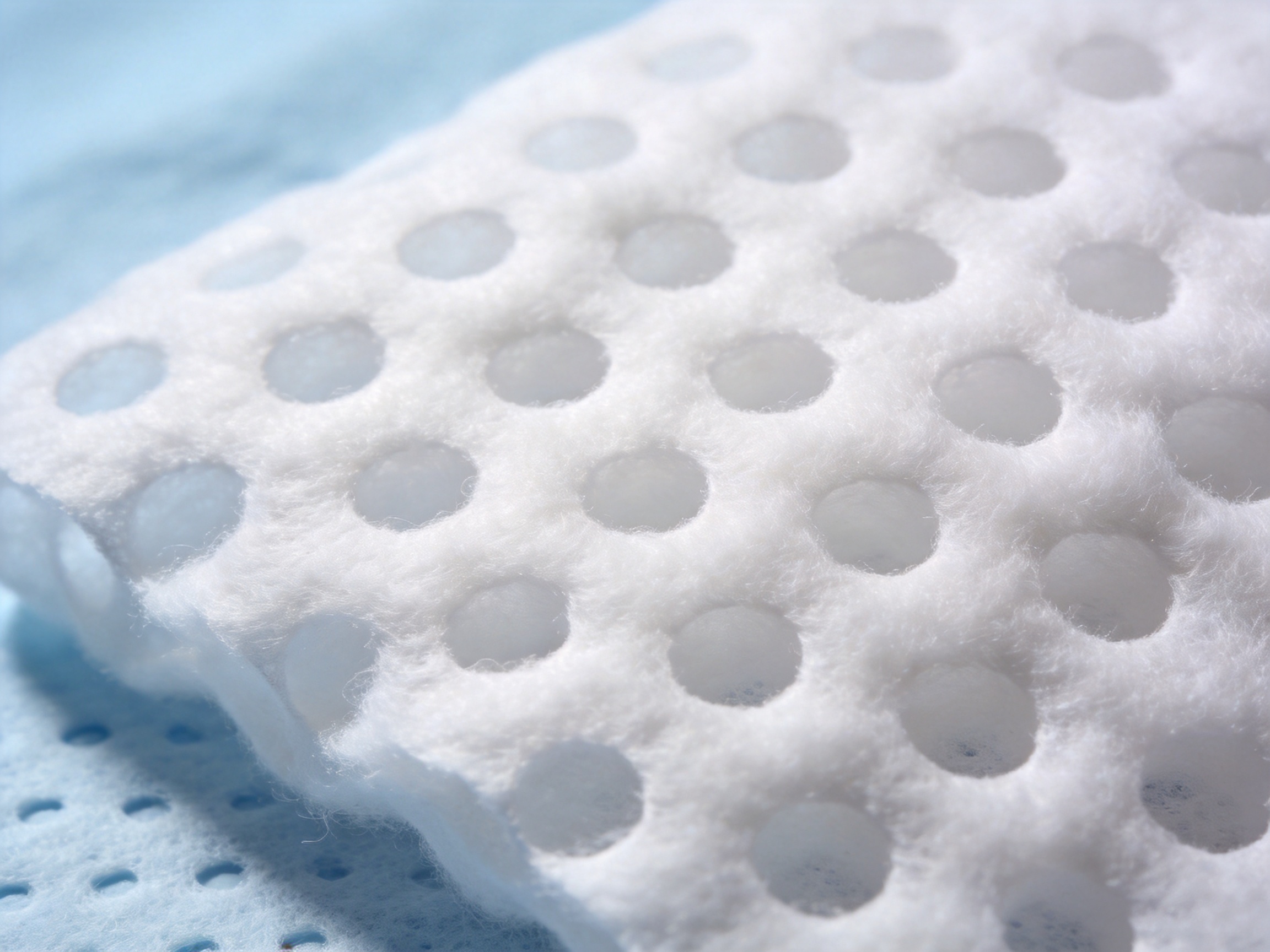
Modern hygiene products are judged not only by absorbency, but also by the first sensation they create when they touch the skin. A diaper, sanitary napkin, pant-style absorbent product, or care pad must feel soft, dry, breathable, clean, and premium from the first contact. Hole type hydrophilic hot air-through nonwoven fabric is designed for this exact purpose. Used as a topsheet material for diapers, sanitary napkins, and related hygiene products, it combines soft hand feel, controlled liquid permeability, attractive visual texture, and customizable performance in one advanced surface-layer solution.
Unlike ordinary spunbond hydrophilic topsheet materials, hot air-through nonwoven fabric is produced by bonding thermoplastic fibers with heated air rather than by heavy mechanical or thermal point bonding alone. This gives the material a fluffy, cushion-like structure and a gentle touch that is especially valuable for baby care and feminine care products. When the fabric is further enhanced with a hole pattern, the topsheet gains improved visual appeal, better fluid guidance, and a stronger premium-product identity.
For manufacturers seeking differentiation in a competitive hygiene market, the choice of topsheet is strategic. A well-designed topsheet can influence user comfort, rewet performance, fluid acquisition, brand perception, and repeat purchase. Hole type hydrophilic hot air-through nonwoven fabric helps hygiene brands create products that look refined, feel softer, and perform more reliably in direct skin-contact applications.
Product Overview
Hole type hydrophilic hot air-through nonwoven fabric is a functional surface material mainly used for the topsheet of baby diapers, adult diapers, sanitary napkins, pant liners, and other absorbent hygiene products. Its composition is typically ES fiber, which may be PP/PE or PET/PE bicomponent fiber. The low-melting PE component enables the fibers to bond through controlled hot air treatment, while the PP or PET component supports structure, resilience, and dimensional stability.
The fabric is white as standard, with gram weight available from 16 g to 60 g and roll width from 10 cm to 320 cm. These ranges make the material suitable for different converting lines, from narrow sanitary napkin production to wider diaper or underpad production. The pattern is hole type and can be customized according to product positioning, liquid penetration requirements, and visual design preferences.
Hydrophilic finishing is one of the most important features. A topsheet must accept and transfer liquid quickly into the absorbent core rather than allowing liquid to remain on the surface. Through hydrophilic treatment, the hot air-through fabric becomes suitable for rapid fluid intake while maintaining the soft and breathable characteristics expected from a premium hygiene material. Additional finishing options can include antistatic, antibacterial, and other functional treatments depending on customer needs.
Item |
Specification |
Product Value |
Composition |
ES fiber, PP/PE or PET/PE |
Soft bonding, stable structure, and skin-friendly touch |
Technology |
Hot air-through bonding |
Fluffy texture, low harshness, and comfort-focused performance |
Pattern |
Hole type, customizable |
Improved appearance and enhanced premium perception |
Color |
White |
Clean visual effect suitable for hygiene products |
Gram Weight |
16 g to 60 g |
Flexible selection for diapers, napkins, and other absorbent items |
Roll Width |
10 cm to 320 cm |
Compatible with different converting requirements |
Finishing |
Hydrophilic, antistatic, antibacterial, and more |
Customized functional performance for target markets |
Usage |
Topsheet of diapers, sanitary napkins, and similar products |
Direct-contact layer for comfort, fluid intake, and appearance |
Why the Topsheet Matters in Hygiene Products
The topsheet is the first layer users see and feel. Although the absorbent core often receives the most technical attention, the topsheet plays a decisive role in user experience. If the surface feels rough, sticky, wet, hot, or synthetic, the entire product may be judged as low quality even if the absorbent core performs well. For baby diapers and sanitary napkins, comfort is not a decorative feature; it is a core performance requirement.
A hygiene topsheet must satisfy several requirements at the same time. It needs to be soft enough for delicate skin, open enough to allow fast liquid passage, stable enough to run smoothly on high-speed converting equipment, and visually appealing enough to support the product’s market positioning. It must also cooperate with acquisition layers, absorbent cores, adhesives, elastic components, and packaging processes. A failure in topsheet selection can lead to poor dryness, increased skin discomfort, low consumer satisfaction, and reduced brand competitiveness.
Hole type hydrophilic hot air-through nonwoven fabric addresses these requirements through structure and finishing. The hot air-through process creates a bulky, elastic web with a tender tactile response. The hydrophilic finish improves liquid transfer. The hole pattern supports functional and visual differentiation. Together, these features make it a strong choice for brands that want to move beyond basic topsheet materials and offer a more comfortable product.
Advantages Over Ordinary Spunbond Hydrophilic Materials
Ordinary spunbond hydrophilic nonwoven fabric is widely used in hygiene products because it is efficient, economical, and stable in mass production. However, when the target product is positioned as soft, premium, baby-friendly, or high-comfort, spunbond materials may have limitations. The thermal bonding points in many spunbond fabrics can create a flatter and sometimes firmer surface. Even when treated to become hydrophilic, the hand feel may not fully match the soft, airy sensation desired in high-end hygiene products.
Hot air-through nonwoven fabric offers a different tactile experience. Because the bonding is achieved by hot air activating the low-melting fiber sheath, the web can maintain more loft and softness. The surface is less board-like and more cushiony. This is particularly important in diapers and sanitary napkins, where the material remains in contact with skin for extended periods. A softer surface can reduce the perception of friction and improve overall comfort.
The hole type pattern further separates this material from ordinary flat topsheets. Holes create a three-dimensional visual effect, making the product look more refined and technically advanced. They can also support liquid movement by offering structured openings through which fluid can pass into the layers below. While the exact performance depends on hole geometry, fabric weight, finishing, and product design, the patterned hot air-through topsheet gives manufacturers more opportunities to fine-tune product function and appearance.
Another advantage is product grade perception. In retail and private label competition, small differences in surface appearance can influence buyer decisions. A diaper or napkin with a soft, hole-patterned topsheet often looks more premium than one with a plain, flat surface. Consumers may associate the pattern with breathability, dryness, and advanced design. This visual cue helps brands communicate quality before the product is even used.
Compared with many standard topsheet materials, this fabric also provides broad customization potential. Gram weight, roll width, hole type, hydrophilic level, and optional finishing functions can be adjusted to meet the needs of different markets. Manufacturers can develop economical versions for mass-market products or higher-weight, highly soft versions for premium lines. This flexibility allows one material platform to support multiple product tiers.
Material Science: The Role of ES Bicomponent Fiber
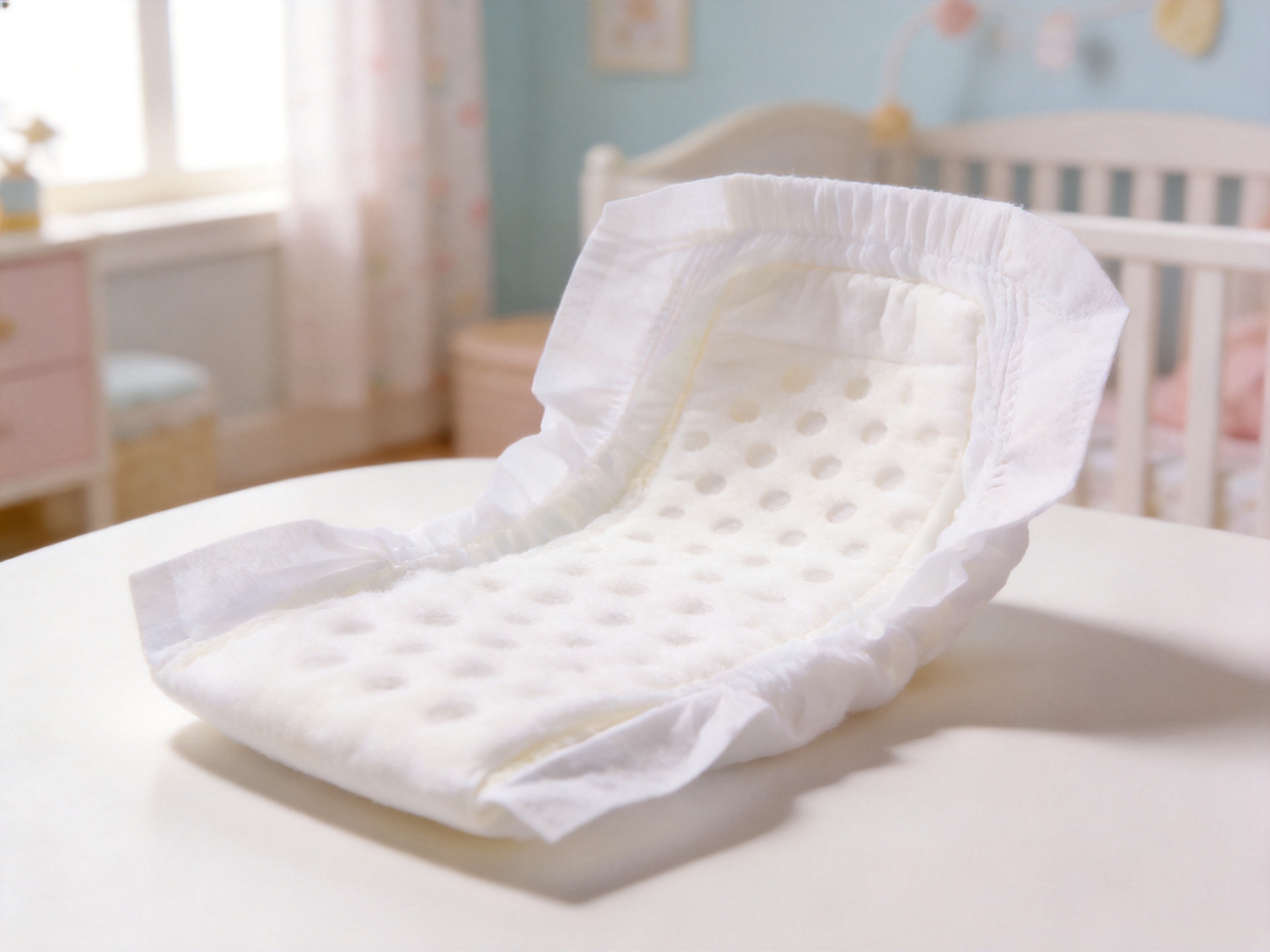
The performance of hot air-through nonwoven fabric begins with the fiber. ES fiber is commonly a bicomponent fiber formed from two polymers with different melting characteristics. Typical combinations include PP/PE and PET/PE. The PE component melts or softens at a lower temperature and acts as the bonding material, while the PP or PET component provides fiber body, strength, and resilience.
During hot air-through bonding, heated air passes through the fiber web and activates the lower-melting PE portion. The fibers bond at contact points while preserving the open and fluffy structure of the web. This differs from calender bonding, where pressure and heat can compress the material. Because less compression is applied, the resulting fabric can keep a softer bulk, better air permeability, and a more pleasant hand feel.
PP/PE ES fiber is often valued for its light weight, softness, and suitability for hygiene applications. PET/PE ES fiber can offer higher resilience and dimensional stability where needed. The choice depends on target performance, cost structure, converting conditions, and end-use requirements. A technically capable supplier can help customers select the appropriate fiber composition according to product goals.
Fiber fineness, fiber length, web uniformity, bonding temperature, air flow, and line speed all influence final fabric properties. A high-quality hot air-through nonwoven fabric requires consistent fiber distribution and controlled bonding. If the air temperature is too low, bonding may be insufficient and linting may increase. If it is too high, the fabric may become harsh, over-bonded, or dimensionally unstable. The best result comes from a carefully balanced process that provides strength without sacrificing softness.
Hot Air-Through Technology and Its Comfort Benefits
Hot air-through technology is especially suitable for hygiene topsheets because it supports softness, loft, and breathability. In this process, a formed fiber web passes through a hot air bonding system. Heated air penetrates the web evenly, allowing the low-melting component of ES fiber to bond the structure. Since the bonding is distributed throughout the web rather than concentrated only at hard points, the fabric can maintain a gentle and fluffy feel.
The comfort benefit is immediately noticeable. When a user touches a hot air-through topsheet, the surface tends to feel warm, soft, and less plasticky than many conventional nonwovens. This is important for baby diapers, because infant skin is delicate and caregivers pay close attention to texture. It is also important for sanitary napkins, where the topsheet must remain comfortable during movement and prolonged wear.
Breathability is another advantage. The open structure of hot air-through fabric allows air to pass through more easily than dense or heavily compressed materials. In absorbent hygiene products, breathable structures can help reduce stuffiness and improve the overall wearing experience. While the complete breathability of a finished diaper or napkin depends on all layers, the topsheet contributes to the surface comfort and perceived freshness of the product.
Hot air-through fabric also has good resilience. The material can recover to some extent after compression, helping the topsheet maintain a soft cushion-like feeling. In converting and packaging, absorbent products are compressed, stacked, and transported. A topsheet that can retain softness after compression helps maintain product quality from factory to consumer use.
Function of the Hole Type Pattern
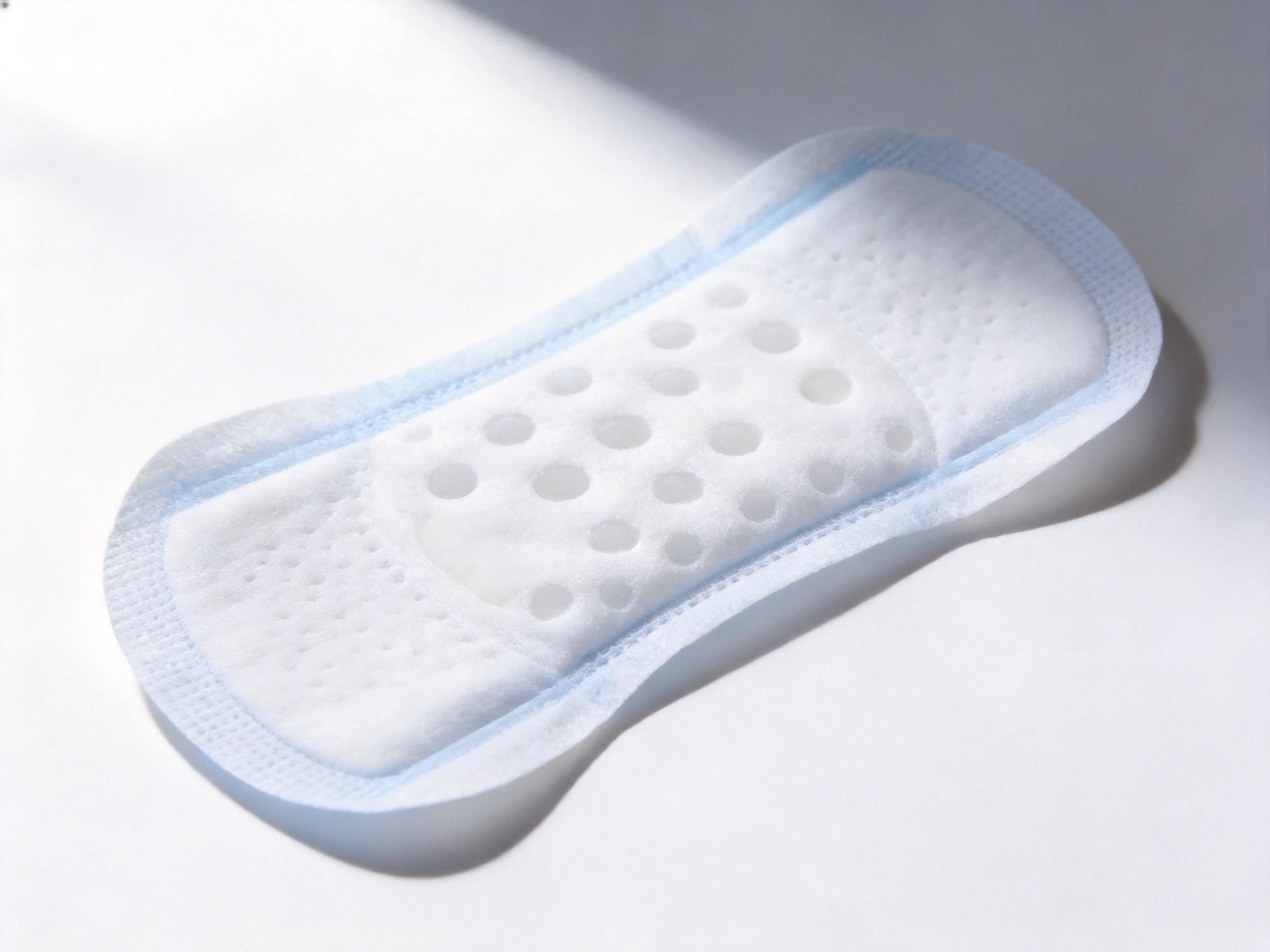
The hole type pattern is both decorative and functional. Visually, holes create a distinctive surface that can make the product look breathable, clean, and high grade. In a market where many hygiene products appear similar, this patterned texture helps brands stand out. It can be used to support premium claims, softness claims, quick absorption concepts, and modern product design.
Functionally, holes can assist fluid entry into the product. When liquid contacts the topsheet, the openings provide channels that may help guide fluid downward into the acquisition layer and absorbent core. This can support quicker surface clearing and contribute to a drier feel, especially when combined with proper hydrophilic finishing and a well-designed absorbent structure underneath.
The hole pattern can be customized. Different hole sizes, shapes, density, spacing, and arrangement can produce different visual and functional effects. A fine and delicate hole pattern may be selected for sanitary napkins where softness and elegance are important. A larger or more open pattern may be considered for diaper topsheets where liquid acquisition speed is a key concern. The ability to customize the pattern gives product developers more design freedom.
However, hole design must be balanced. If holes are too large or too dense, the fabric may lose strength or allow undesirable contact with the lower layer. If holes are too small or sparse, the visual and fluid-transfer benefits may be limited. Experienced manufacturing and technical teams are essential for finding the best balance among softness, strength, appearance, and liquid performance.
Hydrophilic Finishing for Faster Liquid Transfer
Hydrophilic finishing changes the surface behavior of the fibers so that liquid can spread and pass through more easily. Since many polymer fibers used in nonwovens are naturally hydrophobic, untreated fabric may resist wetting. For a topsheet, this would be unsuitable because liquid should not bead on the surface or remain against the skin. Hydrophilic treatment allows the topsheet to function as a quick-transfer layer.
The hydrophilic property must be stable and appropriate for the intended product. If the treatment is too weak, liquid penetration may be slow. If it is excessive or poorly controlled, it could affect surface dryness, rewet, or compatibility with other components. Professional finishing technology aims to achieve the right balance: fast intake, comfortable surface, and stable processing behavior.
In diapers, a hydrophilic topsheet helps urine pass rapidly into the acquisition distribution layer and absorbent core. In sanitary napkins, it helps menstrual fluid move through the surface without excessive spreading on top. In both applications, the user expects the product surface to feel dry and clean after liquid insult. The topsheet is the first stage in achieving that performance.
Optional finishing technologies, such as antistatic or antibacterial treatments, may be applied depending on product requirements and regulatory considerations. Antistatic treatment can improve handling and converting performance, especially in dry environments or high-speed production lines. Antibacterial finishing may be considered for certain product concepts, though it must be designed responsibly and supported by appropriate testing.
Manufacturing Process Strengths
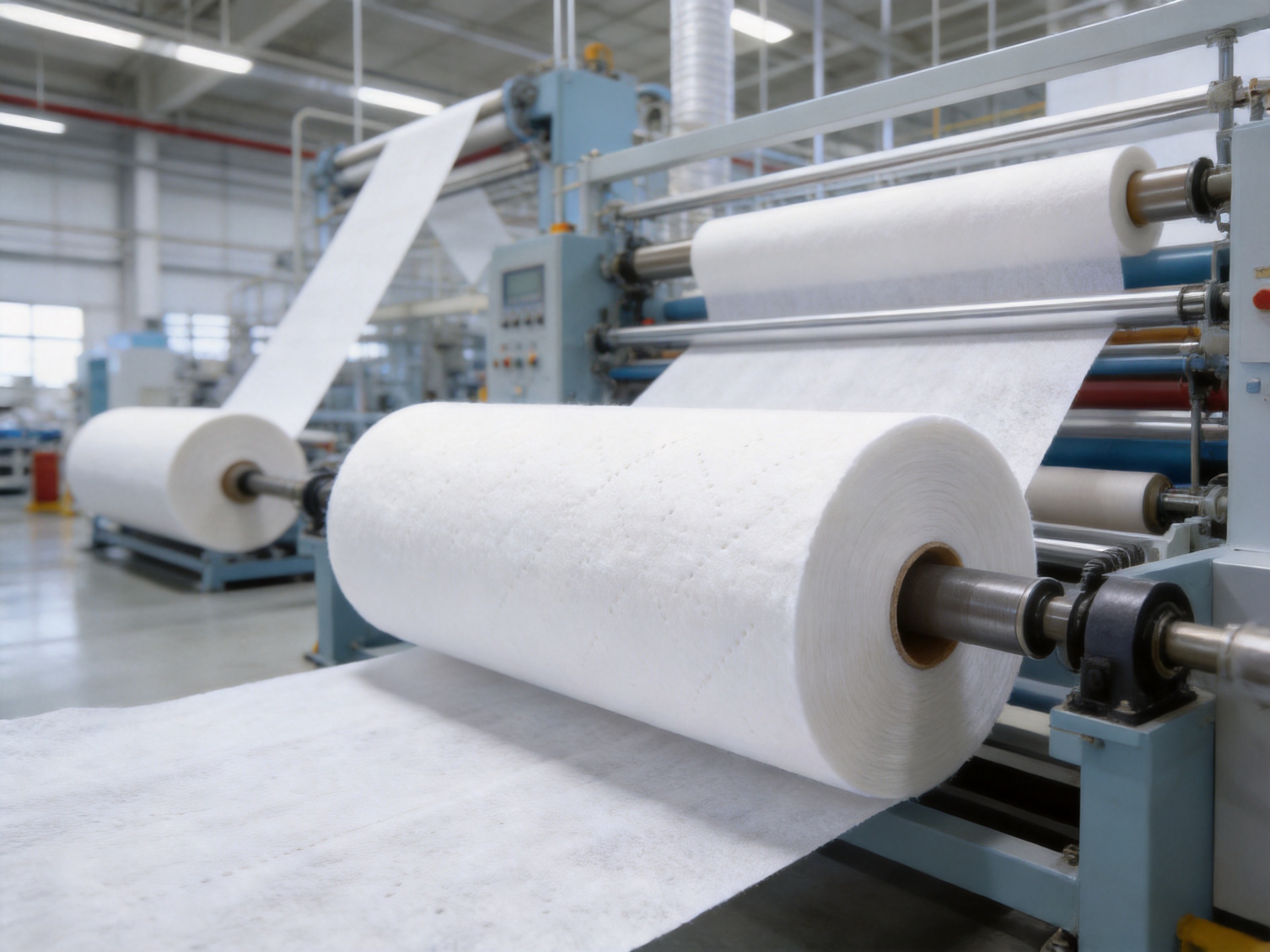
The production of high-quality hole type hydrophilic hot air-through nonwoven fabric requires more than basic equipment. It depends on fiber selection, opening and blending technology, web forming precision, hot air bonding control, pattern formation, finishing treatment, slitting accuracy, and quality inspection. Each stage affects the final performance of the material.
Fiber preparation is the foundation. ES fibers must be opened and distributed evenly so that the web has consistent thickness and weight. Uneven web formation can cause weak areas, visual defects, inconsistent liquid permeability, and converting problems. Advanced production lines use controlled feeding and web-forming systems to improve uniformity across the width and length of the roll.
During hot air bonding, temperature and air flow must be carefully managed. The objective is to bond the fibers sufficiently while preserving the soft, bulky structure. Over-bonding can make the fabric stiff, while under-bonding can reduce strength and increase lint. A stable hot air-through process produces fabric that is soft to the touch yet strong enough for hygiene converting lines.
The hole patterning process must create clean and uniform openings without damaging fabric integrity. The pattern must remain stable across the roll width and throughout long production runs. Consistency is essential because hygiene product converters require predictable material behavior at high speeds. Irregular patterning can lead to visual rejection, tension problems, or inconsistent performance in the finished product.
Finishing treatment must be applied uniformly. Hydrophilic performance should not vary from one area of the roll to another. If treatment is uneven, some parts of the topsheet may absorb quickly while others resist wetting. This can cause complaints in finished diapers or napkins. Reliable finishing technology ensures that the material performs consistently from the beginning to the end of the roll.
Slitting and winding are also important. Hygiene converters need rolls with accurate width, stable tension, neat edges, and clean winding. Poor winding can create wrinkles, telescoping, edge damage, or unwinding instability. A capable manufacturer understands that roll quality is part of product quality. The material must not only perform in the laboratory but also run smoothly on the customer’s production equipment.
Company Manufacturing Capability and Industrial Strength
Zhejiang Uniquality Nursing Products Technology Co., Ltd., supported by the long-term industrial foundation of Kingsafe and Uniquality, brings substantial manufacturing experience to the development of hygiene nonwoven materials. Founded in 1987, the company has grown through decades of specialization in medical and hygienic nonwoven materials, nursing products, and high-end clothing interlining. This background gives the company a broad understanding of fiber technology, nonwoven processing, hygiene product performance, and market requirements.
The company is headquartered in Changxing, Huzhou, within the Yangtze River Delta region, an area known for strong manufacturing infrastructure and convenient transportation. Efficient logistics are valuable for hygiene product supply chains because customers often need stable delivery schedules, flexible order planning, and reliable export capability. Production strength combined with location advantage supports timely service for both domestic and international customers.
After more than 30 years of development, the company has established multiple production bases in China, including locations in Guangdong, Jiangsu, and Hubei. This multi-base structure supports production capacity, supply stability, and regional service coverage. For customers purchasing nonwoven fabric or finished hygiene products, a strong manufacturing network helps reduce supply risk and improves the ability to respond to changing demand.
The company has introduced advanced production equipment and technology from Germany, France, and Italy. This international equipment background supports higher production precision, process stability, and quality consistency. In nonwoven manufacturing, advanced machinery is not merely a symbol of scale; it directly affects web uniformity, bonding quality, finishing accuracy, and roll presentation. These factors are especially important for hot air-through topsheet materials used on high-speed converting lines.
The broader product portfolio includes spunlace nonwoven fabrics, spunmelt nonwoven fabrics, hot air-through nonwoven fabrics, flushable and degradable nonwoven fabrics, wet wipes, dry wipes, baby diapers, pull-ups, wet toilet paper, cleansing wipes, and related products. This integrated industry experience is a competitive advantage. A company that understands both raw materials and finished hygiene products can design topsheet materials with real converting and user requirements in mind.
The company’s ability to meet differentiated, functional, and customized customer needs is particularly relevant for hole type hydrophilic hot air-through nonwoven fabric. Customers may require different weights, widths, hydrophilic levels, hole patterns, softness profiles, and performance targets. A supplier with strong research, development, and production coordination can support product development rather than simply providing standard material.
Advantages for Diaper Manufacturers
For baby diaper manufacturers, the topsheet must deliver softness, quick intake, skin comfort, and visual cleanliness. Caregivers often touch the inside surface of a diaper before purchase or use, and they quickly form an impression of quality. A soft hot air-through topsheet can help create a positive first impression and reinforce claims such as gentle touch, breathable comfort, and premium care.
Baby skin is sensitive, and the diaper surface remains in contact with the skin for long periods. A harsh or stiff topsheet may increase discomfort, especially when the baby moves. The fluffy structure of hot air-through nonwoven fabric helps reduce the hard surface feeling sometimes associated with flatter nonwoven materials. This comfort advantage can support the development of higher-end diaper products.
Hydrophilic performance is also crucial. A diaper topsheet must allow urine to pass rapidly into the absorbent core. Slow intake can leave liquid on the surface, causing discomfort and potentially increasing the risk of skin irritation. Hole type hydrophilic hot air-through fabric helps support fluid transfer through a combination of surface treatment and patterned openings.
The material can also improve product appearance. When caregivers open a diaper and see a clean white hole-patterned topsheet, they may perceive the product as more breathable and advanced. This perception matters in competitive retail environments and private label programs. A distinctive topsheet can help a diaper brand move away from commodity positioning.
For converting operations, roll width options from 10 cm to 320 cm provide flexibility. Different diaper designs, production lines, and cutting methods require different material widths. The ability to supply customized widths helps reduce waste, improve production efficiency, and match line requirements more closely.
Advantages for Sanitary Napkin Manufacturers
Sanitary napkins require a topsheet that balances softness, rapid intake, low surface wetness, and comfort during movement. Users are highly sensitive to surface feel because the product is worn close to the body and may be used for several hours. A rough, plastic-like, or overly dense topsheet can negatively affect product acceptance even if the absorbent core is technically strong.
Hole type hot air-through nonwoven fabric provides a soft, textile-like feel that can improve the wearing experience. The hole pattern adds a premium visual element and may help guide fluid downward. For sanitary napkins, this combination of softness and functional patterning is especially attractive because users often associate surface design with absorbency, breathability, and cleanliness.
White color gives a clean and hygienic appearance, while customizable patterns can support brand identity. A manufacturer may select a subtle hole pattern for a gentle care product or a more visible pattern for a product positioned around fast absorption. The topsheet design can therefore become part of the product’s marketing language.
Hydrophilic finishing helps the surface receive fluid quickly. In sanitary applications, controlled liquid transfer is important because fluid properties differ from urine. The topsheet, acquisition layer, absorbent core, and embossing design must work together. A customizable hot air-through topsheet gives product engineers more options for optimizing the complete napkin structure.
Customization for Market Differentiation
Customization is one of the strongest advantages of this product. Hygiene markets differ by region, price level, consumer expectation, product thickness, absorbency requirement, and brand style. A single standard topsheet cannot satisfy every need. Hole type hydrophilic hot air-through nonwoven fabric can be adjusted in several dimensions to support different product strategies.
Gram weight is an important customization factor. A lighter fabric may be suitable for cost-sensitive products or ultra-thin designs, while a heavier fabric may provide a more luxurious hand feel and stronger visual depth. With a range from 16 g to 60 g, manufacturers can choose a balance between softness, strength, fluid intake, and cost.
Roll width customization supports production efficiency. By matching the supplied width to the converter’s process, customers can reduce trimming loss and improve material utilization. This is especially important in large-scale hygiene manufacturing where even small waste reductions can create meaningful cost savings.
Pattern customization helps brand differentiation. Hole shape, size, spacing, and layout can be selected to align with product identity. A private label customer may want a clean and simple surface, while a premium brand may want a more distinctive pattern. The topsheet becomes part of the product’s visual signature.
Functional finishing customization can further enhance product positioning. Hydrophilic treatment is the core requirement for topsheet use, but antistatic, antibacterial, or other treatments may be considered depending on target performance. The best results come from close communication between material supplier and hygiene product manufacturer, supported by testing and trial production.
Quality Control and Performance Evaluation
Quality control for hygiene topsheet materials must cover both physical properties and functional performance. Basic checks may include gram weight, width, thickness, tensile strength, elongation, appearance, hole uniformity, roll winding quality, and contamination inspection. For hydrophilic topsheet materials, liquid strike-through and wetting behavior are also important.
Softness evaluation may include hand-feel assessment, bending resistance, surface smoothness, and comparison against target samples. Since softness is partly subjective, experienced evaluation teams often combine instrument testing with human sensory assessment. A premium topsheet must meet measurable requirements while also feeling comfortable to the touch.
Uniformity is a critical quality factor. If gram weight fluctuates significantly, the fabric may behave unpredictably during converting or in the finished product. If hole patterning is uneven, the final diaper or napkin may show visible defects. If hydrophilic treatment is inconsistent, fluid handling may vary. Strong process control reduces these risks.
Roll inspection is also essential. Hygiene product lines often run at high speed, and material defects can cause downtime. Clean roll edges, stable tension, accurate width, and proper winding density help customers run production smoothly. A supplier that pays attention to roll quality provides value beyond the fabric itself.
In addition, traceability supports quality management. Production batch records, raw material control, process parameters, and inspection data help identify and solve problems efficiently. For international customers and established hygiene brands, reliable documentation is an important part of supplier qualification.
Competitiveness in Private Label and OEM Hygiene Products
Private label and OEM hygiene product markets are highly competitive. Retailers and brand owners want products that meet consumer expectations while controlling cost. The topsheet is a practical place to create visible differentiation without redesigning the entire product. By selecting a hole type hydrophilic hot air-through topsheet, a private label product can achieve a more premium look and feel.
For OEM diaper and napkin projects, material selection must align with the target price point and performance promise. A basic product may prioritize cost and acceptable performance. A mid-range product may require better softness and appearance. A premium product may demand superior comfort, customized surface design, and enhanced functional finishing. The wide specification range of this fabric makes it suitable for multiple product levels.
The company’s experience in both nonwoven materials and finished products strengthens its OEM and ODM service capability. Understanding how the topsheet behaves in actual diapers, pull-ups, wipes, and care products helps the technical team recommend practical material solutions. This reduces development time and supports smoother commercialization.
For customers developing new hygiene products, supplier collaboration is valuable. The process may include sample selection, laboratory testing, pilot trials, converting line evaluation, performance comparison, packaging assessment, and final specification confirmation. A technically experienced manufacturer can support each stage and help customers avoid common material-selection problems.
Sustainability and Responsible Material Development
Sustainability is increasingly important in hygiene materials. While disposable hygiene products must first meet safety and performance requirements, manufacturers and consumers are paying more attention to efficient material use, responsible production, and product design that reduces unnecessary waste. A well-designed topsheet contributes to sustainability by achieving required performance at an optimized gram weight and by reducing defects during converting.
Hot air-through technology can support efficient bonding through the use of bicomponent fibers. Since the lower-melting PE component enables bonding without excessive compression, the material can achieve softness and structure efficiently. Optimized production reduces off-spec material and improves yield, which is an important environmental and economic benefit.
The company’s broader involvement in flushable and degradable nonwoven materials shows awareness of evolving market needs. Although the hole type hydrophilic hot air-through topsheet described here is primarily based on ES fiber, the same research and development mindset supports ongoing improvement in hygiene material design. Customers increasingly seek suppliers that can respond to future requirements in environmental performance, compliance, and innovation.
Responsible development also includes product safety and suitability for skin-contact applications. Materials used in diapers and sanitary napkins must be clean, stable, and manufactured under controlled conditions. Hygiene brands should work with suppliers capable of providing consistent quality, appropriate testing support, and transparent communication.
How to Select the Right Specification
Selecting the right topsheet specification begins with the end product. A newborn diaper, an adult diaper, an ultra-thin sanitary napkin, and a night-use napkin may all require different surface materials. Product engineers should consider target user, absorption volume, product thickness, softness level, acquisition speed, cost range, and converting process.
Gram weight should be selected according to the desired hand feel and structural requirement. Lighter weights may support thin and economical designs, while heavier weights may create a softer, more premium cushion. However, higher weight is not automatically better. It must be balanced with liquid transfer, drying performance, and cost.
Hole pattern should be selected based on both appearance and performance. If the product emphasizes fast intake, a more functional hole design may be preferred. If the product emphasizes elegance and skin comfort, a finer and more delicate pattern may be appropriate. Sampling and testing are recommended before final decision-making.
Hydrophilic level should match the absorbent system. A topsheet that is too slow may cause wet surface feeling, while a topsheet that interacts poorly with lower layers may create uneven liquid distribution. Testing should be performed with the actual acquisition layer and core structure rather than evaluating the topsheet alone.
Roll width and winding specifications should match converting equipment. Before mass production, customers should confirm machine speed, tension requirements, roll diameter limitations, unwinding direction, splicing needs, and storage conditions. Proper technical communication helps prevent production interruptions.
Storage, Handling, and Converting Recommendations
Like many hygiene nonwoven materials, hot air-through topsheet fabric should be stored in a clean, dry, and well-ventilated environment. It should be protected from direct sunlight, moisture, dust, and contamination. Since the material is intended for skin-contact hygiene products, storage hygiene is important.
Rolls should be handled carefully to avoid edge damage, compression marks, or deformation. Forklift handling, pallet stacking, and warehouse movement should be controlled. Damaged roll edges can create web breaks or tracking problems during converting. Good handling practices help preserve the value of the material.
Before production, rolls should be conditioned if there is a large temperature difference between warehouse and production area. Sudden environmental changes may affect static behavior or unwinding stability. Antistatic finishing can help in some cases, but process control remains important.
During converting, tension should be adjusted to suit the fabric’s structure. Excessive tension may stretch or distort the hole pattern, while insufficient tension may cause wrinkles. Trial runs are useful for determining the best settings. A cooperative supplier can provide guidance based on experience with similar applications.
Q&A Section
Q1: What is hole type hydrophilic hot air-through nonwoven fabric mainly used for?
It is mainly used as the topsheet or surface layer of baby diapers, sanitary napkins, adult hygiene products, and similar absorbent products. Its purpose is to provide a soft skin-contact surface while helping liquid pass into the absorbent layers below.
Q2: How is this material different from ordinary spunbond hydrophilic nonwoven fabric?
The main difference is the production structure and hand feel. Hot air-through nonwoven fabric is bonded with heated air and usually maintains more loft, softness, and cushion-like texture than ordinary spunbond materials. The hole pattern also gives it a more premium appearance and can support liquid transfer.
Q3: Why is hydrophilic treatment necessary?
Hydrophilic treatment allows liquid to wet and pass through the topsheet more easily. Without hydrophilic finishing, polymer-based nonwoven fabric may repel liquid, causing slow intake and wet surface feeling. For diapers and sanitary napkins, hydrophilic performance is essential.
Q4: Can the hole pattern be customized?
Yes. The hole type pattern can be customized according to customer requirements. Hole size, shape, density, and arrangement may be adjusted to support different visual styles and performance goals.
Q5: What gram weights are available?
The available gram weight range is from 16 g to 60 g. This range allows customers to choose lighter materials for economical or thin products and heavier materials for softer or more premium designs.
Q6: What roll widths can be supplied?
Roll widths can range from 10 cm to 320 cm. This flexibility helps match different diaper, sanitary napkin, and hygiene product converting lines while reducing material waste.
Q7: What fibers are used in the fabric?
The fabric is made from ES bicomponent fiber, typically PP/PE or PET/PE. The PE component supports thermal bonding during hot air-through processing, while the PP or PET component provides structure and resilience.
Q8: Is the material suitable for premium hygiene products?
Yes. Its soft hand feel, fluffy structure, customizable hole pattern, and clean white appearance make it suitable for premium baby diapers, sanitary napkins, and other personal care products that require a higher-grade surface layer.
Q9: What additional finishing options are available?
In addition to hydrophilic finishing, optional treatments may include antistatic, antibacterial, and other functional finishing technologies, depending on customer needs and product requirements.
Q10: Why is supplier experience important for this material?
Supplier experience is important because topsheet performance depends on fiber selection, bonding control, pattern consistency, finishing uniformity, roll quality, and compatibility with converting equipment. An experienced manufacturer can provide stable quality and practical technical support.
Conclusion
Hole type hydrophilic hot air-through nonwoven fabric is a high-value topsheet material for diapers, sanitary napkins, and related hygiene products. It offers clear advantages over many ordinary hydrophilic spunbond materials, especially in softness, bulk, visual appeal, and premium product positioning. The combination of ES bicomponent fiber, hot air-through bonding, hydrophilic finishing, and customizable hole pattern creates a material that supports both comfort and differentiation.
For hygiene product manufacturers, the topsheet is more than a surface layer. It is a key part of user experience, product identity, and performance perception. A soft and attractive topsheet can help improve consumer satisfaction and strengthen brand competitiveness. A functional hydrophilic topsheet can also support fast liquid transfer and a cleaner surface feel.
With decades of nonwoven manufacturing experience, advanced equipment, multiple production bases, and strong knowledge of both raw materials and finished hygiene products, Zhejiang Uniquality Nursing Products Technology Co., Ltd. is well positioned to support customers seeking reliable and customized topsheet solutions. The company’s capabilities in nonwoven materials, nursing products, OEM and ODM development, and functional customization provide a strong foundation for long-term cooperation.
As hygiene markets continue to evolve, consumers will keep demanding products that are softer, cleaner, more breathable, more attractive, and more comfortable. Hole type hydrophilic hot air-through nonwoven fabric answers these demands with a balanced combination of material science, manufacturing precision, and user-focused design. For brands that want their diapers or sanitary napkins to stand out among similar products, this material offers a practical and competitive path forward.
References
1. Russell, S. J. Handbook of Nonwovens. Woodhead Publishing.
2. Krcma, R. Manual of Nonwovens. Textile Trade Press.
3. EDANA. Nonwovens Standard Procedures and Guidance for Hygiene Applications.
4. INDA. Nonwoven Materials: Technology, Performance, and Applications.
5. Albrecht, W., Fuchs, H., and Kittelmann, W. Nonwoven Fabrics: Raw Materials, Manufacture, Applications, Characteristics, Testing Processes. Wiley-VCH.
6. Batra, S. K., and Pourdeyhimi, B. Introduction to Nonwovens Technology. DEStech Publications.
7. Chapman, R. A. Applications of Nonwovens in Technical Textiles. Woodhead Publishing.