中文简体
中文简体 English
 日本語
日本語 русский
 Español
In modern diaper manufacturing, the back sheet is no longer treated as a simple outer layer. It is a visible and touchable surface that directly influences consumer perception, product comfort, and brand competitiveness. Plain hot air-through nonwoven fabric for diaper back sheets is designed to deliver a softer, fluffier, and more comfortable hand feel than ordinary spunbond materials, helping diaper manufacturers create products that feel more premium from the first touch.
This product is made from ES fiber, typically PP/PE or PET/PE bicomponent fiber, and is manufactured through hot air-through bonding technology. The result is a nonwoven fabric with excellent softness, comfortable bulk, stable structure, and reliable performance for hygiene applications. It is especially suitable for the back sheet of baby diapers, adult diapers, training pants, and other absorbent hygiene products where tactile quality and surface comfort are important.
For consumers, the first impression of a diaper often comes from touching the outside layer. A diaper back sheet made with ordinary spunbond fabric may feel relatively hard or thin, while a back sheet made with hot air-through nonwoven fabric can feel soft, fluffy, and gentle. This difference may seem subtle from a technical perspective, but it can strongly affect consumer preference, repeat purchase, and overall satisfaction.
Zhejiang Uniquality Nursing Products Technology Co., Ltd. combines long-term experience in nonwoven materials, hygiene products, and customized manufacturing to support global customers with reliable hot air-through nonwoven solutions. Founded in 1987, the company has developed strong capabilities in research, production, quality control, and product customization, serving medical, maternal and baby, beauty, household, industrial cleaning, and clothing-related fields.
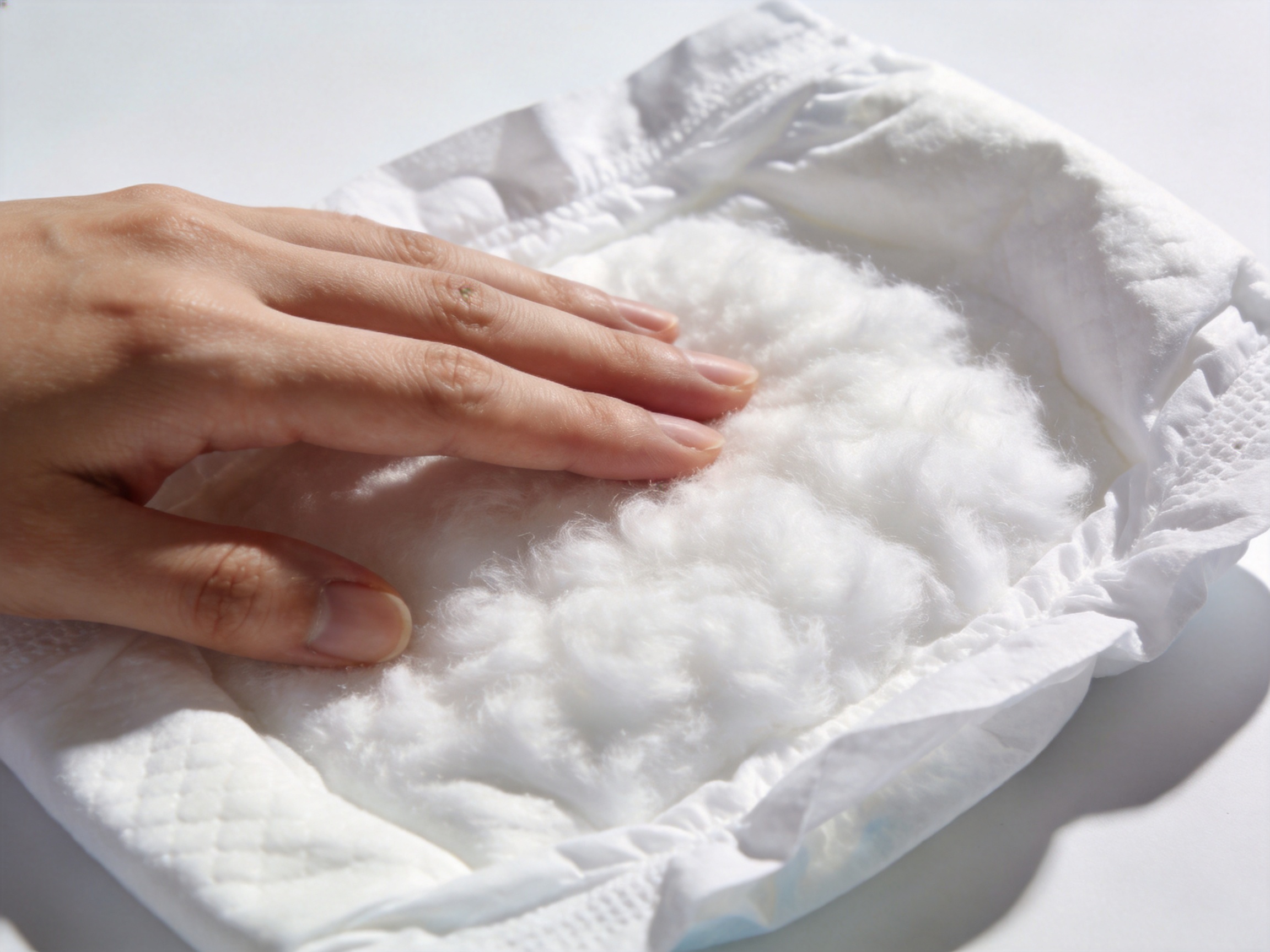
Understanding Hot Air-Through Nonwoven Fabric
Hot air-through nonwoven fabric is a type of thermally bonded nonwoven material. Unlike materials bonded primarily by pressure or chemical binders, hot air-through fabric is formed by allowing heated air to pass evenly through a web of fibers. The heat melts the lower-melting component of the bicomponent ES fiber, bonding fibers together at contact points while maintaining a lofty and soft structure.
The core raw material is ES fiber, which usually has a sheath-core structure. In PP/PE ES fiber, polyethylene is often used as the lower-melting sheath and polypropylene as the higher-melting core. In PET/PE ES fiber, polyethylene serves as the lower-melting outer component while polyester provides stability and resilience. When exposed to controlled hot air, the PE sheath softens and bonds with neighboring fibers, while the core maintains structural integrity.
This bonding mechanism helps preserve softness and bulk. Since the fabric is not overly compressed, it can maintain a fluffy texture and cushion-like touch. For diaper back sheet applications, this makes the finished product feel more comfortable and more upscale than many conventional alternatives.
Hot air-through technology is particularly valued in hygiene products because it can create a nonwoven material with an excellent balance of softness, stability, cleanliness, and functional finishing options. Depending on customer requirements, the fabric can be made hydrophilic, printed, antibacterial, or customized with different patterns and specifications.
Why the Diaper Back Sheet Matters
The back sheet of a diaper is the outermost layer. It is the part parents, caregivers, and users touch when picking up, opening, putting on, adjusting, and disposing of the diaper. Although absorbency and leakage protection are essential, the tactile experience of the back sheet can strongly influence how consumers judge overall quality.
A stiff or rough back sheet may create the impression that the diaper is low-cost or uncomfortable, even if the internal absorbent core performs well. By contrast, a soft and fluffy back sheet can make the diaper feel gentle, breathable, and premium. This is why high-quality diaper brands increasingly focus on the outer layer as part of a complete comfort strategy.
Plain hot air-through nonwoven fabric provides a soft surface without relying on excessive chemical softeners. Its softness comes from fiber selection, web structure, and hot air-through bonding. The result is a naturally comfortable touch that supports the positioning of high-quality baby diapers, adult care products, and private label hygiene products.
The back sheet also contributes to product appearance. A uniform white plain fabric offers a clean and hygienic look. It can also be customized through printing or other finishing processes to support brand identity, product differentiation, and market segmentation.
Key Product Specifications
The product can be customized according to different diaper production requirements. The following table summarizes the main specifications and processing options.
Item |
Specification |
Composition |
ES fiber, including PP/PE or PET/PE options |
Technology |
Hot air-through bonding |
Pattern |
Plain, with customized patterns available |
Color |
White |
Gram Weight |
From 16 gsm to 60 gsm |
Roll Width |
From 10 cm to 320 cm |
Finishing Technology |
Hydrophilic treatment, printing, antibacterial finishing, and other customized treatments |
Main Usage |
Back sheet of diapers and related absorbent hygiene products |
The wide gram weight range allows manufacturers to select the most suitable balance between softness, bulk, cost, and converting efficiency. Lighter weights may be selected for cost-sensitive products or ultra-thin diaper designs, while heavier weights may be chosen for premium diapers requiring a richer hand feel and enhanced surface comfort.
The roll width range from 10 cm to 320 cm supports different production lines and converting formats. This flexibility is important for manufacturers producing baby diapers, adult diapers, training pants, sanitary products, or multiple product categories in one facility.
Advantages Over Ordinary Spunbond Fabric
Ordinary spunbond nonwoven fabric is widely used in hygiene products because it is efficient, stable, and cost-effective. However, when used as a diaper back sheet, it may feel relatively hard, flat, or papery compared with hot air-through nonwoven fabric. In consumer-facing hygiene products, this difference can affect perceived comfort and product grade.
Hot air-through nonwoven fabric offers a more fluffy and cushioned hand feel. Because the web is bonded by hot air rather than being strongly compacted, the structure retains more loft. This creates a soft surface that feels pleasant to the touch and can improve the perceived value of the diaper.
Another advantage is the smoothness and gentleness of the surface. The carefully selected ES fibers and controlled bonding conditions help create a fabric that is suitable for sensitive hygiene applications. For baby diaper back sheets, this soft tactile quality can help reinforce a gentle and caring product image.
The product also supports visual and functional customization. Compared with basic back sheet materials, hot air-through nonwoven fabric can be designed with specific gram weights, widths, patterns, finishing treatments, and print effects. This allows diaper manufacturers and private label brands to create differentiated products for different markets.
In addition, hot air-through nonwoven fabric can enhance the overall sensory experience of a diaper without requiring a complete redesign of the absorbent core or chassis. For manufacturers seeking an efficient way to upgrade product quality, replacing a harder back sheet with a softer hot air-through material can be a practical and effective solution.
Softness as a Competitive Advantage
Softness is one of the most important selling points in baby and adult hygiene products. Parents want diapers that feel gentle for their babies, while adult users and caregivers also prefer products that are comfortable and discreet. A rough or stiff material can cause dissatisfaction even if the diaper has acceptable absorbency.
Plain hot air-through nonwoven fabric delivers softness through both fiber composition and manufacturing technology. The bicomponent ES fiber enables thermal bonding at relatively controlled temperatures, reducing the need for harsh mechanical compression. The fabric maintains a three-dimensional structure, giving it a plush and airy touch.
This softness also helps improve the premium image of private label diapers. Many private label manufacturers compete not only on price but also on consumer experience. A soft back sheet can help a private label product compare favorably with established national brands, allowing retailers and distributors to offer competitive diaper products with enhanced tactile appeal.
For brand owners, softness is easy for consumers to recognize. Unlike some technical features that require explanation, a soft outer layer is immediately noticeable. When customers touch a diaper package sample or use the product for the first time, the improved hand feel can create a strong impression of quality.
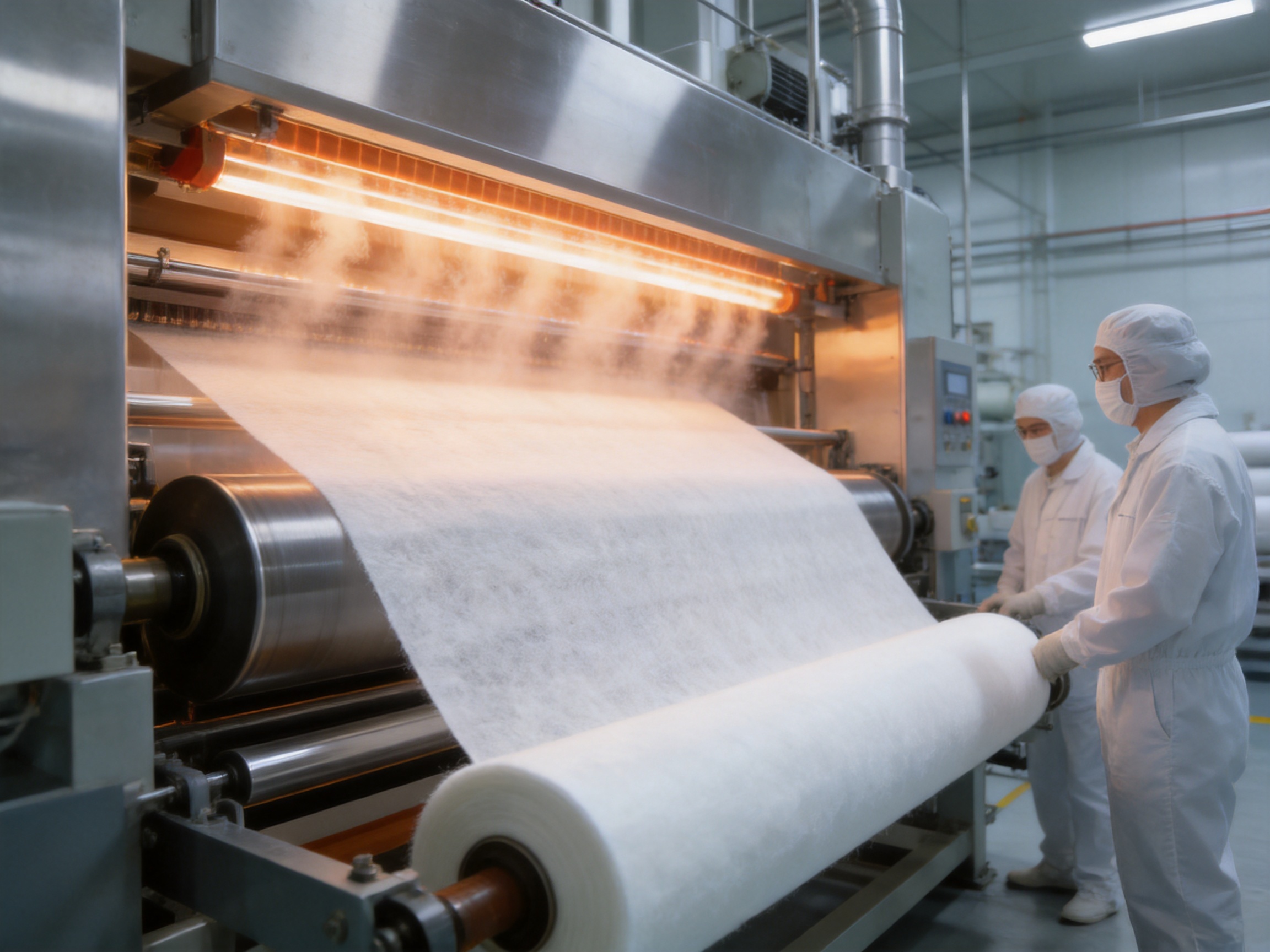
Fluffiness and Bulk for a Premium Touch
Fluffiness is closely related to comfort and perceived quality. A thin and flat material may function adequately, but it may not give consumers the feeling of softness and protection they expect from a premium diaper. Hot air-through nonwoven fabric has a naturally bulky structure because the fibers are bonded while retaining space between them.
This bulk does not mean the fabric is unnecessarily heavy. The product can be produced in a wide gram weight range, allowing manufacturers to control the relationship between loft, weight, and cost. Even at moderate gram weights, the fabric can feel fuller than ordinary compacted nonwovens.
For diapers, a fluffy back sheet can make the product feel more comfortable in the hand and more gentle when worn. It can also improve the perceived thickness and cushioning of the diaper without relying only on the absorbent core. This can be especially valuable for premium baby diapers, overnight diapers, adult care products, and pull-up pants.
Fluffiness also helps create a textile-like impression. Consumers often associate fabric-like surfaces with softness, breathability, and high quality. A hot air-through back sheet can support this impression and help distinguish the finished diaper from lower-end products using harder or flatter materials.
Clean White Appearance and Customizable Design
The standard color of this product is white, which communicates cleanliness and hygiene. In baby care and medical-related applications, a clean white appearance is widely accepted because it suggests purity, safety, and simplicity. For many diaper manufacturers, a uniform white back sheet is the preferred base for product design.
At the same time, the product can be customized through printing and pattern development. Brands can apply decorative designs, size indicators, logos, color elements, or functional markings depending on market needs. Printing can help products stand out on store shelves and improve brand recognition.
The plain pattern is suitable for a broad range of diaper designs, from simple economic products to high-end private label lines. For customers needing a distinct market identity, customized patterns can be developed to match the desired visual style and consumer positioning.
Customization is not limited to appearance. Finishing technologies such as hydrophilic treatment and antibacterial finishing can be selected according to product function. This makes the material adaptable to different hygiene product requirements and regional market preferences.
Hydrophilic, Printing, and Antibacterial Finishing Options
Finishing technology plays an important role in adapting nonwoven fabrics to specific applications. For diaper back sheets and related products, different finishing options can be used to modify surface behavior, appearance, and added functionality.
Hydrophilic finishing improves the ability of the fabric surface to interact with moisture. Although a diaper back sheet usually works with other layers to manage leakage and breathability, hydrophilic characteristics may be useful in certain composite structures or specific product designs. The treatment can be adjusted according to the intended usage and conversion process.
Printing allows brand owners to add patterns, colors, or product information to the material. In the diaper industry, printed back sheets are common for baby products, training pants, and differentiated product lines. Good printing compatibility helps manufacturers create products that are both functional and visually attractive.
Antibacterial finishing may be used when customers require added hygiene-related functions. Such treatments should be selected carefully according to applicable regulations, product positioning, safety requirements, and end-use conditions. Zhejiang Uniquality Nursing Products Technology Co., Ltd. can support customers with customized finishing solutions based on technical communication and production feasibility.
Manufacturing Process Overview
The production of hot air-through nonwoven fabric requires careful control of raw materials, web formation, thermal bonding, finishing, winding, and quality inspection. Each stage influences softness, strength, uniformity, and final usability in diaper production.
The process begins with ES fiber selection. The fiber type, fineness, length, sheath-core ratio, and melting behavior must be matched to product requirements. PP/PE and PET/PE options provide different balances of softness, resilience, thermal stability, and cost performance.
After fiber preparation, the fibers are opened and blended to create a consistent fiber feed. Uniform blending is essential because uneven fiber distribution can cause variations in fabric thickness, strength, or appearance. Advanced opening and carding systems help align and distribute fibers into a stable web.
The carded web then enters the hot air-through bonding stage. Heated air passes through the fiber web under controlled temperature, airflow, and residence time. The low-melting PE component softens and bonds the fibers together, while the higher-melting core maintains shape and structure. Proper bonding is essential: insufficient bonding may reduce strength, while excessive heat may damage softness and bulk.
After bonding, the fabric may undergo finishing treatments such as hydrophilic finishing, printing, or antibacterial processing. The selected treatment depends on customer requirements and end-use applications. The fabric is then dried or stabilized as needed, inspected, wound into rolls, and slit to the required width.
Quality control is performed throughout the process. Key indicators may include gram weight, width, thickness, tensile strength, elongation, softness, bonding uniformity, appearance, roll quality, and cleanliness. For hygiene product manufacturers, stable roll quality is especially important because high-speed diaper production lines require consistent unwinding and converting performance.
Advanced Production Strengths
Zhejiang Uniquality Nursing Products Technology Co., Ltd. has developed strong manufacturing capabilities through decades of experience in nonwoven materials and hygiene products. The company’s background includes research and development, production, sales, and long-term cooperation with domestic and international customers.
The company has introduced advanced production equipment and technology from countries including Germany, France, and Italy. This international equipment foundation supports stable production, precise process control, and the ability to manufacture different nonwoven materials and hygiene products with consistent quality.
The company’s product portfolio includes spunlace nonwoven fabrics, spunmelt nonwoven fabrics, hot air-through nonwoven fabrics, flushable and degradable nonwoven fabrics, wet wipes, dry wipes, baby diapers, pull-ups, wet toilet paper, cleansing wipes, and other related products. This broad product range gives the company valuable cross-category knowledge in raw materials, fabric performance, converting behavior, packaging requirements, and consumer expectations.
Such integrated experience is especially useful for diaper back sheet materials. A supplier that understands both nonwoven production and finished hygiene product manufacturing can better anticipate practical converting requirements. For example, the material must not only feel soft but also run smoothly on diaper production lines, maintain stable roll tension, and meet product design specifications.
The company has grown into a leading enterprise in China’s industrial textile industry and has been recognized among major participants in the nonwovens sector. Its long-term industry presence reflects the accumulation of technical knowledge, manufacturing discipline, and customer service capabilities.
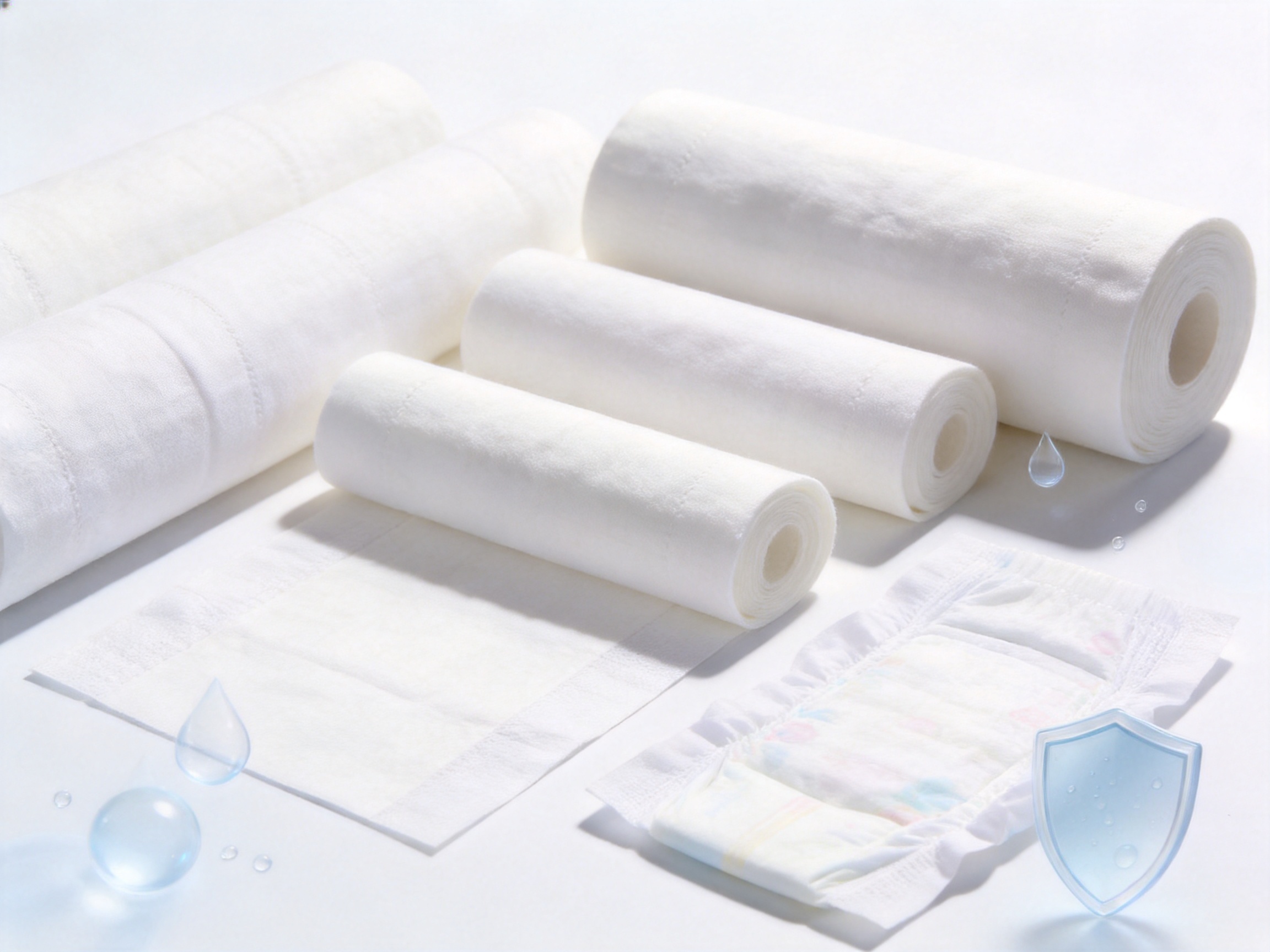
Research and Development Capabilities
R&D is essential for improving nonwoven fabric performance. In the case of hot air-through fabric for diaper back sheets, research may involve fiber selection, web structure optimization, bonding temperature adjustment, softness evaluation, finishing compatibility, and cost-performance balancing.
Different customers may require different product characteristics. Some diaper manufacturers prioritize maximum softness, while others need higher tensile strength, special printability, lower gram weight, or antibacterial finishing. A capable R&D team can help translate these requirements into suitable product specifications.
Zhejiang Uniquality Nursing Products Technology Co., Ltd. emphasizes differentiation, functionalization, and customization. These capabilities are important in a competitive market where diaper brands need to create unique products for specific consumer groups. A newborn diaper line may require an exceptionally soft and light back sheet, while an adult diaper may require a stronger and wider material. A training pants product may require printed designs and stable elastic assembly compatibility.
R&D support also helps customers solve practical problems. If a material is too stiff, too weak, too slippery, or difficult to print, the formulation and process can be adjusted. If customers need a specific roll width, gram weight, or finishing effect, production parameters can be optimized to meet those requirements.
Quality Control for Hygiene Applications
Hygiene products require stable and clean materials. Diaper back sheet fabric must meet expectations for appearance, touch, dimensions, and processing performance. Even small defects can affect finished product quality, especially on high-speed production lines.
Quality control begins with raw material inspection. ES fibers must meet requirements for composition, melting behavior, length, fineness, cleanliness, and consistency. Stable raw materials help ensure stable finished fabric performance.
During production, online monitoring and process control help maintain uniform gram weight, bonding quality, and width. Operators and quality teams check fabric appearance to identify holes, contamination, uneven bonding, wrinkles, or other defects. Proper winding control helps create rolls that unwind smoothly during diaper manufacturing.
Finished product testing may include basis weight measurement, tensile testing, thickness testing, softness evaluation, hydrophilicity testing when applicable, and visual inspection. For customized products, additional tests may be performed according to customer requirements, such as printing performance or antibacterial function evaluation.
Reliable quality control reduces production risk for diaper manufacturers. A stable back sheet material helps minimize machine stoppages, waste, customer complaints, and batch-to-batch variation. This is especially important for customers producing private label diapers, where consistent quality is essential to maintain retailer confidence and consumer trust.
Customization for Global Diaper Manufacturers
Diaper markets vary significantly across regions. Consumer expectations, price levels, package sizes, product thickness, softness standards, and design preferences may differ from one country to another. A flexible nonwoven supplier must be able to customize materials for these diverse requirements.
Plain hot air-through nonwoven fabric can be adjusted in gram weight from 16 gsm to 60 gsm. This broad range supports both economical and premium products. Lower gram weights can help control cost and support lightweight product designs, while higher gram weights provide enhanced softness, bulk, and premium texture.
Roll width customization from 10 cm to 320 cm allows the fabric to fit different production formats. Narrow rolls may be used for specific components or special converting needs, while wider rolls support large-scale diaper production and flexible slitting arrangements.
Pattern and finishing customization further support market differentiation. A brand targeting a natural and gentle image may prefer a simple white plain surface, while a baby diaper brand may choose colorful printed designs. A medical or adult care product may prioritize simple appearance, strength, and functional performance.
The ability to customize is especially valuable for OEM and ODM projects. Customers developing private label diapers often need materials that match their brand positioning, cost target, packaging concept, and local market expectations. A technically capable supplier can help shorten development time and improve product competitiveness.
Applications in Baby Diapers
Baby diapers are one of the most important applications for hot air-through back sheet fabric. Parents often judge baby diapers by softness, dryness, leakage protection, fit, and skin friendliness. The back sheet contributes directly to the softness and overall hand feel of the diaper.
A soft hot air-through back sheet can help create a gentle impression before the diaper is even worn. When parents touch the diaper during changing, the fluffy surface can reinforce confidence in the product’s comfort. This is particularly important for newborn and premium diaper segments, where softness is a major purchase driver.
Printed customization can also add value in baby diapers. Cute patterns, soft colors, and size-related designs can make the product more attractive. Since the back sheet is visible, it provides an opportunity for branding and emotional connection.
For manufacturers, the material must also be compatible with diaper assembly processes such as lamination, cutting, folding, and packaging. Stable roll quality and consistent fabric performance help ensure efficient production.
Applications in Adult Diapers and Care Products
Adult diapers and care products require comfort, discretion, strength, and reliability. Users may wear products for extended periods, so material comfort is important. A soft and fabric-like back sheet can improve the user experience and reduce the institutional feeling sometimes associated with adult incontinence products.
Hot air-through nonwoven fabric can provide a comfortable outer surface while supporting a clean and professional appearance. Depending on product design, manufacturers can select suitable gram weight and width specifications to meet strength and comfort requirements.
For adult care markets, product dignity and comfort are important. A soft textile-like back sheet can make the product feel less clinical and more personal-care oriented. This can support premium positioning and improve user acceptance.
The material can also be used in related absorbent products where a soft outer layer is desired. Through customization, it can be adapted to different product sizes, absorbency levels, and market categories.
Applications in Training Pants and Pull-Ups
Training pants and pull-ups require a balance of comfort, flexibility, appearance, and durability. These products are often designed to look and feel more like underwear than traditional diapers. Therefore, a soft and cloth-like outer material is particularly important.
Hot air-through nonwoven fabric can support the soft touch expected in training pants. Its fluffy texture can contribute to a comfortable garment-like feel, while printing options can create attractive designs for children and parents.
Because training pants involve movement, pulling, and stretching during use, the back sheet material must have stable strength and converting performance. Properly designed hot air-through fabric can support these requirements while maintaining softness.
For private label training pants, outer material quality can be a key differentiator. A soft back sheet helps the product compete with established brands and supports consumer confidence during the transition from diapers to underwear.
How the Fabric Supports Private Label Success
Private label hygiene products are growing in many markets. Retailers, distributors, and brand owners seek products that offer strong value while meeting consumer expectations for comfort and quality. Materials play a critical role in achieving this balance.
Plain hot air-through nonwoven fabric helps private label diaper manufacturers upgrade tactile quality without necessarily changing the entire product structure. By selecting a softer and fluffier back sheet, a private label diaper can feel more competitive against leading brands.
Customization options also allow private label customers to create unique product lines. Different gram weights, printed designs, and finishing treatments can be used for economy, standard, premium, and ultra-premium segments. This supports a complete product portfolio strategy.
Zhejiang Uniquality Nursing Products Technology Co., Ltd. provides OEM and ODM experience in wet wipes, dry wipes, diapers, training pants, and related hygiene products. This experience can help customers develop products from material selection to finished goods planning. For buyers seeking dependable supply and technical support, such integrated capability is valuable.
Environmental and Functional Considerations
Modern hygiene product development increasingly considers comfort, performance, cost, and environmental responsibility. While diapers are complex products involving multiple materials, improving material efficiency and production stability can help reduce waste in manufacturing.
Hot air-through bonding does not rely primarily on chemical adhesives for fiber bonding. The bonding is achieved by the thermal behavior of bicomponent fibers, which can support a clean production approach and reduce the need for binder chemicals in the fabric structure.
The wide gram weight range also allows manufacturers to optimize material use. By selecting the appropriate weight, customers can avoid over-engineering while still achieving the desired softness and strength. Stable quality helps reduce waste during converting, which is an important practical sustainability factor.
The company’s broader product portfolio includes flushable and degradable nonwoven materials, showing its engagement with evolving market demands. While the diaper back sheet product described here is based on ES fiber hot air-through technology, the company’s broader technical background may support future innovation in hygiene materials.
Supply Chain Reliability and Production Scale
Reliable supply is essential for diaper manufacturers. A production line cannot operate efficiently if raw materials are delayed, inconsistent, or unavailable. Suppliers with strong production capacity, multiple bases, and mature management systems can provide better support for long-term customers.
Kingsafe and Uniquality have established multiple production bases in China, including locations in Guangdong, Jiangsu, Hubei, and Zhejiang-related operations. This production network supports broader manufacturing capacity and supply flexibility.
The company is headquartered in Changxing, Huzhou, within the Yangtze River Delta region, an area known for convenient land, sea, and air transportation connections. This geographic advantage supports domestic distribution and international export logistics.
For global customers, supply reliability includes not only production capacity but also communication, documentation, customization, and after-sales support. A long-established enterprise with experience serving known brands can better understand the requirements of professional procurement teams and hygiene product manufacturers.
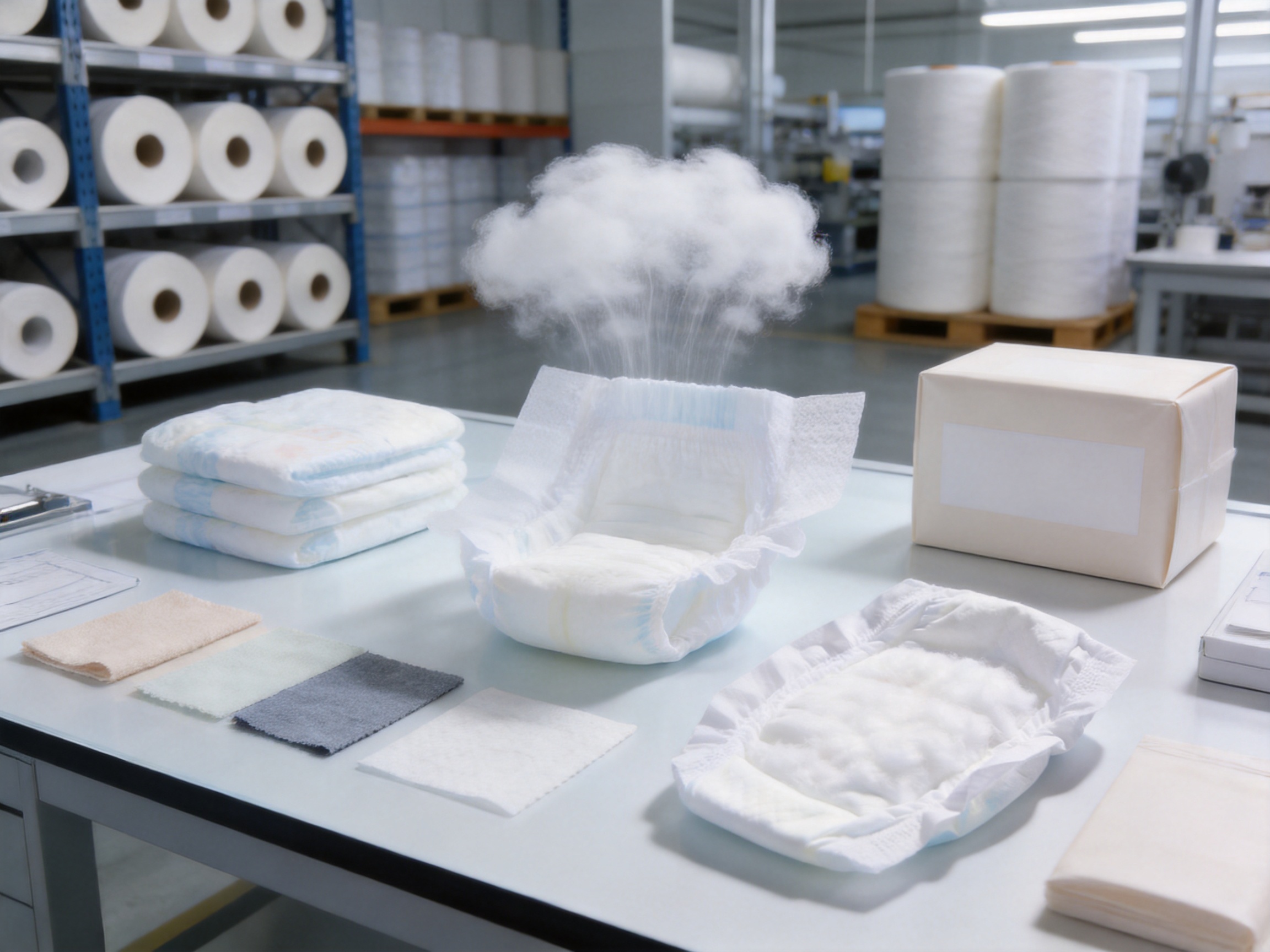
Technical Selection Guide for Buyers
When selecting hot air-through nonwoven fabric for diaper back sheets, buyers should consider several factors. The first is gram weight. A lower gram weight may reduce cost and support lightweight diapers, while a higher gram weight may improve softness, bulk, and premium feel. The ideal choice depends on product positioning and performance targets.
The second factor is fiber composition. PP/PE and PET/PE ES fibers offer different performance characteristics. PP/PE may be suitable for many standard hygiene applications, while PET/PE may provide different resilience or dimensional behavior. The supplier can recommend suitable options based on end-use requirements.
The third factor is roll width. The fabric must match the customer’s production equipment and cutting layout. Proper width selection reduces edge waste and improves production efficiency.
The fourth factor is finishing treatment. If the product requires hydrophilic properties, printing, antibacterial performance, or other functions, these should be discussed early in the development process. Finishing can affect hand feel, surface behavior, cost, and production lead time.
The fifth factor is converting compatibility. A material that feels soft must also run well on diaper machines. Buyers should evaluate unwinding behavior, tension stability, bonding compatibility, cutting performance, and final diaper appearance during trials.
Comparison With Alternative Back Sheet Materials
Diaper back sheets can be made with different materials, including spunbond nonwovens, film-nonwoven laminates, textile-like composites, and other nonwoven structures. Each material has advantages and limitations. Hot air-through nonwoven fabric stands out when softness and fluffiness are major priorities.
Compared with ordinary spunbond fabric, hot air-through fabric usually provides a softer and bulkier hand feel. This is the primary advantage for premium diaper back sheet use. It can help improve sensory quality and consumer acceptance.
Compared with simple plastic film surfaces, a nonwoven fabric provides a more textile-like touch. Plastic film may offer barrier properties but can feel less soft and less breathable to consumers. In many modern diapers, the market preference has shifted toward cloth-like surfaces.
Compared with some composite materials, hot air-through nonwoven fabric offers flexibility in weight, width, and finishing. It can be used as part of a composite structure or as an outer layer depending on product design.
The best material choice depends on the diaper’s total structure, target market, price level, and performance requirements. However, for manufacturers who want a soft, fluffy, and comfortable outer surface, hot air-through nonwoven fabric is a highly attractive option.
Commercial Value for Diaper Brands
From a commercial perspective, a better back sheet can support stronger market positioning. Consumers may not always understand the technical difference between spunbond and hot air-through fabric, but they can feel the difference when touching the diaper. This direct sensory advantage can help brands communicate quality without complicated explanation.
Softness can also support premium pricing. A diaper that feels more comfortable and textile-like may be accepted at a higher price point, especially in baby care and adult care categories where comfort is emotionally important.
For retailers, a private label diaper with a soft back sheet can improve shelf competitiveness. Consumers comparing products may be more likely to trust a diaper that feels gentle and well-made. This can contribute to repeat purchase and brand loyalty.
For manufacturers, material customization can support multiple product tiers. One supplier can provide different grades or specifications for economy, standard, and premium diaper lines. This simplifies sourcing and supports consistent technical cooperation.
Company Strength in Integrated Hygiene Solutions
Zhejiang Uniquality Nursing Products Technology Co., Ltd. is not only a material supplier but also an enterprise with experience in finished hygiene products. Its capabilities cover wet wipes, dry wipes, diapers, growing training pants, wet toilet paper, cleansing wipes, and other personal care products.
This integrated experience helps the company understand how nonwoven materials perform in real consumer products. For example, softness must be evaluated not only as a fabric property but also as part of the complete diaper experience. Roll quality must be considered not only at the fabric mill but also on the diaper converting line. Printing must be assessed not only for appearance but also for durability, safety, and production stability.
The company’s long history since 1987 reflects deep industry accumulation. Over more than three decades, it has developed production knowledge, quality systems, customer relationships, and product innovation capabilities. It has also established long-term cooperative relationships with many well-known domestic and international brands.
The company’s enterprise spirit emphasizes dedication, innovation, inclusiveness, delicacy, and cooperation. These values align with the needs of hygiene product customers who require stable quality, responsive customization, and long-term supply support.
Practical Recommendations for Product Development
When developing a diaper with a hot air-through nonwoven back sheet, manufacturers should begin by defining the target consumer and product tier. A newborn premium diaper may need the softest possible feel, while a standard diaper may need a balance of softness and cost. Adult care products may require additional strength and wider roll formats.
Next, the development team should select a preliminary gram weight and fiber composition. Sample testing should include hand feel evaluation, tensile strength, thickness, compatibility with adhesive or lamination processes, printing performance if required, and full diaper trial production.
After trial production, the finished diapers should be evaluated for appearance, softness, package compression recovery, leakage performance, wear comfort, and consumer feedback. Although the back sheet is only one component, it interacts with the entire diaper structure.
Manufacturers should also consider packaging. A fluffy material may compress during packaging, so it is important to evaluate how the diaper feels after being packed, stored, and opened by consumers. A well-designed hot air-through fabric should retain a pleasing soft touch even after normal packaging conditions.
Finally, suppliers and buyers should establish clear specifications, inspection standards, and communication procedures. Stable cooperation helps ensure that the material continues to meet expectations across repeated production batches.
Q&A Section
What is plain hot air-through nonwoven fabric?
Plain hot air-through nonwoven fabric is a thermally bonded nonwoven material made by passing heated air through a web of ES fibers. The lower-melting component of the fiber bonds the web while preserving softness and bulk. The plain version has a clean, simple surface suitable for diaper back sheets and related hygiene applications.
Why is it suitable for diaper back sheets?
It is suitable because it provides a soft, fluffy, and comfortable outer surface. The diaper back sheet is the first part consumers usually touch, so a softer material can improve perceived product quality and user satisfaction.
How does it compare with ordinary spunbond fabric?
Compared with ordinary spunbond fabric, hot air-through nonwoven fabric generally feels softer, bulkier, and more textile-like. Ordinary spunbond may feel harder or flatter, while hot air-through fabric can create a more premium and gentle touch.
What fibers are used in this product?
The product is made from ES fiber, commonly PP/PE or PET/PE bicomponent fiber. The PE component melts at a lower temperature and bonds the fibers together during the hot air-through process.
What gram weights are available?
The available gram weight range is from 16 gsm to 60 gsm. Customers can choose different weights depending on softness, thickness, cost, and product positioning requirements.
Can the roll width be customized?
Yes. Roll widths can be supplied from 10 cm to 320 cm, allowing the material to match different diaper production lines and converting requirements.
Can the fabric be printed?
Yes. Printing is available as a finishing option. Printed designs can help diaper brands create attractive products, improve recognition, and support private label differentiation.
Is hydrophilic finishing available?
Yes. Hydrophilic finishing can be applied when required by the product design. The treatment should be selected according to the final diaper structure and functional needs.
Can antibacterial finishing be added?
Antibacterial finishing can be considered as a customized option. The final selection should follow product safety requirements, regulatory expectations, and customer specifications.
What types of products can use this fabric?
The main use is the back sheet of diapers. It can also be considered for baby diapers, adult diapers, training pants, pull-ups, and other absorbent hygiene products requiring a soft outer layer.
Why is supplier experience important?
Supplier experience is important because diaper back sheet fabric must combine softness, strength, uniformity, cleanliness, roll stability, and converting compatibility. An experienced supplier can help customers select suitable specifications and reduce production risk.
What makes Zhejiang Uniquality Nursing Products Technology Co., Ltd. a strong manufacturing partner?
The company has decades of experience, advanced equipment and technology introduced from international sources, multiple production capabilities, broad expertise in nonwoven materials and hygiene products, and the ability to support customization for global customers.
Conclusion
Plain hot air-through nonwoven fabric for diaper back sheets is a practical and effective material solution for manufacturers seeking to improve diaper softness, fluffiness, and premium appeal. By using ES fiber and hot air-through bonding technology, the fabric achieves a gentle textile-like touch that can outperform ordinary spunbond materials in tactile comfort.
The product’s specifications are flexible, with gram weights from 16 gsm to 60 gsm, roll widths from 10 cm to 320 cm, white color, plain or customized patterns, and optional finishing technologies such as hydrophilic treatment, printing, and antibacterial finishing. These options allow diaper manufacturers to adapt the material to different markets, product tiers, and brand strategies.
For baby diapers, the material supports a soft and caring image. For adult care products, it improves comfort and dignity. For training pants and pull-ups, it contributes to a garment-like feel and attractive appearance. For private label brands, it provides a clear sensory upgrade that can help products compete more effectively in crowded markets.
Zhejiang Uniquality Nursing Products Technology Co., Ltd. brings strong manufacturing experience, advanced production processes, broad nonwoven expertise, and customization capabilities to support customers in hygiene product development. With a long history since 1987 and a broad product portfolio covering nonwoven fabrics and finished care products, the company is well positioned to provide reliable hot air-through nonwoven fabric for modern diaper applications.
As consumer expectations continue to rise, the materials used in hygiene products must do more than meet basic functional requirements. They must create comfort, confidence, and value. Plain hot air-through nonwoven fabric is one of the key materials that can help diaper manufacturers achieve this goal.
References
1. Russell, S. J. Handbook of Nonwovens. Woodhead Publishing.
2. Mao, N., and Russell, S. J. Advances in Technical Nonwovens. Woodhead Publishing.
3. EDANA. Nonwovens Standard Procedures and Guidelines for Hygiene Applications.
4. INDA. Nonwoven Fabrics Handbook.
5. Kissa, E. Handbook of Fiber Science and Technology: Nonwoven Fabrics. Marcel Dekker.
6. Albrecht, W., Fuchs, H., and Kittelmann, W. Nonwoven Fabrics: Raw Materials, Manufacture, Applications, Characteristics, Testing Processes. Wiley-VCH.