中文简体
中文简体 English
 日本語
日本語 русский
 Español
Modern baby care is being reshaped by two strong expectations: products must be gentle enough for delicate neonatal skin, and they must respond responsibly to the environmental pressure created by high-volume disposable hygiene goods. Alcohol-free compostable baby wipes made with 100% viscose nonwoven material answer both needs by combining skin-friendly cleansing performance with a renewable, plant-derived fiber platform. Unlike conventional wipes based on petrochemical fibers, these wipes are designed to reduce long-term environmental burden while maintaining the softness, wet strength, absorbency, and reliability required for everyday infant care.
This article examines the technical value, manufacturing advantages, product customization possibilities, and market competitiveness of alcohol-free compostable baby wipes. It also explains why advanced nonwoven production capability, strict hygiene management, and mature OEM/ODM experience are essential for brands and distributors that want to build a dependable private label baby wipes program.
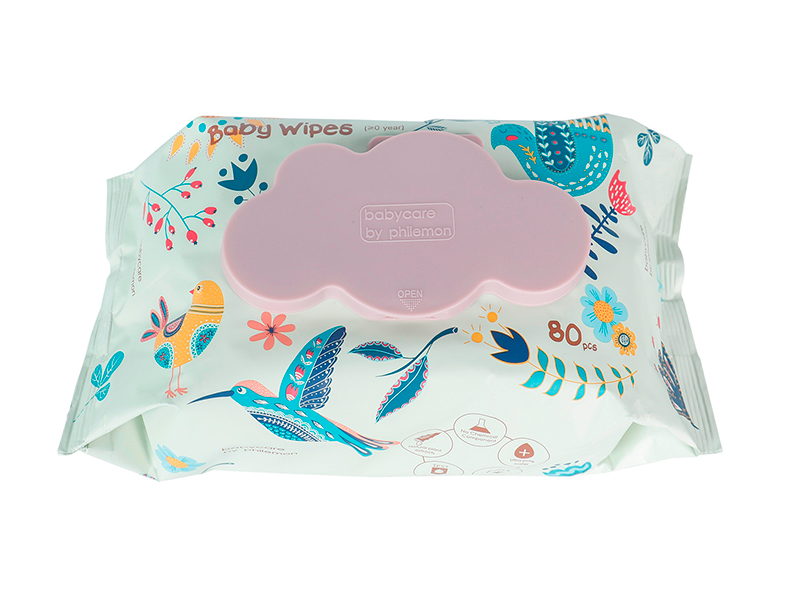
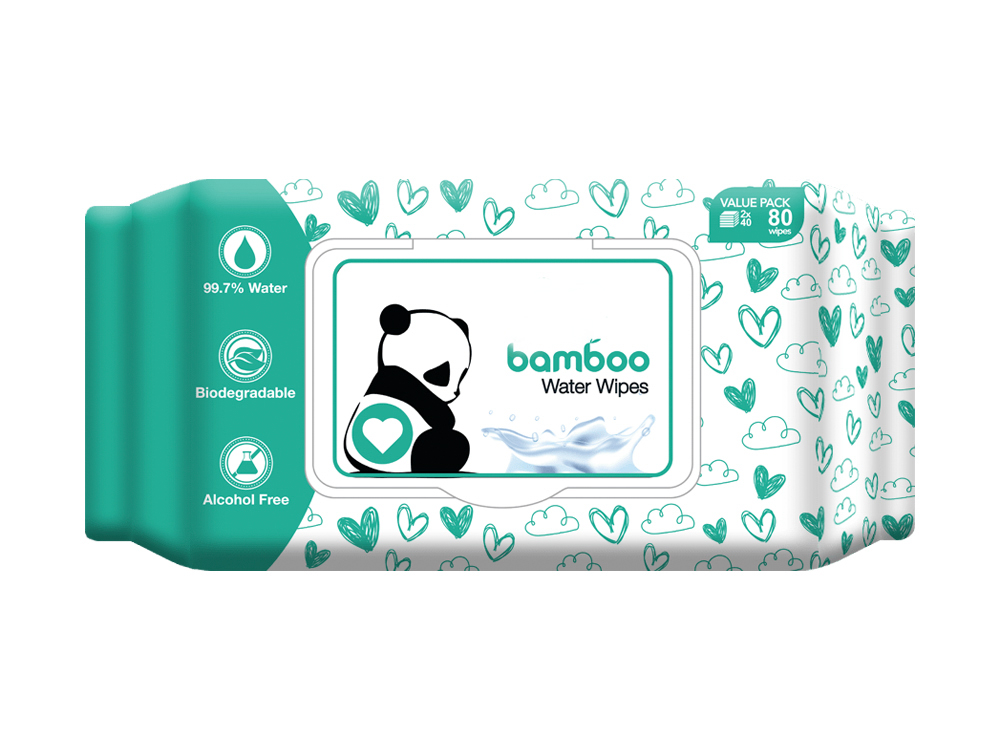
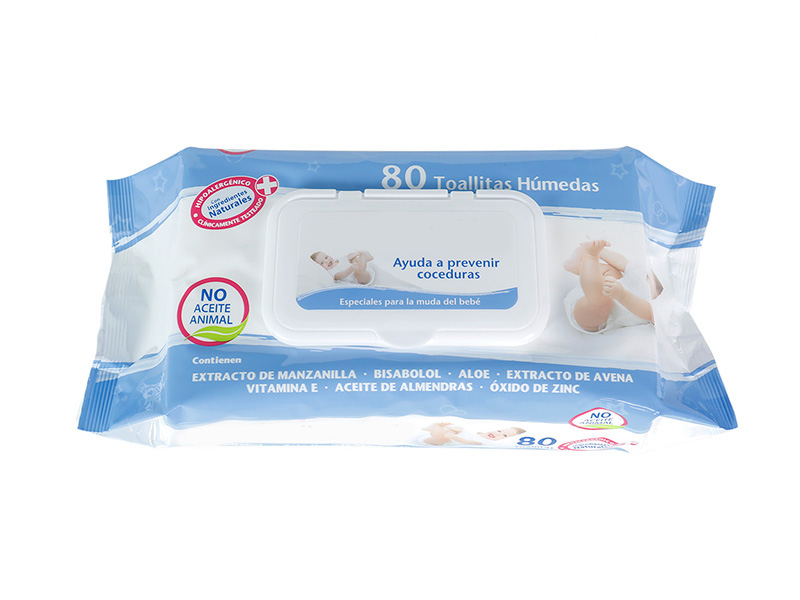
Alcohol free baby wipes compostable
1. Product Overview: A Sustainable Wipe Designed for Sensitive Skin
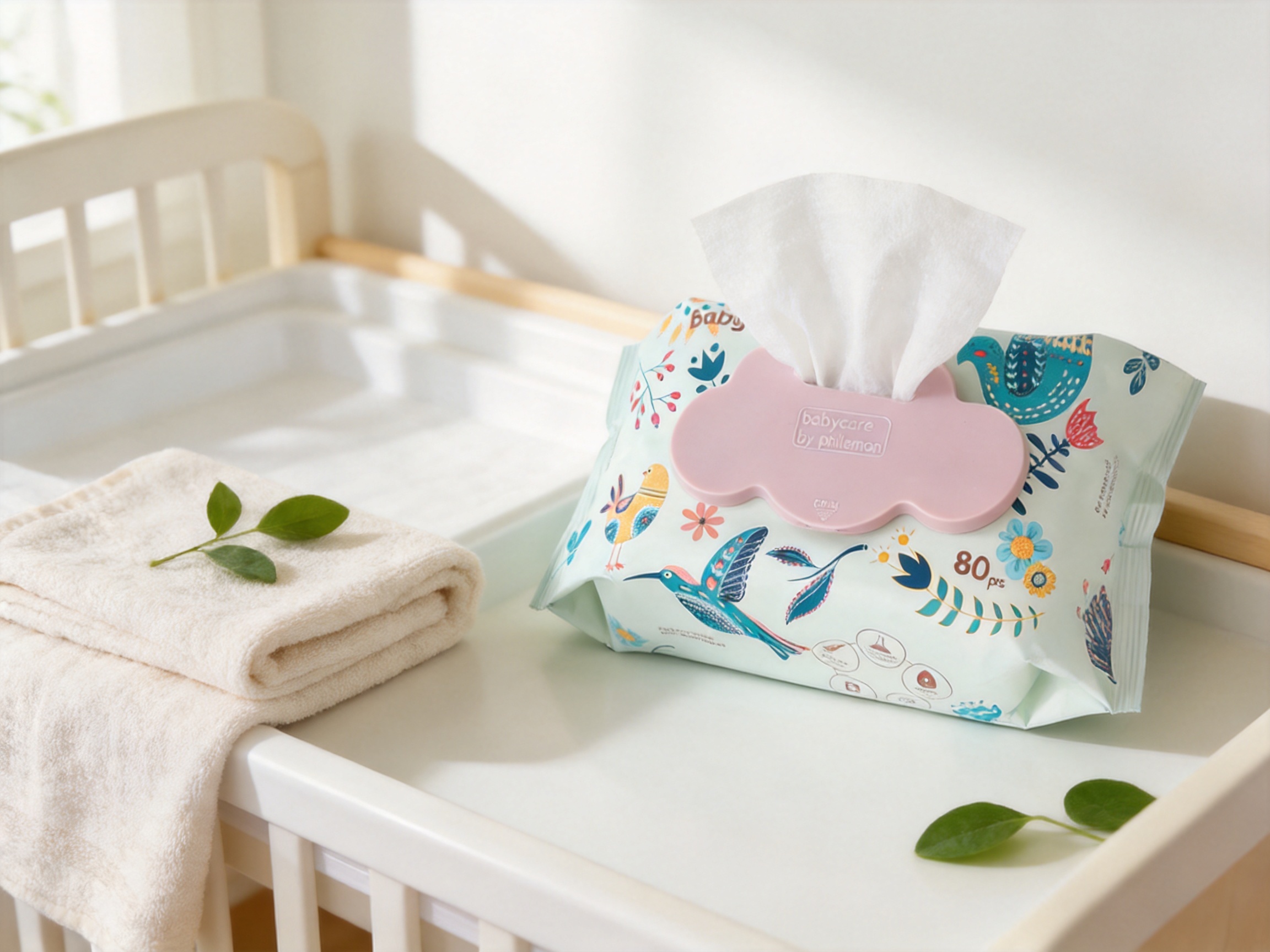
Alcohol-free compostable baby wipes are disposable cleansing wipes developed for babies, infants, and users with sensitive skin. The featured product uses 100% viscose as its core nonwoven substrate. Viscose is derived from renewable plant-based cellulose, giving it a strong advantage over synthetic petroleum-based materials such as polyester or polypropylene when sustainability is a priority.
The wipes are formulated without alcohol, meaning they exclude ethanol and harsh solvent systems that may disrupt the skin’s natural lipid barrier. This is especially important in baby care, where repeated wiping can contribute to dryness, redness, friction damage, or discomfort if the wipe material or lotion system is too aggressive. A gentle alcohol-free structure supports frequent use during diaper changes, feeding cleanup, hand wiping, travel hygiene, and daily household baby care routines.
In addition to skin comfort, the product is designed for compostability and biodegradability. Because the wipe base can be made with plant-derived viscose rather than persistent plastic fibers, it helps reduce the risk of microplastic pollution. This is a major concern in the global hygiene industry, particularly because baby wipes are used in large volumes and are often disposed of immediately after use.
For private label brands, retailers, distributors, and institutional buyers, the product offers a valuable combination: strong cleaning performance, soft touch, moisture retention, customizable specifications, and a sustainability story that can be communicated clearly to end consumers. This makes the wipes suitable for baby care product lines, eco-friendly hygiene ranges, premium maternal and infant categories, and green procurement projects.
2. Why 100% Viscose Matters
The choice of wipe substrate determines many of the final product’s most important characteristics. A wipe may look simple, but its fiber composition affects strength, softness, liquid loading, dispensing behavior, drying rate, environmental impact, and skin feel. 100% viscose offers a balanced technical profile that is particularly well suited to baby wipes.
Viscose is a regenerated cellulose fiber. Because it originates from plant cellulose, it has natural hydrophilicity, meaning it readily absorbs and holds water-based lotion. This property is valuable in wet wipes because the wipe must carry enough cleansing liquid to perform effectively without dripping excessively or drying out too quickly. The moisture regain of viscose is approximately 13%, helping the material maintain a pleasant hand feel and stable moisture balance throughout the product’s shelf life.
Compared with synthetic fibers, viscose provides a more natural, fabric-like softness. This is important for baby wipes because the product is used on sensitive areas, including the diaper region, face, hands, and skin folds. A harsh or scratchy wipe can increase friction and irritation. A soft viscose wipe helps reduce that risk while still providing enough mechanical cleaning action to remove residue.
Another important advantage is the absence of plastic fiber persistence. Traditional wipes containing polyester or polypropylene may fragment into microplastics over time. These fragments can enter soil, waterways, and marine ecosystems. A 100% viscose wipe is better aligned with environmental regulations and consumer expectations for biodegradable hygiene products.
3. Advantages Over Conventional Competitor Wipes
Many competitor wipes rely on synthetic fiber blends because such materials can be inexpensive and strong. However, cost alone is no longer the main decision factor for baby care brands. Consumers increasingly examine ingredient lists, sustainability claims, skin safety, and material transparency. In this context, alcohol-free compostable viscose baby wipes provide several clear competitive advantages.
3.1 Better Sustainability Profile
Petrochemical-based nonwovens can remain in the environment for extended periods. When they break down, they may contribute to microplastic pollution. A viscose-based compostable wipe provides a more responsible alternative by using renewable cellulose fiber and supporting natural degradation after disposal under appropriate composting conditions.
This sustainability advantage is especially meaningful for retailers and brands that are building eco-conscious product portfolios. It allows them to respond to consumer demand for plastic-reduced or plastic-free hygiene goods while meeting procurement goals related to green supply chains.
3.2 Softer Skin Contact
Baby wipes must be gentle. A wipe that cleans well but feels rough can damage consumer trust quickly. Viscose fibers offer a smooth, soft tactile experience, making them suitable for frequent wiping. When combined with an alcohol-free lotion system, the result is a product designed for repeated use without unnecessary harshness.
3.3 Superior Liquid Management
Effective wet wipes must hold lotion evenly and release it at the right rate during use. Viscose has strong hydrophilic properties, allowing a higher liquid loading capacity than many synthetic materials. This means each wipe can deliver efficient cleaning performance and consistent moisture distribution.
3.4 Lower Static Electricity
Plant-derived viscose naturally generates less static electricity than many synthetic fibers. Lower static improves the user experience during dispensing because wipes are less likely to cling excessively or behave unpredictably. For parents using wipes quickly during diaper changes, easy dispensing and smooth handling are practical advantages.
3.5 Customizable Surface Performance
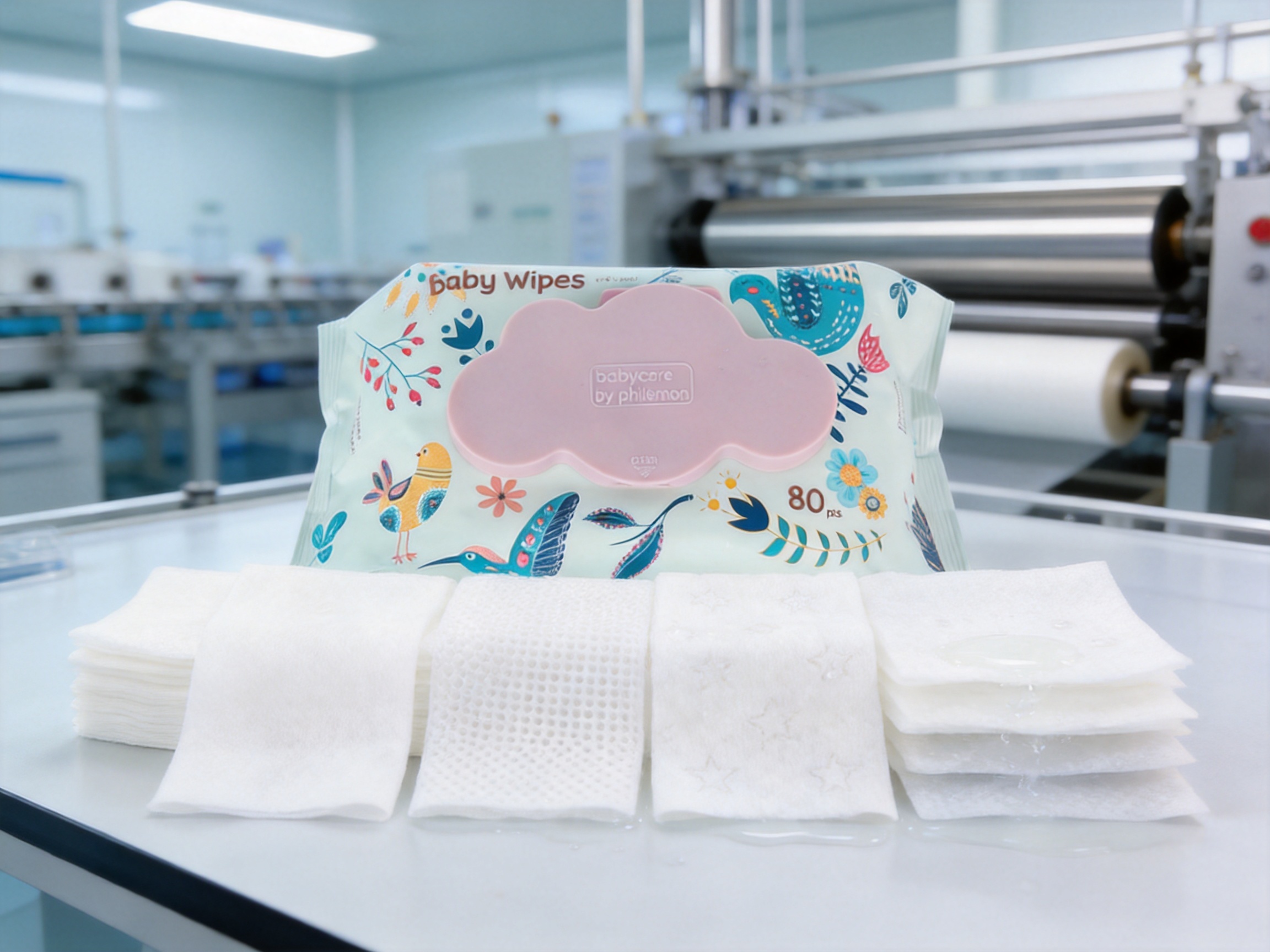
The wipes can be produced with plain, mesh, dot-embossed, flower, or star patterns. These surface designs are not merely decorative. They can influence friction, texture, cleaning efficiency, and perceived softness. For example, a mesh structure may improve residue pickup, while a plain surface may emphasize gentle contact. This gives brand owners flexibility to create differentiated products for different market positions.
4. Technical Specifications
The following table summarizes key product parameters that can be customized according to brand, market, packaging, and usage requirements.
Product Type |
Alcohol-free compostable baby wipes |
Primary Substrate |
100% viscose for compostable and biodegradable product positioning |
Available Material Options |
Viscose, bamboo, lyocell, cotton, polyester blends, and customized nonwoven combinations according to product requirements |
Piece Count |
1–200 pieces per pack |
Grammage |
30–100 gsm |
Size Range |
Width 12–22 cm; length 12–30 cm |
Production Technology |
Parallel lapping and semi-cross lapping |
Pattern Options |
Plain, mesh, dot embossed, flower, stars, and customized textures |
Fragrance Options |
Unscented, fresh, lavender, lemon, lotus, fruit, coconut, cucumber, and other customized options |
Formula Positioning |
Alcohol-free, gentle, skin-friendly, compatible with hypoallergenic lotion systems |
Application |
Baby care, diaper changing, hand and face cleaning, sensitive-skin cleansing, travel hygiene |
5. Alcohol-Free Integrity and Skin Comfort
The absence of alcohol is one of the most important features of this product. Alcohol may evaporate quickly and create a temporary feeling of cleanliness, but it can also dry the skin and weaken the natural protective barrier when used frequently. Babies have thinner and more delicate skin than adults, making them more vulnerable to irritation caused by aggressive cleansing ingredients.
An alcohol-free wipe is designed to cleanse without stripping essential moisture from the skin. This is particularly important during diaper changes, when the skin may already be exposed to urine, stool enzymes, friction, and occlusion from diapers. Gentle wiping helps maintain comfort and supports the skin’s natural balance.
The substrate can be paired with pH-balanced lotions and hypoallergenic formulations. This allows private label customers to create products suitable for daily use and sensitive-skin positioning. Depending on market requirements, the formula can emphasize purified water, mild cleansing agents, soothing botanical ingredients, or fragrance-free simplicity.
For brands targeting premium baby care shelves, alcohol-free claims are highly valuable because they are easy for consumers to understand. Parents often look for wipes labeled as gentle, alcohol-free, fragrance-free, hypoallergenic, dermatologically tested, or suitable for sensitive skin. A high-quality viscose substrate gives these claims a stronger material foundation.
6. Compostability and Environmental Responsibility
Disposable hygiene products face increasing scrutiny because of their environmental impact. Baby wipes are convenient and essential for many families, but their high consumption volume creates a waste management challenge. Compostable viscose wipes help reduce this burden by replacing persistent plastic fibers with plant-derived cellulose fibers.
When designed for industrial composting environments, viscose-based wipes can degrade more rapidly than synthetic nonwoven wipes. This supports landfill reduction strategies and aligns with broader environmental goals in retail, hospitality, healthcare-adjacent hygiene, and consumer goods markets.
It is important to communicate compostability responsibly. Disposal conditions matter. Industrial composting facilities provide controlled temperature, humidity, oxygen, and microbial activity. Brands should ensure that packaging claims match applicable testing standards and local regulations. With the right certification strategy and clear consumer guidance, compostable wipes can become a meaningful part of a sustainable product portfolio.
For B2B buyers, the environmental value extends beyond the final product. It contributes to corporate sustainability reporting, plastic-reduction initiatives, and green procurement. As more regions restrict single-use plastics or require clearer environmental labeling, plant-derived nonwoven wipes can help brands prepare for future compliance.
7. Manufacturing Technologies: Parallel and Semi-Cross Lapping
High-quality wipes depend not only on fiber selection but also on the way the fibers are arranged and bonded. The product can be manufactured using advanced parallel and semi-cross lapping technologies. These processes help control the orientation and distribution of fibers in the nonwoven web.
Parallel lapping supports efficient production and can provide good machine-direction strength. Semi-cross lapping improves balance between the machine direction and cross direction, helping the wipe resist tearing or deformation during use. For baby wipes, this is essential because the wipe must remain intact when pulled from packaging, unfolded, rubbed against the skin, and used for cleaning.
Poorly manufactured wipes may stretch, tear, roll up, or leave fibers behind. These problems reduce user satisfaction and can damage a brand’s reputation. By applying mature lapping technology and controlled nonwoven processing, the manufacturer can produce wipes with stable dimensions, reliable tensile strength, and consistent appearance.
This technical stability is especially important for automatic packaging lines and private label production. Wipes must stack evenly, fold correctly, dispense smoothly, and retain lotion uniformly. A stable nonwoven structure reduces production defects and improves the consumer experience.
8. Absorption, Wet Strength, and Cleaning Efficiency
A baby wipe must perform several tasks at once. It must absorb and carry liquid, release moisture during wiping, remove residue, remain soft, and resist tearing. Viscose offers natural absorption advantages, but manufacturing control is still needed to optimize final performance.
The hydrophilic nature of viscose allows the wipe to hold a sufficient amount of lotion. This improves cleaning efficiency because the wipe can soften and lift impurities from the skin. A wipe with low liquid capacity may feel dry and require multiple sheets for one cleaning task. A wipe with excessive dripping may waste lotion and feel unpleasant. The ideal product balances loading, retention, and release.
Surface pattern also influences cleaning. Dot embossing can improve bulk and texture. Mesh patterns may improve pickup of residue. Plain patterns may provide a smooth, gentle feel. Flower or star patterns can create visual differentiation for consumer markets. By selecting the appropriate texture, brands can position products for economy, premium, eco-friendly, or sensitive-skin segments.
Wet strength is another critical parameter. A wipe must remain strong after absorbing lotion. Advanced web formation and proper material selection help maintain integrity under wet conditions. This is one reason experienced nonwoven manufacturers are preferable to suppliers that only assemble finished wipes without deep substrate expertise.
9. Customization for Private Label and OEM/ODM Programs
Private label baby wipes must meet the needs of different markets, retailers, and price points. A strong manufacturing partner should therefore offer flexible customization. Alcohol-free compostable viscose baby wipes can be customized in piece count, material composition, grammage, size, texture, fragrance, lotion formula, packaging style, and branding.
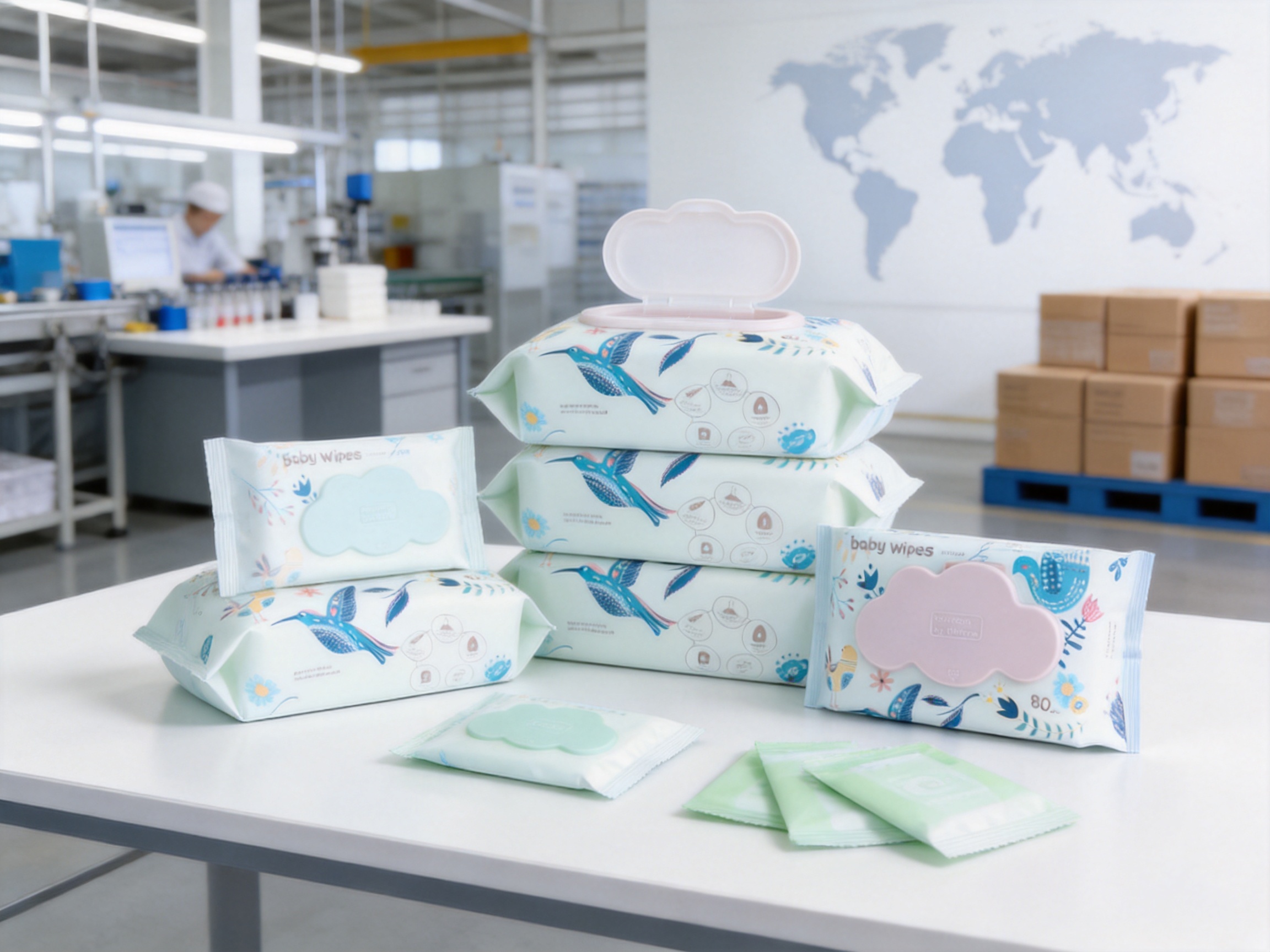
Piece counts can range from single-piece sachets to large family packs of up to 200 pieces. Single wipes are useful for travel, sampling, medical-adjacent hygiene kits, hospitality, or promotional distribution. Mid-size packs are suitable for diaper bags and daily use. Large packs appeal to families seeking better value.
Grammage can range from 30 to 100 gsm. Lower grammage options may support economical products, while higher grammage wipes provide a thicker, more premium hand feel and improved durability. Size can also be adjusted within practical ranges, allowing brands to create compact wipes, standard baby wipes, or oversized cleaning sheets.
Fragrance options include unscented, fresh, lavender, lemon, lotus, fruit, coconut, cucumber, and other customized choices. For sensitive-skin baby wipes, unscented or very mild fragrance systems are often preferred. However, some markets still value gentle scent profiles, especially for general family care or refreshing wipes.
OEM/ODM flexibility allows a brand to move from concept to finished product efficiently. The manufacturer can help select substrate, test lotion compatibility, adjust folding patterns, design packaging, support quality documentation, and scale production. This reduces development risk and helps customers launch products faster.
10. Advanced Manufacturing Strengths
The production of high-quality baby wipes requires more than a filling line. It depends on integrated expertise in nonwoven materials, hygiene product conversion, quality management, R&D, and scalable manufacturing. Zhejiang Uniquality Nursing Products Technology Co., Ltd., together with the broader Kingsafe and Uniquality industrial foundation, has developed strong capabilities across these areas.
Founded in 1987, the enterprise has more than three decades of experience in R&D, production, and sales of medical and hygienic nonwoven materials, nursing products, and high-end textile materials. This long history gives the company a deep understanding of fiber behavior, web formation, liquid interaction, hygiene standards, and consumer product performance.
The company has established multiple production bases in China, including locations in Zhejiang, Guangdong, Jiangsu, and Hubei. This multi-base structure supports stable supply capacity, regional logistics flexibility, and large-scale order fulfillment. For international buyers, production stability is a major advantage because baby wipes are repeat-purchase products that require consistent supply.
The company has introduced advanced production equipment and technology from Germany, France, and Italy. International equipment standards support precise process control, efficient output, and consistent product quality. In the wipes industry, consistency is essential: consumers expect every pack and every sheet to feel the same.
The enterprise’s product coverage includes spunlace nonwoven fabrics, spunmelt nonwoven fabrics, hot air through nonwoven fabrics, flushable and degradable nonwoven materials, wet wipes, dry wipes, baby diapers, pull-ups, wet toilet paper, cleansing wipes, and related hygiene products. This broad technical base gives the company an advantage over narrower competitors because it can integrate material development with finished-product manufacturing.
11. Quality Control and Hygiene Management
Baby care products must be produced under strict quality conditions. The wipe touches sensitive skin and may be used many times each day. Therefore, microbiological control, raw material traceability, formula consistency, packaging integrity, and finished-product inspection are all essential.
ISO-compliant cleanroom processing helps ensure microbiological purity and controlled production conditions. Clean manufacturing environments reduce contamination risks and support stable product safety. For international markets, this kind of quality infrastructure can help buyers meet regulatory expectations and retailer audit requirements.
Quality control should cover the entire production chain. Raw materials must be inspected for fiber composition, cleanliness, and physical properties. Nonwoven substrates should be checked for weight uniformity, tensile strength, absorbency, thickness, and surface quality. Lotion systems require monitoring of pH, appearance, odor, viscosity where applicable, and microbiological stability. Finished wipes require checks for sheet count, dimensions, fold accuracy, moisture content, seal strength, packaging appearance, and leakage resistance.
Reliable quality systems reduce consumer complaints and support long-term brand growth. In private label production, the manufacturer’s consistency becomes the customer’s reputation. A stable production partner allows brand owners to focus on marketing, distribution, and customer relationships while trusting the factory to maintain product integrity.
12. Supply Chain Value for Global Buyers
Global buyers increasingly evaluate suppliers based on more than unit price. They look for manufacturing depth, compliance awareness, sustainability options, product development support, reliable delivery, and long-term cooperation. Alcohol-free compostable baby wipes made by an experienced nonwoven hygiene manufacturer offer strong supply chain value.
First, the product supports sustainability differentiation. A retailer can add compostable wipes to its eco-friendly baby care range, while a distributor can offer a premium alternative to standard synthetic wipes. Second, the product supports sensitive-skin positioning through alcohol-free formulation and soft viscose substrate. Third, flexible customization allows customers to adapt product specifications for local preferences.
Logistical reliability is also important. A company with multiple production bases and large-scale manufacturing experience can better support repeat orders, seasonal demand, and promotional volume. This matters for supermarkets, pharmacy chains, e-commerce brands, and baby care distributors, where stockouts can quickly lead to lost sales.
For customers seeking OEM/ODM cooperation, technical communication is another advantage. A supplier with deep nonwoven knowledge can help solve issues such as lotion compatibility, wipe strength, packaging leakage, drying-out problems, texture selection, and product positioning. This makes development more efficient and reduces costly trial-and-error.
13. Market Positioning Opportunities
Alcohol-free compostable baby wipes can be positioned in several profitable market segments. The first is premium sensitive-skin baby care. In this segment, consumers value softness, mild formulas, and trusted materials. The product’s alcohol-free claim and viscose substrate support this positioning well.
The second segment is eco-friendly baby care. Compostable and plant-derived claims are powerful differentiators in markets where parents are concerned about plastic waste. Packaging can emphasize cellulose-based material, reduced plastic fiber content, and responsible disposal guidance.
The third segment is private label retail. Supermarkets, pharmacies, and e-commerce platforms often need products that provide strong value while still meeting quality and sustainability expectations. Customizable specifications allow the product to be tailored for entry-level, mid-range, and premium shelves.
The fourth segment is travel and convenience. Small packs or single sachets are useful for diaper bags, airplanes, hotels, clinics, and outdoor activities. Alcohol-free gentle wipes are suitable for many quick-clean situations beyond diaper changes.
The fifth segment is family hygiene. Although designed for babies, soft compostable wipes can also be used by adults with sensitive skin, elderly care users, or anyone needing gentle cleansing. This broader usability can support product line extensions.
14. Packaging and Consumer Experience
Packaging plays a major role in wet wipe performance. Even the best substrate and lotion system can fail if the pack does not preserve moisture or allow smooth dispensing. Effective packaging must protect the wipes from drying, prevent leakage, maintain hygiene, and provide convenient access.
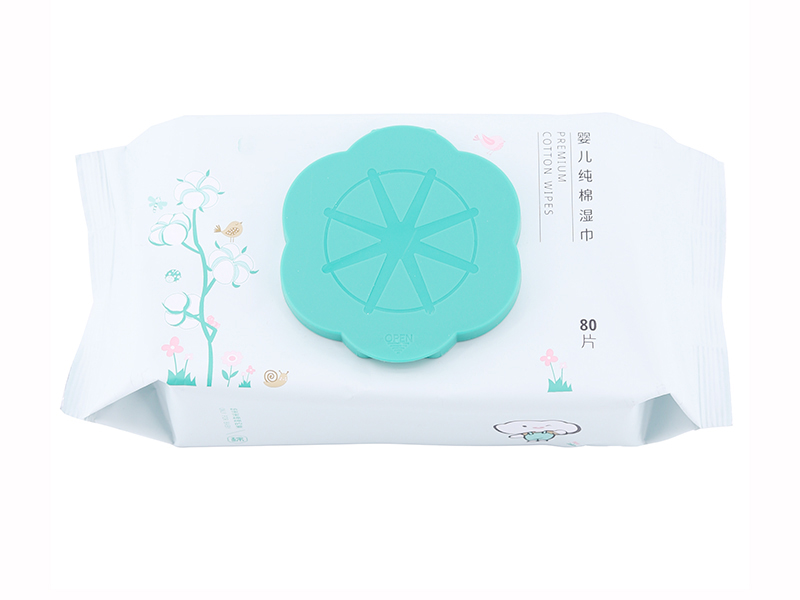
For baby wipes, common packaging options include soft packs with resealable labels, soft packs with plastic lids, travel packs, refill packs, and individual sachets. The choice depends on market position and usage scenario. Premium products often use a lid for better moisture retention and convenience. Economy products may use a resealable label to control cost.
Dispensing behavior is especially important. Parents often use one hand while holding a baby with the other. If wipes tear, clump, or fail to separate properly, the experience becomes frustrating. Stable nonwoven structure, correct folding, and appropriate lotion level all contribute to smooth dispensing.
Packaging design should also communicate the product’s advantages clearly. Important claims may include alcohol-free, compostable, plant-derived viscose, soft and absorbent, suitable for sensitive skin, pH-balanced, and OEM/private label customization. Claims should always be supported by appropriate testing and local regulatory compliance.
15. Responsible Formula Development
The lotion system used in baby wipes must be carefully developed. It should clean effectively while remaining mild. Because the product is alcohol-free, the formula can focus on purified water, mild cleansing agents, humectants, soothing components, pH adjustment, and preservation systems suitable for wet wipe applications.
Preservation is necessary because wet wipes contain water and are stored for extended periods. A responsible preservation system helps prevent microbial growth while remaining compatible with sensitive-skin requirements. Formula development should balance safety, mildness, stability, odor, and regulatory acceptance.
Fragrance selection should also be handled carefully. Although fragrance can improve consumer appeal, many sensitive-skin products are fragrance-free or lightly scented. Unscented versions are often preferred for newborns and dermatology-conscious consumers. Where fragrance is used, it should be selected according to market regulations and safety standards.
The viscose substrate’s strong liquid compatibility supports a wide range of lotion systems. Its absorbency helps distribute the formula evenly, improving consistency from the first wipe to the last wipe in the pack.
16. Why Manufacturing Experience Gives the Product an Edge
In the baby wipes market, competitors may offer similar claims, but manufacturing experience determines whether those claims translate into dependable products. A supplier with decades of nonwoven and hygiene product experience has practical knowledge that cannot be replaced by simple assembly operations.
For example, compostable viscose wipes must be soft but strong. Increasing softness can sometimes reduce strength; increasing strength can sometimes reduce softness. Experienced process engineers understand how to adjust fiber selection, web formation, lapping method, pattern, grammage, and lotion loading to reach the right balance.
Similarly, packaging moisture retention depends on the interaction between substrate, lotion amount, folding pattern, film barrier properties, and sealing quality. If any one factor is poorly controlled, wipes may dry out or leak. Mature production systems help prevent these problems.
Large-scale manufacturing experience also supports cost control. A company that can produce nonwoven materials and finished hygiene products has better control over raw materials, process efficiency, and technical troubleshooting. This can provide buyers with more stable quality and more competitive long-term value.
17. Applications Beyond Standard Baby Care
Although these wipes are designed primarily for baby care, their properties make them suitable for several related applications. The alcohol-free formula and soft viscose substrate can support gentle face and hand cleaning, maternity care, elderly care, travel hygiene, household quick cleaning, and personal care.
In maternity care, gentle wipes may be used by mothers who prefer mild cleansing products. In elderly care, soft alcohol-free wipes can help reduce discomfort during frequent cleaning. In travel, compact packs provide convenient hygiene without the harshness of alcohol-based products. In family care, a compostable wipe can appeal to households trying to reduce plastic consumption.
This application flexibility helps buyers create product families. A single material platform can be adapted into baby wipes, sensitive skin wipes, family wipes, travel wipes, and eco-friendly personal care wipes. This improves development efficiency and brand consistency.
18. Q&A: Common Questions About Alcohol-Free Compostable Baby Wipes
Q1: What makes these baby wipes compostable?
The wipes can be made with 100% viscose, a plant-derived cellulose fiber. Unlike synthetic plastic fibers, viscose is designed to biodegrade under appropriate conditions. For compostability claims, brands should match product design with relevant testing standards and disposal guidance.
Q2: Are alcohol-free wipes better for babies?
Alcohol-free wipes are generally preferred for frequent baby care because they avoid ethanol and harsh solvent effects that may dry or irritate delicate skin. When combined with a mild, pH-balanced lotion, they support gentle daily cleansing.
Q3: How does viscose compare with polyester in baby wipes?
Viscose is plant-derived, hydrophilic, soft, absorbent, and biodegradable under suitable conditions. Polyester is synthetic and durable, but it is petroleum-based and can contribute to persistent plastic waste. For eco-friendly baby care, viscose offers a stronger sustainability profile.
Q4: Can the wipe size and thickness be customized?
Yes. The wipes can be customized within a width range of 12–22 cm, a length range of 12–30 cm, and a grammage range of 30–100 gsm. This allows customers to develop economy, standard, or premium products.
Q5: What surface patterns are available?
Available patterns include plain, mesh, dot embossed, flower, stars, and other customized textures. Different textures can improve softness, cleaning friction, appearance, or product differentiation.
Q6: Are fragrance-free versions available?
Yes. Unscented options are available and are often recommended for newborns or sensitive-skin positioning. Other fragrance options can also be developed according to market demand.
Q7: What is the benefit of parallel and semi-cross lapping?
These manufacturing methods help control fiber orientation and web strength. Parallel lapping supports efficient production and machine-direction strength, while semi-cross lapping improves balanced strength and dimensional stability.
Q8: Are these wipes suitable for private label programs?
Yes. The product is highly suitable for OEM/ODM and private label projects because specifications, formulas, packaging, fragrance, texture, and branding can be customized.
Q9: Why is liquid loading important?
Liquid loading determines how moist the wipe feels and how effectively it cleans. Viscose has strong absorbency, helping the wipe hold and release lotion evenly during use.
Q10: What should buyers consider when making compostability claims?
Buyers should confirm the exact material composition, test results, certification requirements, and local regulations. Compostability claims should be accurate, evidence-based, and clear about proper disposal conditions.
19. Conclusion
Alcohol-free compostable baby wipes made with 100% viscose represent a strong response to the changing expectations of the baby care and hygiene markets. They combine the softness and absorbency needed for sensitive skin with a plant-derived material structure that supports environmental responsibility. Compared with conventional synthetic wipes, they offer better sustainability positioning, reduced microplastic concerns, strong liquid management, lower static, and a premium tactile experience.
The product’s value is strengthened by advanced manufacturing technologies such as parallel and semi-cross lapping, customizable surface patterns, flexible grammage and sizing, and compatibility with mild alcohol-free lotion systems. These features allow buyers to develop products for premium baby care, eco-friendly retail, private label programs, travel hygiene, and family care.
Manufacturing capability is a key differentiator. With decades of nonwoven and hygiene product experience, advanced equipment, multiple production bases, clean manufacturing conditions, and OEM/ODM service capacity, Zhejiang Uniquality Nursing Products Technology Co., Ltd. offers buyers a reliable foundation for building competitive wet wipe products. For brands seeking a product that is gentle, practical, customizable, and aligned with sustainability trends, alcohol-free compostable viscose baby wipes provide a compelling solution.
References
1. EDANA. Guidelines for Nonwoven Wipe Materials and Wet Wipe Product Performance.
2. INDA. Nonwovens Industry Technical Publications on Spunlace and Hygiene Applications.
3. European Commission. Policy Frameworks on Single-Use Plastics and Sustainable Product Design.
4. ISO Standards for Cleanroom Manufacturing, Microbiological Control, and Quality Management Systems.
5. Textile Exchange. Preferred Fiber and Materials Market Reports.
6. World Health Organization. General Principles of Hygiene Product Safety and Skin Health Considerations.
7. Academic literature on regenerated cellulose fibers, biodegradation behavior, and absorbent nonwoven structures.