中文简体
中文简体 English
 日本語
日本語 русский
 Español
Modern kitchens demand cleaning solutions that are fast, hygienic, practical, and gentle enough for daily use. Kitchen cleaning wipes have become an essential household product because they combine the cleaning power of a prepared wiping material with the convenience of immediate use. Instead of reaching for a spray bottle, cloth, sponge, and water, users can take a single wipe and clean countertops, stovetops, sinks, range hoods, dining tables, appliances, and other high-contact kitchen surfaces. The product discussed in this article is designed for everyday kitchen maintenance as well as tougher grease-removal tasks, offering a balance of strength, absorbency, skin comfort, customization, and production reliability.
Kitchen cleaning wipes are not merely disposable cloths. A well-developed wipe depends on the right nonwoven material, appropriate grammage, carefully selected fibers, controlled liquid loading, practical sheet size, pleasant or neutral fragrance options, and a mild formulation that cleans without creating unnecessary irritation. In competitive markets, the difference between an ordinary wipe and a high-performance kitchen wipe often appears in the details: how the fabric resists tearing, how much liquid it carries, how easily it picks up oil, whether it leaves residue, whether the user’s hands remain comfortable, and whether the packaging supports long-term freshness.
Zhejiang Uniquality Nursing Products Technology Co., Ltd., supported by the long industrial foundation of Kingsafe & Uniquality, manufactures kitchen cleaning wipes through advanced nonwoven production and converting capabilities. Founded in 1987, the group has accumulated decades of experience in medical and hygienic nonwoven materials, wet wipes, dry wipes, baby diapers, pull-ups, wet toilet paper, cleansing wipes, and related personal and household care products. This background gives the company a clear advantage: it understands both the substrate and the finished wipe. Many suppliers purchase base material externally and simply convert it into wipes, but a vertically integrated and technically experienced manufacturer can better control fiber selection, web formation, thickness, softness, absorbency, tensile strength, liquid distribution, and final product consistency.
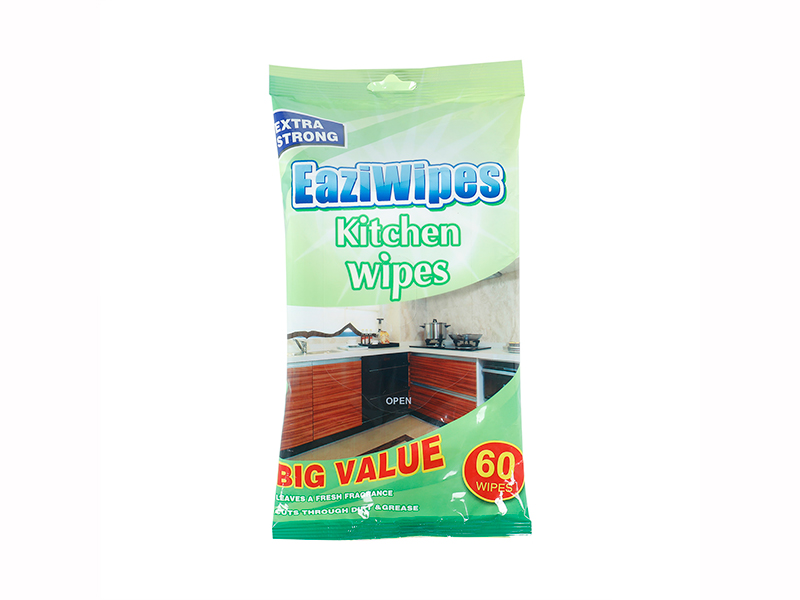
Kitchen cleaning wipes
Product Overview: A Practical Wipe for Demanding Kitchen Cleaning
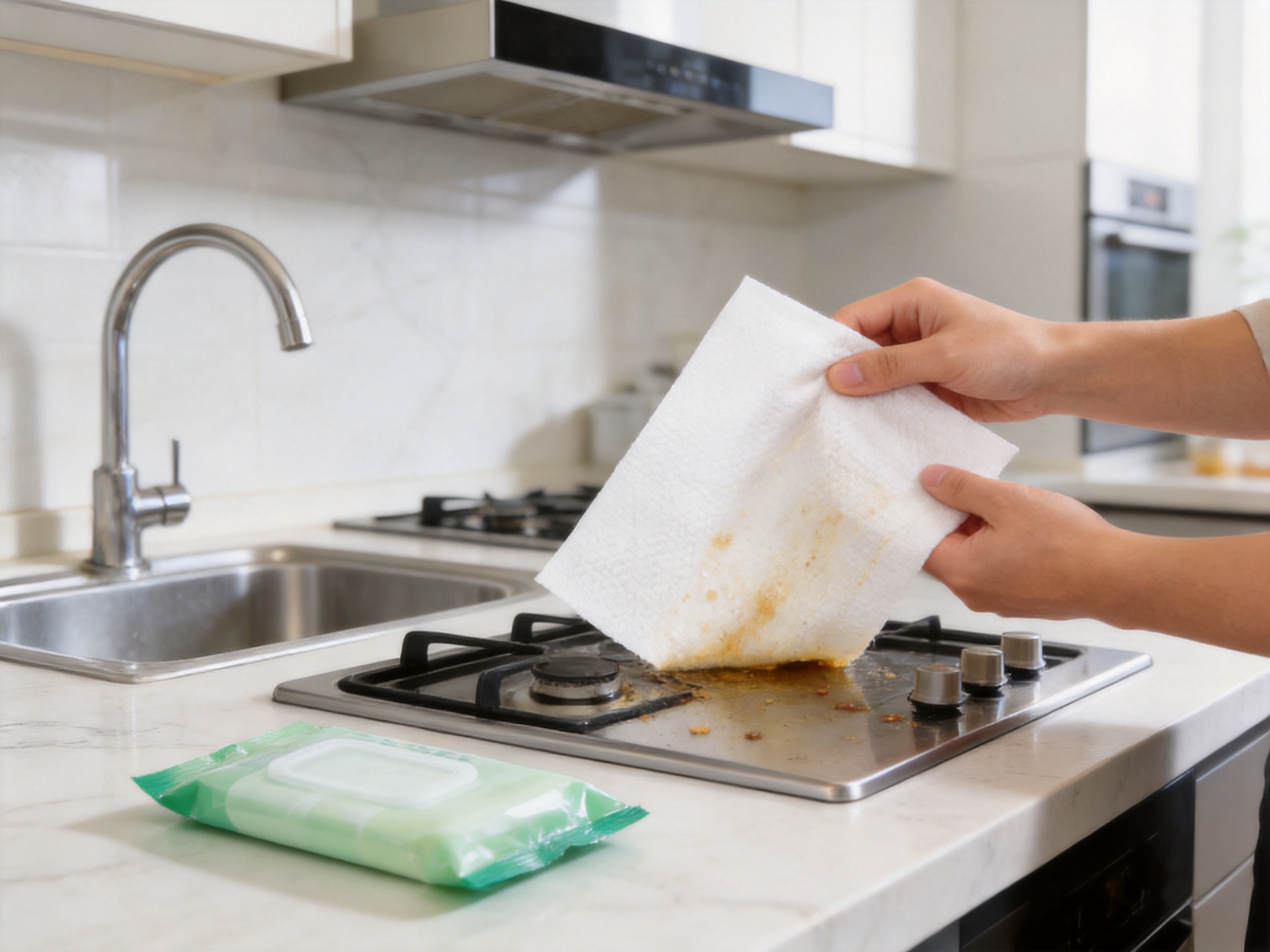
The kitchen cleaning wipe is made from premium nonwoven fabrics engineered to be durable, flexible, and resistant to tearing. Its thick design enables it to hold sufficient cleaning liquid, allowing users to tackle stubborn oil stains and food residues without needing to pre-wet the cloth. This feature is especially useful in busy households, restaurants, office pantries, rental apartments, and other spaces where quick and reliable cleaning is needed. The wipe is intended for convenient use on many kitchen surfaces, including sinks, stoves, countertops, range hoods, backsplashes, appliance exteriors, cabinet handles, dining surfaces, and other frequently touched areas.
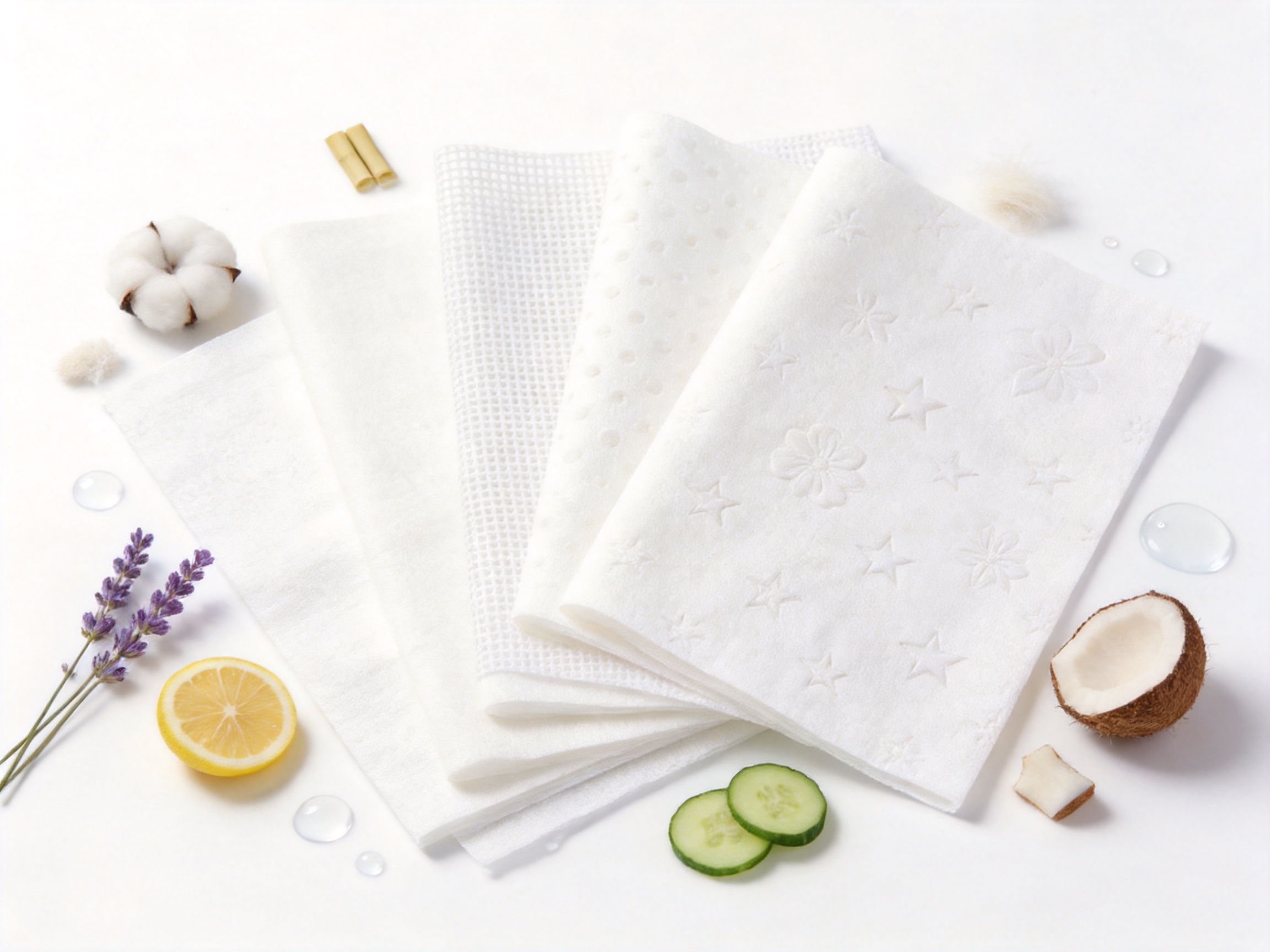
The product can be manufactured from a variety of material options, including polyester, viscose, bamboo, lyocell, and cotton. Each fiber type contributes different characteristics. Polyester improves strength and durability. Viscose adds softness and absorbency. Bamboo and lyocell can offer a natural-feeling touch and favorable moisture management. Cotton provides a familiar softness and comfort. By adjusting fiber blends, the wipe can be customized for a specific market position, from economical daily household cleaning to premium natural-fiber-oriented products.
The wipe can be produced in grammage options from 30 to 100 gsm. A lighter wipe may be suitable for quick surface refreshing, while a heavier wipe supports more demanding degreasing and scrubbing. Size options range from 12 cm by 12 cm to 22 cm by 30 cm, allowing brands and buyers to select compact wipes for light use, standard wipes for everyday household needs, or larger sheets for heavy-duty kitchen tasks. Pattern options include plain, mesh, dot-embossed, flower, and star designs, offering both functional texture and visual differentiation. Fragrance choices include unscented, fresh, lavender, lemon, lotus, fruit, coconut, cucumber, and other customized scents.
In use, the wipe is designed to combine cleaning efficiency with user comfort. Its mild, skin-safe formula helps clean thoroughly while reducing the risk of hand discomfort during regular use. Special skin care ingredients can be incorporated to support a more pleasant handling experience. For consumers who clean kitchens daily, this is an important advantage over harsher cleaning formats that may dry the skin or require gloves.
Core Specifications
Specification |
Available Options |
Practical Value |
Pieces per Pack |
1 to 200 pieces |
Supports travel packs, household packs, promotional packs, and bulk formats |
Technology |
Parallel and semi-cross structures |
Improves wipe durability, uniformity, and handling performance |
Material |
Polyester, viscose, bamboo, lyocell, cotton |
Allows customized strength, softness, absorbency, and sustainability positioning |
Pattern |
Plain, mesh, dot embossed, flower, stars |
Supports cleaning texture, appearance, and brand differentiation |
Grammage |
30 to 100 gsm |
Enables light, standard, and heavy-duty product designs |
Size |
Width 12 to 22 cm, length 12 to 30 cm |
Fits different cleaning scenarios and pack formats |
Fragrance |
Unscented, fresh, lavender, lemon, lotus, fruit, coconut, cucumber, and more |
Matches consumer preferences across different markets |
Why Kitchen Wipes Have Become a Household Necessity
The kitchen is one of the most active areas in any home. Food preparation, cooking oil, sauces, crumbs, water splashes, fingerprints, pet activity, and frequent hand contact all contribute to visible and invisible contamination. Traditional cleaning tools such as rags, sponges, and towels can be useful, but they also have limitations. When reused repeatedly, they can retain moisture, grease, food particles, and odors. If not washed and dried properly, they may become an unpleasant source of bacterial growth and cross-contamination.
Disposable kitchen cleaning wipes solve many of these everyday problems. A fresh wipe can be used for a specific task and then discarded, reducing the chance that grease, bacteria, or odor will be transferred from one surface to another. This is especially beneficial for high-contact surfaces such as faucet handles, stovetop knobs, refrigerator handles, microwave buttons, cabinet pulls, and kitchen counters. Consumers increasingly value this hygienic convenience because it supports a cleaner home environment with less time and effort.
Another key reason for the growth of kitchen wipes is the pace of modern life. Many consumers want cleaning products that are easy to store, quick to use, and simple to dispose of. A ready-to-use wipe eliminates preparation time. There is no need to dilute concentrate, find a cloth, apply spray separately, or rinse the cloth afterward. This simplicity encourages more frequent cleaning, which can improve overall kitchen hygiene.
Kitchen wipes are also popular because they deliver predictable dosing. With sprays and reusable cloths, users may apply too much or too little cleaning solution. Too much liquid can leave residue or require additional wiping, while too little may reduce cleaning effectiveness. A well-made wipe is loaded with an appropriate amount of solution, helping provide consistent performance sheet after sheet.
Advantages Over Ordinary Cleaning Cloths and Low-Quality Wipes
The product’s major advantages are rooted in material engineering and manufacturing control. Compared with ordinary rags, the wipe is more hygienic because it is designed for single-use cleaning. It reduces the accumulation of old grease and odor that can occur in reusable cloths. Compared with thin, low-cost disposable wipes, it offers better durability and liquid capacity. The premium nonwoven structure resists tearing during wiping, scrubbing, and folding, making it suitable for cleaning oily stovetops and textured surfaces.
Another advantage is convenience without compromise. Some cleaning wipes are convenient but too small, too dry, too weak, or too heavily fragranced. This product can be customized across size, grammage, fiber blend, fragrance, and pattern, allowing buyers to create a wipe that fits their exact market. A supermarket private-label brand may prefer a cost-effective standard sheet with a fresh fragrance. A premium household care brand may choose a higher gsm, embossed texture, bamboo or lyocell blend, and a more refined scent. A professional cleaning distributor may request large sheets, stronger polyester content, and higher liquid loading. The manufacturing flexibility makes the product suitable for many channels.
The wipe’s skin-friendly formula is another point of differentiation. Kitchen cleaning often involves repeated hand contact with cleaning products. Harsh formulas may leave users feeling dryness, tightness, or irritation. A mild formula, supported by optional skin care ingredients, improves the user experience. This is important not only for household consumers but also for people who clean frequently in food service, office, childcare, and hospitality environments.
Texture choices also provide an advantage. Mesh and embossed patterns can enhance contact with residues and improve pickup of crumbs, oil, and stuck-on particles. Plain wipes may be preferred for smooth surfaces and general cleaning. Decorative patterns such as flower and star designs help create a recognizable product appearance, which is valuable for branding and shelf appeal. A wipe’s visual and tactile qualities can influence consumer perception before and during use.
Material Science Behind Strong and Absorbent Wipes
The performance of a kitchen wipe begins with the nonwoven substrate. Nonwoven fabric differs from woven textile because fibers are bonded into a sheet without traditional yarn weaving. This allows manufacturers to create materials with specific properties such as high absorbency, softness, dimensional stability, and controlled strength. For wet wipes, the substrate must hold liquid, release it evenly, remain intact during use, and feel comfortable in the hand.
Polyester is valued for strength, dimensional stability, and resistance to tearing. In kitchen cleaning, the wipe may be used against greasy stovetops, sink edges, and appliance surfaces. A weak wipe can shred or roll up during cleaning, frustrating the user and reducing perceived value. Polyester helps prevent this problem. Viscose contributes absorbency and softness, helping the sheet retain cleaning solution and spread it across surfaces. Bamboo, lyocell, and cotton can provide additional softness and a natural material story, supporting premium or environmentally conscious product positioning when used appropriately.
Grammage is another important factor. A 30 gsm wipe can be economical and suitable for light tasks. A 50 to 70 gsm wipe may provide a balanced everyday cleaning experience. A 80 to 100 gsm wipe feels thicker and more substantial, making it suitable for demanding grease removal, larger surface areas, and premium market segments. The ability to manufacture across this range allows the company to support diverse customer requirements rather than offering a one-size-fits-all product.
Parallel and semi-cross technologies influence the fiber arrangement and mechanical behavior of the sheet. A parallel structure can provide good uniformity and efficient production for standard wipe applications. Semi-cross technology can improve strength in multiple directions, helping the wipe resist tearing when pulled, folded, or scrubbed. This matters in kitchen cleaning because users rarely wipe in one direction only. They rub, twist, press, fold, and apply pressure. A well-engineered web structure maintains integrity under these motions.
Embossing and patterning further improve the product. Dot embossing can add texture and bulk, helping the wipe pick up debris and improving its hand feel. Mesh patterns can support scrubbing and particle capture. Flower and star patterns add visual distinction and can make a private-label product more memorable. These details show that kitchen wipes are not simple commodities; they are engineered products with many adjustable performance variables.
Cleaning Formula: Mild, Effective, and User-Oriented
A kitchen wipe must clean effectively, but it must also be appropriate for frequent household use. The formula can be designed to target grease, food residue, and everyday dirt while remaining mild for the user’s hands. For kitchen cleaning, the ideal formulation supports oil removal, quick surface wiping, and a fresh clean feeling without excessive residue or overpowering scent.
Fragrance choice is particularly important. Lemon and fresh scents are popular in kitchen cleaning because they communicate cleanliness and grease-cutting freshness. Lavender and lotus may appeal to consumers who prefer a calmer home-care fragrance. Coconut, cucumber, fruit, and other scent options allow brands to differentiate themselves. Unscented options are also essential for consumers who are fragrance-sensitive or prefer a neutral cleaning product near food preparation areas.
Natural antibacterial ingredients can be incorporated depending on regulatory requirements and market positioning. When formulated and labeled appropriately, such ingredients can help address consumer concerns about hygiene. However, responsible product development requires that claims match validated performance and local regulations. A trustworthy manufacturer understands that kitchen cleaning products must be effective, safe, and accurately represented.
Skin comfort is another critical part of the formula. Because the wipe is handled directly, the solution should be designed to minimize unnecessary harshness. A product that cleans well but leaves the user’s hands uncomfortable may discourage repeat purchase. By combining a mild formula with skin care ingredients, the wipe offers a more pleasant cleaning experience and can stand apart from aggressive cleaners that prioritize strength but overlook daily usability.
Advanced Manufacturing Strengths
Zhejiang Uniquality Nursing Products Technology Co., Ltd. benefits from the wider manufacturing expertise of Kingsafe & Uniquality, a group founded in 1987 and recognized as a leading enterprise in China’s industrial textile industry. The company has built long-term competence in the research, development, production, and sales of medical and hygienic nonwoven materials, nursing products, and high-end clothing interlining. This industrial background is highly relevant to kitchen wipes because the same attention to hygiene, consistency, fiber control, and conversion quality is required in household cleaning products.
The company has established multiple production bases in China, including locations in Guangdong, Jiangsu, Hubei, and Zhejiang. This broad production footprint supports capacity, stability, and supply flexibility. For international buyers and private-label brands, manufacturing reliability is a major concern. A supplier with multiple production bases and extensive experience is better positioned to manage large orders, seasonal demand, product customization, and long-term supply partnerships.
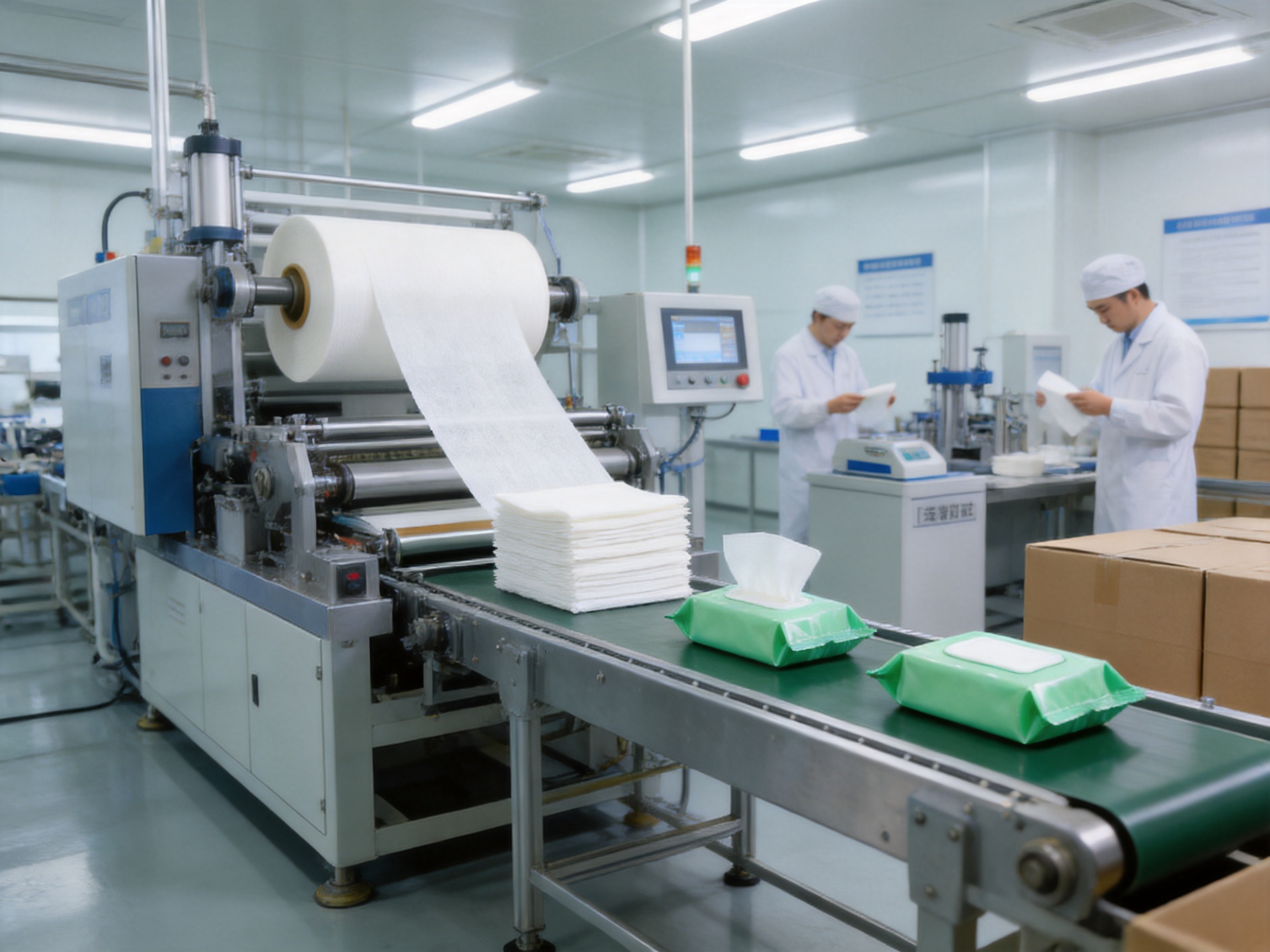
The group has introduced advanced production equipment and technology from Germany, France, and Italy. This international equipment foundation supports high-quality nonwoven manufacturing and finished-product conversion. Advanced equipment helps improve web uniformity, process control, product consistency, packaging quality, and production efficiency. In the wipes industry, these factors directly influence consumer satisfaction. If wipes are uneven, too dry, too wet, poorly folded, or inconsistently cut, users notice immediately. Modern production lines help prevent these issues.
The company’s products cover spunlace nonwoven fabrics, spunmelt nonwoven fabrics, hot-air-through nonwoven fabrics, flushable and degradable nonwoven fabrics, wet wipes, dry wipes, baby diapers, pull-ups, wet toilet paper, cleansing wipes, and other categories. This wide portfolio demonstrates technical breadth. Spunlace expertise is especially valuable for wet wipes because spunlace materials are known for softness, strength, and absorbency. A manufacturer with substrate and finished-product knowledge can optimize the wipe from the fiber stage to the packaged product.
As a national high-tech enterprise with decades of development, the company can support differentiation, functionalization, and customization. These capabilities are essential in the current household cleaning market. Retailers and brands need products that match their price point, consumer preference, packaging design, sustainability goals, fragrance profile, and performance expectations. A strong OEM and ODM partner must not only manufacture but also help develop practical, market-ready product solutions.
Quality Control from Raw Material to Finished Pack
Quality control is one of the most important differences between a dependable wipe manufacturer and an ordinary converter. Kitchen wipes must perform consistently from the first sheet to the last sheet. They must remain moist in the package, resist tearing during use, have stable fragrance, and meet agreed specifications. These outcomes require disciplined control at multiple production stages.
Raw material inspection is the first step. Fiber quality, nonwoven roll appearance, weight, thickness, strength, and absorbency must meet requirements before conversion. If raw materials vary too much, finished wipes will also vary. For a manufacturer with long-term nonwoven expertise, this inspection process is supported by deep knowledge of substrate behavior.
During liquid preparation, formula accuracy is essential. Ingredients must be measured properly, mixed uniformly, and controlled under hygienic production conditions. The liquid must be compatible with the substrate and packaging. It must remain stable throughout the product’s intended shelf life. Poor formula control can lead to odor changes, residue, inconsistent cleaning, or user dissatisfaction.
Conversion control includes cutting, folding, liquid application, counting, stacking, and packaging. Each pack should contain the correct number of wipes, with consistent sheet size and moisture level. Packaging seals must protect against leakage and drying. For resealable packs, the closure should support repeated opening and closing. For canisters or flow packs, dispensing should be smooth and convenient.
Finished product testing may include appearance checks, weight checks, moisture content evaluation, tensile strength, packaging integrity, fragrance assessment, microbial control, and performance testing. These procedures help ensure that products delivered to customers meet expectations. In private-label manufacturing, reliable quality control protects both the manufacturer and the buyer’s brand reputation.
Customization for OEM and Private-Label Buyers
One of the product’s strongest commercial advantages is its customization range. The company supports OEM and ODM services for wipes and related hygiene products, making it suitable for retailers, distributors, cleaning brands, e-commerce sellers, and institutional buyers. Rather than offering a fixed wipe, the manufacturer can adjust multiple elements to create a product aligned with target consumers.
Customization can begin with the substrate. Buyers can select polyester-rich blends for strength, viscose-rich blends for absorbency, bamboo or lyocell blends for a softer natural feel, or cotton-containing blends for comfort and familiarity. The grammage can be chosen based on cost and performance goals. A household value line may use a moderate gsm for affordability, while a premium degreasing wipe may use a thicker substrate.
Sheet size is another important decision. Small sheets reduce cost and suit light cleaning, but larger sheets provide better coverage and may be perceived as more effective. For kitchen wipes, a practical size should allow users to clean a meaningful surface area without wasting material. The available range from 12 cm to 22 cm in width and 12 cm to 30 cm in length gives buyers strong flexibility.
Fragrance development is a powerful branding tool. Lemon is a classic kitchen scent, while fresh and unscented options suit broad markets. Lavender, coconut, cucumber, lotus, and fruit scents can create a distinctive product personality. In some markets, consumers prefer strong fragrance as a signal of cleanliness. In others, light fragrance or unscented products are more desirable. The ability to offer multiple fragrance options helps brands localize their products.
Packaging customization can further support brand identity and market positioning. Although the provided specification focuses on wipe options, private-label buyers typically consider pack count, film design, label design, resealable sticker or lid, carton configuration, and display requirements. A supplier with wet wipe manufacturing experience can help align product structure with packaging practicality, ensuring that wipes remain moist and easy to dispense.
Applications Across Household and Commercial Settings
Kitchen cleaning wipes are useful in many environments beyond the home. In apartments and dormitories, they help users maintain cleanliness in small shared cooking areas. In offices, they are practical for pantry counters, coffee stations, microwave areas, and breakroom tables. In hospitality settings, they can support fast turnover cleaning of guest kitchenettes or staff food-preparation areas. In food service environments, they may be useful for non-food-contact cleaning tasks when formulated and labeled according to relevant rules.
At home, the wipes are especially convenient after cooking. Oil splashes on stovetops, sauce drops on counters, and fingerprints on appliances can be wiped away immediately. Quick cleaning prevents residues from drying and becoming harder to remove. A wipe can also be used after meal preparation to clean cutting-area surroundings, cabinet handles, and dining surfaces. Because each wipe is disposable, users can clean one task and discard it rather than rinsing a greasy cloth.
For range hoods and stove backsplashes, the wipe’s strength and liquid capacity are especially valuable. Grease deposits can require more pressure and repeated strokes. A low-quality wipe may tear, dry out, or leave lint. A thicker nonwoven wipe with appropriate structure maintains contact with the surface and helps lift oily residue. For sinks and faucets, the wipe can remove water marks, soap residue, and food splashes quickly.
Appliance exterior cleaning is another common use. Refrigerator doors, microwave panels, toaster exteriors, rice cookers, ovens, and dishwashers often collect fingerprints and light grime. A ready-to-use wipe allows users to refresh these surfaces without setting up a full cleaning routine. This convenience encourages small cleaning actions throughout the day, resulting in a kitchen that looks and feels cleaner with less effort.
Consumer Experience: What Makes a Wipe Feel Better
Consumers judge kitchen wipes through direct sensory experience. They notice the first touch, the ease of pulling a sheet from the pack, the wetness level, the scent, the sheet size, the glide on surfaces, the ability to lift grease, and whether the wipe stays intact. A product that performs well in these everyday moments earns repeat purchases.
The thick design supports a confident hand feel. When users hold a wipe that feels substantial, they are more likely to trust it for difficult cleaning tasks. A wipe that is too thin can feel cheap, even if the formula is adequate. Thickness also helps protect the hand from direct contact with grime, making cleaning more pleasant.
Moisture balance is equally important. A wipe should not be so dry that it drags across the surface or fails to dissolve residue. It should not be so wet that it drips excessively or leaves the counter soaked. Proper liquid loading allows the wipe to clean efficiently while leaving a manageable surface finish. This balance depends on both formulation and substrate absorbency.
Fragrance should support the cleaning experience rather than overpower it. A pleasant lemon or fresh scent can make the kitchen feel cleaner, but excessive fragrance may be undesirable near food areas. Offering unscented and multiple fragrance options allows buyers to choose the right sensory profile for their customers.
Finally, wipe strength determines whether the experience feels smooth or frustrating. Tearing, pilling, or linting can turn a simple cleaning task into a messy one. The use of durable nonwoven fabric, appropriate fiber blends, and parallel or semi-cross technologies helps deliver the strength required for kitchen cleaning.
Competitive Positioning in the Wipes Market
The kitchen wipes market includes many product types, from low-cost thin wipes to premium textured degreasing wipes. To stand out, a product must offer clear value. This wipe’s competitive position is based on four pillars: material flexibility, cleaning performance, skin-friendly formulation, and manufacturing strength.
Material flexibility allows the product to compete across multiple price levels. Some competitors may only offer limited substrates or fixed grammage. This manufacturer can support 30 to 100 gsm options and several fiber choices, enabling value, standard, and premium products. This flexibility is important for private-label customers who need to match local market demand.
Cleaning performance comes from the combination of substrate strength, liquid capacity, texture, and formula. A wipe that can handle stubborn oil stains without pre-wetting provides real convenience. It saves time and reduces the need for additional cleaning tools. This is a meaningful advantage over dry cloths, ordinary paper towels, and weak wipes.
Skin-friendly design differentiates the product from harsh cleaners. Many users clean without gloves, especially for quick kitchen tasks. A mild formula with skin care ingredients makes frequent use more comfortable. This advantage can be emphasized in consumer communication, particularly for households that clean several times per day.
Manufacturing strength gives buyers confidence. With decades of industrial textile experience, advanced equipment, multiple production bases, and broad nonwoven product expertise, Zhejiang Uniquality Nursing Products Technology Co., Ltd. offers more than simple contract packing. It can support product development, material optimization, consistent production, and long-term supply.
Sustainability and Responsible Product Development
Sustainability is increasingly important in the wipes industry. Consumers and retailers are paying closer attention to material choices, packaging, product claims, and disposal guidance. Kitchen wipes are disposable by design, so responsible development should focus on efficient material use, appropriate fiber selection, accurate labeling, and practical pack formats that reduce waste.
The availability of bamboo, lyocell, cotton, viscose, and other fiber options allows buyers to explore different sustainability narratives. Some markets may value plant-based fibers or softer biodegradable-oriented materials, while others may prioritize durability and cost. The company’s experience with flushable and degradable nonwoven fabrics also indicates broader technical awareness of evolving material requirements, although each kitchen wipe design must be evaluated according to its own intended use and disposal method.
Efficient cleaning also contributes to responsible consumption. A strong wipe that completes a task with one sheet may be preferable to a weak wipe that requires several sheets. Higher performance can reduce total wipe usage per cleaning event. Choosing the correct sheet size, grammage, and liquid loading is therefore not only a cost decision but also a resource-efficiency decision.
Responsible claims are essential. If a product is marketed with antibacterial, biodegradable, compostable, natural, or skin-friendly statements, those claims should be supported by appropriate testing and comply with local regulations. A professional manufacturer can help buyers understand the difference between marketing language and validated product performance.
Manufacturing Process: From Fiber to Finished Kitchen Wipe
The production of a high-quality kitchen cleaning wipe can be understood as a sequence of carefully controlled steps. First, suitable fibers are selected based on the desired product profile. Polyester, viscose, bamboo, lyocell, and cotton can be blended to achieve the target balance of strength, softness, absorbency, and cost. The selected fibers are processed into a nonwoven web using technologies that create a uniform sheet.
Next, the web structure is controlled through parallel or semi-cross technology. This affects the direction and distribution of fibers, influencing tensile strength and user handling. For kitchen wipes, cross-directional integrity is valuable because users apply pressure in different directions. The nonwoven sheet may then receive patterning or embossing to improve texture, bulk, appearance, and cleaning performance.
The substrate is produced to the required grammage, usually between 30 and 100 gsm. Consistent grammage is important because it affects sheet thickness, absorbency, cost, and perceived quality. The nonwoven roll must then be inspected and prepared for conversion. During conversion, the material is cut to the selected sheet size and folded into the desired format.
The cleaning liquid is prepared separately according to the product formula. This solution may include cleaning agents, fragrance, skin comfort ingredients, and other functional components. It must be mixed uniformly and applied accurately to the wipes. Liquid loading control is essential: too little solution reduces cleaning performance, while too much can cause dripping, leakage, or waste.
After wetting, the wipes are counted and packed. Packaging must protect moisture, prevent contamination, and allow convenient dispensing. Depending on customer requirements, the pack may contain a single wipe, a small travel quantity, a standard household count, or a large 200-piece format. Finished packs are checked for seal integrity, appearance, weight, count, and other quality indicators before shipment.
Benefits for Retailers, Distributors, and Brand Owners
For retailers and brand owners, kitchen cleaning wipes offer strong category potential. They are consumable products, meaning customers purchase them repeatedly. They address a frequent household need and are easy to demonstrate through packaging claims such as grease removal, convenience, hygienic single use, skin-friendly formula, and fresh fragrance. A well-designed kitchen wipe can fit supermarket shelves, e-commerce bundles, cleaning aisles, home-care promotions, and private-label programs.
Working with an experienced OEM and ODM manufacturer helps reduce development risk. Instead of starting from zero, buyers can select from established material ranges, fragrance options, patterns, sizes, and pack counts. They can also request adjustments to create differentiation. This speeds up product launch while maintaining technical reliability.
Distributors benefit from product versatility. Kitchen wipes can be sold to household retailers, cleaning supply channels, hospitality suppliers, office maintenance buyers, and online marketplaces. Multiple pack sizes allow different sales strategies. Small packs can encourage trial. Medium packs support daily household use. Large packs create value for frequent users. Premium formulas and textures can target consumers willing to pay more for convenience and performance.
Private-label brands also benefit from the manufacturer’s broad hygiene product background. Because the company produces wet wipes, dry wipes, wet toilet paper, cleansing wipes, baby diapers, pull-ups, and nonwoven materials, it understands the standards expected in hygiene-related categories. This experience supports quality discipline and product consistency, both of which are essential for building consumer trust.
Practical Selection Guide for Buyers
When selecting a kitchen cleaning wipe, buyers should first identify the target user and cleaning scenario. For everyday light cleaning, a moderate-size wipe with standard gsm and a fresh or lemon fragrance may be sufficient. For heavy grease cleaning, a larger and thicker wipe with a textured pattern may be more suitable. For fragrance-sensitive markets, unscented products should be included.
The second consideration is material positioning. If the product is intended to compete mainly on price, a practical polyester and viscose blend may provide a good balance of strength and absorbency. If the product targets premium or natural-oriented consumers, bamboo, lyocell, or cotton-containing options may support a more distinctive story. The material should always be chosen for real performance, not only marketing appeal.
The third consideration is packaging. A wipe can only perform well if it remains moist and easy to dispense. Buyers should choose pack formats that match local consumer habits. A resealable soft pack may be convenient for household use. Larger packs may require stronger closure systems to prevent drying. Single-wipe packs may be appropriate for travel, hospitality, or promotional use.
The fourth consideration is claim strategy. Claims such as tough on grease, gentle on hands, hygienic single use, no pre-wetting needed, and available in multiple fragrances can be effective if supported by product design. If antibacterial or other functional claims are used, testing and regulatory compliance should be planned early.
The fifth consideration is supplier reliability. A buyer should evaluate manufacturing experience, production capacity, quality control, customization ability, and communication. Zhejiang Uniquality Nursing Products Technology Co., Ltd. offers advantages in these areas through its long history, advanced equipment, multiple production bases, and deep nonwoven expertise.
Q&A Section
What are kitchen cleaning wipes mainly used for?
Kitchen cleaning wipes are used for quick and convenient cleaning of kitchen surfaces such as countertops, stovetops, sinks, range hoods, cabinet handles, appliance exteriors, dining tables, and other high-contact areas. They are especially useful for removing grease, food residue, fingerprints, water marks, and everyday dirt.
What makes these wipes different from ordinary rags?
Unlike reusable rags, these wipes are designed for hygienic single use. A rag can retain grease, moisture, odor, and bacteria if it is not washed and dried properly. A disposable wipe provides a fresh cleaning sheet for each task, reducing the risk of transferring contamination from one surface to another.
Why is nonwoven material important for kitchen wipes?
Nonwoven material determines the wipe’s strength, absorbency, softness, and durability. A high-quality nonwoven wipe can hold cleaning liquid, resist tearing, and clean surfaces efficiently. Materials such as polyester, viscose, bamboo, lyocell, and cotton can be blended to achieve different performance goals.
What does the 30 to 100 gsm range mean?
Gsm refers to grams per square meter, a measure of fabric weight. Lower gsm wipes are lighter and often more economical, while higher gsm wipes are thicker, stronger, and better suited for heavy-duty cleaning. The available 30 to 100 gsm range allows buyers to choose the right balance of cost and performance.
Are these wipes suitable for stubborn oil stains?
Yes. The thick nonwoven design helps hold sufficient cleaning liquid and provides the durability needed for greasy kitchen surfaces. The wipe can be used directly without pre-wetting, making it convenient for stovetops, range hoods, counters, and other areas where oil residue is common.
Can the fragrance be customized?
Yes. Fragrance options include unscented, fresh, lavender, lemon, lotus, fruit, coconut, cucumber, and other customized choices. This allows brands and buyers to match local consumer preferences and create differentiated product lines.
Are the wipes gentle on hands?
The wipes can be formulated with a mild, skin-friendly solution and special skin care ingredients. This helps make them comfortable for regular use, especially for consumers who clean kitchens frequently without gloves.
What pack sizes are available?
The product can be supplied in pack counts from 1 to 200 pieces. This range supports single-use sachets, travel packs, household packs, promotional packs, and larger value formats.
Can the wipe pattern affect cleaning performance?
Yes. Patterns such as mesh and dot embossing can improve texture, help pick up debris, and enhance the wiping experience. Plain patterns may be suitable for general cleaning, while decorative patterns such as flower and stars can support visual differentiation.
Why is the manufacturer’s nonwoven experience important?
A manufacturer with deep nonwoven experience can better control substrate quality, fiber blending, web formation, strength, absorbency, and finished wipe consistency. Zhejiang Uniquality Nursing Products Technology Co., Ltd. benefits from decades of expertise in medical, hygienic, household, and industrial nonwoven products.
Conclusion
Kitchen cleaning wipes have become an essential solution for modern surface care because they combine convenience, hygiene, and reliable cleaning performance. The product described here is designed to address the practical realities of kitchen cleaning: grease, frequent contact surfaces, time pressure, odor concerns, and the need for comfortable daily use. Its premium nonwoven construction provides strength and tear resistance, while its thick design supports effective liquid retention for stubborn oil stains and quick cleaning without pre-wetting.
The product’s customization options are a major advantage. With material choices including polyester, viscose, bamboo, lyocell, and cotton, grammage from 30 to 100 gsm, sizes from compact to large, multiple patterns, and a wide fragrance range, buyers can develop wipes for different markets and price levels. This flexibility supports value products, premium products, natural-feeling products, heavy-duty wipes, and fragrance-specific product lines.
Compared with ordinary rags, the wipes offer better hygiene through single-use convenience. Compared with low-quality disposable wipes, they provide stronger material, better liquid capacity, and more customization potential. Compared with harsh cleaning products, the mild and skin-friendly formula supports a more comfortable user experience. These advantages make the product attractive for households, retailers, distributors, private-label brands, and professional cleaning channels.
The manufacturing strength behind the product further increases its value. Zhejiang Uniquality Nursing Products Technology Co., Ltd., supported by the industrial foundation of Kingsafe & Uniquality, brings decades of nonwoven expertise, advanced production equipment from Europe, multiple production bases, strong R&D capability, and broad experience in hygiene and cleaning products. This combination of product performance and manufacturing reliability makes the kitchen cleaning wipe a competitive choice in a rapidly growing market.
For brands seeking a dependable OEM or ODM kitchen wipe solution, the key benefits are clear: strong and absorbent nonwoven materials, flexible specifications, mild and effective formulas, professional quality control, and the capacity to support long-term customized production. In a market where consumers expect convenience without sacrificing cleanliness, a well-engineered kitchen cleaning wipe can become a trusted daily household essential.
References
1. Russell, S. J. Handbook of Nonwovens. Woodhead Publishing.
2. Kissa, E. Handbook of Fiber Science and Technology: Nonwoven Fabrics. Marcel Dekker.
3. EDANA. Nonwovens Standard Procedures and Industry Guidance Materials.
4. INDA. Nonwoven Materials: Industry Definitions, Test Methods, and Application Guides.
5. McDonnell, G. Antisepsis, Disinfection, and Sterilization: Types, Action, and Resistance. ASM Press.
6. NielsenIQ. Global Consumer Trends in Home Care and Household Cleaning Products.
7. Euromonitor International. Home Care Market Development and Consumer Hygiene Trends.