中文简体
中文简体 English
 日本語
日本語 русский
 Español
Modern consumers expect intimate care products to be gentle, practical, hygienic, and reliable enough for everyday use. Feminine wipes meet this expectation by offering a convenient cleansing solution designed specifically for delicate intimate areas. Unlike ordinary cleansing tissues or general-purpose wet wipes, feminine wipes are formulated and manufactured with special attention to skin comfort, pH balance, softness, cleanliness, and controlled moisture. They are used at home, at work, while traveling, during menstruation, after exercise, before or after intimacy, and whenever a fresh, comfortable feeling is desired.
Feminine Wipes are positioned within the adult wipes category, but their function is more specialized than many conventional adult wipes. Their value lies in the balance between effective cleansing and mild skin care. The product is designed with a gentle, pH-balanced formula that helps reduce the risk of irritation while caring for sensitive skin. For consumers who want daily freshness without harshness, this is a meaningful advantage. For distributors, retailers, and private-label buyers, feminine wipes represent a growing hygiene category with strong demand, high repeat-purchase potential, and opportunities for product differentiation.
Behind a high-quality feminine wipe is much more than a piece of moist nonwoven fabric. The finished product depends on raw material selection, nonwoven fabric technology, liquid formulation, converting precision, packaging integrity, microbiological control, and quality management. Zhejiang Uniquality Nursing Products Technology Co., Ltd., supported by the long manufacturing background of Kingsafe & Uniquality, brings these elements together through decades of experience in nonwoven materials and hygienic nursing products. Founded in 1987, the company has grown into a national high-tech enterprise with strong research and development, large-scale manufacturing capacity, advanced international equipment, and extensive experience in OEM and ODM production.
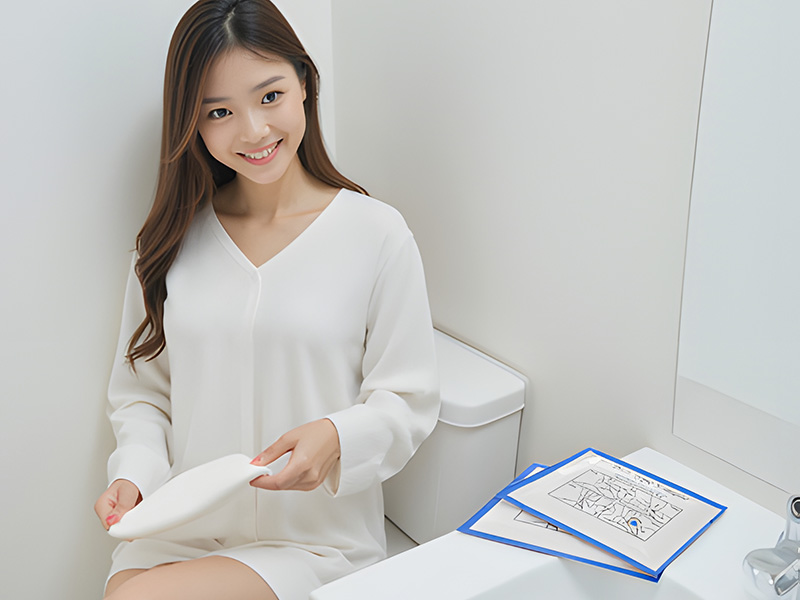
Product Overview: What Makes Feminine Wipes Different
Feminine wipes are intended for intimate hygiene, which means they must meet a higher standard of comfort and gentleness than many ordinary wipes. The intimate area has delicate skin and a naturally balanced environment. Products used in this area should avoid unnecessary harshness, heavy residues, and aggressive cleansing effects. The key product principle is simple: cleanse effectively while respecting skin comfort. A feminine wipe should feel soft on contact, glide smoothly, deliver appropriate moisture, and leave a clean but not overly wet sensation.
The pH-balanced formula is one of the most important characteristics. The natural intimate environment is sensitive to disruption, and products with unsuitable pH values may cause discomfort for some users. A carefully balanced formula helps make daily cleansing more suitable for intimate care. While feminine wipes are not medical treatments and should not replace professional care when symptoms appear, they can support routine freshness when designed responsibly. This makes formulation control a major competitive factor in the feminine care wipes market.
Another defining feature is non-irritating performance. Consumers often judge a wipe not only by how it cleans but by how it feels during and after use. If a wipe causes stinging, dryness, excessive fragrance, or rough friction, it will not earn repeat trust. A well-developed feminine wipe uses a mild lotion system and a soft, stable substrate. The goal is a comfortable user experience that supports frequent use, including during sensitive times such as menstruation or after physical activity.
The product also provides convenience. Water, soap, and towels are not always available outside the home. Feminine wipes offer portable hygiene in a sealed pack that can fit in handbags, travel kits, office drawers, gym bags, and restroom cabinets. This convenience is one reason the category has expanded globally. Consumers increasingly prefer ready-to-use hygiene products that match active lifestyles, while still expecting safety and softness.
Core Advantages Over Ordinary Wet Wipes
The first advantage of feminine wipes over ordinary wet wipes is targeted design. Many general wet wipes are developed for household cleaning, hands, baby care, facial cleansing, or multipurpose personal care. Their material, lotion, fragrance, and moisture level may not be appropriate for intimate areas. Feminine wipes, by contrast, are designed around delicate skin. The formulation is built to be mild, the substrate is chosen for comfort, and the product positioning is clearly focused on intimate hygiene.
The second advantage is pH balance. General wipes may not be formulated with intimate pH considerations in mind. Feminine wipes that are pH-balanced provide a more suitable option for daily intimate care. This distinction is easy for consumers to understand and valuable for brands because it communicates product purpose clearly. When supported by responsible testing and manufacturing control, pH balance becomes a strong quality signal.
The third advantage is tactile softness. A wipe used for intimate care must reduce friction and feel gentle against the skin. High-quality nonwoven fabric technology allows the wipe to be soft yet strong. Poor-quality wipes may tear, roll, feel rough, or leave lint. A superior feminine wipe should maintain structural integrity while remaining smooth and comfortable. This combination of softness and strength is not accidental; it is achieved through fiber selection, web formation, bonding technology, and converting control.
The fourth advantage is controlled wetness. A feminine wipe should not feel dry, but it should also not be excessively wet or dripping. Overly wet wipes can be inconvenient and uncomfortable, while under-saturated wipes may not clean effectively. Moisture control depends on lotion loading accuracy, substrate absorbency, packaging sealing, and process consistency. Advanced manufacturing lines can maintain uniform saturation from the first wipe to the last, improving consumer satisfaction.
The fifth advantage is hygiene assurance. Products used in personal intimate care require strong cleanliness management. Manufacturing must control contamination risks through clean processes, validated procedures, appropriate raw material handling, and reliable packaging. Companies with experience in medical and hygienic nonwoven materials have an advantage because they understand the importance of stable quality systems. This is where manufacturing background becomes as important as product concept.
Designed for Daily Comfort and Practical Use
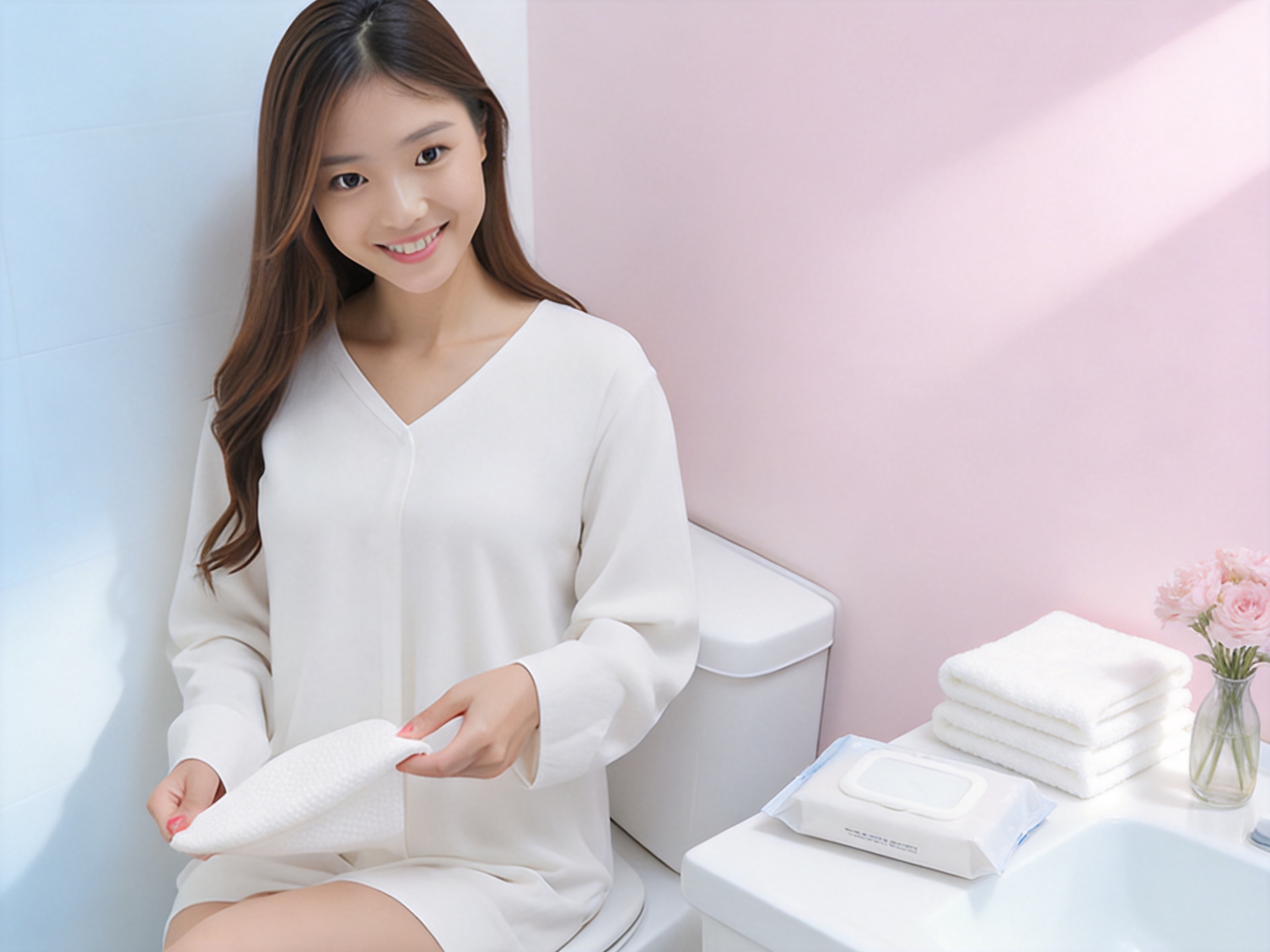
Daily intimate hygiene requires a product that fits naturally into a user’s routine. Feminine wipes can be used after using the restroom, during menstruation, after exercise, on long travel days, in hot weather, or whenever a person wants a quick refresh. The wipe is ready immediately after opening the pack and can be disposed of conveniently according to local waste guidance and product instructions. This practical usability makes it attractive for a wide range of adult consumers.
Comfort begins with the fabric. The wipe should be flexible enough to conform to body contours and strong enough to resist tearing during use. The surface should feel even, with no rough particles or unpleasant stiffness. Good nonwoven material can offer a cloth-like touch that is much more pleasant than low-grade tissue. For intimate care, this difference is noticeable and important. Consumers may not know the technical details, but they immediately recognize softness, strength, and cleanliness in use.
The lotion system should support freshness without overpowering the senses. Some markets prefer fragrance-free feminine wipes, while others accept light fragrance. In either case, the product should avoid a harsh or artificial after-feel. Mildness is central. A wipe that smells strong but feels irritating will not perform well in repeat purchase. A wipe that is gentle, discreet, and dependable is more likely to become part of a consumer’s daily hygiene habits.
Packaging also matters. Feminine wipes must remain moist and protected from contamination after opening. Good pack design helps prevent drying, supports easy dispensing, and allows consumers to carry the product discreetly. For private-label development, pack size can be customized for different market needs, such as travel packs, pocket packs, family packs, bathroom packs, or individually wrapped sachets. Packaging is not only a container; it is part of the user experience and brand identity.
Manufacturing Strength Behind the Product
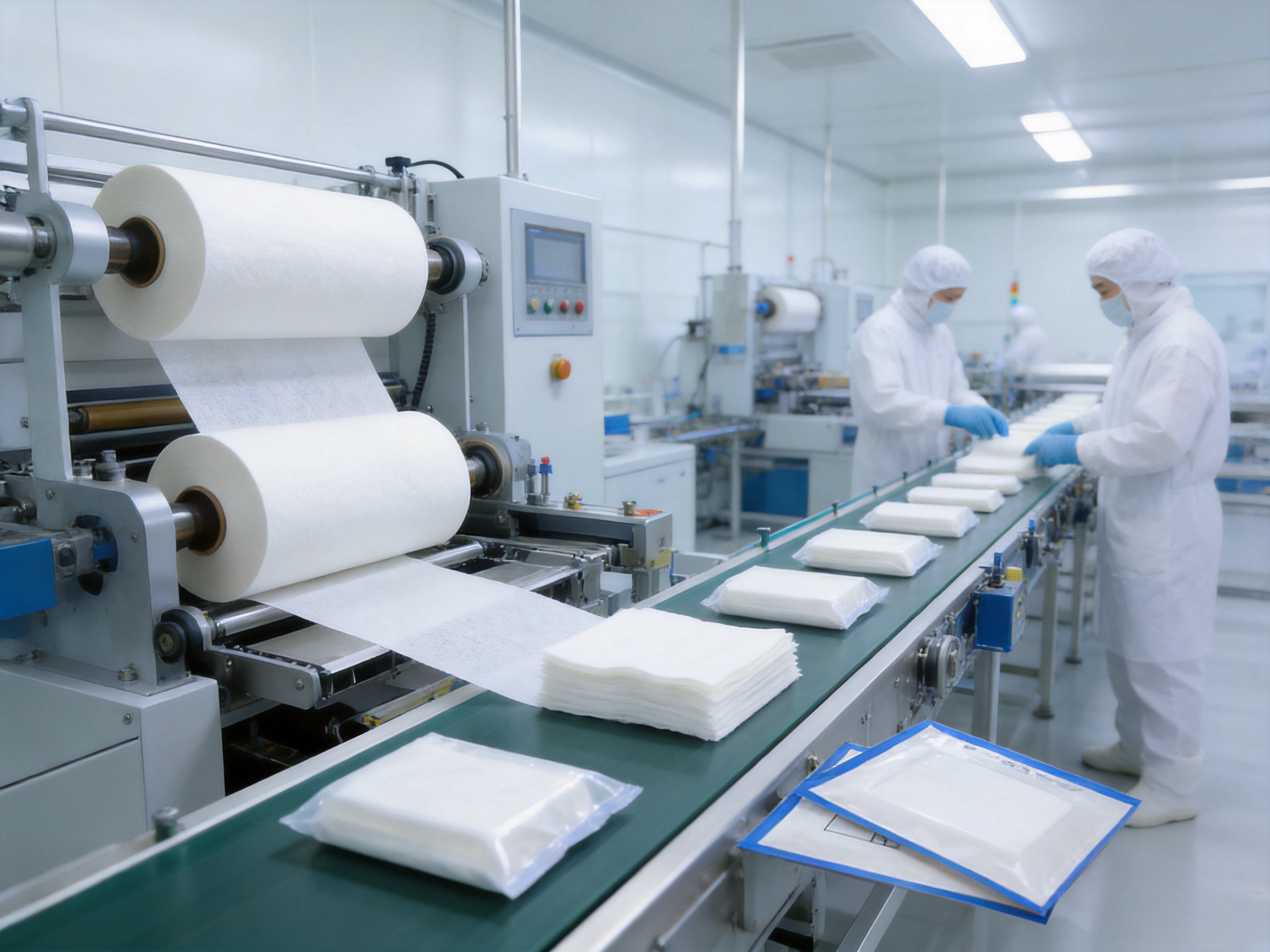
A feminine wipe is only as reliable as the manufacturing system behind it. Zhejiang Uniquality Nursing Products Technology Co., Ltd. operates with the foundation of Kingsafe & Uniquality, a company established in 1987 and developed over more than thirty years into a leading enterprise in China’s industrial textile and hygienic products sector. The company has been recognized as a national high-tech enterprise specializing in research, development, production, and sales of medical and hygienic nonwoven materials, nursing products, and high-end clothing interlining.
This background provides a major advantage for feminine wipes. Many suppliers simply convert purchased nonwoven fabric into wipes. A company with deep nonwoven material expertise has better control over the core substrate. Nonwoven fabric determines softness, absorbency, tensile strength, elongation, thickness, lint performance, and lotion interaction. When material knowledge is integrated with wipe production, the finished product can be optimized from the inside out rather than assembled from unrelated components.
The company has introduced advanced production equipment and technology from Germany, France, and Italy. Internationally advanced equipment supports consistency, speed, efficiency, and precision. In wet wipes manufacturing, even small variations can affect the product: lotion distribution, sheet cutting, folding accuracy, pack sealing, and microbiological control all influence quality. Advanced machinery reduces unstable output and helps meet the expectations of large buyers, retail chains, and private-label brands.
The company’s product coverage includes spunlace nonwoven fabrics, spunmelt nonwoven fabrics, hot-air-through nonwoven fabrics, flushable and degradable nonwoven fabrics, wet wipes, dry wipes, baby diapers, pull-ups, wet toilet paper, cleansing wipes, and other hygiene products. This broad technical base means the company is not limited to one material or one product category. It can develop differentiated, functional, and customized products for different customer needs. For feminine wipes, this flexibility allows adjustments in fabric feel, lotion composition, pack format, sheet size, folding method, and market positioning.
Multiple production bases in China, including locations connected to major industrial and logistics regions, also strengthen supply reliability. The headquarters in Changxing, Huzhou, Zhejiang, benefits from the convenient transportation network of the Yangtze River Delta. For international buyers, manufacturing scale and logistics access are important because private-label wipes programs often require stable lead times, container-level shipment planning, and repeat production consistency. A supplier with established production bases and mature export experience can reduce operational uncertainty.
Advanced Nonwoven Technology for Better Wipes
Nonwoven technology is the foundation of wipe performance. Spunlace nonwoven fabric is especially important in many wet wipe applications because it can provide a soft, cloth-like touch while maintaining good strength. In a spunlace process, high-pressure water jets entangle fibers to form a cohesive web without the need for traditional weaving. This creates a fabric suitable for skin-contact products because it can be soft, flexible, and absorbent. For feminine wipes, spunlace material can help deliver a gentle surface and reliable wet strength.
Spunmelt nonwoven technology, hot-air-through nonwoven technology, and degradable material development also show the company’s broader capabilities. Although feminine wipes may use different materials depending on customer requirements, having access to multiple nonwoven platforms supports product innovation. For example, one private-label customer may prioritize premium softness, another may require an economical daily-use wipe, while another may request biodegradable or environmentally conscious material options. Strong material engineering makes such customization more feasible.
Flushable and degradable nonwoven research is increasingly important in the hygiene market. Consumers and retailers are paying more attention to environmental responsibility, responsible disposal, and material sustainability. While not all feminine wipes should be marketed as flushable unless they meet relevant standards and regional requirements, the ability to develop degradable materials gives brands more options. A responsible supplier can help customers choose suitable claims based on actual material performance and compliance requirements.
The interaction between lotion and substrate is another technical point. A fabric that feels soft when dry may behave differently when saturated. It may stretch too much, tear, release fibers, or fail to dispense smoothly. The lotion may also distribute unevenly if the substrate absorbency is not well controlled. Manufacturing experience in both nonwoven materials and wet wipes helps avoid these problems. The best feminine wipes are engineered as complete systems, not as separate fabric and liquid components.
Formula Philosophy: Mild, Balanced, and Skin-Conscious
The formula of feminine wipes should support daily intimate hygiene without unnecessary irritation. A pH-balanced design is central because it aligns the product with the needs of delicate areas. The wipe should cleanse gently, remove ordinary residue and odor-causing impurities, and provide a fresh feeling. It should not be formulated like a disinfecting surface wipe, a harsh deodorizing wipe, or a heavily perfumed cosmetic product. Intimate care depends on moderation and skin awareness.
Non-irritating performance comes from careful ingredient selection and concentration control. Mild cleansing agents, suitable moisturization components, purified water, appropriate preservative systems, and responsible fragrance choices can all affect the final experience. Preservatives are necessary in wet wipes because the product contains water and must remain safe during shelf life, but the preservative system should be selected and controlled with skin compatibility in mind. Product development must balance safety, stability, sensory feel, and regulatory expectations.
For private-label customers, formulation can be adjusted to meet different market preferences. Some customers may want alcohol-free, fragrance-free, or hypoallergenic-positioned products. Others may request botanical extracts, soothing ingredients, or premium sensory claims. The key is to ensure that claims are supported and that the formula remains stable. A manufacturing partner with R&D experience can help convert a brand concept into a practical, compliant, and scalable product.
Quality testing should support the formula. pH testing, viscosity checks, microbiological testing, stability observation, compatibility testing with packaging materials, and sensory evaluation all help ensure that the product performs as intended. In a high-quality production environment, these checks are not one-time actions but part of a repeatable control system. This is especially important for feminine wipes because consumer trust depends on consistency over many purchases.
Comparison of Key Product Attributes
| Attribute | High-Quality Feminine Wipes | Ordinary General Wipes | Customer Benefit |
|---|---|---|---|
| Product Purpose | Designed for daily intimate hygiene and delicate skin care | Often designed for hands, surfaces, baby care, or general cleaning | More suitable for personal intimate use |
| Formula | Gentle and pH-balanced, with a non-irritating concept | May not consider intimate pH or sensitivity needs | Improved comfort and confidence |
| Fabric Feel | Soft nonwoven substrate with skin-friendly touch | May feel rough, thin, or unstable | Reduced friction and better user experience |
| Moisture Control | Balanced saturation for cleansing without excessive wetness | May be too dry, too wet, or inconsistent | Cleaner, more convenient use |
| Manufacturing Control | Supported by advanced nonwoven and wipes production systems | May rely on basic converting and limited material control | More stable quality and supply reliability |
| Customization | Suitable for OEM and ODM private-label development | Often limited to standard formulas and packaging | Better brand differentiation |
Quality Control and Safety Management
Quality control is essential for any wet wipe, but it is especially important for feminine wipes because the product is used on sensitive areas. A reliable manufacturer must control incoming materials, purified water, lotion preparation, fabric handling, production environment, packaging materials, finished product testing, and warehouse storage. Each step affects the final quality. Strong quality systems reduce the risk of contamination, drying, leakage, inconsistent sheet count, odor changes, or consumer complaints.
Incoming material inspection includes nonwoven fabric appearance, weight, width, softness, tensile strength, absorbency, and cleanliness. Packaging materials must also be checked for sealing performance, printing accuracy, barrier properties, and compatibility with the lotion. If the package seal is weak, the wipes may dry out. If the film is incompatible with the formula, the product may develop odor, swelling, or leakage. Professional manufacturing treats packaging as a technical component, not merely decoration.
Water quality is another critical factor. Wet wipes are water-based products, and purified water quality influences product stability and microbiological safety. Lotion preparation should follow controlled procedures, with accurate weighing, mixing, filtration where applicable, and batch records. The pH level must be verified to ensure that the formulation remains within target specifications. These controls support the product promise of mild, balanced intimate care.
During converting and packing, machines must cut, fold, stack, saturate, and seal wipes accurately. Sheet size and count consistency affect consumer perception and retailer acceptance. A pack labeled with a certain count must deliver that count reliably. The first wipe should not be overly wet while the last wipe is dry. Stable production equipment and trained operators help maintain this consistency across large batches. For OEM and ODM customers, consistency is vital because the product carries their brand reputation.
Finished product testing may include appearance checks, odor evaluation, pH confirmation, microbiological limits, package seal integrity, weight control, leakage testing, and aging or stability observation. These procedures help ensure that the wipes leaving the factory meet defined requirements. For international buyers, documentation and traceability are also important. A mature supplier can support product files, specifications, batch records, and quality communication needed for professional procurement.
OEM and Private-Label Opportunities
Feminine wipes are well suited for OEM and private-label development because the category allows differentiation in formula, material, packaging, sheet size, claims, and market positioning. Zhejiang Uniquality Nursing Products Technology Co., Ltd. is experienced in OEM and ODM wet and dry wipes, diapers, and growing training pants. This experience is valuable for buyers seeking a reliable factory that can transform brand ideas into finished products for retail, e-commerce, pharmacy, supermarket, personal care, and institutional channels.
Private-label customers often begin with a target consumer profile. A brand may want a premium feminine wipe for sensitive skin, a value pack for daily freshness, a travel sachet for convenience stores, or an eco-conscious line with degradable material options. The manufacturer can then advise on substrate selection, lotion concept, pack format, unit count, carton configuration, and production feasibility. This development process helps customers avoid costly mistakes and accelerates time to market.
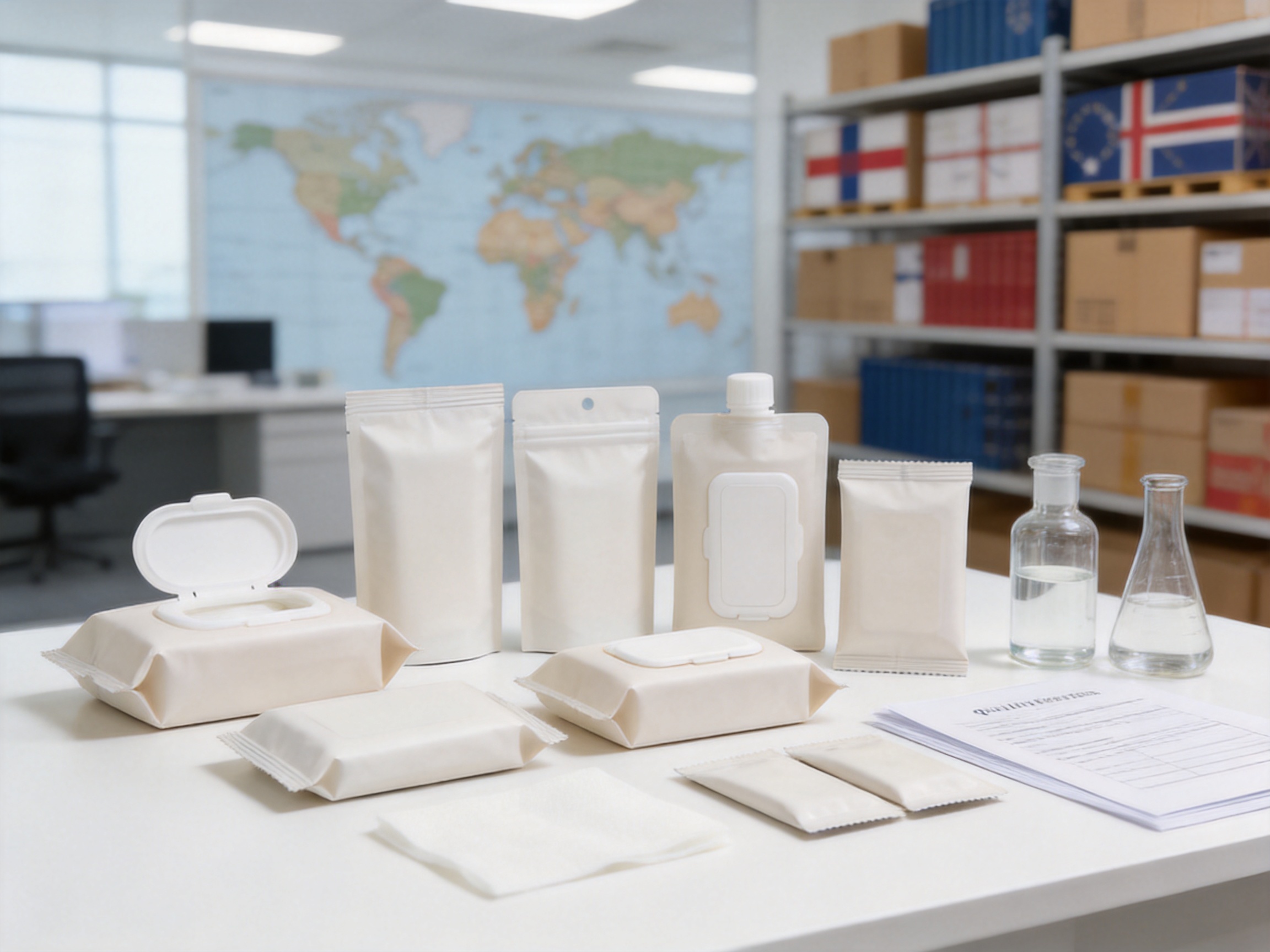
Packaging customization is a major competitive tool. Feminine wipes can be packed in soft packs with resealable labels, flip-top lids, travel packs, single-use sachets, or multipack formats. Each format serves a different consumer need. A pocket pack supports portability, while a larger bathroom pack encourages daily home use. A sachet is suitable for hotels, airlines, clinics, vending, promotional sampling, and travel kits. Flexible packaging solutions allow brands to target multiple channels with one product concept.
Formula customization also supports differentiation. Depending on regulatory requirements and brand strategy, customers may request fragrance-free, alcohol-free, botanical, soothing, moisturizing, or sensitive-skin concepts. However, responsible manufacturing should prevent overcomplicated formulas that increase irritation risk or stability problems. The strongest product concepts are usually clear and credible: gentle cleansing, pH balance, soft fabric, reliable freshness, and safe daily use. These benefits are easy to communicate and meaningful to consumers.
For large retailers and distributors, supplier reliability is just as important as product design. A factory must deliver consistent quality, stable capacity, accurate documentation, and responsive communication. The company’s long history, multiple production bases, and broad expertise in nonwoven and hygiene products provide advantages for customers who need dependable long-term cooperation. This is particularly relevant for private-label programs, where continuity and trust are essential.
Market Relevance and Consumer Trends
The feminine hygiene market has changed significantly as consumers have become more informed and more willing to choose specialized products. Intimate care is no longer limited to basic sanitary protection. Consumers increasingly seek products that support comfort, freshness, confidence, and personal well-being throughout the day. Feminine wipes fit this trend because they offer immediate convenience and a sense of cleanliness in many everyday situations.
Travel and mobility are major demand drivers. Commuters, business travelers, students, athletes, healthcare workers, and parents often spend long hours away from home. A small pack of feminine wipes provides portable hygiene when bathrooms may not be fully equipped. In warm climates or during physical activity, the need for freshness becomes stronger. The product’s portability makes it highly relevant for modern lifestyles.
Retailers also appreciate the category because feminine wipes can be merchandised alongside sanitary pads, panty liners, adult wipes, body wipes, travel hygiene products, and personal care items. The product has strong cross-selling potential. A consumer purchasing menstrual care products may also be interested in intimate wipes. A consumer buying travel toiletries may add a small pack for convenience. This makes feminine wipes attractive for supermarkets, pharmacies, online stores, beauty retailers, and health product distributors.
Another trend is the demand for safer, clearer, and more transparent product claims. Consumers are cautious about harsh ingredients and exaggerated promises. They prefer products that are gentle, pH-balanced, and suitable for sensitive skin. Brands that communicate honestly and manufacture responsibly can build long-term loyalty. Feminine wipes should not rely on fear-based marketing; they should focus on practical hygiene, comfort, and confidence.
Sustainability is also influencing purchasing decisions. Buyers increasingly ask about degradable substrates, responsible packaging, reduced plastic use, and disposal guidance. Because Kingsafe & Uniquality has experience with flushable and degradable nonwoven materials, it is positioned to support customers exploring more environmentally responsible wipe solutions. Any sustainability claim must be based on real material performance and applicable standards, but material innovation gives brands a path toward future market needs.
Why Manufacturing Integration Matters
Many products in the wipes market look similar on the shelf, but their performance can differ greatly. Manufacturing integration is one of the reasons. A supplier that understands nonwoven production, lotion formulation, converting, and packaging can design a wipe more holistically. Instead of solving problems after they appear, integrated manufacturing prevents them during development. This is valuable for feminine wipes because the product must perform gently and consistently.
For example, if the fabric is too thin, the wipe may lack premium feel and may tear during use. If the fabric is too thick but poorly absorbent, it may not release lotion evenly. If the lotion is too watery, the pack may leak or the wipe may feel unpleasantly wet. If the preservative system is unsuitable, shelf stability may suffer. If the packaging seal is weak, moisture loss can occur before the consumer finishes the pack. These are not isolated issues; they are connected design factors.
An experienced manufacturer can balance these factors through trial production, testing, and process validation. The ability to adjust the substrate, formula, and package as a complete system is a major advantage over suppliers with limited technical scope. For brands entering the feminine wipes category, this reduces development risk and helps create a product that consumers will repurchase.
Integrated strength also supports cost control. Premium quality does not always mean unnecessary cost. A skilled manufacturer can recommend the most efficient material and pack configuration for the target market. For example, a premium retail product may justify a thicker, softer substrate and a flip-top lid, while a travel sachet may require a different cost structure. The goal is not simply to make the cheapest wipe but to make the best-value wipe for the intended consumer and channel.
Responsible Positioning for Intimate Care
Feminine wipes should be positioned with care and responsibility. They are useful hygiene products, but they should not be presented as medical treatments. Consumers with persistent discomfort, odor changes, itching, pain, unusual discharge, or other symptoms should seek professional medical advice. Responsible brands clearly communicate that wipes are for external cleansing and daily freshness. This approach builds trust and avoids misleading claims.
Directions for use should be simple and clear. The product is typically intended for external use only. Consumers should close the package after use to prevent drying. Used wipes should be disposed of properly according to the product instructions and local waste regulations. If irritation occurs, use should be discontinued. These basic instructions improve user experience and support safe product handling.
Ingredient transparency is also important. Private-label brands should provide clear labeling that meets the requirements of their target markets. This includes ingredient lists, warnings, manufacturer information where required, batch coding, shelf life, and disposal guidance. A professional OEM or ODM partner can help customers prepare suitable product specifications and packaging information, though final compliance should always be reviewed according to local regulations.
Applications and User Scenarios
Feminine wipes can serve many routine scenarios. During menstruation, they help users feel cleaner when changing sanitary pads, tampons, or menstrual products. After exercise, they provide a quick refresh before showering is available. During travel, they help maintain hygiene in airports, trains, hotels, rest stops, or public facilities. In hot and humid weather, they can provide comfort during long days outdoors. Their value is practical, immediate, and easy to understand.
They are also useful for workplace and school settings where access to full washing facilities may be limited. A discreet pack can be kept in a bag or locker. For postpartum or adult care contexts, gentle wipes may also support comfort, though product suitability should match the specific user’s needs and any professional advice. The broader adult wipes category includes many products, but feminine wipes focus on intimate freshness and gentle external cleansing.
Hospitality and travel businesses can also use individually wrapped feminine wipes as guest amenities. Hotels, spas, airlines, and wellness centers can offer them as part of personal care kits. For these channels, packaging presentation and single-use hygiene are especially important. OEM sachet production can help create branded amenities that enhance customer experience.
E-commerce is another strong channel. Online consumers often search for specific features such as pH-balanced, gentle, fragrance-free, sensitive-skin, travel-size, or private-label feminine wipes. Strong product pages can explain the benefits, material, formula, pack count, and usage instructions. Because the product is consumable, online subscriptions and multipack sales may encourage repeat purchasing.
Building a Better Feminine Wipes Product Line
A successful feminine wipes line can include several variations. A core daily freshness wipe may use a gentle pH-balanced formula and a soft standard substrate. A sensitive version may be fragrance-free and designed with minimalistic ingredients. A premium version may use a thicker, softer nonwoven fabric and enhanced packaging. A travel version may be compact or individually wrapped. An eco-conscious version may explore degradable materials and responsible packaging. Together, these options allow brands to serve different consumer segments.
Product line planning should consider price positioning, retail channel, target region, regulatory requirements, and consumer preferences. In some markets, fragrance-free products are favored because consumers associate them with mildness. In other markets, a light fresh scent may be preferred. Some consumers prioritize softness, while others focus on pack convenience or value. A flexible manufacturer can support these choices without compromising basic quality principles.
Testing and feedback are valuable before full launch. Brands can evaluate texture, wetness, pack dispensing, fragrance acceptance, and overall comfort through internal review or consumer panels. Adjustments can then be made before mass production. This development discipline is one of the advantages of working with an experienced OEM and ODM supplier rather than purchasing an off-the-shelf product without optimization.
Company Strengths Supporting Global Customers
Zhejiang Uniquality Nursing Products Technology Co., Ltd. benefits from the heritage of a group founded in 1987. Over more than three decades, Kingsafe & Uniquality has developed into a leading enterprise in China’s industrial textile industry and has ranked among prominent nonwoven manufacturers. This history matters because hygienic products require long-term technical accumulation. Experience improves problem-solving, supplier management, production planning, and product development.
The company’s portfolio covers medical, maternal and baby, beauty, home, industrial cleaning, clothing, and other fields. Such diversity demonstrates technical adaptability. A manufacturer serving multiple hygiene and nonwoven markets must understand different performance demands, from softness and absorbency to strength and cleanliness. Feminine wipes benefit from this accumulated knowledge because the product sits at the intersection of personal care, hygiene, and nonwoven material science.
The company is also capable of meeting differentiated, functional, and customized needs. This is important for international customers because each market may require unique specifications. A buyer may need a product for supermarket shelves in Europe, an e-commerce brand in North America, a pharmacy channel in Southeast Asia, or a hospitality amenity in the Middle East. Customization capability helps the same manufacturing partner support multiple strategies.
Long-term cooperation with well-known domestic and international brands further indicates the company’s ability to meet professional buyer expectations. Large brands typically require stable quality, documentation, confidentiality, production capacity, and responsive service. These same strengths are valuable for emerging brands seeking a dependable OEM factory for private-label feminine wipes.
Frequently Asked Questions
What are feminine wipes used for?
Feminine wipes are used for external intimate cleansing and daily freshness. They are suitable for situations such as menstruation, travel, exercise, hot weather, workdays, and general personal hygiene routines. They provide convenient cleansing when water and washing facilities are not available.
How are feminine wipes different from ordinary wet wipes?
Feminine wipes are specifically designed for delicate intimate areas. They usually emphasize gentle cleansing, pH balance, soft nonwoven fabric, controlled moisture, and non-irritating performance. Ordinary wet wipes may be designed for hands, surfaces, baby care, or general use and may not consider intimate hygiene needs.
Why is pH balance important in feminine wipes?
pH balance helps make the product more suitable for intimate care. Delicate areas can be sensitive to products that are too harsh or poorly formulated. A pH-balanced wipe supports a mild cleansing experience and helps reduce the likelihood of discomfort associated with unsuitable products.
Can these wipes be customized for private-label brands?
Yes. Feminine wipes can be customized through OEM and ODM services. Options may include fabric type, sheet size, lotion formula, fragrance choice, pack count, packaging format, private-label artwork, and market-specific product positioning.
What manufacturing strengths support product quality?
Quality is supported by advanced nonwoven technology, experienced wet wipes production, controlled lotion preparation, accurate converting equipment, packaging integrity checks, microbiological management, and finished product testing. The manufacturer’s long experience in hygienic nonwoven materials strengthens the reliability of the finished wipes.
Are feminine wipes suitable for daily use?
They can be suitable for daily external cleansing when formulated gently and used according to instructions. Consumers should discontinue use if irritation occurs and should consult a healthcare professional for persistent discomfort or abnormal symptoms.
What packaging formats are available?
Common formats include resealable soft packs, flip-top packs, travel packs, pocket packs, multipacks, and individually wrapped sachets. The best option depends on the sales channel and consumer usage scenario.
Can environmentally conscious versions be developed?
Yes, depending on customer requirements and applicable standards. Options may include degradable nonwoven materials or packaging improvements. Any environmental claim should be verified and aligned with the regulations of the target market.
Conclusion
Feminine wipes are more than convenient personal care accessories. They are specialized intimate hygiene products that require gentle formulation, soft materials, stable manufacturing, and responsible quality control. Their advantages over ordinary wet wipes include pH-balanced design, delicate-skin suitability, controlled wetness, improved softness, and targeted daily freshness. These features make them valuable for consumers and attractive for retailers, distributors, and private-label brands.
Zhejiang Uniquality Nursing Products Technology Co., Ltd., supported by the long industrial experience of Kingsafe & Uniquality, offers strong manufacturing advantages for this product category. With roots dating back to 1987, advanced equipment from Europe, multiple production bases, expertise in nonwoven materials, and broad OEM and ODM capability, the company can support customized feminine wipes for different markets and brand strategies. Its experience in wet wipes, dry wipes, baby care, adult care, and nonwoven materials creates a strong foundation for consistent product quality.
For brands seeking a reliable private-label feminine wipes manufacturer, the ideal partner must do more than produce packs of wet sheets. It must understand intimate care needs, engineer the right substrate, prepare a mild and stable formula, maintain strict hygiene control, and deliver consistent packaging performance. Feminine Wipes designed with these principles can provide consumers with comfort, confidence, and freshness in everyday life while giving brands a competitive product in the growing personal hygiene market.
References
1. European Disposables and Nonwovens Association. Guidelines for Nonwoven Personal Care and Hygiene Products.
2. International Organization for Standardization. Quality Management Systems and Good Manufacturing Practices for Consumer Hygiene Products.
3. World Health Organization. General Principles of Hygiene, Water Quality, and Consumer Health Protection.
4. United States Food and Drug Administration. Cosmetic Labeling and Safety Considerations for Personal Care Products.
5. Cosmetic Ingredient Review. Safety Assessments of Common Ingredients Used in Personal Cleansing Products.
6. Association of the Nonwoven Fabrics Industry. Technical Resources on Spunlace, Spunmelt, and Disposable Hygiene Materials.