中文简体
中文简体 English
 日本語
日本語 русский
 Español
In the restaurant and food-service industry, wiping materials are no longer simple accessories. They are part of a hygiene system, a productivity tool, and a visible sign of operational quality. A wipe used on dining tables, kitchen counters, service stations, food preparation areas, and cleaning carts must do more than remove visible liquid. It must absorb quickly, hold together during repeated wiping, feel substantial in the hand, resist deformation when wet, and support the cleanliness expectations of customers and regulators. The 5mm big dot spunlace nonwoven for restaurant wipes is designed precisely for these requirements, combining a towel-like hand feel with the hygiene advantage of disposable use.
This product is a double-carded, parallel-laid spunlace nonwoven fabric with a 5mm big dot pattern. A typical construction is 70 grams per square meter, offering a heavier and more reassuring texture than many lightweight disposable wipes. Its standard composition is 50% viscose and 50% polyester, while the blending ratio can be customized to match different absorption, strength, softness, cost, and processing targets. The product is suitable for wet wipes and dry wipes and can be supplied in roll widths from 10cm to 320cm, supporting downstream converting into multiple wipe formats for restaurants, catering companies, hotels, convenience kitchens, institutional dining, and cleaning-service providers.
What makes this fabric particularly relevant for restaurant wipes is the balanced relationship between absorbency and stability. Viscose contributes rapid liquid uptake and a soft touch, while polyester provides wet strength, shape retention, and durability during scrubbing or repeated passes over a surface. The oversized 5mm dot pattern improves the wiping experience by creating a textured surface that increases contact efficiency and helps lift sauce, oil residues, crumbs, and water films from tables and work surfaces. Compared with ordinary flat nonwoven fabric, the big dot pattern gives the wipe a more three-dimensional feel, which can improve user confidence and cleaning effectiveness.
Restaurant operators face constant pressure to maintain cleanliness while controlling labor and material costs. Traditional cotton towels may look economical, but they require laundering, storage, rotation, and contamination control. Low-grade disposable wipes may reduce laundering needs, but they can tear, roll up, shed lint, or fail to absorb enough liquid. The 5mm big dot spunlace nonwoven offers a practical middle ground: it has the heft and wiping comfort of a reusable towel, yet it can be designed for single-use or controlled-use systems that reduce cross-contamination risk.
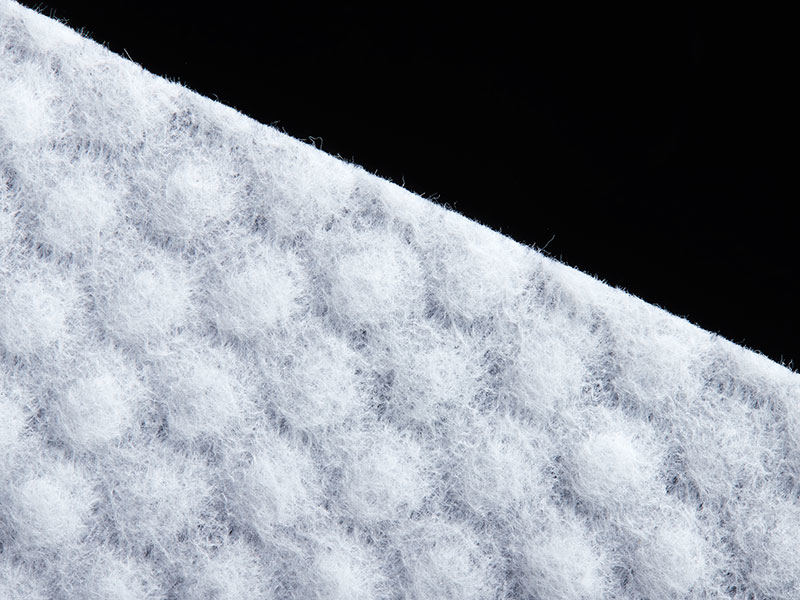
5mm Big Dot Spunlace Nonwoven For Restaurant Wipes
Product Overview and Core Technical Characteristics
The 5mm big dot spunlace nonwoven is built through a process that entangles fibers using high-pressure water jets. This method creates a fabric structure without traditional chemical bonding as the main strength source, giving the material a clean, soft, and flexible character. The double-carding process helps distribute fibers more evenly, while the parallel web formation supports a stable surface and consistent roll quality. For restaurant wipes, this consistency is important because downstream converters need predictable cutting, folding, wetting, packaging, and dispensing performance.
The material’s typical 70gsm weight is one of its most important selling points. At this weight, the wipe feels more substantial than many economy-grade disposable options. Restaurant staff often judge wipe quality by hand feel before they judge laboratory data. A thin wipe may be perceived as weak, even if it passes certain tests. A 70gsm wipe gives the operator a sense of control, especially when wiping wet tables, beverage spills, or greasy service counters. It can also reduce the tendency to use multiple sheets for one cleaning task, which may help control overall consumption.
The 5mm big dot pattern provides both aesthetic and functional value. Visually, the dots create a professional texture that distinguishes the fabric from plain commodity wipes. Functionally, the pattern increases surface irregularity, helping the wipe pick up residues rather than merely spreading them across the surface. In food-service environments, this matters because many residues are mixed: water, oil, sugar, starch, salt, protein, and fine particles. A wipe with a textured surface can interact better with these residues and remove them more efficiently.
The standard 50% viscose and 50% polyester blend is a classic performance balance for spunlace wipes. Viscose, derived from cellulose, is valued for absorbency and softness. Polyester is valued for tensile strength, dimensional stability, and resilience. In wet wipe applications, too much absorbent fiber without enough reinforcement may lead to poor shape retention. Too much synthetic reinforcement without enough absorbent fiber may feel slick and absorb slowly. The 50/50 structure therefore offers a dependable middle path for restaurant cleaning tasks.
The product can be customized from 40gsm to 100gsm. Lighter weights may be used for cost-sensitive dry wiping or light-duty applications, while heavier weights can be selected for premium restaurant wipes, industrial kitchen cleaning, or wet wipes requiring more liquid loading. Roll widths from 10cm to 320cm give converters flexibility to produce narrow rolls, jumbo rolls, folded wipes, canister wipes, sachet wipes, flat-pack wipes, or customized food-service wipe formats. Finishing technologies such as hydrophilic treatment, coating, and antistatic treatment can further adapt the fabric to specific application environments.
Feature |
Specification or Capability |
Benefit for Restaurant Wipes |
Composition |
50% viscose and 50% polyester, customizable blend ratio |
Balances absorbency, softness, wet strength, and shape retention |
Technology |
Double-carding and parallel spunlace process |
Supports uniform fabric formation and reliable converting performance |
Pattern |
5mm big dot texture |
Improves grip, residue pickup, and towel-like wiping feel |
Typical Weight |
70gsm, with available range from 40gsm to 100gsm |
Provides a substantial hand feel and allows product tier customization |
Roll Width |
10cm to 320cm |
Fits multiple converting formats and packaging designs |
Finishing Options |
Hydrophilic, coating, antistatic, and other treatments |
Allows functional adjustment for wet wipes, dry wipes, and specialty cleaning |
Usage |
Wet wipes and dry wipes |
Suitable for dining areas, kitchens, counters, and general food-service cleaning |
Why Restaurant Wipes Need a Higher-Performance Nonwoven
Restaurants are demanding environments for wiping materials. A single wipe may be used to remove spilled beverages, clean sauce from tabletops, handle water left after sanitizing, wipe grease near cooking zones, or refresh serving areas during busy hours. The surface types vary as well: stainless steel, wood laminate, plastic trays, glass, ceramic, stone, and coated furniture. Each surface presents different friction, moisture, and residue challenges. A weak wipe can tear on textured surfaces, leave fibers on glass, or become saturated too quickly on tables.
Restaurant cleaning also occurs under time pressure. Staff must clear tables quickly between customers, maintain food preparation zones during service, and respond immediately to spills. In such conditions, a wipe that absorbs quickly and remains stable can improve workflow. If the wipe collapses or folds into a small wet mass, the worker loses contact area and must slow down. If it stretches excessively, the cleaning motion becomes inefficient. If it releases lint, another cleaning step may be needed. A strong spunlace wipe helps reduce these operational interruptions.
Hygiene is another critical factor. Reusable towels can be effective when controlled properly, but they require strict procedures: separate use zones, frequent laundering, chemical concentration control, drying, storage, and replacement. In real operations, towels can be misused or left damp, creating contamination concerns. Disposable restaurant wipes made from high-quality spunlace nonwoven can support a clearer hygiene protocol. They can be used for defined tasks and discarded before contamination spreads from one table, station, or surface to another.
The 5mm big dot spunlace nonwoven is also well suited to wet wipe systems. When converted into pre-moistened wipes, the fabric must carry liquid evenly, release liquid during wiping, and maintain strength in the presence of cleaning or sanitizing formulations. Viscose supports liquid pickup, while polyester helps the wipe resist tearing and deformation. The dot structure can improve tactile feedback, making it easier for workers to feel contact with the surface. For restaurants that want a more premium cleaning wipe, this material offers an effective foundation.
In dry wipe form, the material can be paired with a spray bottle system or used for general absorbent cleaning. Dry wipes allow restaurants to control the cleaning solution separately and reduce the weight associated with shipping pre-moistened packs. A 70gsm big dot dry wipe can absorb liquid from spills and hold cleaning solution applied at the point of use. This versatility allows distributors and private-label buyers to develop multiple product lines from the same base technology.
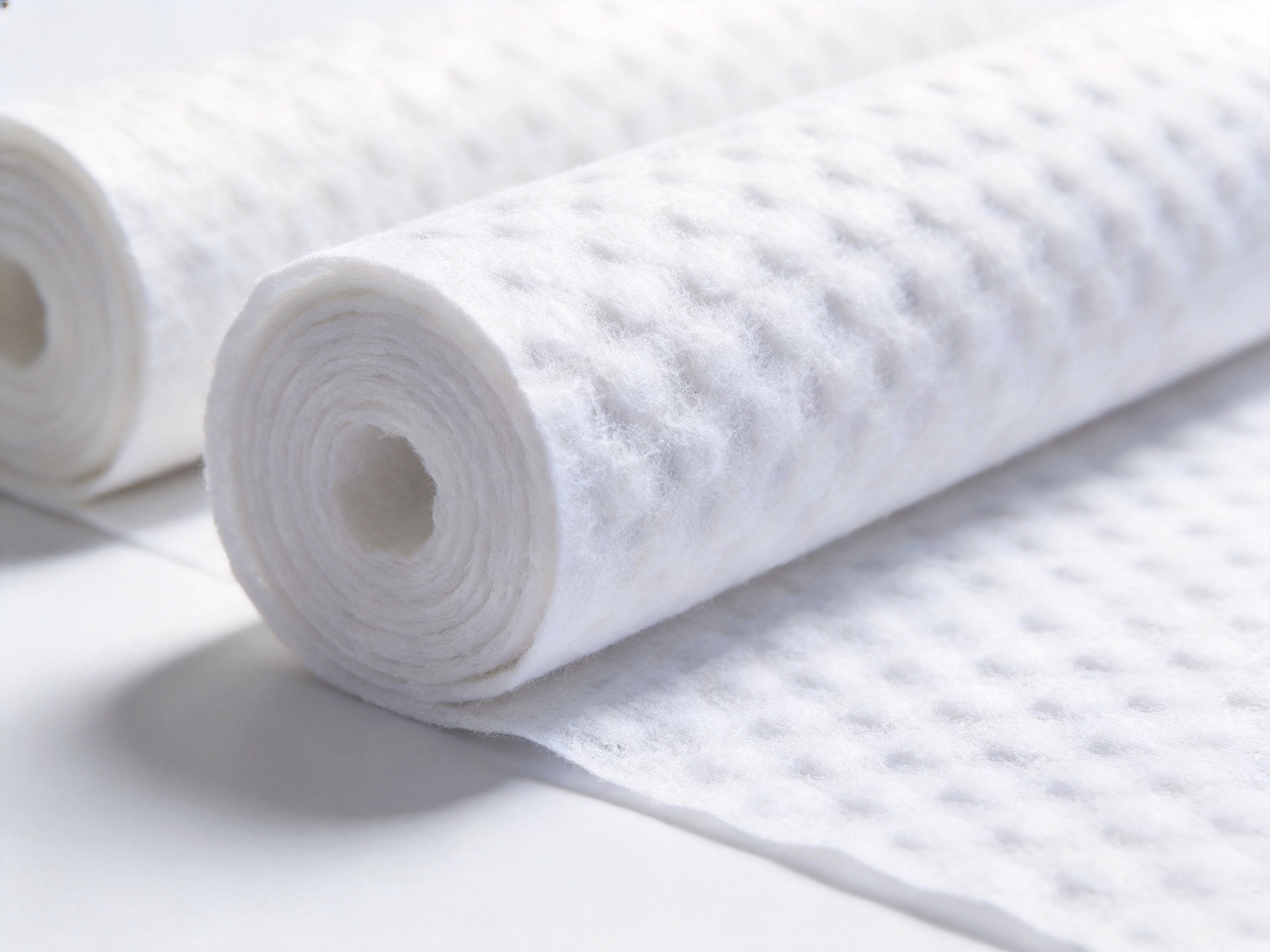
Advantages Over Common Competing Materials
Restaurant operators and cleaning product buyers often compare disposable spunlace wipes with cotton towels, airlaid paper, spunbond nonwovens, needlepunch fabrics, and lightweight generic wipes. Each material has its place, but the 5mm big dot spunlace nonwoven offers a combination of advantages that directly addresses food-service cleaning needs.
Compared with Traditional Cotton Towels
Cotton towels are familiar and absorbent, but they introduce hidden costs and hygiene challenges. They must be collected, laundered, dried, folded, stored, and redistributed. If laundering is outsourced, logistics costs and inventory management become significant. If laundering is handled in-house, restaurants must manage labor, detergent, energy, water, and equipment. Even when washed regularly, towels can become stained, worn, or contaminated through improper use.
The 5mm big dot spunlace nonwoven offers a disposable alternative with towel-like substance. At 70gsm, it gives a stronger, more premium hand feel than thin disposable sheets. Because each wipe can be used for a defined task and then discarded, it reduces the risk of using the same cloth across unrelated surfaces. This is especially valuable in restaurants where table cleaning, kitchen cleaning, restroom-adjacent cleaning, and service-area cleaning must be separated.
Compared with Lightweight Disposable Wipes
Many low-cost disposable wipes are designed primarily to reduce unit price. They may be thin, loosely bonded, or too small for practical restaurant cleaning. Staff often compensate by using two or three wipes at once, which weakens the apparent cost advantage. Thin wipes may also have poor liquid capacity, making them unsuitable for spilled drinks, sauces, or rinse water.
The 5mm big dot spunlace fabric provides a heavier and more durable alternative. Its structure helps maintain wipe integrity during wet use, while the viscose content supports fast absorption. The textured dot surface improves wiping action, allowing better performance per sheet. For buyers, this means the comparison should not be limited to price per wipe; it should include number of wipes used per task, cleaning speed, user satisfaction, and waste generation.
Compared with Airlaid Paper
Airlaid materials can absorb liquids well, but they may not match spunlace nonwoven in wet strength, flexibility, and repeated wiping durability. In restaurant applications, a wipe often needs to perform multiple passes across a surface. A material that absorbs but breaks down too quickly can leave particles or become difficult to handle.
Spunlace nonwoven, especially with polyester reinforcement, offers a more textile-like structure. The water-jet entanglement process creates mechanical bonding among fibers, helping the fabric remain coherent in wet conditions. The 50/50 viscose-polyester blend gives the wipe both absorption and strength, making it suitable for practical cleaning motions rather than simple liquid blotting.
Compared with Spunbond Nonwovens
Spunbond polypropylene fabrics are strong and economical, but they often lack the soft absorbency required for high-quality wipes unless specially treated or combined with other materials. They can feel less cloth-like and may not absorb water-based liquids as rapidly as viscose-containing spunlace. For dining-table cleaning, customer-facing food-service use, and premium wipes, touch and absorption are important.
The 5mm big dot spunlace nonwoven is better positioned when softness, liquid uptake, and a towel-like cleaning experience are priorities. The hydrophilic nature of viscose and the optional hydrophilic finishing treatment support fast wetting. The dot pattern gives additional tactile value that ordinary spunbond may not provide.
Compared with Needlepunch Fabrics
Needlepunch fabrics can be durable, but they may be bulkier, less soft, or less suitable for wet wipe conversion depending on fiber type and construction. They may also have a different surface feel that is not ideal for restaurant tabletop or customer-area cleaning. Spunlace technology can produce a cleaner, smoother, more wipe-oriented fabric with excellent drape and softness.
The big dot spunlace product is specifically aligned with wipe applications. It can be converted into wet or dry wipes, folded efficiently, and packaged for food-service distribution. Its surface texture is designed for wiping performance rather than merely fabric strength.
Material Science Behind the 50% Viscose and 50% Polyester Blend
The performance of a restaurant wipe depends heavily on fiber selection. Viscose and polyester have complementary properties, and their combination is one of the reasons this product performs well in demanding wiping tasks. Viscose is hydrophilic, meaning it has a natural affinity for water. This helps the wipe absorb spills, carry cleaning solutions, and feel soft when used by hand. It also contributes to a pleasant surface touch, which matters when staff handle wipes frequently throughout a shift.
Polyester, by contrast, is valued for strength, resilience, and dimensional stability. It does not absorb water like viscose, but it helps the fabric maintain structure when wet. In a wipe, this means less stretching, less tearing, and better shape retention during scrubbing. Polyester also helps the wipe resist disintegration when exposed to mechanical stress. In restaurant cleaning, where staff may apply pressure to remove sticky residue, this is essential.
A 50/50 blend is not accidental. If the wipe contained too much viscose, it might absorb quickly but become weak or overly limp when saturated. If it contained too much polyester, it might be strong but less absorbent and less soft. The balanced blend gives restaurant users a wipe that can take up liquid quickly while remaining strong enough for practical use. This is particularly useful for pre-moistened cleaning wipes, where the fabric must remain stable from production through storage and use.
The blending ratio can be customized, which gives product developers and private-label buyers an important advantage. A buyer targeting premium wet wipes may prefer a higher viscose content for enhanced softness and absorption. A buyer targeting heavy-duty kitchen cleaning may request more polyester for strength. A buyer concerned with cost optimization may select a formulation that balances performance and price for a specific market. This customization capability allows the material to serve multiple product tiers without abandoning the core big dot spunlace platform.
Fiber blending also affects liquid release. A wipe should not merely absorb liquid and hold it permanently; it should release enough liquid to clean the surface. The viscose-polyester structure supports controlled uptake and release, especially when combined with suitable lotion or cleaning formulations. For wet wipe manufacturers, this makes the fabric compatible with a range of liquid loadings and packaging types.
The Functional Role of the 5mm Big Dot Pattern
The 5mm big dot texture is one of the most distinctive features of this spunlace nonwoven. In wiping materials, surface architecture matters because cleaning is a contact process. A completely flat sheet may glide over residues without fully lifting them. A textured surface creates contact points, micro-channels, and friction variation that help capture particles and spread pressure more effectively.
The oversized dot pattern improves grip between the wipe and the hand. When workers clean quickly, especially with wet wipes, a slippery fabric can bunch up or slide. The big dot texture gives tactile feedback, making the wipe feel more controllable. This improves the user experience and may reduce fatigue during repetitive cleaning tasks.
The dot pattern also supports better residue management. Food-service residues are rarely uniform. A table may have water rings, sugar syrup, oil droplets, crumbs, salt, and sauce residue at the same time. The raised and recessed areas of the pattern can help collect fine particles while maintaining enough surface area for liquid absorption. This makes the wipe useful for both wet and dry cleaning motions.
From a product differentiation perspective, the 5mm dot pattern helps private-label wipes stand out. Many disposable wipes look similar on the shelf or in a dispenser. A visible large-dot texture communicates thickness, strength, and cleaning ability. This can support premium positioning in business-to-business sales, especially for restaurant chains, hospitality groups, and distributors that want a wipe that looks and feels more professional.
The pattern also contributes to perceived value. In many markets, buyers associate embossed or textured wipes with higher quality. While appearance alone is not enough, the combination of texture, weight, absorbency, and strength creates a strong value proposition. The 5mm big dot spunlace nonwoven therefore works not only as a technical material but also as a marketing asset for finished wipe products.
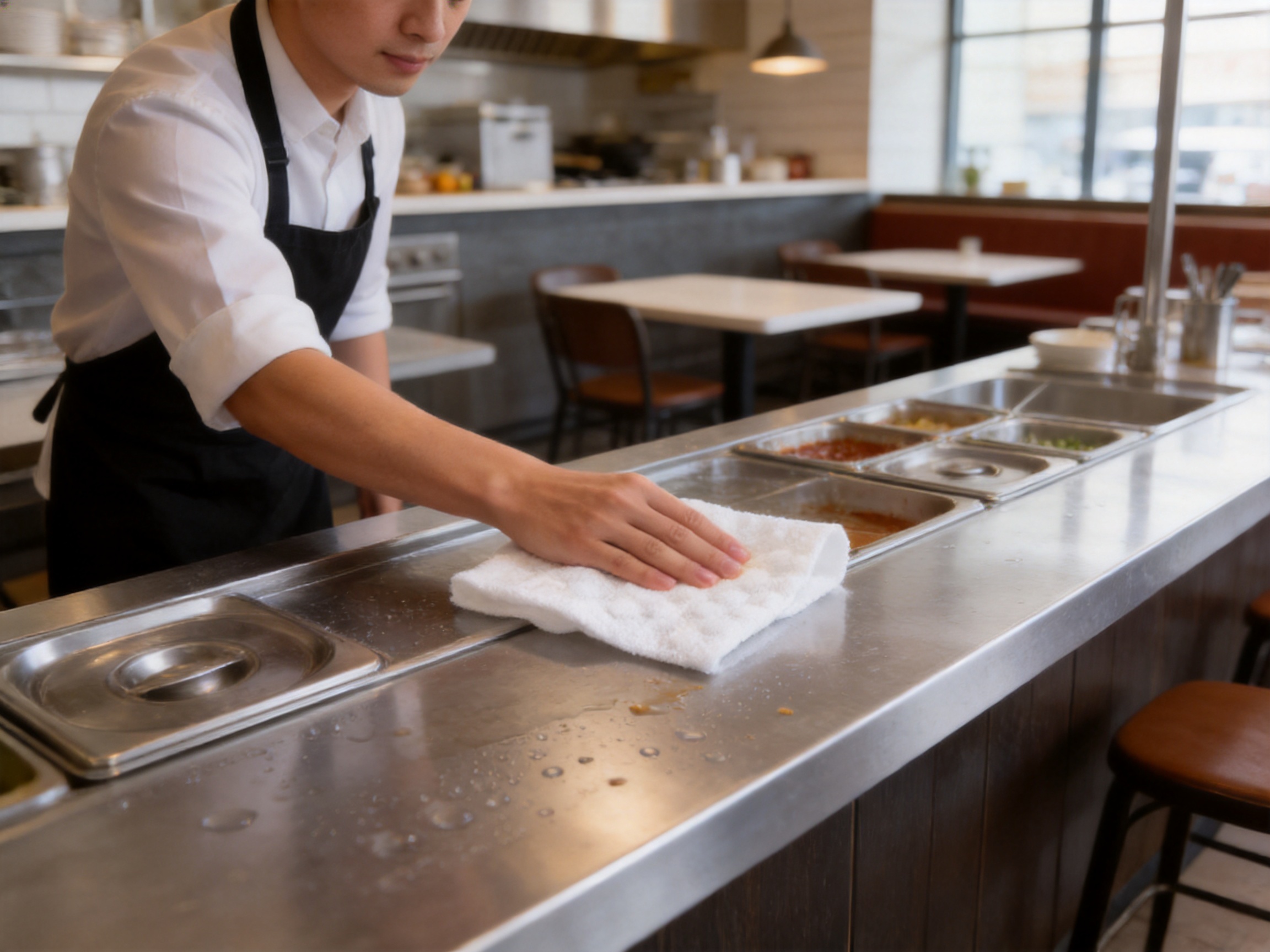
Manufacturing Process and Quality Strengths
The quality of a spunlace nonwoven wipe begins long before the finished roll is shipped. It depends on fiber selection, opening, blending, carding, web formation, hydroentanglement, drying, winding, inspection, and finishing. A manufacturer with long experience in nonwoven materials and nursing products can control these stages more precisely, producing fabric that is consistent in weight, width, texture, strength, and surface appearance.
The company behind this product was founded in 1987 and has grown into a major high-tech enterprise specializing in research, development, production, and sales of medical and hygienic nonwoven materials, nursing products, and related textile technologies. With more than three decades of development, it has built broad expertise across spunlace nonwovens, spunmelt nonwovens, hot air through nonwovens, flushable and degradable nonwovens, wet wipes, dry wipes, baby diapers, pull-ups, wet toilet paper, cleansing wipes, and other hygiene products. This broad technical background supports a deeper understanding of how raw nonwoven materials behave in finished consumer and institutional products.
Advanced production equipment and technology introduced from Germany, France, and Italy contribute to process stability and manufacturing efficiency. In nonwoven production, equipment precision affects fiber distribution, web uniformity, entanglement quality, drying consistency, and roll formation. Poor equipment or weak process control may lead to streaks, uneven weight, weak zones, edge defects, or unstable winding. For wipe converters, such defects can cause production interruptions, package defects, or inconsistent user experience. Advanced lines help reduce these risks.
The double-carding process is especially relevant. Carding aligns and distributes fibers into a web. Double carding improves web formation and can enhance uniformity compared with simpler approaches. For a restaurant wipe fabric, uniformity affects absorption, strength, pattern clarity, and cutting performance. If the fabric varies too much across the width or along the roll length, finished wipes may behave inconsistently. Stable carding and web control therefore protect both converter efficiency and end-user satisfaction.
Parallel technology gives the fabric a controlled fiber orientation. In many wipe applications, this supports a desirable balance of machine-direction and cross-direction performance. While different web structures can be selected for different needs, the parallel structure is well suited for many wipe formats because it can provide good stability, efficient production, and reliable folding behavior. When paired with proper hydroentanglement, it creates a fabric that is soft yet strong.
Hydroentanglement is the heart of spunlace manufacturing. High-pressure water jets penetrate the fiber web and entangle fibers mechanically. This creates cohesion without relying mainly on binders. The result is a clean, flexible, textile-like nonwoven. For restaurant wipes, this is important because the material may contact food-service surfaces and must perform without unpleasant stiffness or excessive chemical feel. Spunlace technology is widely recognized for producing premium wipe substrates because it combines softness, absorbency, and strength.
Finishing technology further expands product performance. Hydrophilic finishing can improve wetting speed and liquid distribution, which is valuable for dry wipes intended to absorb spills or for wet wipes that need even lotion loading. Coating can add specific functions depending on the end use. Antistatic treatment may be relevant for certain dry environments or packaging conditions. The ability to apply different finishing technologies allows the product to move beyond a single standard specification and become a customized platform for different wipe brands and restaurant cleaning systems.
The company has established multiple production bases in China, including locations in Guangdong, Jiangsu, Hubei, and Zhejiang-related operations. A multi-base production layout supports capacity, supply flexibility, and proximity to different industrial clusters. For international buyers, production scale and continuity are important. Restaurant wipe programs often require stable monthly supply, seasonal responsiveness, and the ability to support new product launches. A manufacturer with multiple production bases and broad product experience can better support long-term procurement plans.
The company has also ranked among leading nonwoven enterprises in China and has been recognized among major global nonwoven manufacturers for consecutive years. While rankings alone do not guarantee product suitability, they indicate scale, industry participation, and accumulated manufacturing experience. For buyers selecting a restaurant wipe substrate supplier, such experience reduces development risk. A supplier that understands both nonwoven roll goods and finished hygiene products can provide practical suggestions on gram weight, roll width, wetting ratio, packaging compatibility, and market positioning.
Customization Options for Different Restaurant Wipe Programs
One of the strongest advantages of this 5mm big dot spunlace nonwoven is its adaptability. Restaurant wipe programs vary widely. A quick-service restaurant may need economical disposable table wipes. A high-end hotel restaurant may prefer a premium wipe with a cloth-like feel. A catering company may need strong dry wipes for field use. A food processing kitchen may require wipes compatible with specific cleaning solutions. Because the fabric can be adjusted in composition, gram weight, width, and finishing, it can support many different product concepts.
Gram weight customization from 40gsm to 100gsm allows buyers to tune cost and performance. A 40gsm or 50gsm version may be suitable for light-duty wiping, compact packaging, or cost-sensitive markets. A 60gsm to 70gsm version offers a strong balance for mainstream restaurant wipes. An 80gsm to 100gsm version can be used for premium or heavy-duty cleaning wipes where durability and hand feel are especially important. This range gives product developers the ability to create good-better-best product lines using the same visual pattern language.
Composition customization gives further control. A higher viscose percentage can enhance absorbency and softness, making the wipe more suitable for customer-facing table cleaning or hand-contact applications. A higher polyester percentage can improve mechanical strength, making the wipe suitable for kitchen surfaces, greasy equipment zones, or repeated scrubbing. A balanced blend, such as 50% viscose and 50% polyester, remains a strong standard choice because it offers both liquid management and durability.
Roll width flexibility from 10cm to 320cm is valuable for converters. Narrow widths may reduce slitting needs for certain applications, while wide jumbo rolls support high-speed converting and efficient logistics. Finished wipes may be cut into different sizes depending on usage: small wipes for individual packs, medium wipes for table service, large wipes for kitchen cleaning, and roll-fed wipes for dispensers. A supplier that can provide wide width options helps converters optimize yield and reduce waste.
Finishing customization can align the fabric with specific formulations. Wet wipes may require compatibility with cleaning agents, surfactants, alcohol-free solutions, or food-service sanitizing liquids, depending on local regulations and customer specifications. Dry wipes may require rapid liquid pickup or low-lint performance. Antistatic or coating treatments can be selected when needed for special environments. These options support a more engineered approach than simply purchasing a generic wipe substrate.
Packaging requirements can also influence substrate selection. A wipe for flow packs must fold cleanly and maintain stack stability. A wipe for canisters must pull through dispensing openings without tearing or roping. A wipe for bucket systems must handle higher liquid loads and repeated extraction. The 5mm big dot spunlace nonwoven can be supplied as roll goods for downstream converting into these different formats, making it suitable for private-label and OEM/ODM projects.
Applications in Restaurants, Catering, and Hospitality
The primary use of this product is in wet wipes and dry wipes for restaurant environments, but the practical application range is broad. In dining areas, the wipe can be used to clean tables, chairs, menus, trays, counters, and service stations. Its substantial hand feel supports fast wiping between customer turnovers, while the dot texture helps remove visible residues. In customer-facing areas, a premium-looking wipe can also strengthen the perception that the restaurant takes cleanliness seriously.
In kitchens, the wipe can support cleaning of stainless steel surfaces, preparation counters, splash zones, and equipment exteriors. Grease and food residues are common in these areas, so the wipe must resist tearing and maintain enough friction to lift contaminants. The polyester component helps maintain durability, while the viscose component absorbs water-based residues and cleaning solutions. For heavy grease removal, the wipe can be paired with appropriate cleaning formulations.
In catering operations, portability matters. Disposable dry wipes or pre-moistened wipes are easier to transport than bags of reusable towels. Catering teams often work in temporary spaces where laundry access is limited. A strong disposable wipe can simplify cleanup and reduce the need to return contaminated textiles to a central facility. The 5mm big dot spunlace nonwoven is suitable for this type of mobile food-service cleaning because it combines absorption, strength, and controlled disposal.
Hotels and hospitality venues can use finished wipes made from this fabric in restaurants, banquet halls, lounges, and back-of-house areas. Hospitality operations often require products that perform well and look professional. The big dot pattern and heavier gram weight support premium positioning. For hotel groups with private-label cleaning supplies, the material can be customized to match brand standards, sustainability considerations, and operational protocols.
Institutional dining facilities such as schools, hospitals, factories, and transportation hubs may also benefit from this substrate. These environments handle high traffic and require frequent surface cleaning. A reliable disposable wipe can support standardized cleaning procedures and reduce the complexity of towel management. Because the material can be supplied in various weights and sizes, it can be adapted to different institutional budgets and cleaning intensities.
Hygiene, Safety, and Operational Efficiency
Restaurant hygiene is not achieved by one product alone. It depends on procedures, training, cleaning chemicals, surface contact time, storage, and waste handling. However, the wipe substrate plays an important role because it is the tool that transfers cleaning action to the surface. A wipe that fails during use can undermine the cleaning process. A wipe that is too thin may encourage shortcuts or overuse. A wipe that absorbs poorly may leave wet residue behind. The 5mm big dot spunlace nonwoven helps address these risks by providing reliable structure and absorption.
Disposable wipes can improve hygiene control by making usage boundaries clearer. For example, a restaurant may assign one wipe to one table or one task, then discard it. This avoids the ambiguity of reusable cloths that may be used repeatedly across multiple zones. The result can be a cleaner workflow and easier staff training. While disposable products must be managed responsibly, they can be valuable in environments where contamination control is a priority.
The material’s compatibility with wet wipes also supports controlled dosing. Pre-moistened wipes can deliver a consistent amount of cleaning solution compared with manually sprayed towels. This can reduce under-application or over-application. A high-quality substrate helps hold the liquid in the pack and release it during wiping. The viscose-polyester blend supports this balance, while the 5mm dot pattern improves contact with the surface.
Operational efficiency is also improved when wipes are easy to dispense, unfold, and use. Staff should not need to fight with a wipe that tears during extraction or sticks together in the pack. Consistent roll quality and fabric formation help downstream converters produce wipes that dispense properly. This is one reason manufacturing control matters as much as the material specification itself.
Waste control should be considered on a per-task basis. A stronger wipe may use more material per sheet than an ultra-light wipe, but it may reduce the number of sheets required for each cleaning job. If one 70gsm wipe replaces several thin wipes, the total cost and waste impact may be competitive or better. Buyers should therefore evaluate cleaning efficiency, not only nominal sheet price.
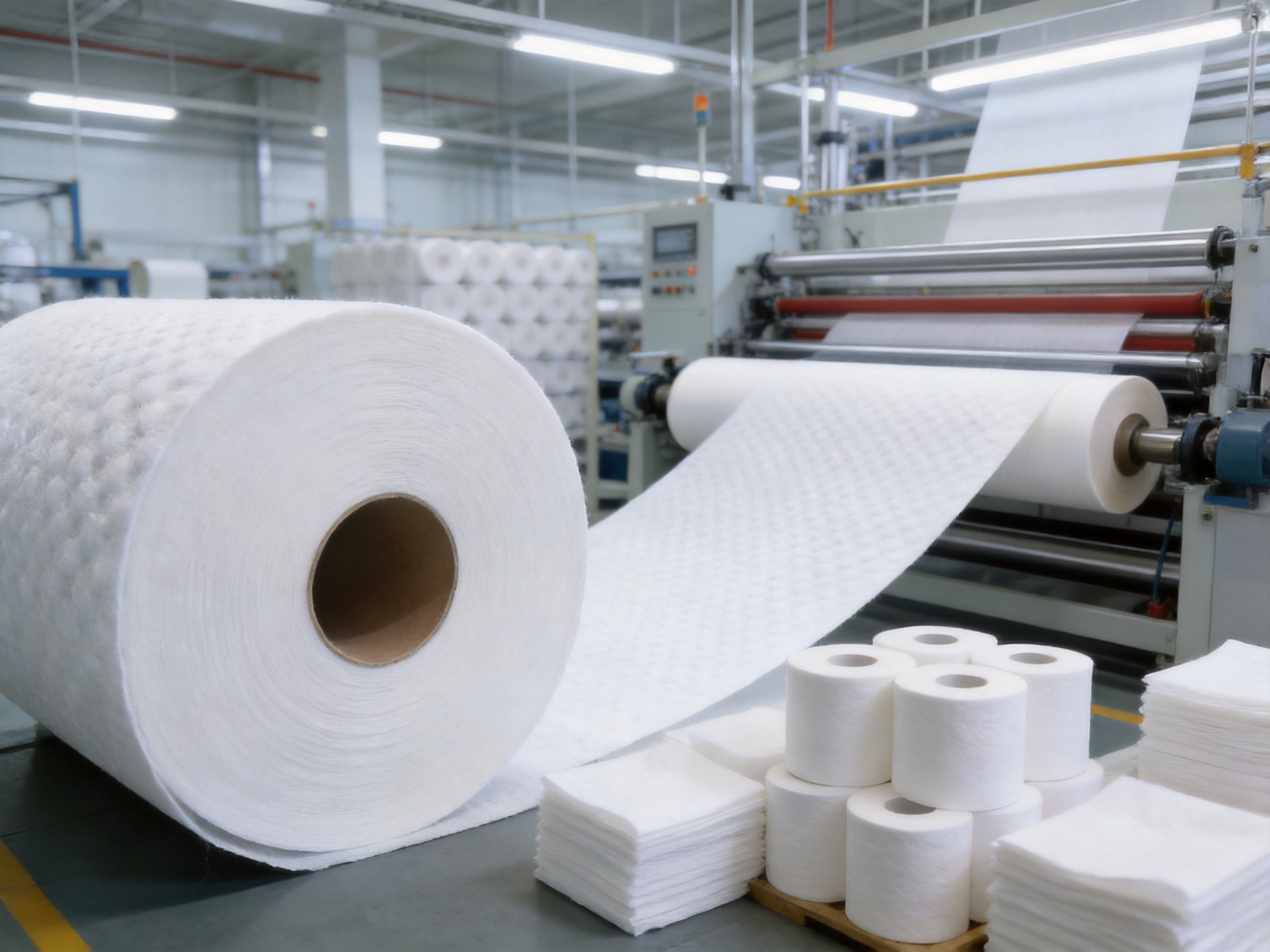
OEM, Private Label, and Supply Chain Value
For distributors, cleaning brands, and restaurant supply companies, this material offers strong OEM and private-label potential. The combination of a recognizable 5mm big dot texture, customizable weight, adjustable fiber blend, and multiple finishing options makes it possible to create differentiated wipe products. A brand can develop a premium restaurant wipe, an economical food-service wipe, a heavy-duty kitchen wipe, or a multi-purpose hospitality wipe using the same manufacturing foundation.
The manufacturer’s experience in both nonwoven materials and finished hygiene products is especially useful for OEM/ODM projects. Some suppliers only provide roll goods, while others only convert finished wipes. A company with broad expertise can better understand how substrate decisions affect the final product. For example, it can advise whether a buyer should prioritize higher liquid absorption, stronger tensile performance, softer hand feel, larger wipe size, or more compact packaging. This reduces trial-and-error during product development.
Private-label buyers often need more than a fabric. They need stable quality, documentation, scalable capacity, packaging coordination, and technical support. The company’s long operating history, advanced equipment, multiple production bases, and position in the nonwoven industry provide confidence for buyers planning long-term restaurant wipe programs. Consistency is essential because a restaurant chain or distributor cannot risk frequent changes in wipe feel, size, absorbency, or strength.
Supply chain reliability also matters in global markets. Food-service wipes may experience demand changes due to seasonal tourism, restaurant expansion, public health concerns, or institutional contracts. A manufacturer with significant capacity and diversified production experience is better positioned to support large orders and recurring shipments. Custom roll widths and specifications can also improve converter efficiency in the buyer’s local market.
The product can be integrated into different business models. Some buyers may purchase roll goods and convert them domestically. Others may request finished wipes under private label. Still others may develop a complete product family that includes wet wipes, dry wipes, cleansing wipes, and related hygiene products. The manufacturing group’s broad portfolio supports these possibilities and allows buyers to consolidate supplier relationships.
Quality Evaluation Criteria for Buyers
When evaluating 5mm big dot spunlace nonwoven for restaurant wipes, buyers should look beyond a simple technical sheet. The first criterion is basis weight consistency. A 70gsm target should remain stable across the roll because variations can affect absorbency, strength, wetting ratio, and finished wipe count. Consistent weight also supports predictable costing and performance.
The second criterion is tensile strength, especially wet tensile strength. Restaurant wipes are often used under pressure and in wet conditions. A wipe that performs well dry but tears when wet is not suitable for many food-service tasks. The polyester content and hydroentangled structure should provide reliable wet handling. Buyers may request test data in both machine direction and cross direction to understand performance.
The third criterion is absorbency and absorption speed. The wipe should take up liquid quickly enough to handle spills and cleaning solutions. Viscose content and hydrophilic finishing strongly influence this behavior. For wet wipes, buyers should also test liquid loading and lotion release over time. A substrate that absorbs too slowly may cause uneven wetting during production.
The fourth criterion is linting. Restaurant wipes should minimize fiber release, especially on glass, stainless steel, and customer-facing surfaces. Spunlace nonwoven generally offers good low-lint potential, but actual performance depends on fiber quality, entanglement, finishing, and converting. Buyers should test the wipe on dark glossy surfaces and stainless steel to observe residue.
The fifth criterion is hand feel and texture. Staff acceptance matters because workers use wipes repeatedly. The 5mm big dot pattern should feel substantial and effective without being abrasive. For dining areas, a wipe should not feel harsh. For kitchen cleaning, it should provide enough friction. This balance can be adjusted through gram weight and blend ratio.
The sixth criterion is converting compatibility. Roll formation, edge quality, width tolerance, splice management, and tension stability all influence production efficiency. A good substrate should run smoothly through slitting, folding, wetting, cutting, stacking, and packaging equipment. Manufacturing experience and quality control systems are therefore crucial.
Sustainability and Responsible Use Considerations
Disposable wipes must be designed and used responsibly. In restaurant settings, the hygiene and labor benefits of disposable wipes can be significant, but buyers should still consider material efficiency, waste management, packaging reduction, and correct disposal instructions. A stronger wipe that completes a task with fewer sheets can be a more responsible choice than a very weak wipe that encourages overuse.
The viscose component is cellulose-based, while polyester contributes durability. The blend is selected for performance, and performance is a key part of sustainability because products that fail in use create waste. Customization can help buyers select the most appropriate weight and composition for the intended cleaning task, avoiding unnecessary overengineering while still protecting hygiene and efficiency.
Roll width optimization can also reduce waste during converting. If the supplier provides widths that match the converter’s cutting plan, edge trim can be minimized. Efficient packaging formats can reduce transportation volume and storage requirements. For dry wipes, shipping without liquid may reduce weight, while wet wipes may provide convenience and controlled cleaning solution delivery. The best choice depends on the use case.
Responsible disposal communication is important. Restaurant wipes should be disposed of according to local waste-management rules and should not be flushed unless specifically designed and validated for flushability. Since this product is intended for wet wipes and dry wipes rather than being presented as a flushable material, clear labeling and staff training are recommended for finished products.
Commercial Positioning and Market Opportunities
The food-service cleaning market continues to evolve. Restaurants, hotels, catering companies, and institutional kitchens increasingly seek products that combine hygiene, convenience, and professional presentation. The 5mm big dot spunlace nonwoven fits this trend because it allows finished wipes to be positioned as stronger, more absorbent, and more comfortable than ordinary disposable options.
For premium restaurants and hospitality venues, the product can be marketed around its towel-like hand feel and visible big dot texture. For chain restaurants, it can be positioned around consistency, hygiene protocol support, and operational efficiency. For distributors, it can serve as a differentiated product that stands apart from commodity wipes. For private-label brands, the customizable specification range allows development of multiple price tiers.
The material is also suitable for cross-category expansion. A restaurant wipe brand may extend into hotel housekeeping wipes, office pantry wipes, food-service counter wipes, or general cleaning wipes. Because the substrate can be supplied in wet and dry formats, it can support both ready-to-use and solution-paired cleaning systems. This flexibility increases commercial value for buyers that serve multiple customer segments.
In markets where reusable towels remain dominant, the product can be introduced as a hygiene upgrade and labor-saving alternative. In markets already using disposable wipes, it can be introduced as a premium improvement over thin commodity products. The key message is not simply disposability; it is reliable cleaning performance with a substantial feel, fast absorption, and strong wet handling.
Q&A Section
What is the main advantage of the 5mm big dot spunlace nonwoven for restaurant wipes?
The main advantage is its balance of absorbency, strength, texture, and hygiene convenience. The 50% viscose and 50% polyester blend absorbs quickly while maintaining shape and wet strength. The 5mm big dot pattern improves wiping contact and gives the material a premium towel-like feel.
Why is 70gsm a suitable weight for restaurant wipes?
A 70gsm fabric feels more substantial than many lightweight disposable wipes. It can provide better durability, liquid capacity, and user confidence. It may also reduce the need to use multiple wipes for one cleaning task, which can improve cost efficiency in practical use.
Can the composition be customized?
Yes. The standard blend is 50% viscose and 50% polyester, but the ratio can be customized. More viscose can improve softness and absorbency, while more polyester can improve strength and dimensional stability.
What does the 5mm big dot pattern do?
The 5mm big dot pattern creates a textured surface that improves grip, tactile feedback, and residue pickup. It helps the wipe interact more effectively with liquids, crumbs, sauces, and grease films commonly found in restaurant environments.
Is the product suitable for both wet wipes and dry wipes?
Yes. The material is designed for wet wipes and dry wipes. It can be converted into pre-moistened wipes or supplied as a dry wipe substrate for use with spray systems or direct spill absorption.
How does this material compare with cotton towels?
Cotton towels are reusable but require laundering, storage, and strict contamination control. The spunlace nonwoven provides a disposable alternative with a cloth-like feel, helping reduce cross-contamination risk and simplify cleaning procedures.
How does it compare with low-cost thin disposable wipes?
Thin wipes may tear, absorb poorly, or require several sheets per task. The 5mm big dot spunlace nonwoven offers stronger wet performance, better absorption, and a more substantial hand feel, which can improve cleaning efficiency.
What roll widths are available?
Roll widths can range from 10cm to 320cm. This wide range supports different converting processes, including folded wipes, rolls, canister wipes, flat packs, and customized food-service wipe formats.
What finishing options are available?
Available finishing technologies include hydrophilic treatment, coating, antistatic treatment, and other functional options. These treatments can be selected according to the intended wet wipe or dry wipe application.
Why is advanced manufacturing important for this product?
Advanced manufacturing supports consistent basis weight, stable texture, strong hydroentanglement, uniform roll quality, and reliable converting performance. For restaurant wipe buyers, consistency reduces production problems and improves end-user satisfaction.
Conclusion
The 5mm big dot spunlace nonwoven for restaurant wipes is a high-performance substrate designed for the real conditions of food-service cleaning. With a typical 70gsm weight, a 50% viscose and 50% polyester blend, double-carding parallel spunlace technology, and a distinctive 5mm big dot pattern, it offers a strong combination of absorbency, wet strength, shape retention, and wiping efficiency. It gives restaurants and cleaning product brands a disposable wipe material that feels substantial while supporting hygienic, task-based use.
Its advantages over competing materials are clear. Compared with cotton towels, it reduces laundering and cross-contamination concerns. Compared with lightweight disposable wipes, it provides better durability and a more premium hand feel. Compared with airlaid paper, it offers stronger wet wiping performance. Compared with spunbond materials, it delivers better absorbency and softness. Compared with needlepunch fabrics, it is more directly suited to wipe conversion and restaurant cleaning applications.
The product’s manufacturing foundation is equally important. Supported by decades of nonwoven expertise, advanced international equipment, multiple production bases, and broad experience in hygiene products, the supplier can offer customization in composition, gram weight, roll width, and finishing technology. This enables OEM, ODM, and private-label buyers to develop restaurant wipes for different market tiers and application scenarios.
For restaurants, catering companies, hospitality groups, distributors, and cleaning brands, this material represents a practical upgrade: a wipe substrate that combines hygiene convenience with textile-like performance. In a market where cleanliness, speed, and user confidence are essential, the 5mm big dot spunlace nonwoven provides a reliable foundation for better restaurant wipes.
References
1. Russell, S. J. Handbook of Nonwovens. Woodhead Publishing.
2. EDANA. Nonwovens Standard Procedures and Industry Guidelines.
3. INDA. Nonwoven Fabrics Handbook.
4. Hutten, I. M. Handbook of Nonwoven Filter Media. Elsevier.
5. Chapman, R. A. Applications of Nonwovens in Technical Textiles. Woodhead Publishing.
6. Food-service sanitation training materials and general hygiene management principles for surface cleaning systems.