中文简体
中文简体 English
 日本語
日本語 русский
 Español
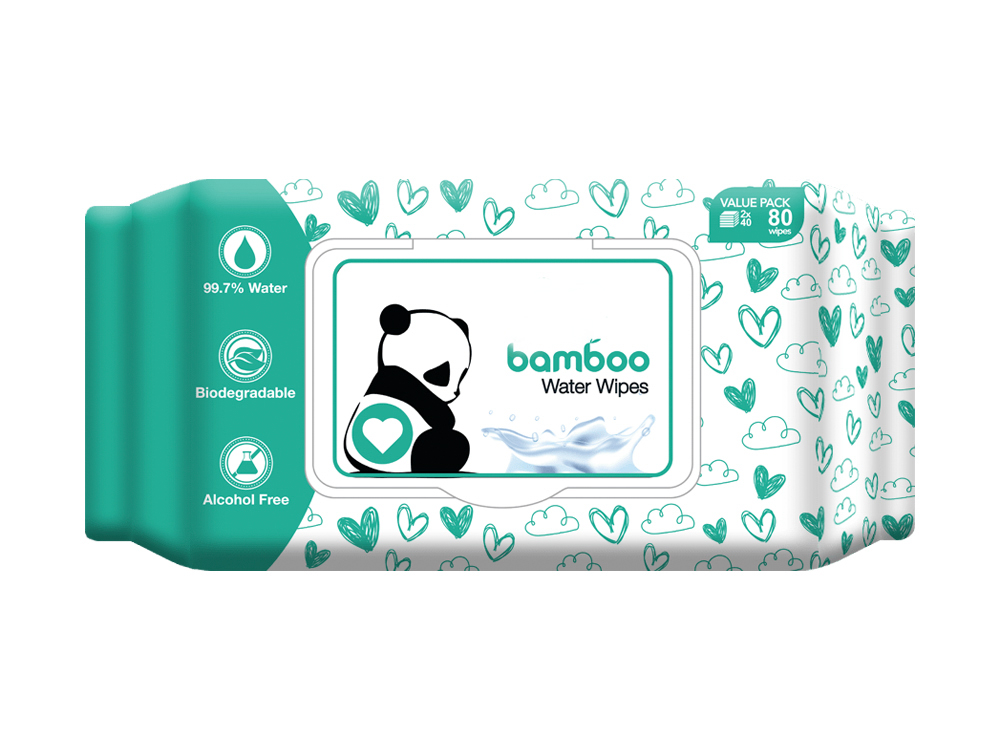
Bamboo fiber spunlace nonwoven fabric is becoming one of the most compelling material choices for modern wet wipes, dry wipes, cleansing towels, personal care wipes, and hygienic disposable products. As consumers increasingly look for materials that are soft, absorbent, skin-friendly, and more environmentally responsible, bamboo-based nonwoven substrates offer a strong combination of functional performance and natural origin.
This article focuses on bamboo fiber spunlace nonwoven fabric produced with double-carding and semi-cross technology, designed especially for wet wipes and dry wipes. The material combines the naturally derived characteristics of bamboo cellulose with the mechanical strength, uniformity, and absorbency created by advanced spunlace manufacturing. With customizable composition, basis weight, roll width, surface pattern, and finishing options, it provides an adaptable substrate for brand owners, private label wipe manufacturers, converters, and hygiene product developers.
Compared with many conventional wipe materials, bamboo fiber spunlace nonwoven fabric can provide a softer hand feel, excellent water absorption, good breathability, reliable wet strength, and a more natural product story. For companies developing baby wipes, facial wipes, household cleaning wipes, personal hygiene wipes, or dry cleansing towels, it offers both market appeal and technical practicality.
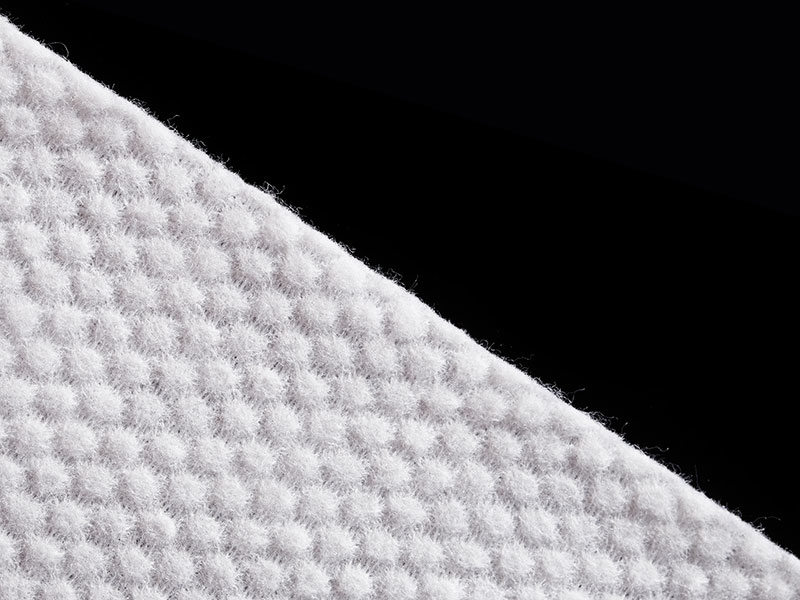
Bamboo Fiber Spunlace Nonwoven Fabric For Wet Wipes Or Dry Wipes
Understanding Bamboo Fiber Spunlace Nonwoven Fabric
Bamboo fiber is a cellulose fiber derived from bamboo, a fast-growing plant widely recognized for its renewable nature. When processed into nonwoven fabric, bamboo fiber can be transformed into a soft, absorbent, and comfortable substrate suitable for skin-contact and cleaning applications. The fabric discussed here is made using spunlace technology, a process in which high-pressure water jets entangle fibers to form a cohesive web without relying on traditional weaving or knitting.
Spunlace nonwoven fabric is particularly suitable for wipes because it can deliver a balanced combination of softness, strength, absorbency, and lint control. In wipes manufacturing, these properties directly influence consumer experience. A wipe that is too weak may tear during use. A wipe that is too rough may cause discomfort. A wipe that absorbs poorly may fail to hold lotion or cleaning solution efficiently. Bamboo fiber spunlace nonwoven fabric is designed to solve these challenges by offering a well-rounded structure for both wet and dry applications.
The material described in the product specifications uses double-carding and semi-cross technology. Double-carding improves fiber distribution and web uniformity, while the semi-cross structure enhances strength and dimensional stability compared with purely parallel-laid webs. The result is a substrate that can be converted into wipes with consistent texture, controlled thickness, and dependable performance across production batches.
In addition, the fabric may feature a 3 mm small-dot pattern. This type of surface pattern can improve tactile quality, liquid management, and cleaning efficiency. For wipe products, surface design is more than a visual feature; it affects how the wipe contacts skin or surfaces, how it releases liquid, and how effectively it removes impurities.
Key Product Specifications
The bamboo fiber spunlace nonwoven fabric can be customized according to application requirements. Its composition, weight, roll width, and finishing can be adjusted to support different product categories, from premium wet wipes to economical dry wipes.
Item |
Specification |
Benefit for Wipe Applications |
Composition |
100% bamboo fiber, with customizable blending ratio available |
Supports natural positioning, softness, absorbency, and product differentiation |
Technology |
Double-carding, semi-cross spunlace process |
Improves web uniformity, strength, and stability during converting and use |
Pattern |
3 mm small-dot pattern |
Enhances surface texture, cleaning performance, and consumer touch experience |
Gram Weight |
40 gsm to 100 gsm |
Allows selection from lightweight wipes to thick premium towels |
Roll Width |
10 cm to 320 cm |
Compatible with different converting lines, folding systems, and product formats |
Finishing Technology |
Hydrophilic, coating, antistatic, and other options |
Enables improved liquid uptake, functional treatment, and application-specific performance |
Usage |
Wet wipes, dry wipes, cleansing towels, hygiene wipes, and related products |
Supports multiple personal care, household, and professional cleaning markets |
Why Bamboo Fiber Is a Valuable Material for Wipes
Bamboo fiber has a unique position in the nonwoven industry because it combines natural origin with practical performance. As a cellulose fiber, it can offer comfort, absorbency, and biodegradability under suitable conditions. These characteristics are increasingly important as consumers and regulators focus more on sustainability, ingredient transparency, and responsible material selection.
One of the most important qualities of bamboo fiber is its moisture absorption. Wipes must absorb and retain liquids such as water, cleansing lotion, disinfecting solution, makeup remover, or skin-care formulation. A substrate with good absorbency can improve liquid loading, help maintain wetness, and enhance wiping efficiency. Bamboo fiber provides rapid water uptake, making it suitable for wet wipes that need an even and pleasant moist feel.
Breathability is another advantage. Although wipes are not worn continuously like garments, breathability still contributes to a fresh, natural tactile impression. In dry wipes and cleansing towels, breathable structure can help the material feel lighter and more comfortable against skin.
Bamboo fiber also offers a soft hand feel. For baby care wipes, facial wipes, feminine care wipes, and personal hygiene products, softness is a decisive quality factor. Consumers often judge wipe quality immediately by touch. Bamboo fiber nonwoven fabric can create a gentle, smooth, and premium sensation that supports higher-end product positioning.
In addition, bamboo fiber has good wear resistance compared with many delicate cellulose-based materials. When combined with spunlace entanglement and semi-cross web formation, the resulting fabric can maintain integrity during wiping, folding, packaging, and end use.
Advantages Over Conventional Wipe Substrates
Many wipes on the market are made from polyester, viscose, cotton, wood pulp, polypropylene, or various blended nonwoven structures. Each material has its own strengths, but bamboo fiber spunlace nonwoven fabric provides a particularly attractive balance for brands that want performance and a more natural identity.
Compared with Polyester-Rich Wipes
Polyester is commonly used in wipes because it provides strength and durability. However, polyester is synthetic and may not align with consumer demand for more naturally derived materials. Bamboo fiber offers a cellulose-based alternative with excellent absorbency and softness. While polyester contributes mechanical strength, bamboo fiber contributes skin comfort and liquid management. With proper spunlace processing, bamboo fiber nonwoven fabric can achieve reliable wipe strength while providing a more natural product message.
Compared with Standard Viscose Wipes
Viscose is also a cellulose fiber and is frequently used in wet wipes. Bamboo fiber can compete strongly with viscose because it offers similar absorbency while adding a distinctive raw material story. Bamboo is widely recognized by consumers as renewable and natural. For brands seeking differentiation in a crowded wipes market, bamboo fiber can help create a premium and environmentally mindful image.
Compared with Cotton Wipes
Cotton is valued for softness and natural origin, but cotton-based nonwoven substrates may be more expensive or limited in certain performance parameters depending on processing. Bamboo fiber can provide a similarly gentle touch with strong absorbency and good wet performance. It also gives manufacturers another route to create natural-positioned wipes without relying solely on cotton supply chains.
Compared with Wood Pulp Composite Wipes
Wood pulp composites are often chosen for cost and absorbency, especially in industrial or household wiping. However, they may lack the softness, premium touch, or wet integrity needed for personal care. Bamboo fiber spunlace nonwoven fabric can provide a better skin-contact experience and a smoother appearance, making it suitable for higher-value wipe categories.
Compared with Low-Cost Nonwoven Wipes
Low-cost wipe substrates may compromise softness, uniformity, strength, or liquid retention. Bamboo fiber spunlace fabric offers an upgraded solution. Its double-carding and semi-cross process helps create consistent formation, while customizable gram weight allows manufacturers to choose the right balance between cost and performance. For private label and OEM wipe programs, this flexibility is essential.
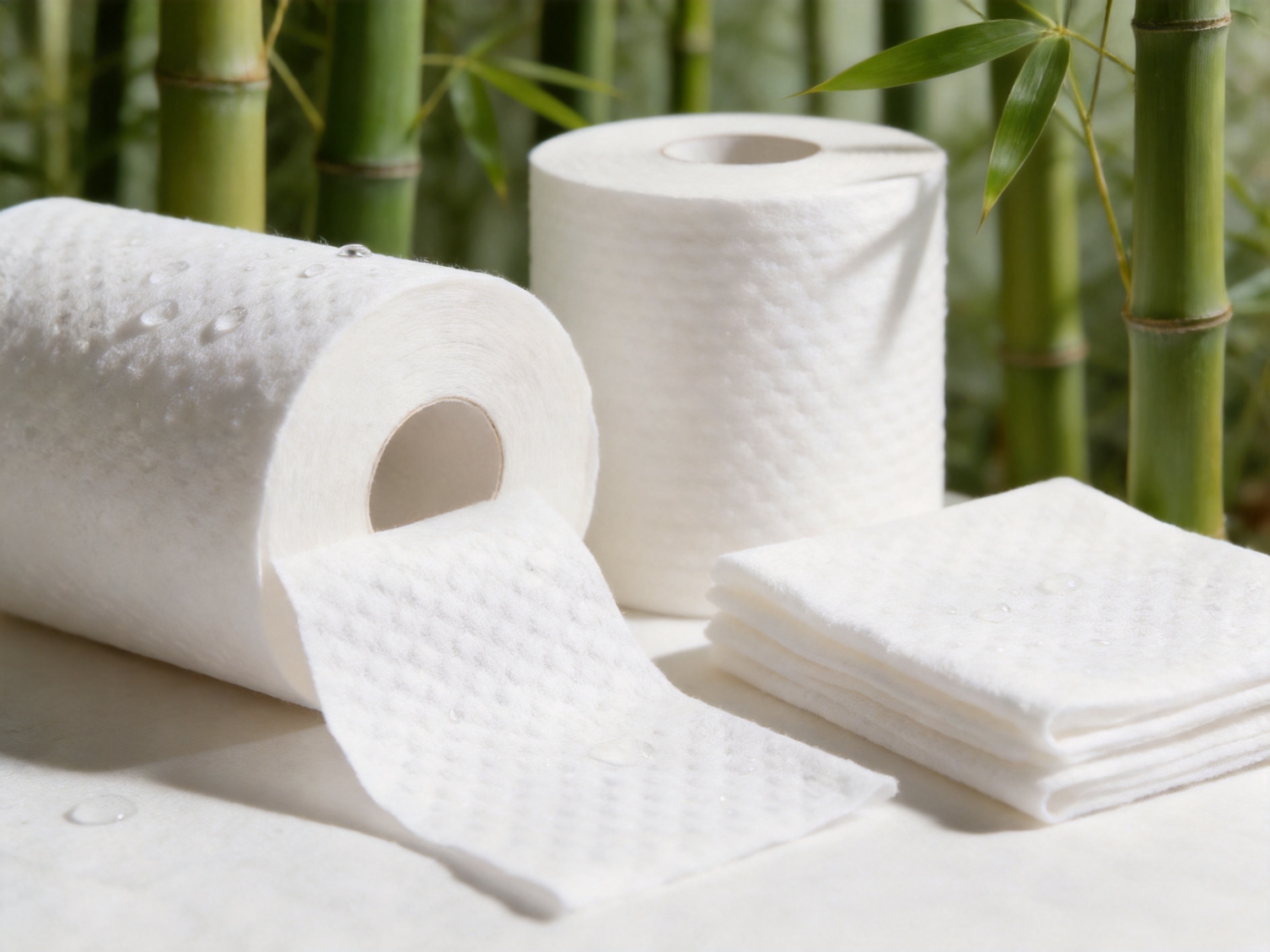
Advanced Double-Carding and Semi-Cross Manufacturing
The quality of nonwoven fabric depends not only on fiber selection but also on the manufacturing process. Bamboo fiber must be opened, blended, carded, layered, entangled, dried, finished, inspected, and rolled with precision. The use of double-carding and semi-cross technology is central to the fabric’s performance.
Carding is the process of separating and aligning fibers into a web. A single carding stage may create a workable web, but double-carding can improve fiber distribution and reduce irregularities. This is important because wipes must have consistent thickness, weight, and surface quality. Uneven web formation can lead to weak points, inconsistent liquid loading, or visible defects after converting.
Semi-cross technology improves the orientation of fibers in the web. If fibers are aligned mostly in one direction, the fabric may have strong machine-direction strength but weaker cross-direction strength. A semi-cross structure helps balance the fabric’s mechanical behavior. This is especially valuable for wipes, which are pulled, folded, stretched, and rubbed in multiple directions during use.
After web formation, the spunlace process uses high-pressure water jets to entangle the fibers. This mechanical bonding method avoids the heavy use of chemical binders, helping preserve softness and absorbency. Water-jet entanglement creates a cohesive structure that can withstand converting and wiping without becoming stiff.
The resulting fabric can be produced in gram weights ranging from 40 gsm to 100 gsm. Lightweight grades may suit economical wet wipes or single-use cleansing products, while heavier grades may be ideal for premium dry towels, facial cleansing cloths, baby care towels, or professional cleaning wipes. This production range gives brand owners flexibility to create products for different markets and price levels.
Surface Pattern and Consumer Experience
The 3 mm small-dot pattern gives the fabric a refined texture. In wipe products, surface texture affects both functional performance and consumer perception. A dot pattern can increase surface contact points, improve the ability to pick up dirt or liquid, and create a gentle massaging effect during wiping.
For baby wipes, the pattern should be gentle enough for delicate skin while still effective in cleaning. For facial wipes, it should provide a smooth and premium feel. For household wipes, it can help improve friction and cleaning efficiency. The small-dot structure offers a versatile balance, making it suitable for multiple categories.
Texture also influences product appearance. Consumers associate uniform dot patterns with quality, cleanliness, and professional manufacturing. In private label products, where shelf appeal is essential, the visual and tactile quality of the wipe substrate can support stronger brand value.
Hydrophilic and Functional Finishing Options
Finishing technology allows bamboo fiber spunlace nonwoven fabric to be tailored for specific uses. Hydrophilic treatment is especially important for wet wipes because it improves liquid absorption and distribution. A well-designed hydrophilic finish helps the fabric absorb lotion quickly and evenly, reducing dry spots and improving user comfort.
Coating options can provide additional performance properties depending on application. For example, a specialized surface treatment may modify hand feel, improve cleaning action, or support compatibility with certain formulations. Antistatic finishing can be beneficial in dry wipe applications, industrial environments, or packaging processes where static control is important.
The ability to apply different finishing technologies gives manufacturers and product developers greater control. Instead of using one standard substrate for all products, they can specify material characteristics according to end-use requirements. This is especially valuable for OEM and ODM wipe programs, where customers often need unique product performance, private label differentiation, and controlled cost structures.
Applications in Wet Wipes
Wet wipes are among the most important applications for bamboo fiber spunlace nonwoven fabric. A wet wipe must perform as a complete system: substrate, liquid formulation, packaging, and dispensing must work together. The substrate is the foundation of this system. Bamboo fiber spunlace fabric can support many wet wipe categories because of its absorbency, softness, and customizable structure.
Baby Wipes
Baby wipes require exceptional softness, liquid retention, and skin comfort. Parents often prefer materials that feel gentle and safe for repeated use. Bamboo fiber provides a natural cellulose base and a soft touch suitable for delicate skin-contact products. When paired with an appropriate lotion formula, it can support baby wipes positioned as premium, gentle, or nature-inspired.
Facial and Beauty Wipes
Facial wipes and cleansing wipes need a smooth surface, reliable wet strength, and good absorption. Bamboo fiber spunlace fabric can carry cleansing liquids and remove impurities without feeling harsh. The small-dot pattern may help improve cleansing efficiency while maintaining comfort. For beauty brands, bamboo fiber can add a premium and naturally derived material story.
Personal Hygiene Wipes
Personal hygiene wipes require softness, discretion, and dependable wet performance. Bamboo fiber’s absorbency and comfort make it suitable for intimate care, adult care, and general hygiene products. Its natural positioning can help brands communicate care, comfort, and responsibility.
Household Cleaning Wipes
Household cleaning wipes must hold liquid and maintain strength during wiping on surfaces. Bamboo fiber spunlace fabric can be adjusted in weight and finishing to support surface cleaning. Heavier grades can provide better durability, while textured patterns can improve cleaning action.
Wet Toilet Paper and Cleansing Wipes
For wet toilet paper and cleansing wipes, substrate design must consider softness, dispersibility requirements where applicable, formulation compatibility, and user comfort. Bamboo fiber can contribute to a gentle and natural feel. Product developers should select the appropriate blend, structure, and testing protocol based on the desired product claims and local regulations.
Applications in Dry Wipes and Towels
Dry wipes and dry towels are increasingly popular in personal care, baby care, beauty, travel, medical support, and household cleaning. Unlike wet wipes, dry wipes allow users to add water, cleanser, disinfectant, or other liquids as needed. This makes absorbency and dry hand feel especially important.
Bamboo fiber spunlace nonwoven fabric can provide a soft, cloth-like touch in dry form. It can absorb water quickly when activated, making it suitable for dry facial towels, baby dry wipes, cleansing towels, and disposable washcloths. The 40 gsm to 100 gsm weight range gives manufacturers the ability to create thin, lightweight wipes or thicker, towel-like products.
Dry facial towels made with bamboo fiber can appeal to consumers who want a clean, single-use alternative to reusable towels. Baby dry wipes can be used with warm water for gentle cleaning. Household dry wipes can be packaged as multipurpose cleaning cloths. In each case, bamboo fiber helps support comfort, absorbency, and product differentiation.
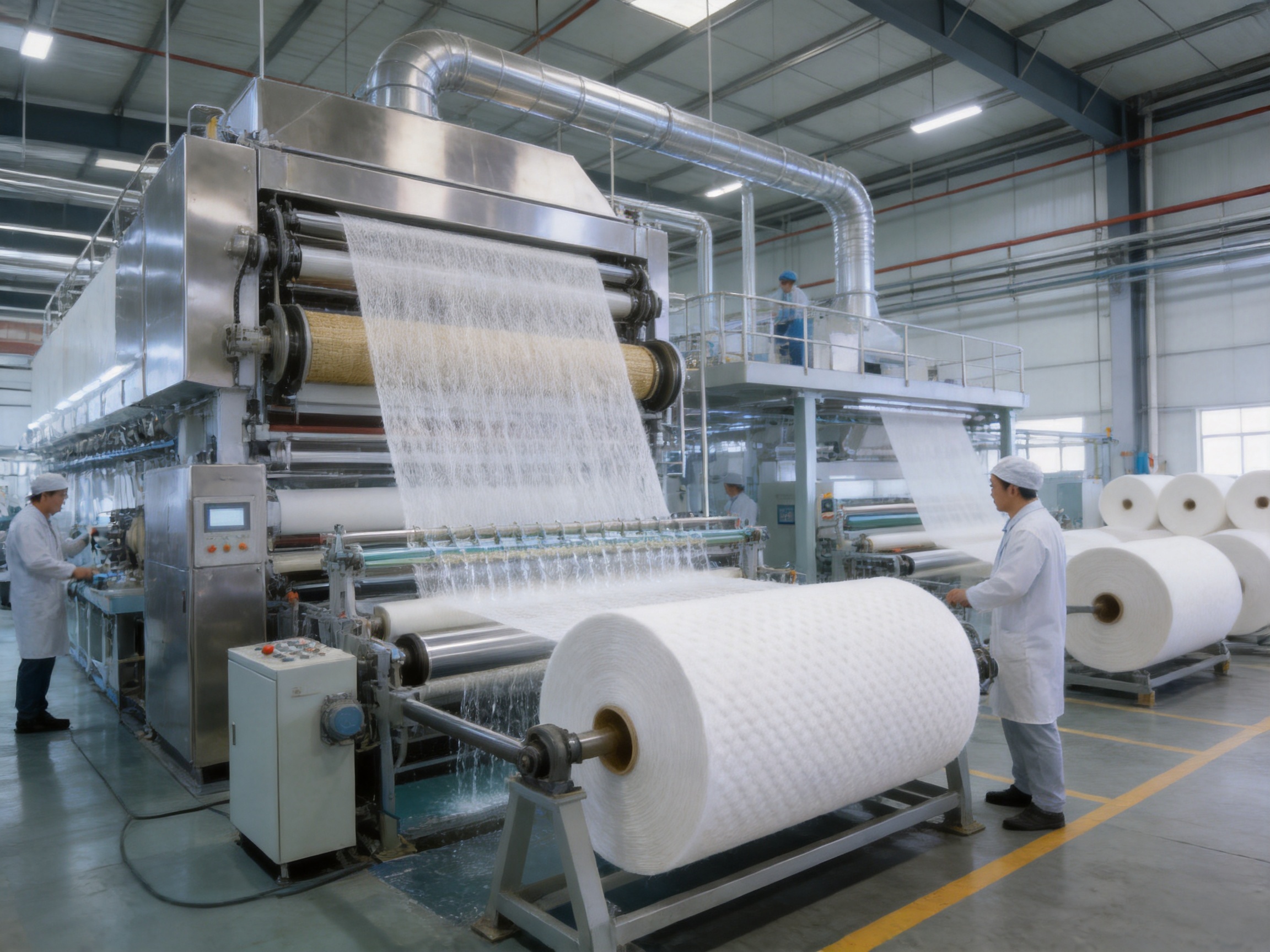
Company Manufacturing Strengths and Industrial Capability
Behind a high-quality nonwoven fabric is a manufacturing organization with strong production capability, process knowledge, and quality control. Zhejiang Uniquality Nursing Products Technology Co., Ltd., together with Kingsafe & Uniquality, has developed deep expertise in medical and hygienic nonwoven materials, nursing products, and related textile technologies since its founding in 1987.
The enterprise has grown into a recognized participant in China’s industrial textile sector and has been ranked among leading nonwoven manufacturers for many consecutive years. Its long-term development reflects not only production scale but also technical competence, customer service capability, and market adaptability.
One major strength is the company’s integrated manufacturing structure. Its product scope includes spunlace nonwoven fabrics, spunmelt nonwoven fabrics, hot-air-through nonwoven fabrics, flushable and degradable nonwoven fabrics, wet wipes, dry wipes, baby diapers, pull-ups, wet toilet paper, cleansing wipes, and other hygiene-related products. This broad portfolio gives the company valuable cross-category knowledge. A manufacturer that understands both raw nonwoven materials and finished hygiene products can better design substrates that perform well in real converting and consumer-use conditions.
The company has established multiple production bases in China, including locations in Zhejiang, Guangdong, Jiangsu, and Hubei. This production footprint supports stable capacity, regional supply flexibility, and large-scale order fulfillment. For international and domestic customers, supply stability is a key purchasing factor, especially in the hygiene industry where demand can fluctuate quickly.
Advanced equipment and technology introduced from Germany, France, and Italy further support the company’s manufacturing strength. Modern nonwoven production requires precise control of fiber opening, carding, web formation, hydroentanglement, drying, finishing, inspection, and rolling. High-quality equipment helps reduce defects, improve uniformity, and increase production efficiency.
In addition, the company emphasizes research and development, customization, and functionalization. This is essential because wipes brands are not all seeking the same material. Some need maximum softness. Some need high liquid absorption. Some need a specific roll width for converting equipment. Some require a special finishing process. Others require a blend that balances cost and performance. The ability to develop customized solutions gives the manufacturer a strong advantage over suppliers that offer only standard commodity materials.
Quality Control from Fiber to Finished Roll
Quality control in bamboo fiber spunlace nonwoven fabric begins with raw material selection. Fiber quality influences softness, uniformity, absorbency, and mechanical strength. Proper inspection helps ensure that incoming bamboo fiber meets requirements for cleanliness, length, fineness, and consistency.
During production, web uniformity is monitored carefully. Uneven fiber distribution can create weak areas, holes, streaks, or inconsistent basis weight. Double-carding helps improve formation, but process control remains essential. Operators and quality systems must monitor line speed, carding parameters, water-jet pressure, drying temperature, and winding tension.
After hydroentanglement, the fabric must be dried to the correct moisture level. Over-drying can affect hand feel, while insufficient drying may create storage and packaging issues. Finishing treatments must be applied evenly so that hydrophilic or antistatic performance remains consistent throughout the roll.
Finished rolls are typically inspected for visual defects, width accuracy, roll tension, basis weight, tensile performance, absorbency, and surface pattern. For wipe converters, roll quality is critical. A roll with uneven winding, inconsistent width, or hidden defects may cause downtime on converting lines. Reliable roll formation helps customers reduce waste and maintain production efficiency.
Customization for OEM and Private Label Wipe Programs
OEM and private label wipe manufacturers need flexible material options because different customers have different brand strategies. Bamboo fiber spunlace nonwoven fabric can be customized in composition, blending ratio, basis weight, width, finishing, and texture. This flexibility supports multiple product tiers and market segments.
A premium baby wipe brand may choose a high bamboo content, heavier basis weight, and extra-soft finishing. A beauty wipe brand may prioritize smooth texture, elegant appearance, and balanced lotion release. A household wipe brand may choose stronger fabric with enhanced cleaning texture. A dry towel brand may select a thicker grade with rapid water absorption.
Roll width customization from 10 cm to 320 cm allows compatibility with many converting machines. This is especially important for customers producing different wipe sizes, folding formats, and packaging styles. Narrow widths may serve specialty converting, while wider rolls can improve efficiency for large-scale production.
Basis weight customization from 40 gsm to 100 gsm also helps control product cost and performance. A 40 gsm substrate may be suitable for lightweight everyday wipes, while 80 gsm or 100 gsm fabric can create a premium towel-like product. This flexibility allows customers to build product lines across good, better, and best tiers.
Sustainability and Market Appeal
The wipes market is undergoing a strong shift toward materials with improved environmental profiles. Consumers are increasingly aware of plastic content, biodegradability, renewable raw materials, and disposal impact. Bamboo fiber spunlace nonwoven fabric can help brands respond to this trend because bamboo is a naturally derived cellulose source and the resulting fiber can be associated with biodegradability under appropriate conditions.
It is important for brands to make responsible and accurate claims based on testing, composition, local regulations, and end-of-life conditions. However, from a material-selection perspective, bamboo fiber provides a stronger sustainability story than petroleum-based synthetic fibers. For companies looking to reduce reliance on plastic-rich substrates, bamboo fiber offers a practical alternative.
Bamboo also has strong consumer recognition. Many buyers associate bamboo with natural freshness, cleanliness, softness, and environmental awareness. This perception can help wipe brands stand out on retail shelves and e-commerce platforms. In categories such as baby care, facial cleansing, personal hygiene, and premium household cleaning, material identity can influence purchasing decisions.
In addition to consumer appeal, bamboo fiber can support corporate sustainability goals. Brands seeking to expand their naturally derived product lines can use bamboo fiber spunlace fabric as part of a broader strategy that may include responsible packaging, gentle formulations, and transparent labeling.
Performance Factors That Matter to Wipe Manufacturers
When selecting a nonwoven substrate, wipe manufacturers evaluate multiple performance factors. Bamboo fiber spunlace nonwoven fabric offers advantages across many of these areas.
Absorbency
Absorbency determines how much liquid a wipe can hold and how evenly it distributes that liquid. Bamboo fiber has instant water absorption, making it suitable for wet wipes and dry wipes that need quick activation.
Softness
Softness is essential for skin-contact products. Bamboo fiber provides a gentle touch, and spunlace bonding helps maintain textile-like comfort without excessive stiffness.
Wet Strength
Wet strength is necessary for wipes that are saturated with lotion. Semi-cross web formation and hydroentanglement help the fabric resist tearing during use.
Uniformity
Uniform fabric improves converting efficiency and final product appearance. Double-carding supports consistent fiber distribution and stable quality.
Texture
The 3 mm small-dot pattern improves tactile appeal and can enhance cleaning performance. Texture can also create a more premium product image.
Customizability
Custom composition, width, weight, and finishing options allow customers to match the fabric to specific product goals.
Natural Product Positioning
Bamboo fiber provides a naturally derived material story that can help brands differentiate from synthetic or commodity wipe substrates.
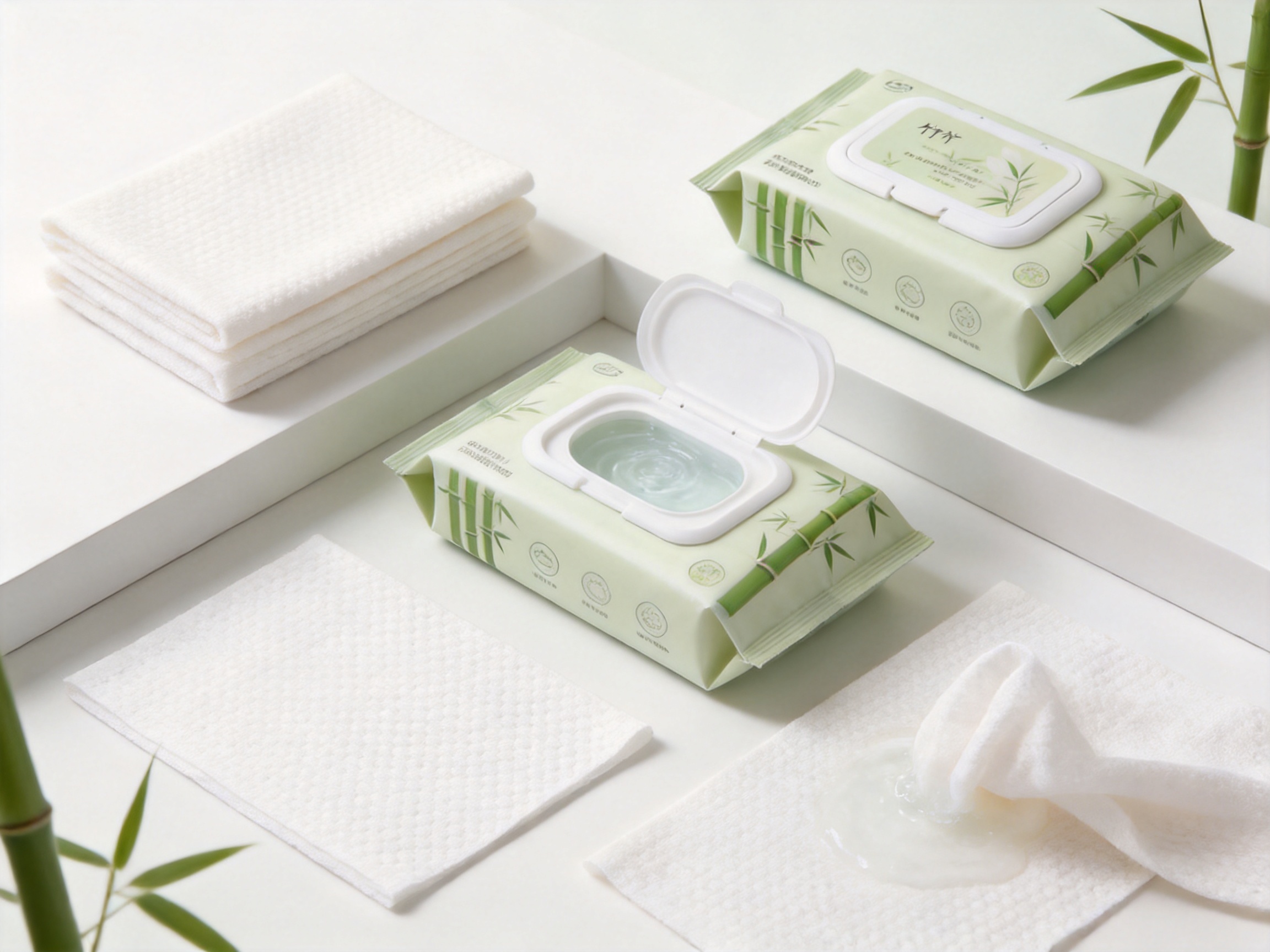
How Bamboo Fiber Spunlace Fabric Supports Brand Differentiation
The global wipes market is highly competitive. Many products look similar, and consumers often compare price, softness, ingredients, and environmental claims. A carefully selected substrate can help a brand communicate quality before the consumer even reads the full label.
Bamboo fiber spunlace nonwoven fabric gives brands several differentiation opportunities. First, it supports a premium natural material message. Second, it offers a soft and comfortable user experience. Third, it can be customized to create unique product textures and performance levels. Fourth, it can be used across multiple product categories, allowing a brand to build a consistent material identity.
For example, a company could develop a bamboo-based product family including baby wipes, dry facial towels, personal cleansing wipes, and household wipes. Using the same material concept across categories strengthens brand recognition and simplifies marketing. It also gives consumers a clear reason to choose the product over standard wipes.
Private label programs can also benefit. Retailers often need products that combine competitive pricing with clear shelf differentiation. Bamboo fiber is easy for consumers to understand, and its benefits can be communicated through packaging language focused on softness, absorbency, and natural origin. With appropriate testing and regulatory review, brands may also communicate biodegradability or related environmental features where supported.
Manufacturing Reliability for Large-Scale Supply
In hygiene and personal care markets, suppliers must provide not only good samples but also stable mass production. A material may perform well in development, but if quality varies between batches, it can create serious problems for converters and brand owners. Reliable manufacturing capability is therefore a major competitive advantage.
The company’s long history, multiple production bases, advanced equipment, and broad nonwoven expertise support large-scale reliability. Its experience in both raw materials and finished hygiene products means it understands the practical demands of downstream customers. This includes roll handling, converting speed, packaging compatibility, lotion loading, and final product performance.
For customers sourcing bamboo fiber spunlace nonwoven fabric, supplier capability can reduce risk. Stable basis weight, consistent width, controlled moisture, uniform texture, and reliable finishing all contribute to smoother production. This can reduce waste, improve output, and support timely delivery of finished wipes.
In addition, the company’s ability to serve medical, maternal and baby, beauty, home, industrial cleaning, clothing, and hygiene markets demonstrates versatility. Different markets have different standards and expectations. Experience across these sectors can strengthen process discipline and product development ability.
Recommended Selection Guide
Choosing the correct bamboo fiber spunlace nonwoven fabric depends on the final product. The following selection approach can help product developers and purchasing teams define their requirements.
For Economy Wet Wipes
Select a lower to medium basis weight, such as around 40 gsm to 50 gsm, depending on performance targets. Prioritize hydrophilic finishing and consistent roll quality. Consider a bamboo blend if cost control is important.
For Premium Baby Wipes
Choose a softer and possibly heavier substrate, such as 55 gsm to 70 gsm or above, depending on desired thickness. A high bamboo fiber ratio can support natural positioning. Ensure lotion compatibility and skin-contact testing.
For Facial Cleansing Wipes
Focus on softness, smooth texture, and liquid release. The small-dot pattern can provide gentle cleansing action. Select a basis weight that feels premium without being too heavy for packaging.
For Dry Facial Towels
Choose a medium to high basis weight for towel-like feel. Rapid absorbency is important because consumers often wet the towel before use. A soft finish can improve the experience.
For Household Cleaning Wipes
Prioritize strength, texture, and liquid loading. A higher basis weight or tailored blend may improve durability. Functional finishing may be selected based on cleaning formulation compatibility.
For Industrial or Professional Wipes
Consider tensile strength, lint control, absorbency, and chemical compatibility. Customized blends and finishing treatments can help meet specific performance requirements.
Q&A: Bamboo Fiber Spunlace Nonwoven Fabric
What is bamboo fiber spunlace nonwoven fabric?
It is a nonwoven fabric made from bamboo-derived cellulose fiber using spunlace technology. High-pressure water jets entangle the fibers into a soft, absorbent, and strong web suitable for wet wipes, dry wipes, cleansing towels, and other disposable hygiene products.
Why is bamboo fiber suitable for wipes?
Bamboo fiber offers good breathability, rapid water absorption, soft touch, wear resistance, and a naturally derived material profile. These qualities are valuable for wipes that require comfort, liquid retention, and cleaning performance.
What does semi-cross technology mean?
Semi-cross technology refers to a web formation method that improves fiber orientation balance. It helps enhance strength in different directions, making the fabric more stable during converting and wiping.
What is the advantage of double-carding?
Double-carding improves fiber distribution and fabric uniformity. This helps create consistent thickness, appearance, strength, and liquid absorption across the roll.
Can the fabric be used for both wet and dry wipes?
Yes. The fabric is suitable for wet wipes because of its absorbency and wet strength, and it is also suitable for dry wipes because of its soft hand feel and rapid water absorption when activated.
What basis weights are available?
The fabric can be produced from 40 gsm to 100 gsm. Lower weights are suitable for lighter wipes, while higher weights are suitable for premium towels, dry wipes, or stronger cleaning products.
Can the composition be customized?
Yes. The standard option is 100% bamboo fiber, and blending ratios can be customized to meet cost, strength, softness, or application requirements.
What roll widths are available?
Roll widths can range from 10 cm to 320 cm, allowing compatibility with different converting machines, product sizes, and packaging formats.
What finishing options are available?
Available finishing technologies include hydrophilic treatment, coating, antistatic treatment, and other functional options depending on customer needs.
How does this fabric help private label wipe brands?
It helps private label brands differentiate through a natural bamboo material story, soft hand feel, good absorbency, customizable specifications, and premium appearance. It can be used to develop baby wipes, facial wipes, hygiene wipes, household wipes, and dry towels.
Conclusion
Bamboo fiber spunlace nonwoven fabric offers a powerful combination of natural origin, softness, absorbency, strength, and customization. For wet wipes and dry wipes, these characteristics directly support product quality and consumer satisfaction. Compared with many conventional wipe substrates, bamboo fiber provides a more distinctive material identity while maintaining practical manufacturing performance.
The use of double-carding and semi-cross spunlace technology strengthens the fabric’s value by improving uniformity, directional stability, and overall reliability. The 3 mm small-dot pattern enhances texture and cleaning performance, while customizable basis weight, roll width, composition, and finishing options allow the material to serve a wide range of applications.
Supported by the manufacturing experience, advanced equipment, broad product portfolio, and R&D strength of Zhejiang Uniquality Nursing Products Technology Co., Ltd. and Kingsafe & Uniquality, this bamboo fiber spunlace nonwoven fabric is well suited for brands and converters seeking high-quality wipe substrates. It is especially valuable for companies developing OEM, ODM, and private label wipe programs that require both technical performance and market differentiation.
As the wipes industry continues to move toward softer, more absorbent, and more responsibly sourced materials, bamboo fiber spunlace nonwoven fabric stands out as a forward-looking solution. It meets the practical needs of manufacturers while aligning with consumer expectations for comfort, quality, and natural material innovation.
References
1. Russell, S. J. Handbook of Nonwovens. Woodhead Publishing.
2. Albrecht, W., Fuchs, H., and Kittelmann, W. Nonwoven Fabrics: Raw Materials, Manufacture, Applications, Characteristics, Testing Processes. Wiley-VCH.
3. EDANA. Guidelines for Nonwoven Materials and Hygiene Product Testing.
4. INDA. Nonwoven Fabrics Handbook and Wipes Industry Technical Resources.
5. Morton, W. E., and Hearle, J. W. S. Physical Properties of Textile Fibres. Woodhead Publishing.
6. Textile Institute. Sustainable Fibres and Textiles: Processing, Properties and Applications.